Japandi Kitchen and Dining Room Ideas for Clean, Functional Spaces

By Tereza Hower | Published April 6, 2026
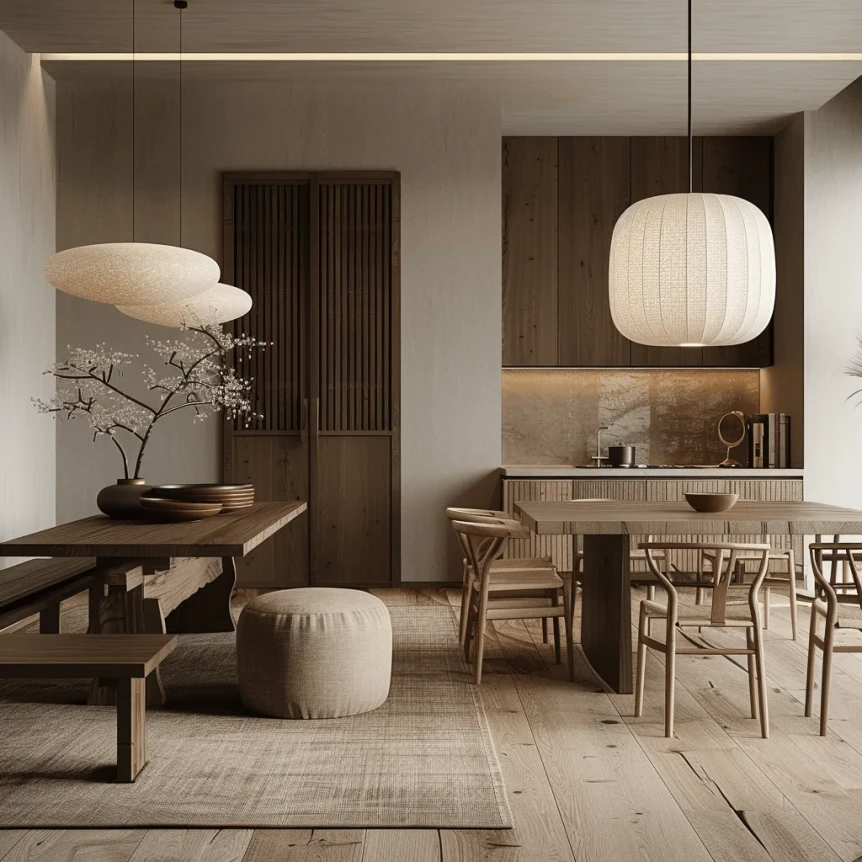
The kitchen and dining area might be the most natural fit for Japandi design. Both Japanese and Scandinavian traditions place deep value on the rituals of cooking and eating, and both share a love of honest materials, functional tools, and spaces that feel calm even when they’re busy. A Japandi kitchen and dining room blends these values into a space that’s as pleasant to work in as it is to look at.
This guide covers cabinetry, countertops, shelving, dining furniture, and the styling details that bring a Japandi kitchen and dining area together.
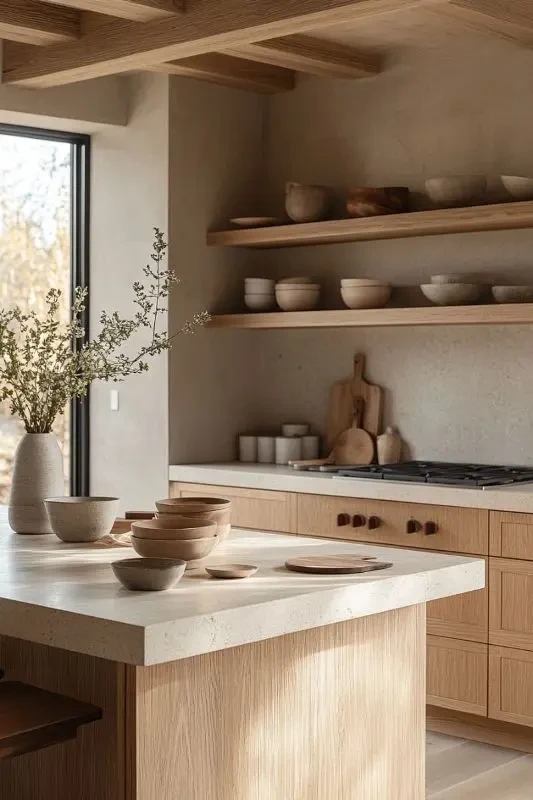
The Japandi Kitchen Foundation
Cabinetry
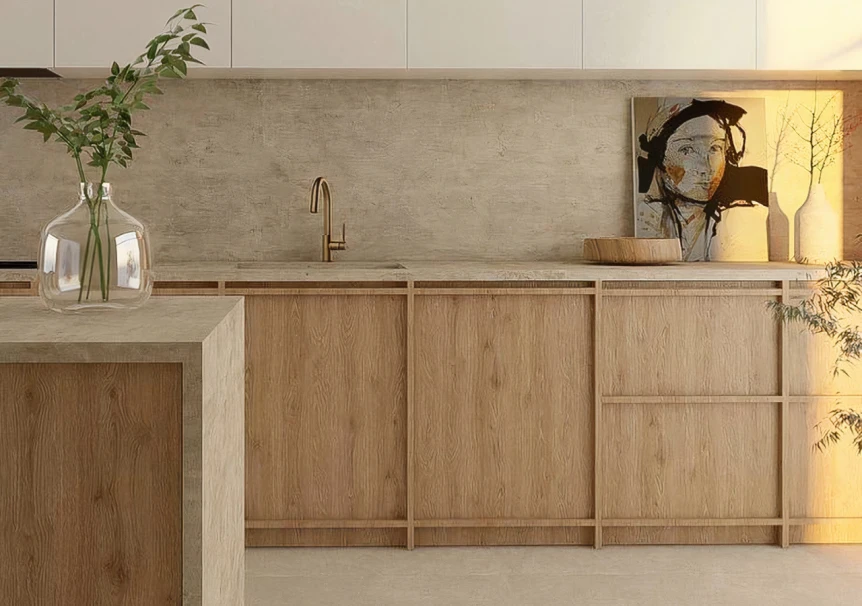
Japandi kitchen cabinets are clean fronted and unadorned. Flat panel or slab style doors in natural wood or a matte painted finish in warm white, soft gray, or muted sage are the most common choices. Hardware is minimal: slim pulls in black or brass, or no visible hardware at all with push to open mechanisms.
The natural wood option is particularly effective because it brings warmth and the Japandi emphasis on honest materials directly into the most used surfaces in the kitchen. Light oak, ash, and birch lean Scandinavian. Walnut and darker oak lean Japanese. Combining upper cabinets in one tone with lower cabinets in another creates subtle contrast without being busy.
Countertops
Natural stone, such as a honed marble, quartzite, or soapstone, aligns perfectly with Japandi values. These materials are beautiful, functional, and carry natural variation that reflects the wabi sabi appreciation for imperfection. Engineered quartz in warm, neutral tones works as a more practical alternative. Butcher block or natural wood countertops add warmth in areas that don’t see heavy water use.
Backsplash
Keep the backsplash simple. A single material in a neutral tone works best. White or cream subway tile, natural stone, or even a continuation of the countertop material up the wall maintains the clean visual line that Japandi kitchens depend on. Avoid busy patterns or high contrast mosaic designs.
Open Shelving
Why Open Shelving Works in Japandi Kitchens
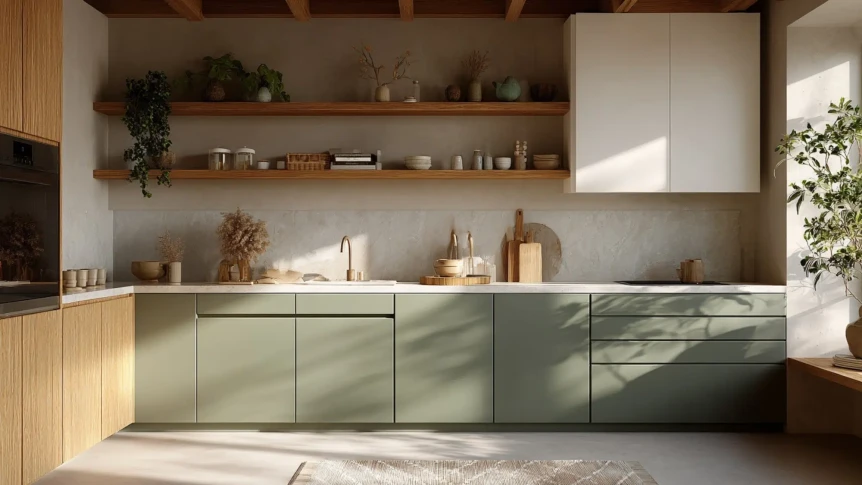
Open shelving is a signature Japandi kitchen feature. It serves both the Japanese aesthetic value of displaying beautiful, functional objects and the Scandinavian belief that everyday items should be accessible and visible. The contents of your shelves become decor in themselves.
What to Display
A curated selection of handmade ceramic bowls, simple glassware, a few wooden utensils, and perhaps a small plant. The key word is curated. Open shelving in a Japandi kitchen should not display everything you own. It should show a small, intentional collection of items that are both useful and beautiful.
How to Style It
Stack plates and bowls in small, neat groups. Leave visible space between groups. Vary heights with a taller item like a ceramic pitcher next to shorter stacks. Keep the palette cohesive: matching or closely related ceramic glazes create visual calm. For more styling techniques, see our Japandi decor ideas and styling tips guide.
Color in the Japandi Kitchen
The Foundation
Warm white, soft cream, and natural wood tones cover most surfaces. These create a bright, clean environment that feels warm rather than sterile. The Scandinavian side of the equation ensures the kitchen never feels cold.
Adding Depth
Dark accents ground the space: a walnut cutting board, black or dark brass fixtures, charcoal grout on light tile, or a dark stone countertop. These elements bring the Japanese sense of contrast and weight that prevents the kitchen from looking too airy or lightweight.
Accent Color
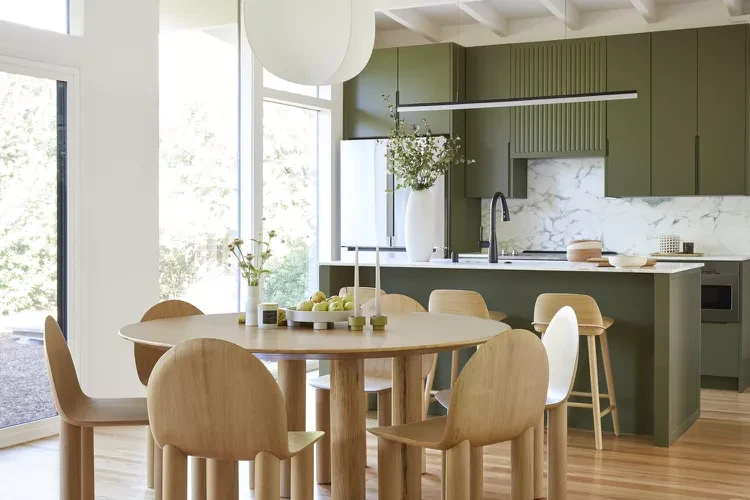
If you want a touch of color, muted sage green is the most popular Japandi kitchen accent. It can appear on lower cabinets, a painted shelf, or through ceramic pieces on display. Soft clay and warm taupe also work as subtle accents. For more palette ideas, visit our Japandi color palettes guide.
The Japandi Dining Area
Choosing the Table
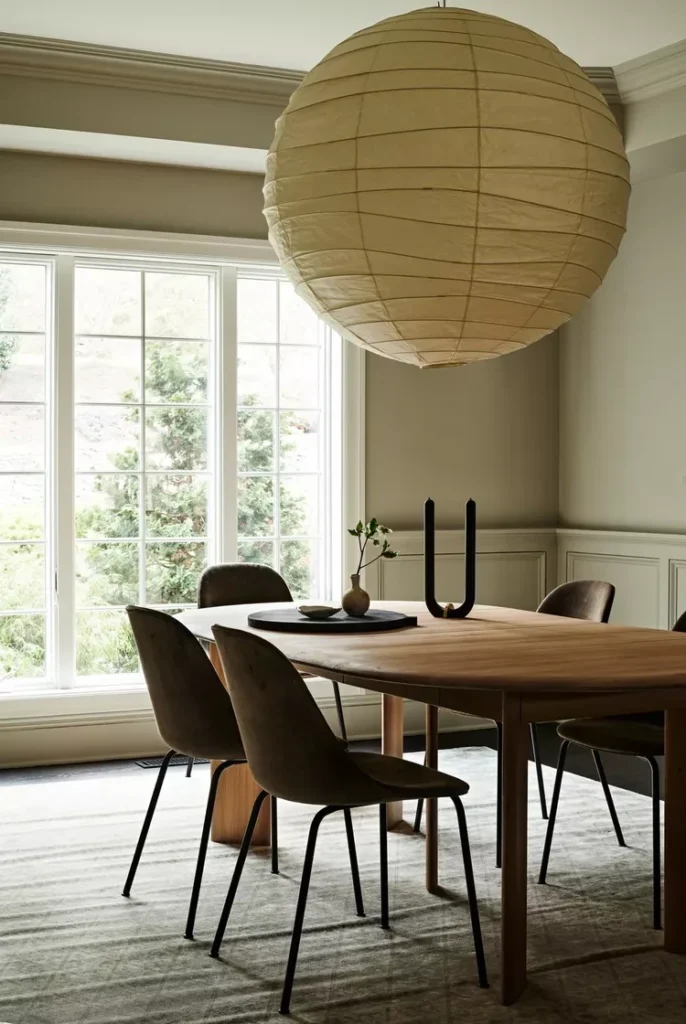
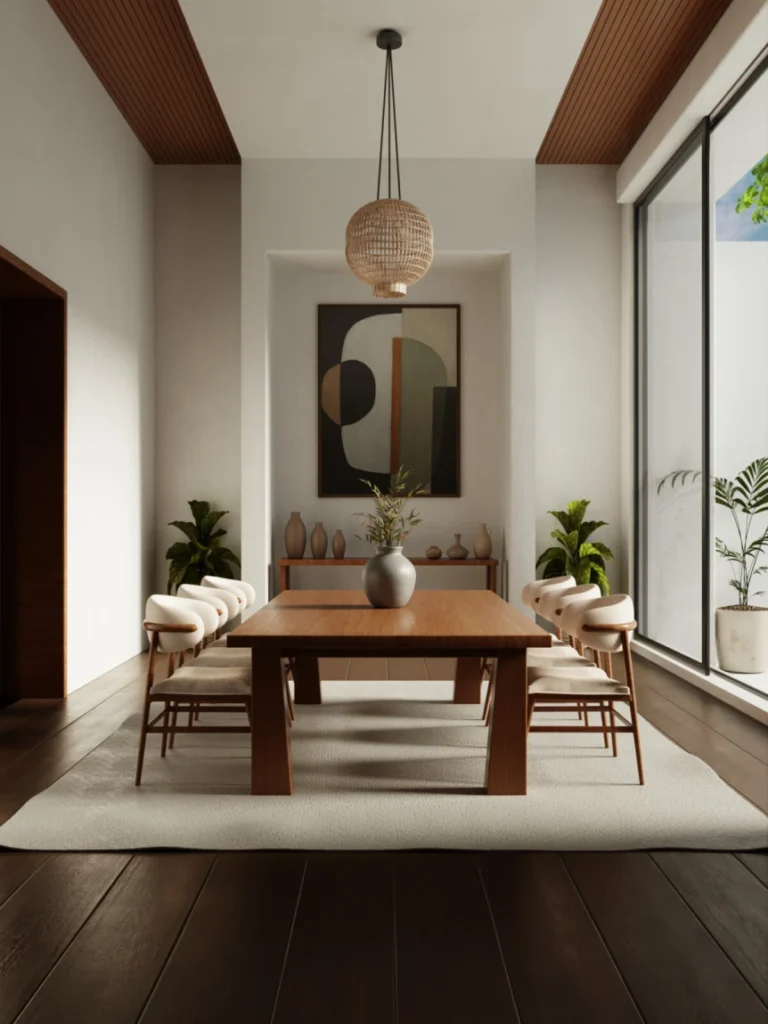
The dining table is often the most important single piece of furniture in a Japandi home. A solid wood table with clean lines and a natural finish invites gathering and daily use. Rectangular tables with gently rounded corners are the most common Japandi shape. Round tables work beautifully in smaller spaces and encourage more intimate conversation.
Look for quality construction that will age well. A table you can keep for twenty years aligns with the Japandi value of investing in fewer, better things. For furniture sourcing tips, see our Japandi furniture guide.
Dining Chairs
Wooden dining chairs with simple lines are the standard. Chairs with woven seats, like classic Danish styles, bridge the Scandinavian and Japanese aesthetics beautifully. Upholstered seats in neutral linen or leather add comfort without detracting from the clean look. Matching chairs create order and calm. If you prefer variation, keep it subtle: the same chair model in two complementary wood tones, for example.
Table Styling
A Japandi dining table doesn’t need a centerpiece, but a simple one adds warmth. A single ceramic vase with one or two stems. A small potted herb. A wooden bowl. Keep it low enough not to obstruct conversation and simple enough not to compete with the food. When the table is not in use, a single object or a clean, bare surface is perfectly appropriate.
Lighting the Kitchen and Dining Area
Over the Dining Table
A pendant light hung above the dining table serves as both task lighting and a design element. Paper lanterns, woven rattan pendants, and simple drum shades in linen all fit the Japandi aesthetic. A single larger pendant centered over the table is cleaner than multiple smaller fixtures, though two or three matching pendants in a row work well over longer tables.
Kitchen Task Lighting
Under cabinet lighting provides practical illumination for countertops. Choose warm white LED strips that blend into the cabinetry. Overhead lighting in the kitchen should be warm and even, avoiding harsh fluorescent fixtures. A simple flush mount or recessed lighting in warm tones works best.
Natural Light
Maximize natural light with minimal window treatments. If your kitchen has a window above the sink or counter, leave it bare or use a simple roller shade. Natural light is the best light for a Japandi kitchen, and anything that blocks it should be minimized.
Small Kitchen Strategies
Japandi design is especially well suited to small kitchens because it naturally avoids clutter and excess. Choose a cohesive cabinet color to create visual continuity. Use open shelving selectively, one or two shelves rather than an entire wall, to keep the display manageable. Store most items in closed cabinets and display only the pieces that contribute to the aesthetic.
A compact round table can serve as a dining area in a small kitchen, doubling as prep space when needed. Two or three chairs are enough for everyday use. Understanding the relationship between Japandi and minimalism can help refine your approach in tight spaces. See our guide on Japandi vs. minimalist vs. Scandinavian design for more context.
Japandi Kitchen Essentials
Everyday Objects as Decor
One of the most satisfying aspects of Japandi kitchen design is that your everyday tools become part of the aesthetic. A beautiful wooden cutting board. A hand thrown ceramic mug. A simple linen dish towel. When you invest in well made, visually appealing versions of the items you use daily, the kitchen naturally looks good without needing separate decorative objects.
Storage Solutions
Keep countertops as clear as possible. Store small appliances in cabinets when not in use. Use drawer organizers to keep utensils tidy. A single crock of wooden cooking utensils on the counter is a classic Japandi touch that’s both functional and beautiful, but resist the urge to line the counter with gadgets.
Bringing Nature Into the Kitchen
A small herb plant on the windowsill serves double duty: it looks beautiful and provides fresh herbs for cooking. A single trailing plant on top of a cabinet adds greenery at eye level. A small vase with a single stem or a branch of dried eucalyptus softens the hard surfaces of the kitchen without cluttering the workspace.
Conclusion
A Japandi kitchen and dining area celebrates the daily rituals of cooking and eating in a space that feels clean, warm, and deeply considered. The foundation is honest materials, clean cabinetry, and a warm, neutral palette. The personality comes from handmade ceramics, thoughtful lighting, and a few well chosen natural elements. Build the room around how you actually cook and eat, and let the aesthetic follow the function.
For the complete Japandi design framework, visit our complete guide to Japandi interior design.
Frequently Asked Questions
What does a Japandi kitchen look like?
A Japandi kitchen features clean, flat panel cabinetry in natural wood or muted colors, natural stone or wood countertops, minimal hardware, and open shelving displaying curated handmade ceramics. The palette is warm and neutral with darker accents for grounding. Countertops are kept clear, and everyday objects are chosen for both function and beauty.
What wood is best for a Japandi kitchen?
Light oak, ash, and birch bring Scandinavian warmth. Walnut and darker oak bring Japanese depth. Many Japandi kitchens combine both, using one tone for cabinets and another for open shelving or a countertop. Natural, matte finishes that show the wood grain are preferred over glossy or heavily stained surfaces.
How do I style open shelving in a Japandi kitchen?
Display a curated, minimal selection of items: a few ceramic bowls or plates stacked neatly, simple glassware, one or two wooden utensils, and perhaps a small plant. Leave visible space between groups. Keep the color palette cohesive. The shelves should feel intentional and edited, not packed full.
What dining table works for Japandi style?
A solid wood table with clean lines and a natural finish is the ideal Japandi dining table. Rectangular tables with gently rounded corners are most common. Round tables work well in smaller spaces. Look for quality construction in oak, walnut, or ash with a matte or oil finish that lets the natural grain show through.