Japandi Bedroom Ideas for Restful, Minimal Spaces

By Tereza Hower | Published April 5, 2026 | Updated April 6, 2026
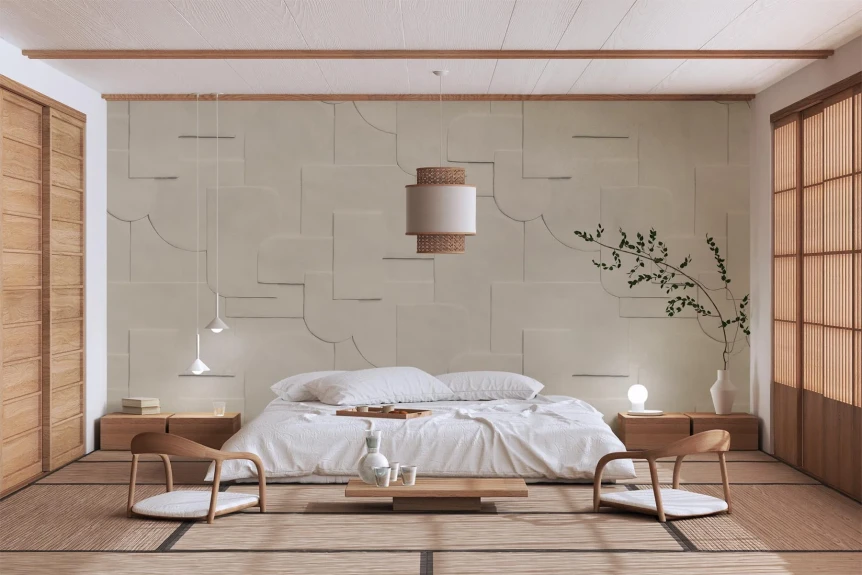
If there’s one room where Japandi design truly excels, it’s the bedroom. The style’s emphasis on calm, natural materials, and intentional simplicity creates the kind of environment that actually supports good sleep. Nothing in a Japandi bedroom demands your attention or creates visual stress. Everything in the room contributes to rest.
This guide covers the key decisions that shape a Japandi bedroom, from the bed and bedding to storage, lighting, and the small details that make the style feel complete.
The Bed as the Foundation
Platform Beds and Low Frames
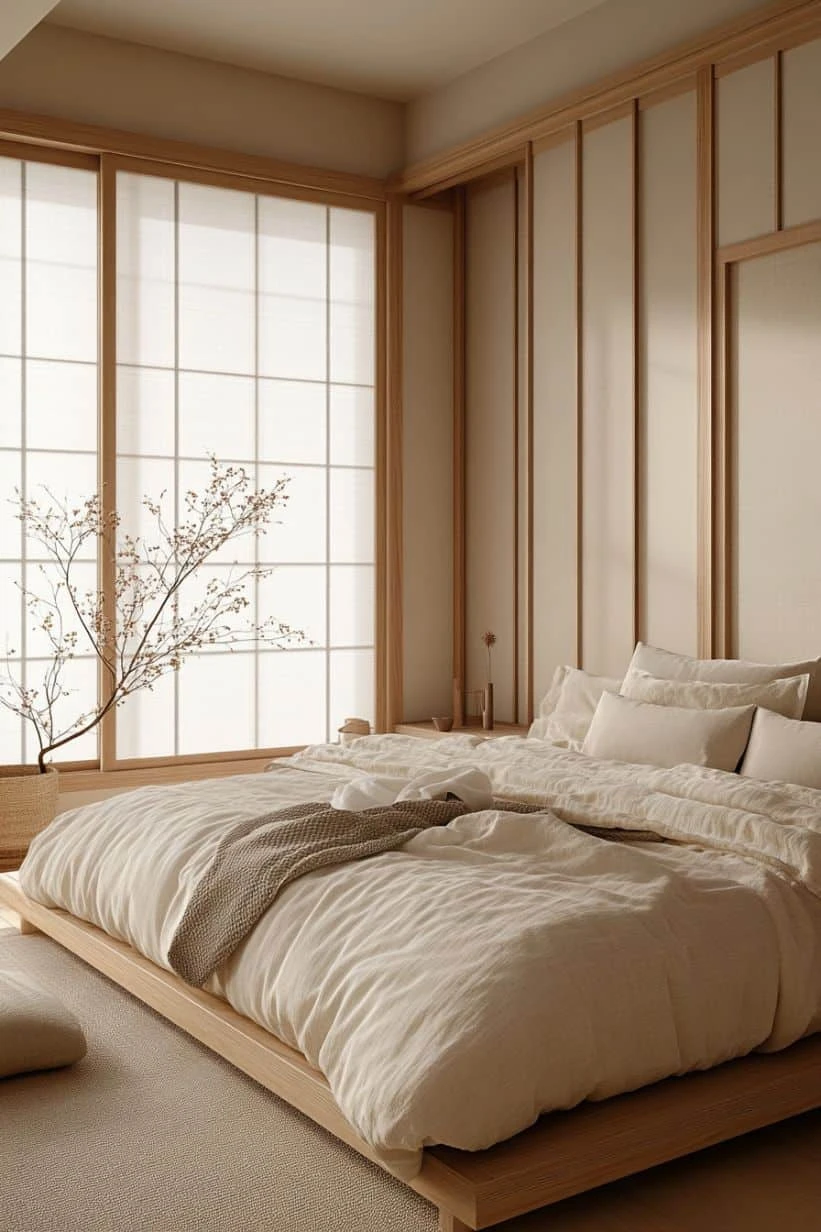
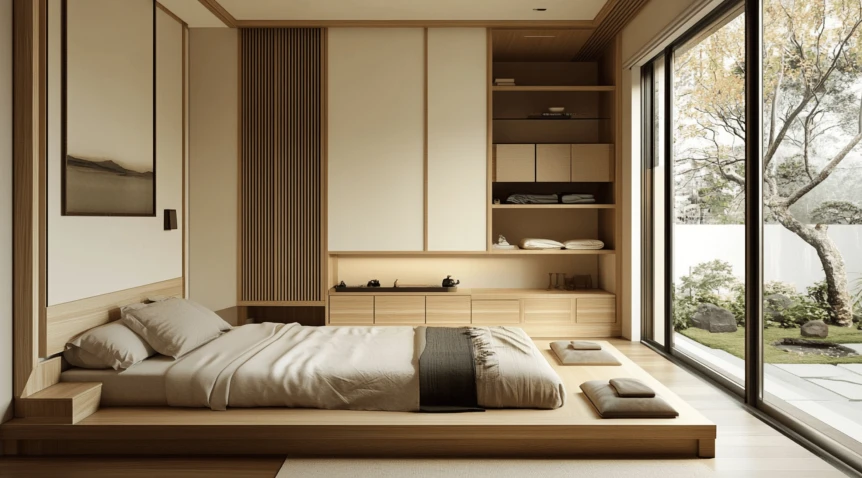
A low platform bed is the most recognizable element of a Japandi bedroom. Drawing from the Japanese tradition of sleeping closer to the ground, these beds create a grounded, restful feeling. Look for frames in natural wood with clean, straight lines. Walnut, oak, and ash are all excellent choices. The headboard, if there is one, should be simple. A flat wooden panel or a slim upholstered headboard in linen keeps the look clean.
Some Japandi bedrooms skip the headboard entirely, letting the bed frame stand on its own against a bare or lightly decorated wall. This works especially well in rooms where you want the wall space to feel open and uninterrupted.
Choosing Bedding
Linen is the Japandi fabric of choice for bedding. It has a natural, relaxed texture that looks beautiful both rumpled and smoothed. Choose sheets and a duvet cover in warm white, soft cream, light gray, or a muted earth tone like sand or stone. Layer with one or two textured throw pillows and a lightweight linen or cotton blanket at the foot of the bed.
The overall look should be inviting but not overdone. Two to three pillows and one throw is usually enough. The restrained layering is part of what distinguishes Japandi from more maximalist bedroom styles.
Color and Atmosphere
The Ideal Japandi Bedroom Palette
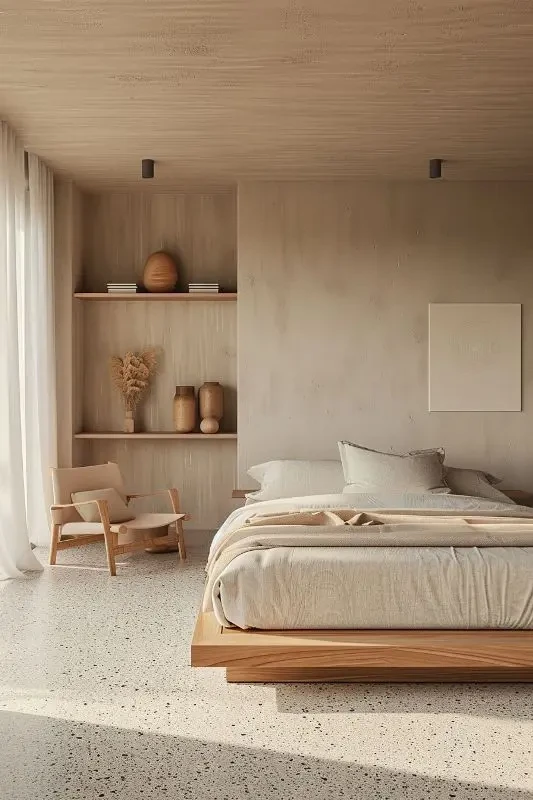
Soft, warm neutrals form the base: warm white, cream, light sand, and pale greige. These tones promote relaxation and reflect natural light gently throughout the room. Add depth through one or two darker accents. A walnut bed frame, a charcoal throw pillow, or a dark wooden nightstand provides visual grounding without disrupting the calm atmosphere.
Accent Colors for the Bedroom
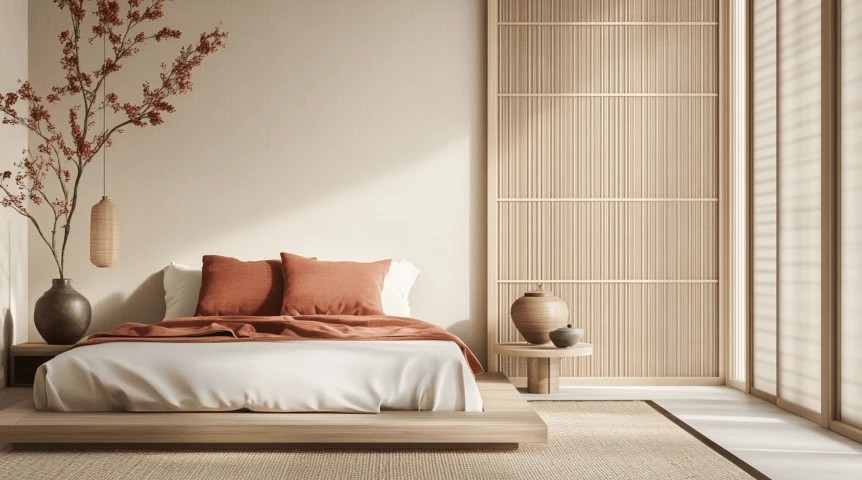
If you want color beyond neutrals, the safest choices for a Japandi bedroom are muted sage green, dusty blue, or soft clay. Introduce these through a single pillow, a piece of art, or a small ceramic object. The color should feel like a whisper, not a shout. For specific palette ideas, see our Japandi color palettes guide.
The Power of Monochrome
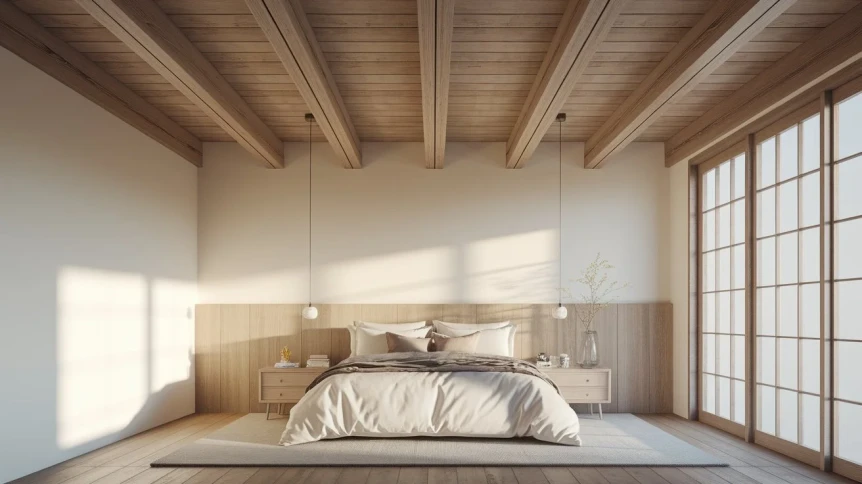
Some of the most striking Japandi bedrooms are nearly monochromatic, using variations of a single warm tone throughout the room. A cream wall, off white bedding, a light wood floor, and a beige rug create a cocoon of warmth that’s incredibly soothing. The visual interest comes entirely from texture and material variation rather than color contrast.
Nightstands and Bedside Styling
Choosing Nightstands
Japandi nightstands are simple and functional. A small wooden table with clean lines, a wall mounted shelf, or a slim wooden stool all work well. Matching nightstands on both sides of the bed creates a sense of symmetry and order that aligns with the Japanese appreciation for balance. If you prefer asymmetry, choose two pieces that differ in form but share a material or color.
What Belongs on the Nightstand
Keep bedside surfaces minimal. A lamp, a book, and perhaps a small ceramic dish or a glass of water. That’s it. If you need to store more, choose a nightstand with a drawer or shelf to keep clutter hidden. The cleared surface contributes to the restful atmosphere. For furniture sourcing advice, visit our Japandi furniture guide.
Storage
The Case for Concealed Storage
Visual clutter is the enemy of a Japandi bedroom. Built in closets, wardrobes with solid doors, or dressers with clean fronts keep clothing and personal items out of sight. If your bedroom doesn’t have built in closets, a freestanding wardrobe in natural wood with simple hardware serves the same purpose.
Open Storage Done Right
If you prefer some open storage, be highly selective about what’s visible. A single floating shelf above the bed or beside the window can display one or two meaningful objects. An open clothing rack works if what’s on it is curated and visually consistent, but it requires ongoing editing to avoid looking cluttered.
Under Bed Storage
Platform beds with built in drawers or enough clearance for low profile storage boxes offer practical hidden storage that keeps the room looking clear. This is especially valuable in smaller bedrooms where closet space is limited.
Lighting for Rest
Bedside Lamps
A warm, dimmable bedside lamp is essential for creating the right evening atmosphere. Ceramic table lamps in muted tones, wooden lamps with linen shades, or simple paper lantern style desk lamps all fit the Japandi aesthetic. The light should be soft and directional, focused on the bedside area rather than flooding the entire room.
Overhead Lighting
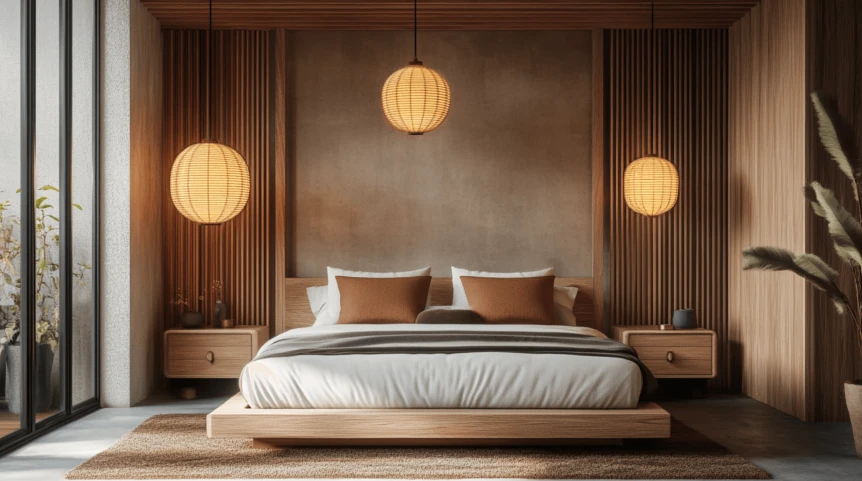
If your bedroom has a ceiling fixture, choose something organic and understated. A woven pendant, a simple drum shade in linen, or a paper globe lantern provides gentle, diffused overhead light without looking harsh or industrial.
Natural Light
Maximize natural light during the day with minimal window treatments. Sheer linen curtains in white or cream let light filter softly into the room while maintaining privacy. For darkening the room at night, layer blackout shades behind the sheer curtains.
Wall Decor
Less Is More
Japandi bedroom walls are largely left open. A single piece of art above the bed is the most common approach. Choose something calm and understated: an ink wash painting, a simple landscape photograph in black and white, a botanical print, or an abstract piece in muted tones.
The No Art Option
Some Japandi bedrooms have no wall art at all, letting the texture of the wall itself, the play of light through the window, or a single shelf with a plant serve as the only wall feature. This is a bold choice, but it can be incredibly effective in creating a truly minimal, meditative sleeping space.
For broader decor strategies, our Japandi decor ideas and styling tips guide covers approaches for every room.
Plants in the Japandi Bedroom
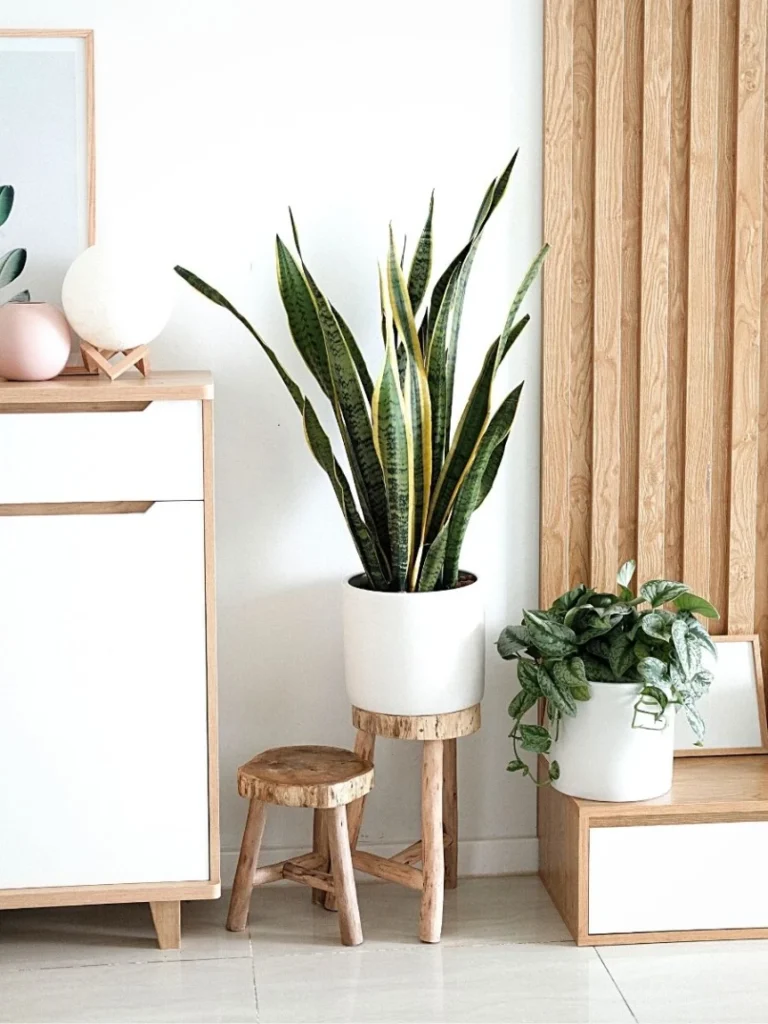
One or two plants add life without clutter. A snake plant or ZZ plant in a simple ceramic pot works well in a corner or on a shelf. Both tolerate low light and require minimal care, which suits the low maintenance ethos of Japandi design. A small bonsai on a nightstand or windowsill adds a distinctly Japanese touch.
Avoid crowding the room with multiple plants. In Japandi design, one well placed plant makes a stronger statement than a collection of five.
Flooring and Rugs
Natural wood flooring in a light or medium tone is ideal. If you have hard floors, a simple wool or jute rug placed beside or partially under the bed adds warmth and softness. Choose a rug in a solid color or very subtle texture. Bold patterns would distract from the calm simplicity that defines the room.
Japandi Bedroom for Small Spaces
Small bedrooms suit Japandi design perfectly. A low platform bed makes the room feel taller. Wall mounted nightstands and shelves free up floor space. Keeping the color palette light and consistent makes the room feel more expansive. Choose one or two pieces of decor rather than filling every surface, and use concealed storage to keep the room visually clear.
Understanding how Japandi compares to other simplified styles can help you make the best choices for a compact room. Our guide to Japandi vs. minimalist vs. Scandinavian design explores those differences.
Conclusion
A Japandi bedroom is a sanctuary built on simplicity, warmth, and natural materials. It doesn’t need many pieces or much decoration. What it needs is care in selecting the few things you do include. A good bed frame, beautiful bedding, warm lighting, and a clear, uncluttered space are the foundation of a room that genuinely supports rest.
For a complete overview of Japandi principles across every room, visit our complete guide to Japandi interior design.
Frequently Asked Questions
What kind of bed is best for a Japandi bedroom?
A low platform bed in natural wood is the signature Japandi choice. Look for clean lines, visible wood grain, and a simple or absent headboard. Walnut, oak, and ash are popular wood choices. The low profile draws from Japanese design tradition and creates a grounded, restful feeling.
What bedding should I use for a Japandi look?
Linen is the ideal Japandi bedding material. Choose sheets and a duvet cover in warm white, cream, light gray, or soft sand. Keep layering minimal with two or three pillows and one lightweight throw. The look should feel naturally relaxed and inviting without being overly styled.
How do I keep a Japandi bedroom from feeling too bare?
Focus on warmth and texture rather than adding more objects. Use warm toned wood for your bed frame and nightstands. Choose textured fabrics like linen and wool. Add a single plant for life and a warm lamp for atmosphere. These elements create a room that feels serene and inviting rather than empty.
Should Japandi bedrooms be all white?
No. While warm whites and creams are common as a base, the best Japandi bedrooms include darker grounding elements like walnut wood, charcoal accents, or deep gray textiles. A fully white bedroom risks feeling sterile. The contrast between light and dark tones is part of what gives Japandi its distinctive balance.