Best Modern Bathroom Vanities & Sinks for 2026

By Tereza Hower | Published March 18, 2026 | Updated March 27, 2026
The vanity is the anchor of any bathroom. It is the first thing you see when you walk in, the surface you use every morning and every night, and the piece that most directly communicates the style and quality of the room. Getting it right is one of the most rewarding decisions in a bathroom project. Getting it wrong is one of the most visible and most expensive to correct.
This guide covers everything that matters when choosing a modern bathroom vanity: the format options, the sink types, the storage configurations, the materials, and how to make it all work with the rest of the room.
Floating vs Freestanding: The First Decision
The most fundamental vanity decision is whether to go wall-mounted or floor-standing. Both can look beautiful in a modern bathroom, but they create very different atmospheres and suit different room types.
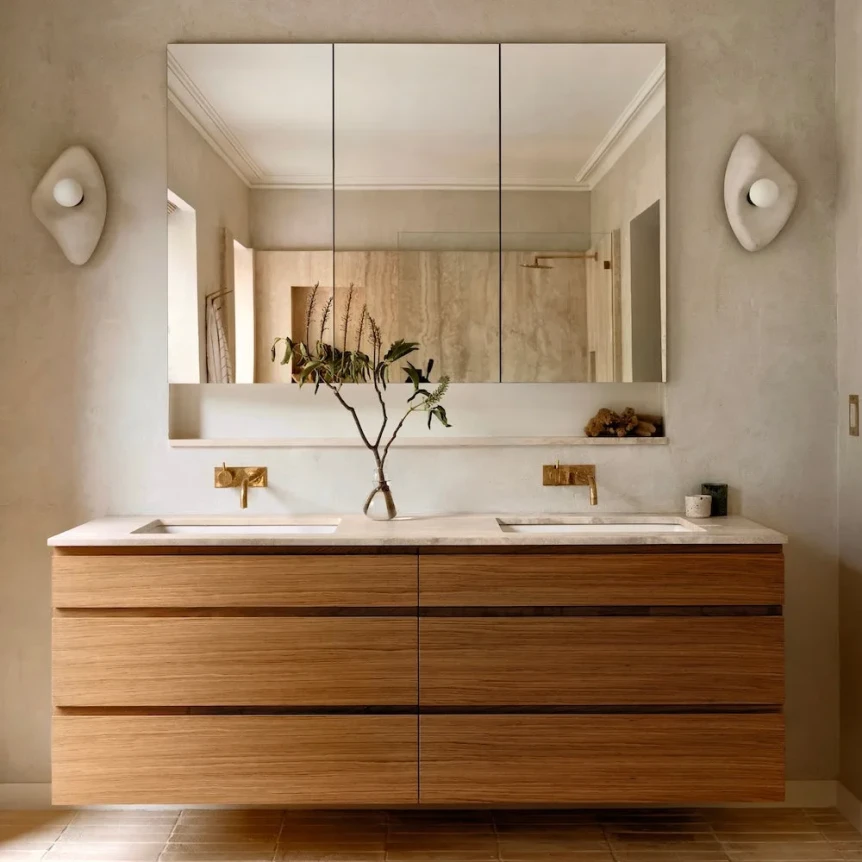
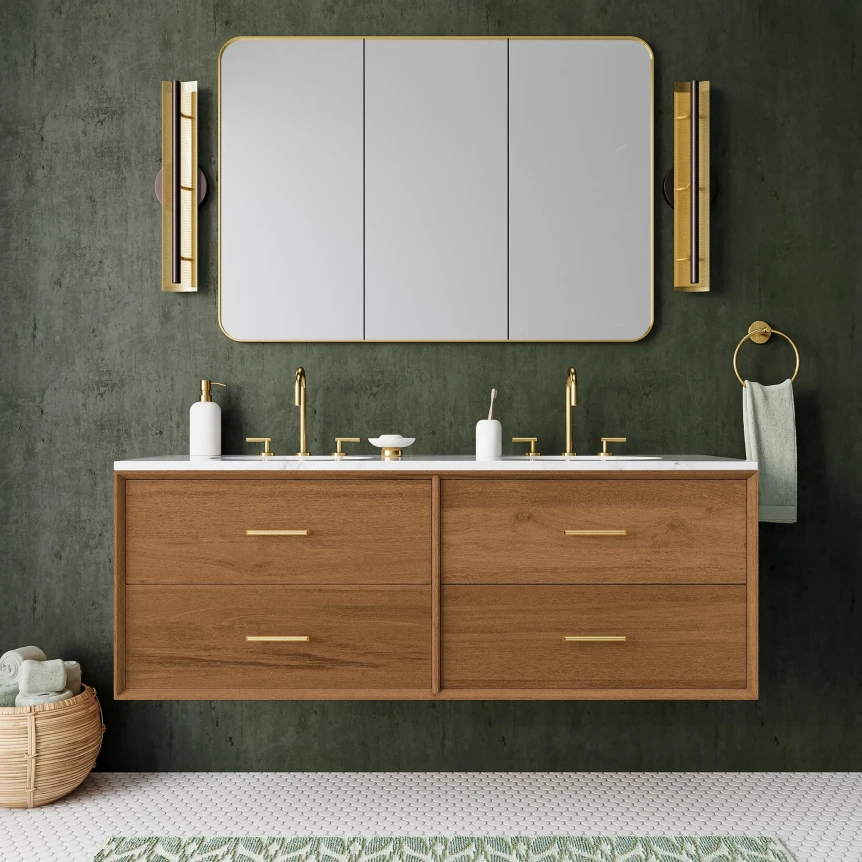
Floating vanities, wall-hung units with no legs or base touching the floor, are the defining choice of modern bathroom design. The visible floor beneath them makes the room feel larger and more open, they are straightforward to clean around, and their horizontal profile gives the room a sense of calm that grounded furniture often cannot. They also allow precise height adjustment during installation, which is particularly useful in households where people of different heights share the bathroom.
The practical requirement for a floating vanity is a sufficiently robust wall to take the weight. In most cases this means solid masonry or a timber-framed wall with the vanity fixings going into structural members. This is worth confirming with your installer before committing to a floating unit, particularly in older properties or where the walls are drywall over a light frame.
Freestanding vanities, units that sit directly on the floor either on legs or a solid base, have a more furniture-like quality that suits bathrooms with a warmer, less austere aesthetic. A vanity with tapered timber legs, for instance, has a very different character from a wall-hung unit in white lacquer, and may be exactly the right choice for a bathroom that is going for something more relaxed and organic. Freestanding units are also easier to install in situations where wall fixings are complicated.
Single vs Double Basin Vanities
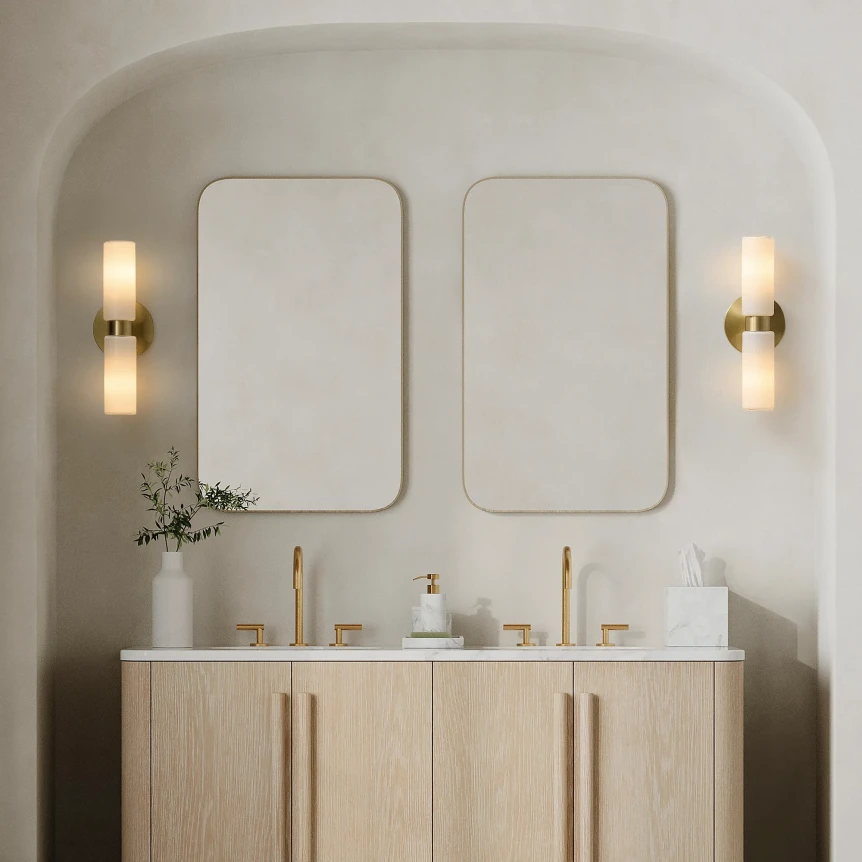
In a bathroom used by two people, a double basin vanity is one of the most practical upgrades available. It eliminates the morning bottleneck at the sink, allows each person to have their own side with their own products, and gives the bathroom a sense of scale and importance that a single basin unit cannot quite match.
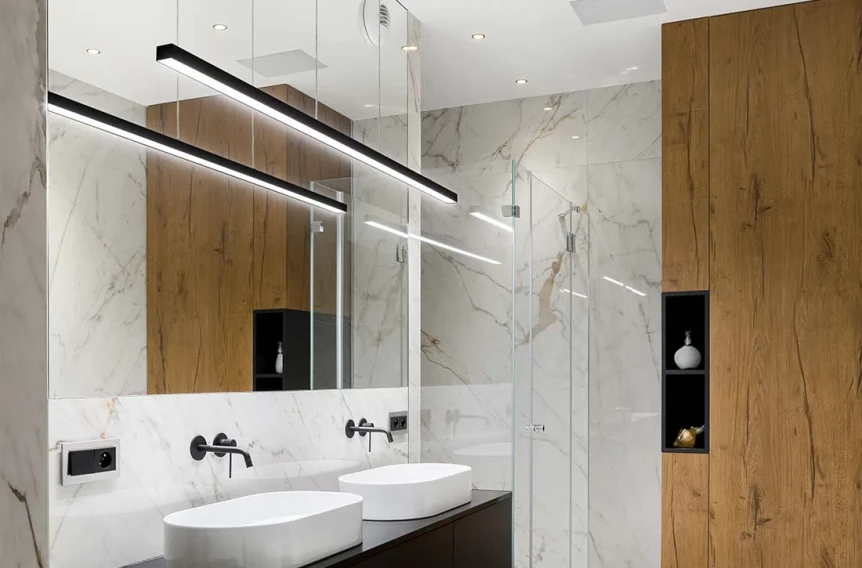
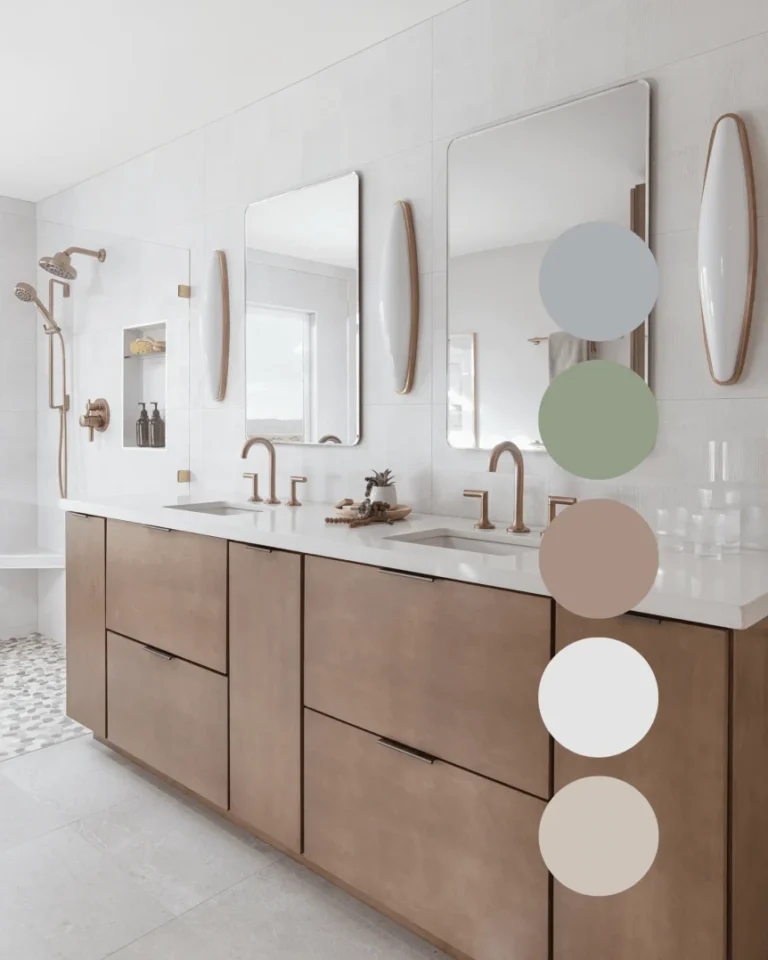
Double vanities work best in bathrooms with enough wall width to accommodate them without feeling cramped. As a rough guide, a double vanity needs at least 120 centimeters to look proportional, with 150 centimeters or more giving each basin genuine comfort and counter space.
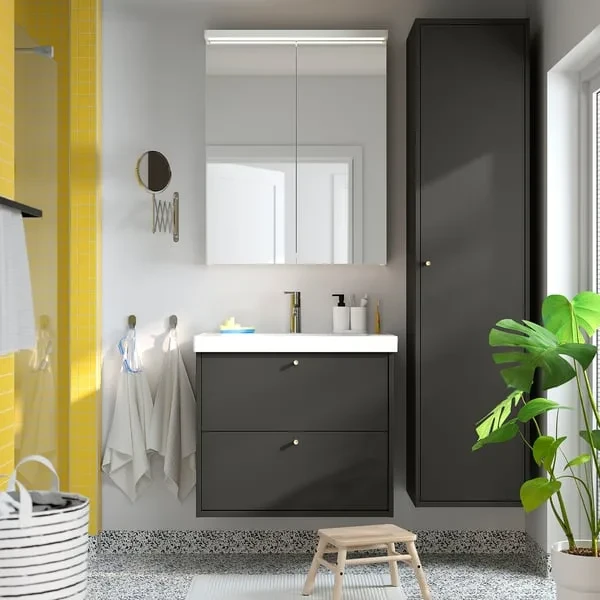
In smaller bathrooms or those used by one person, a single basin vanity is the right choice. It can be centred on a wall or positioned off-centre to make room for additional storage, depending on the room’s configuration.
Sink Types: Undermount, Vessel, and Integrated
The sink type you choose has a significant effect on both the look of the vanity and the practicality of the counter surface. The three main options in modern bathroom design each have distinct characteristics.
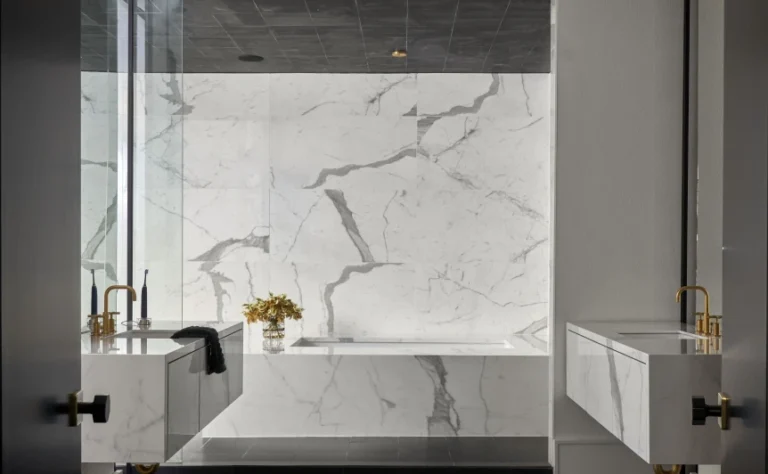
Undermount sinks are set below the level of the counter, with the rim of the basin invisible from above. The result is a clean, uninterrupted counter surface that is very easy to wipe down since there is no lip or edge to clean around. Undermount sinks suit stone, engineered stone, and solid surface countertops particularly well, as the material can be finished right to the basin edge without interruption. This combination of a stone counter with an undermount sink is one of the most reliably elegant choices in a modern bathroom.
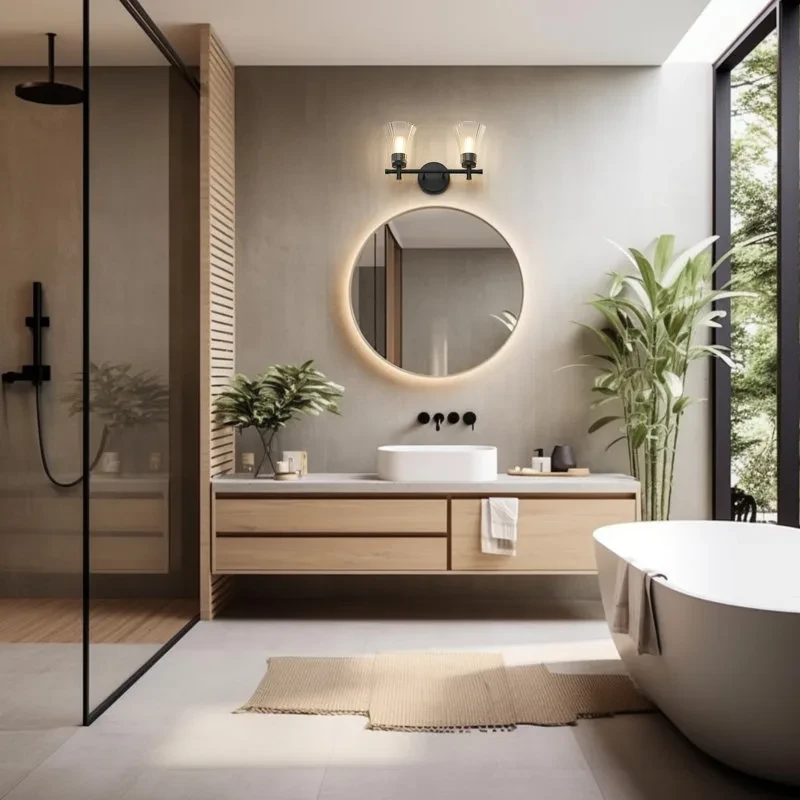
Vessel sinks sit above the counter surface entirely, like a bowl placed on top of the vanity. They make a strong visual statement and suit bathrooms where the vanity is intended to be a feature. The trade-off is that they typically require a taller counter or a wall-mounted tap rather than a deck-mounted one, and the gap between the base of the vessel and the counter surface can collect water and products if not cleaned regularly. They work best in bathrooms used by adults rather than children.
Integrated sinks are formed from the same material as the counter, usually a solid surface, ceramic, or cast resin, with no joint between the basin and the surround. The result is the cleanest look possible: a single seamless surface with no grout lines, no edges, and no places for water or product to accumulate. Integrated designs have become significantly more refined in recent years and are increasingly available at accessible price points.
Counter Materials: Stone, Solid Surface, and Timber
The vanity counter is the most tactile surface in the bathroom and the one most in contact with water, products, and daily use. Choosing the right material means balancing aesthetics with practical durability.
Natural stone counters in marble, granite, or limestone are the most luxurious option. Each piece is unique, the material has a depth and variation that nothing manufactured fully replicates, and it ages beautifully in the right conditions. The important caveats are that marble in particular is susceptible to staining from cosmetics and toiletries, and to etching from acidic products like some cleansers and perfumes. Regular sealing and careful cleaning are necessary to keep it looking good over time. If you love the look but want lower maintenance, engineered stone or a high-quality porcelain countertop achieves a very similar aesthetic with significantly less care required.
Solid surface materials, including composite and cast resin options, offer a seamless, non-porous surface that is highly resistant to staining and very easy to clean. They can be formed into integrated sink designs that are not possible with natural stone, and they are available in a wide range of colors and finishes. Matte versions in warm white, soft gray, or pale terracotta are particularly effective in modern bathroom contexts.
Timber and timber-effect surfaces bring warmth and organic texture to a bathroom vanity that stone and solid surfaces cannot match. Solid timber requires careful sealing and maintenance to withstand the humidity of a bathroom environment but is deeply beautiful when done well. Timber-effect laminates and water-resistant engineered finishes offer much of the visual warmth of real timber with considerably less maintenance concern.
Vanity Storage: What Actually Works
The storage configuration of your vanity will have more effect on the daily experience of your bathroom than almost any aesthetic decision. A vanity that looks beautiful but does not provide enough of the right kind of storage will be a constant source of minor frustration.
Deep drawers are generally more useful than shelves behind cabinet doors. With drawers, everything is visible at once when they are opened, items at the back are as accessible as items at the front, and the drawer itself can be divided with inserts to keep different categories of products organised. Shelves behind cabinet doors require things to be moved to access items at the back, and tend to become messy more quickly.
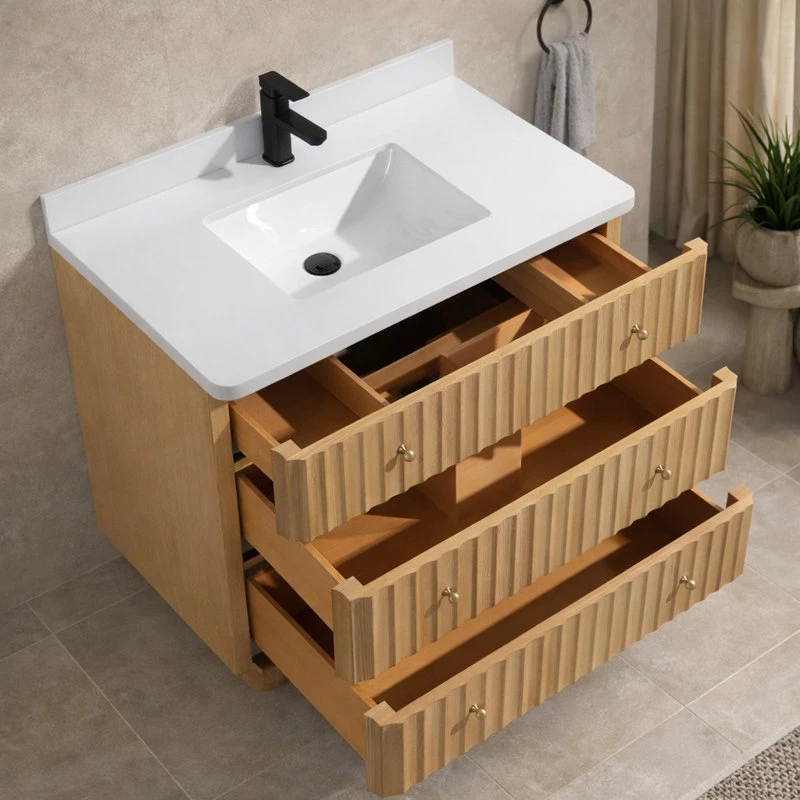
A combination of one shallow drawer for daily items, a deeper drawer for larger products, and a cupboard space for spare stock and cleaning products covers most households efficiently. If the bathroom is used by two people, mirrored storage arrangements on each side of a double vanity give each person their own organized space.
Hardware Finish: The Detail That Ties the Room Together
Taps, handles, and any other hardware on the vanity should be chosen in a finish that matches or closely complements every other piece of metal hardware in the bathroom: the towel rail, the toilet roll holder, any shower fittings, and the light switches if they are metal. This consistency is one of the clearest markers of a well-designed bathroom and one of the easiest things to get wrong.
Matte black hardware has had a significant period of popularity and continues to work well in bathrooms with a monochrome palette or strong graphic tile choices. Brushed brass and unlacquered brass suit warmer, more organic bathroom schemes and pair beautifully with stone, timber, and earthy palettes. Brushed nickel and polished chrome remain the most versatile and timeless choices, sitting comfortably in both warm and cool bathroom contexts.
Avoid mixing more than two hardware finishes in a single bathroom. Occasionally, a deliberate combination of two metals, brushed brass and matte black for instance, can work effectively. More than two becomes difficult to resolve and tends to read as indecision rather than intention.
Once your vanity is sorted, these related guides cover the rest of the room:
- Best Modern Bathroom Tiles and Flooring
- Modern Bathroom Lighting: Complete Guide
- Bathroom Storage Solutions
- Bathroom Color Schemes That Work
- Modern Bathroom Accessories and Decor
For the full bathroom design roadmap, read The Complete Guide to Modern Bathroom Design.