Small Patio Ideas That Make the Most of Your Space

By Tereza Hower | Published March 24, 2026 | Updated September 7, 2026
Take a patio of about 80 square feet and furnish it twice. The first version has everything in it: a dining table for four, a separate lounge chair, a side table, two chairs that never move, and nine small pots along the edges, and it is a space nobody can really sit in. The second version does less and works twice as well: a bistro table for two against one wall, one deep seat lounge chair in the corner, three large planters, and a string of warm lights overhead. Most small patio ideas fail on the first version and succeed on the second.
A small patio is not a lesser version of a large one. Some of the most inviting outdoor rooms anywhere are compact urban courtyards, narrow terraces, and modest back garden patios designed with precision. The constraints, worked with rather than fought, produce an intimacy that sprawling gardens rarely manage.
This guide covers what consistently works in a small patio: how to lay it out, which furniture fits, how to plant it, and the visual moves that make a tight space feel more generous than its dimensions. The complete guide to outdoor and patio design covers the principles this one builds on.
Key Takeaways
- Commit to one zone done well; two half zones in 80 square feet are both too small to use.
- A 30 inch round bistro table uses about 8 square feet where a dining table for six uses 35, and the difference is the lounge chair.
- Three large planters in one material beat nine small pots every time.
- Walls and fences are the small patio’s largest surface; plant them, light them, and hang seating from them before adding anything to the floor.
- One continuous, pale paving surface from the door to the far edge makes the space read larger than any furniture choice can.
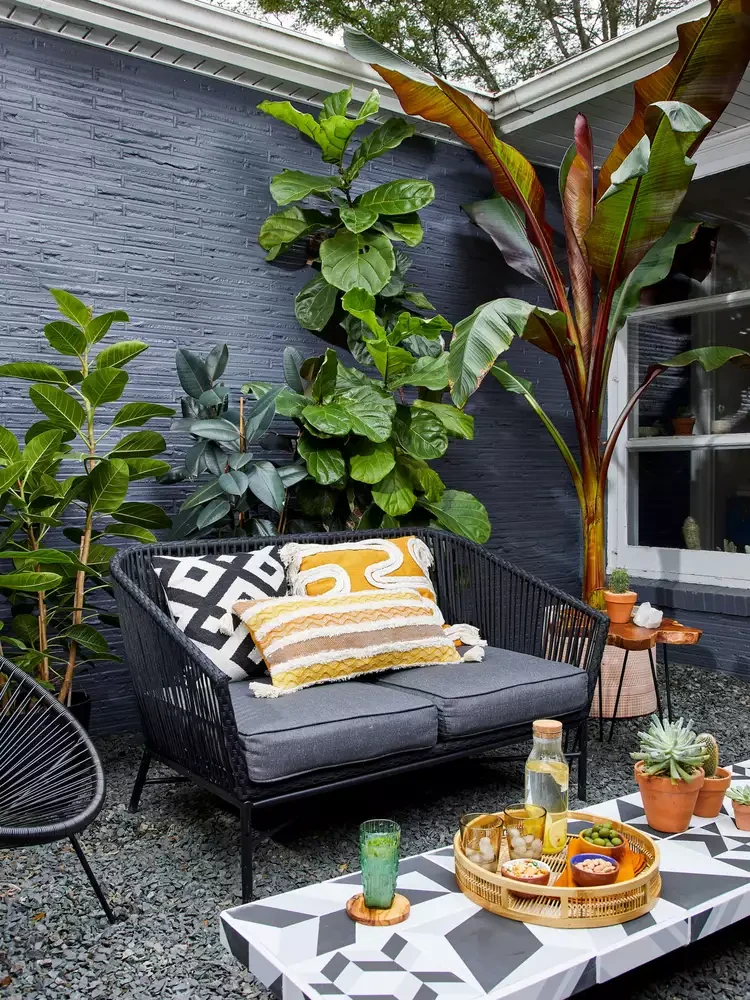
Why Is Restraint the First Rule of Small Patio Ideas?
The most common mistake in a small patio is fitting too much in. The instinct to use every square foot with more furniture, more pots, more accessories, and more features is understandable, and it consistently produces a space that feels cramped rather than compact.
One well chosen seating arrangement, two or three generous pots, and good lighting feel far more inviting than the same footprint stuffed with several small chairs, dozens of small pots, and a collection of accessories. Restraint is a design strategy outdoors, not a compromise forced by the dimensions.
Before anything is added, it has to earn its place. Does it serve a real purpose, does it add to the atmosphere, and does it agree with what is already there? Asked consistently, that question stops a small patio from accumulating things that dilute it.
How Should a Small Patio Be Laid Out?
Around one zone. Trying to create several, a dining area here, a lounging area there, a planting border along one side, leaves each too small to be comfortable. Committing to one primary zone and doing it well is the better approach in almost every space under 120 square feet.
For most small patios that zone is a seating area that also serves as a dining spot. A small bistro table with two chairs handles both without the footprint of separate dining and lounge furniture, and a pair of low chairs with a coffee table that doubles as a dining surface is the other reliable combination. The open floor around either makes the patio feel larger and easier to move through. The footprints below are the numbers to plan with.
| Piece | Footprint with clearance | Fits in 80 square feet? | Better small patio choice |
|---|---|---|---|
| Rectangular dining table for six | About 35 square feet plus 3 feet of circulation each side | No; it dominates anything under 150 | Round bistro table for two |
| Round bistro table for two, 28 to 32 inches | About 8 square feet plus modest circulation | Yes, with room to spare | The default |
| Deep seat lounge chair with side table | About 12 square feet | Yes, alongside the bistro set | One, in the best corner |
| Three seat outdoor sofa | About 20 square feet plus a coffee table | Only instead of the bistro set, not with it | Two seat loveseat or a wall mounted bench |
| Nine small pots | Scattered; every edge | Technically, and it reads as clutter | Three planters 18 to 24 inches across |
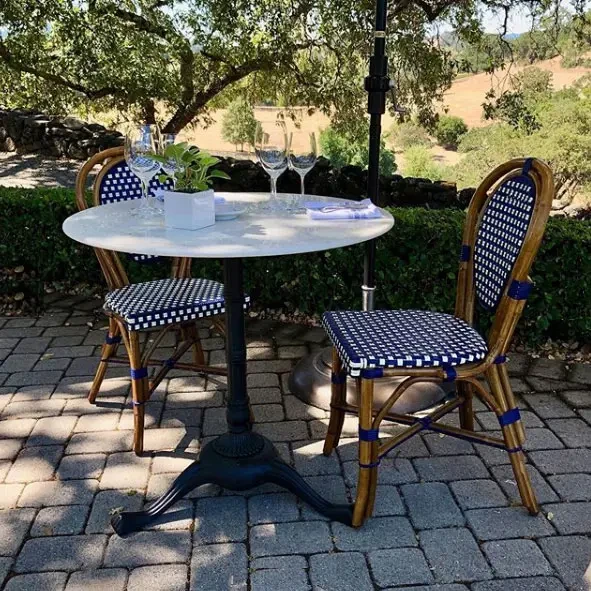
Position the furniture for the best aspect of the space: the view toward the garden, the patch of afternoon sun, the sheltered corner. In a small patio the difference between a well placed arrangement and an awkward one has an outsized effect on how often the space actually gets used.
Why Does a Bistro Table Beat a Dining Table Outdoors?
The biggest change in outdoor design over the last few years has been the move away from large dining tables toward smaller, more intimate bistro setups, and the shift matters most in small patios. The math is simple. A rectangular table for six takes roughly 35 square feet plus circulation, which means it dominates almost any patio under 150 square feet, while a round bistro table for two takes about 8 square feet and frees the rest for a lounge chair, real planting, or simply room to breathe.
The bistro setup also reads as an invitation rather than a commitment. Walk past it on the way to the back door and the natural thing is to sit down with a glass of wine. The big dining table never has that quality; it sits empty most nights waiting for a dinner party that happens twice a summer, and it makes the patio feel formal even when nobody is at it.
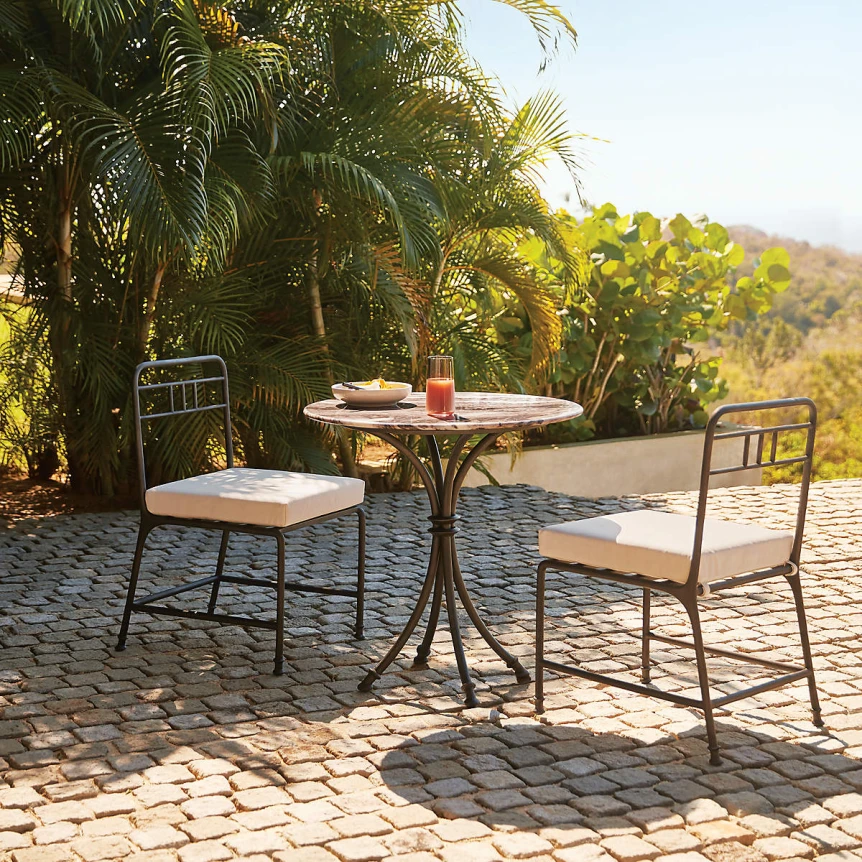
Bistro tables come in a few materials worth knowing. Cast iron with a powder coated finish is the classic Parisian version; a marble or stone top on a slim steel pedestal reads more contemporary; a solid wood top on a cast iron base is the warmer look. A 28 to 32 inch round top is the size to buy: smaller feels cramped for two place settings, and larger starts to dominate the patio.
Carving Out a Lounge Corner
Once the bistro set handles dining, the rest of the patio has room for what turns out to be the most used piece of outdoor furniture in most homes: a single lounge chair positioned for rest. A deep seat chair, a small side table for a book and a drink, and one large potted plant beside it is enough to define a lounge corner in the smallest of patios.
In an 80 square foot patio the lounge chair occupies roughly 12 square feet including its side table, which leaves clearance for the bistro set, the planters along the perimeter, and a path from the back door to the chair. Bistro table plus one lounge chair is the whole plan. This is the version I gravitate toward in my own work and the one I would recommend to most homeowners building a first modern patio.
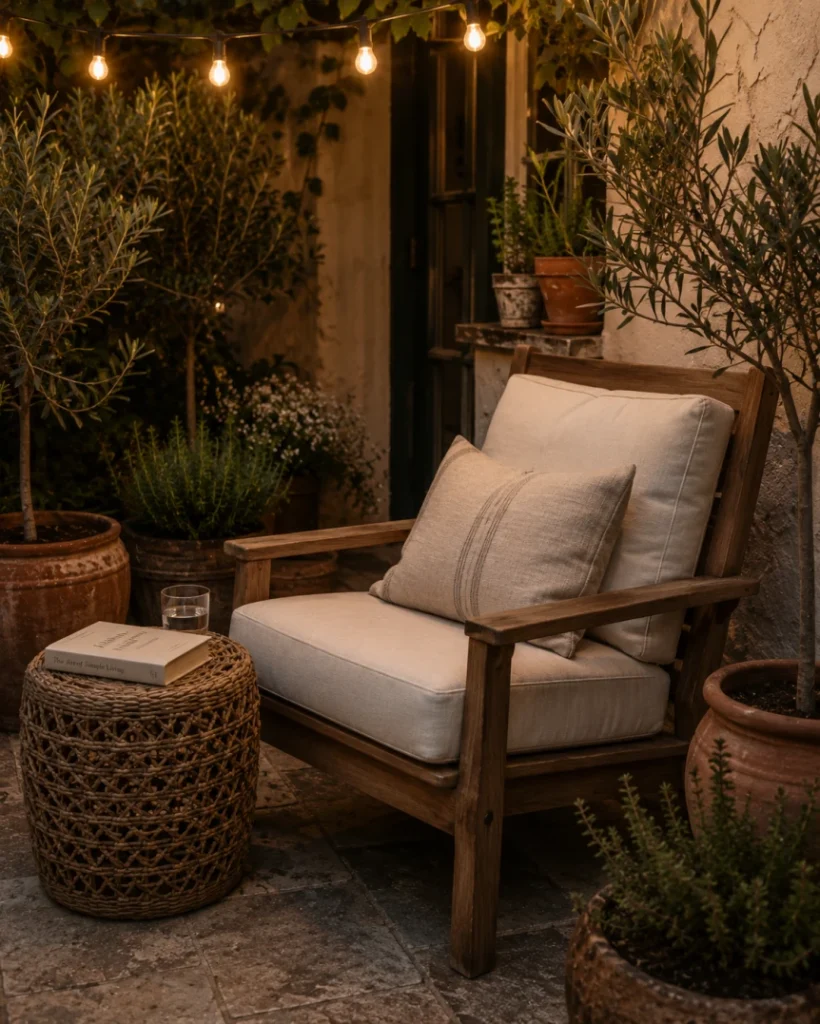
For a deeper breakdown of the lounge corner, the lighting that supports it, and the planting that screens it from the rest of the space, see outdoor recovery zones and wellness corners.
Which Furniture Fits a Small Patio?
Scale is everything outdoors. Furniture that is slightly too large makes a small patio cramped and hard to move through; furniture chosen for the actual dimensions makes the same square footage feel comfortable.
Bistro tables and chairs are the natural choice for very small patios and have a long record of making compact spaces feel charming. A set in powder coated steel or cast iron suits a range of outdoor styles, takes minimal space, and covers a morning coffee or a light meal.
Folding and stackable pieces earn their place where the space needs clearing when not in use or reconfiguring for different occasions. Good folding chairs and a lightweight folding table store flat against a wall or in a small cupboard, and the best of them look as considered as fixed furniture rather than like a compromise.
Benches seat more people in less space than individual chairs around a small table, because they push under the table when not in use and need none of the circulation that pushed out chair legs demand. A wall mounted bench along one side of a small courtyard is one of the most effective seating moves for a tight space. The best outdoor patio furniture guide covers what lasts outdoors and what does not.
How Do You Use Vertical Space on a Small Patio?
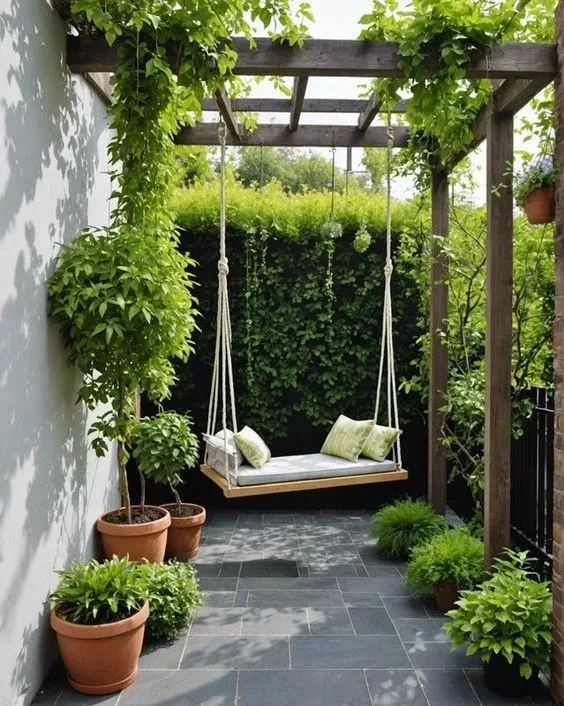
When floor area is limited, the walls become the primary design opportunity. Fences, walls, and any vertical structure can carry planting, storage, lighting, and even seating, adding richness to the space without reducing the usable floor.
Climbing plants are the most natural use of a wall. A bare fence panel covered in a climbing rose, a clematis, or a fast growing evergreen climber turns a boundary into a garden feature, and wall mounted planters let herbs, trailing plants, and flowering annuals grow on the surface itself. A simple timber or metal shelf at head height holding three or four pots creates a planting moment with real presence while using none of the floor beneath it.
Lighting used vertically does what horizontal lighting cannot. String lights along a fence line, uplights against a wall, and wall mounted lanterns at different heights create depth and draw the eye upward and outward, so the space feels less bounded after dark. The outdoor lighting ideas guide covers the layering in full.
Surface Choices That Add Space
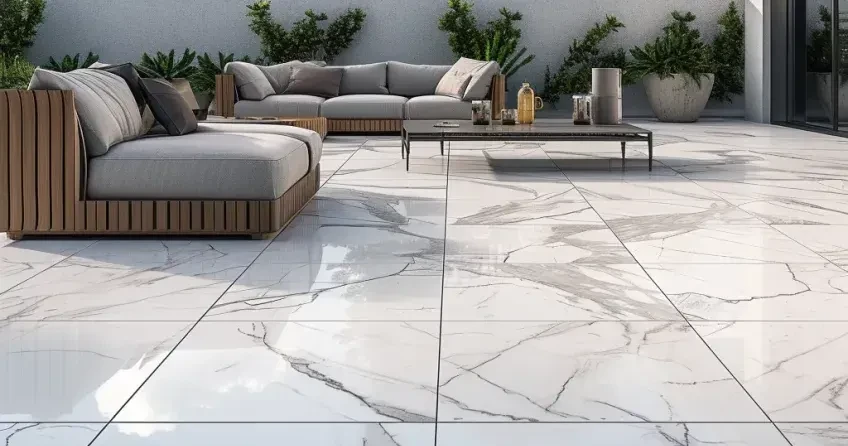
The paving has a large effect on how big a small patio feels. Large format tiles or pavers with narrow joints read as one expansive surface, while small units with frequent joints create a grid the eye uses to measure the space, and the measurement always comes out small.
A pale or warm neutral paving color reflects light and makes the space feel brighter and more open than a dark one. Dark pavers have their place outdoors, but in a small enclosed patio they absorb light and shrink the room. Where a darker tone is wanted for character, use it as a border around a lighter field rather than across the whole floor.
Run the same paving continuously from the house threshold to the far edge, without breaks, color changes, or pattern interruptions. Every break, whether a strip of a different material, a color change, or a contrasting border in a prominent position, is a visual stop that divides the space and makes it smaller.
Plants: Fewer and More Generous
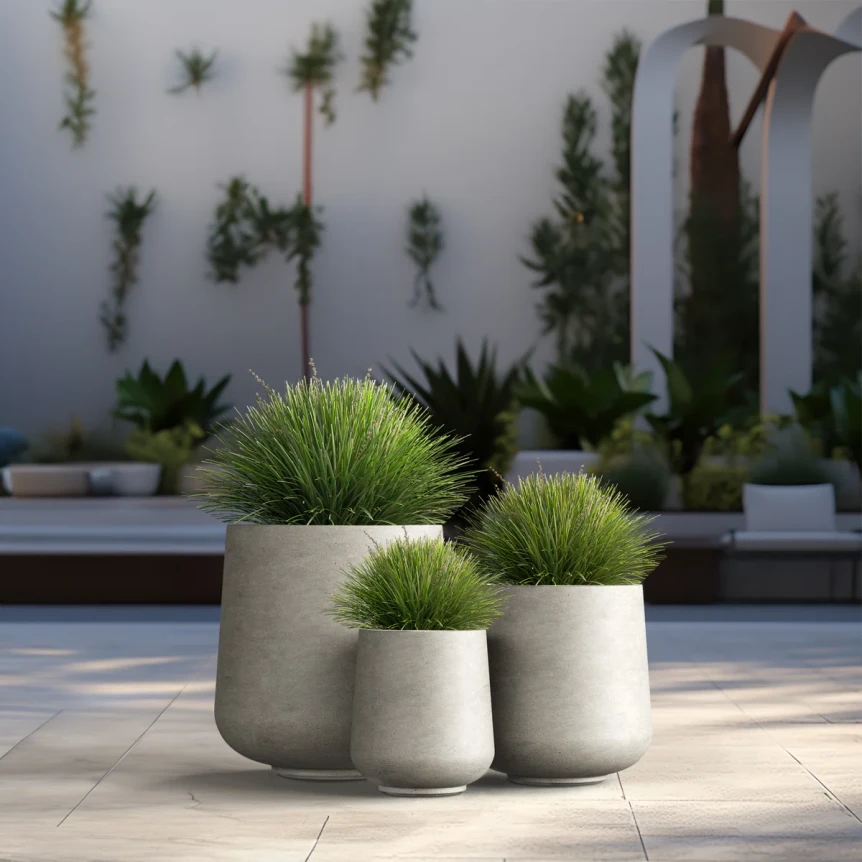
The restraint that applies to furniture applies to plants. Many small pots in different sizes, shapes, and species create a market stall effect that crowds the space, while a few generous pots with well chosen plants create structure and real presence.
A single large specimen in a beautiful pot, whether a clipped box ball, a small olive tree, a dramatic grass, or an architectural succulent, anchors the whole patio. Two or three pots in the same material and a consistent palette look curated rather than accumulated: glazed terracotta in warm tones, dark concrete planters, or weathered zinc in matching sizes all beat mismatched pots in different finishes.
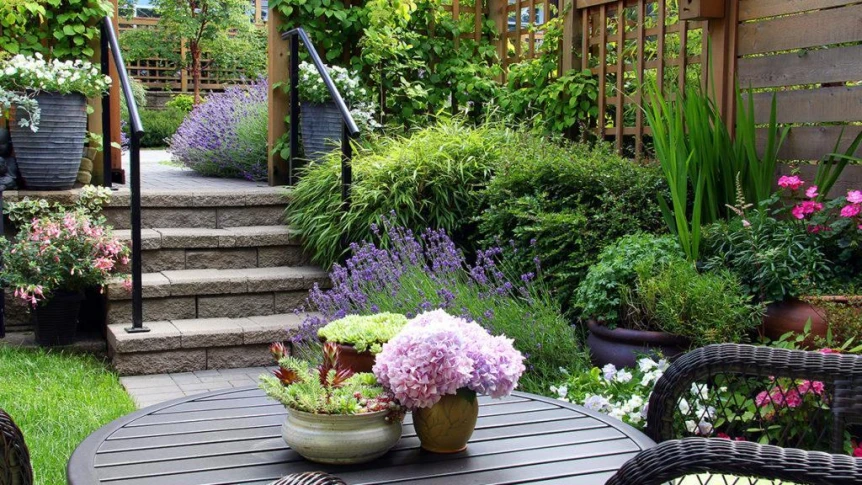
Fragrant plants near the seating add a sensory layer that a small space rewards, because everything is at close quarters. Lavender, rosemary, jasmine, thyme, and mint all perform well in pots, and a single jasmine trained on the wall beside the chairs fills a small courtyard on summer evenings in a way purely visual planting cannot. For the broader planting principles, see outdoor plants and landscaping ideas for patios.
What Are the Most Common Small Patio Mistakes?
The same handful of mistakes turn up in small patios again and again. All are easier to avoid than to fix.
- A dining table for six in a space that seats four comfortably. The table dominates the patio and makes every other piece look undersized. Size the table for how the household actually eats, not for imagined entertaining.
- Many small pots instead of a few generous ones. Nine small terracotta pots around the edges read as clutter. Three large glazed pots in one finish read as design.
- Skipping the rug. Even in a tight space, an outdoor rug under the seating defines the zone and makes the patio read as a room. A flat weave in a synthetic fiber handles the weather; the outdoor rugs and textiles guide covers sizing and materials.
- No overhead light. A small patio lit only at ground level feels closed in after dark. A single string of warm lights overhead changes the whole space for very little money.
- Treating the back wall as an afterthought. The wall opposite the seating is the most prominent surface in the patio. A climbing plant, mounted art, a vertical planter, or a coat of warm color all earn their place there.
- Recreating a large patio in miniature. The successful small patio leans into its scale rather than fighting it. Lean into the intimacy, and do not try to fit dining for eight into a space built for two.
Where to Go Next
One bistro table, one lounge chair, three generous planters, and a string of lights overhead is a complete patio, not a compromise. Once that plan is in place, the remaining decisions are about finish and planting rather than layout, and each has its own guide. The patio design ideas post covers the same principles at every size, and the complete guide to outdoor and patio design is the framework the whole outdoor series sits inside.
Frequently Asked Questions
What is the smallest patio that can actually work?
About 40 square feet works for one person: a bistro table with one chair, one large planter, and overhead lighting. The comfortable minimum for two is 60 to 80 square feet, which fits a bistro set plus a lounge chair in the corner. Below 40 square feet the space is genuinely tight, though even a balcony can work with wall mounted furniture and a folding table.
Should a small patio have a bistro set or a small dining table?
A round bistro table for two, in most cases. The round shape needs less circulation than a square or rectangular top, the smaller footprint frees room for a lounge chair or planting, and the proportions read intimate rather than cramped. A small rectangular dining table for two only makes sense where a comfortable lounge zone already exists elsewhere.
How many plants should a small patio have?
Three to five large pots with mature plants outperform fifteen small pots with seedlings. Choose pots big enough that one mature plant fills each, in matching or complementary materials, and place them deliberately at the corners and along one wall. Climbing plants on walls and fences add greenery without using any floor.
Can a tiny patio have a lounge corner as well as a table?
Yes, and it often works better in a small space because the corner naturally feels tucked away. A single deep seat lounge chair, a small side table, and one large planter is the whole setup, about 12 square feet. In a patio of 60 to 80 square feet it fits beside a bistro set without crowding, and it tends to become the most used seat outdoors.
What is the single biggest mistake in a small patio?
Recreating a full sized patio in miniature. Dining for eight, a separate lounge, several zones, and dozens of small pots always end up cramped. A small patio works when it commits to fewer, larger, more deliberate pieces with breathing room around them: one bistro table, one lounge chair, three generous planters, and overhead lighting is a complete patio.