The Complete Guide to Modern Dining Room Design (2026)

By Tereza Hower | Published March 30, 2026 | Updated April 1, 2026
The dining room is one of the most underestimated spaces in a home. It sits at the intersection of function and occasion, asked to handle weeknight dinners, holiday gatherings, homework sessions, and the occasional long conversation over a second bottle of wine. And yet, it rarely gets the same design attention as a kitchen or living room.
That’s a missed opportunity. A well designed dining room doesn’t need to be formal or fussy. It just needs a table that fits, lighting that flatters, and a palette that feels intentional. Modern dining room design leans into that simplicity. It strips away the heavy drapery and ornate furniture of traditional dining rooms and replaces them with clean lines, honest materials, and spaces that feel as comfortable on a Tuesday as they do on Thanksgiving.
This guide covers everything you need to design a modern dining room from the ground up, whether you’re working with a dedicated room, an open plan layout, or a small corner of a studio apartment.
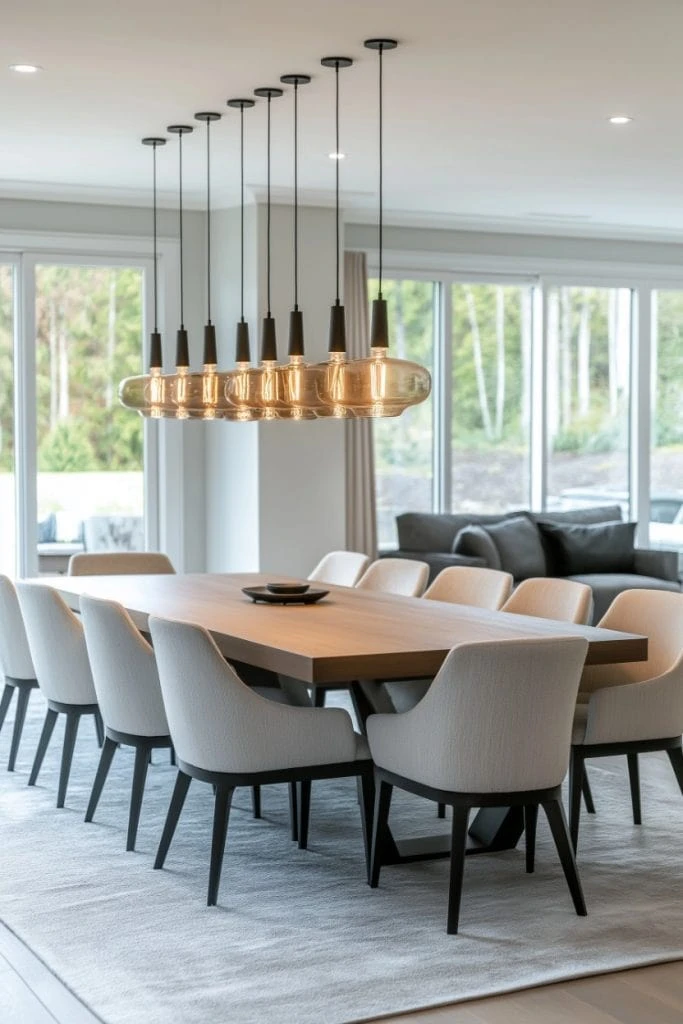
What’s Covered in This Guide
- What Makes a Dining Room “Modern”?
- Choosing the Right Dining Table
- Dining Chairs: Matching, Mixing, and Finding the Right Fit
- Lighting a Dining Room Properly
- Color Schemes and Palettes
- Layout, Spacing, and Room Proportions
- Making Small Dining Rooms Work
- Wall Decor and Finishing Touches
- Formal vs. Casual: Finding Your Level
- Recommended Resources and Related Guides
- Frequently Asked Questions
What Makes a Dining Room “Modern”?
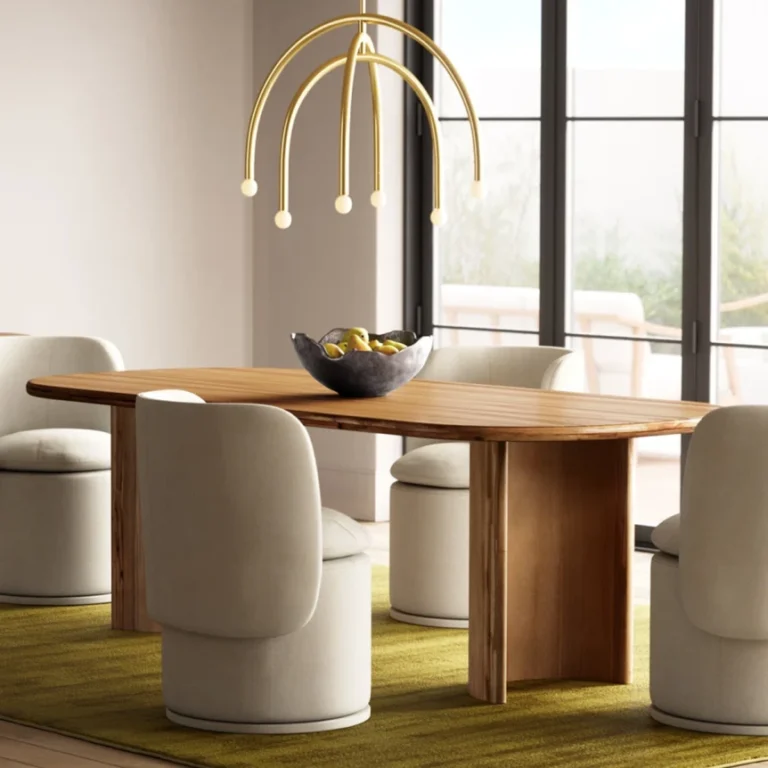
Modern dining room design is rooted in a few core principles: clean geometry, restrained ornamentation, and a preference for natural materials used honestly. That means solid wood tables instead of veneered reproductions. Simple pendant lights instead of crystal chandeliers. Chairs chosen for comfort and visual weight rather than matching a suite.
The modern dining room borrows from mid-century, Scandinavian, and minimalist traditions, but it isn’t locked into any one style. What ties it together is an editorial sensibility. Every piece in the room earns its place. Nothing is there just because dining rooms “should” have it.
A few defining characteristics of a modern dining room:
- Furniture with clean lines and visible structure
- Natural materials like solid wood, stone, linen, and leather
- A neutral or tonal color palette with moments of warmth
- Lighting used as a design feature, not just a functional necessity
- Minimal clutter and intentional negative space
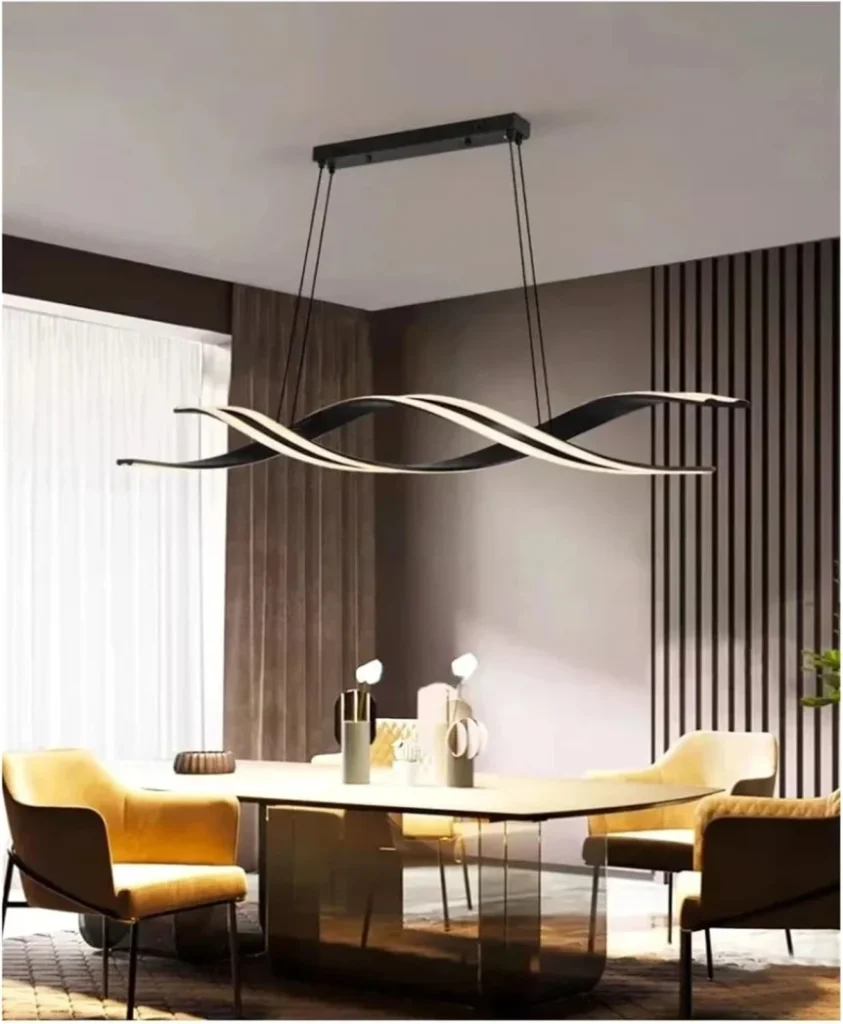
Choosing the Right Dining Table
The table is the centerpiece. Everything else in the dining room is arranged around it, scaled to it, and visually anchored by it. Getting the table right is the single most important decision in the room.
Shape and Size
Rectangular tables are the most versatile and work in most room proportions. They seat more people per square foot of floor space than round tables and fit naturally against walls or in narrow rooms. For rooms that are roughly square, a round or oval table tends to feel more balanced and encourages conversation by eliminating head-of-table hierarchy.
As a general rule, allow 24 inches of table width per person for comfortable seating. A table for six should be at least 72 inches long. For eight, aim for 84 to 96 inches. Leave a minimum of 36 inches between the edge of the table and the nearest wall or piece of furniture so chairs can be pulled out comfortably.
Materials
Solid wood remains the most popular and practical choice for dining tables. Oak, walnut, and ash are all strong options that develop character over time. Marble and stone tops are beautiful but require more care and are cold to the touch, which matters in a room where people rest their forearms on the surface for long periods. Glass tables are less common in modern design today than they were a decade ago, partly because they show every fingerprint and partly because the trend has shifted toward warmer, more tactile materials.
For a deeper look at table shapes, materials, and sizing for different room layouts, see our Dining Table Buying Guide.
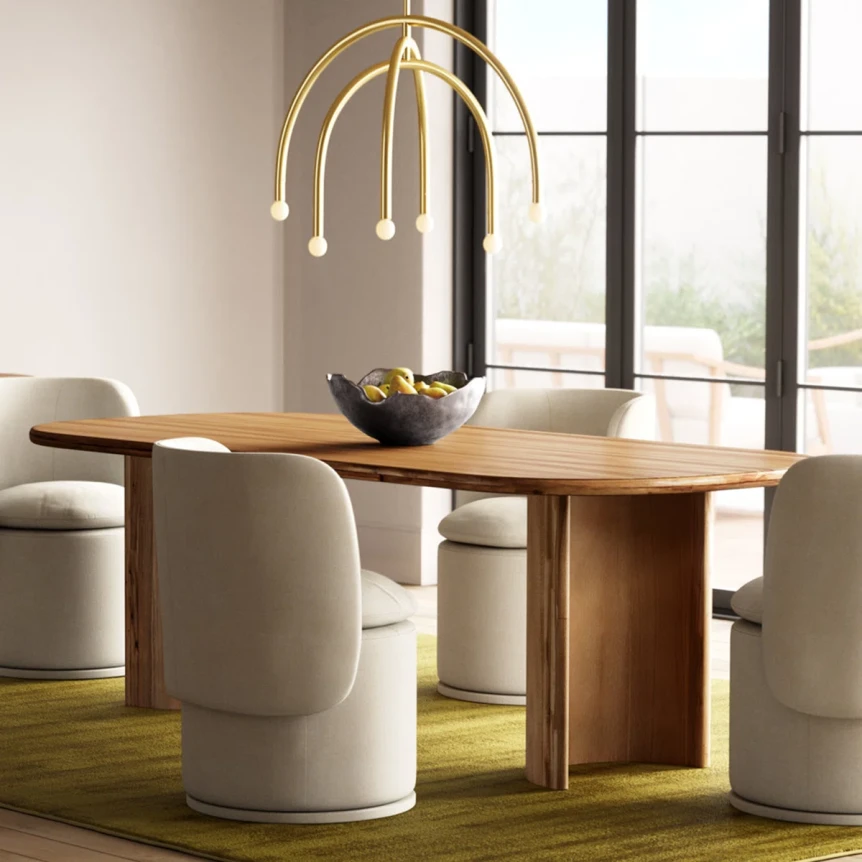
Extendable Tables
If your dining room does double duty or you entertain occasionally, an extendable table is one of the smartest purchases you can make. Modern extendable designs have improved significantly. The best ones use integrated leaf systems that store inside the table frame, so there’s no separate piece to lose in a closet. Look for extension mechanisms that one person can operate alone.
Dining Chairs: Matching, Mixing, and Finding the Right Fit
Dining chairs are second only to the table in their impact on the room’s look and feel. They’re also the piece of furniture your guests will interact with most physically, so comfort matters just as much as appearance.
Choosing a Chair Style
For modern dining rooms, chairs tend to fall into a few categories: fully upholstered, wood frame with an upholstered seat, molded shell (like the classic Eames style), or all wood. Each creates a different atmosphere. Fully upholstered chairs feel more formal and comfortable for long dinners. Wood and molded shell chairs are lighter in visual weight and easier to maintain.
The Case for Mixing Chairs
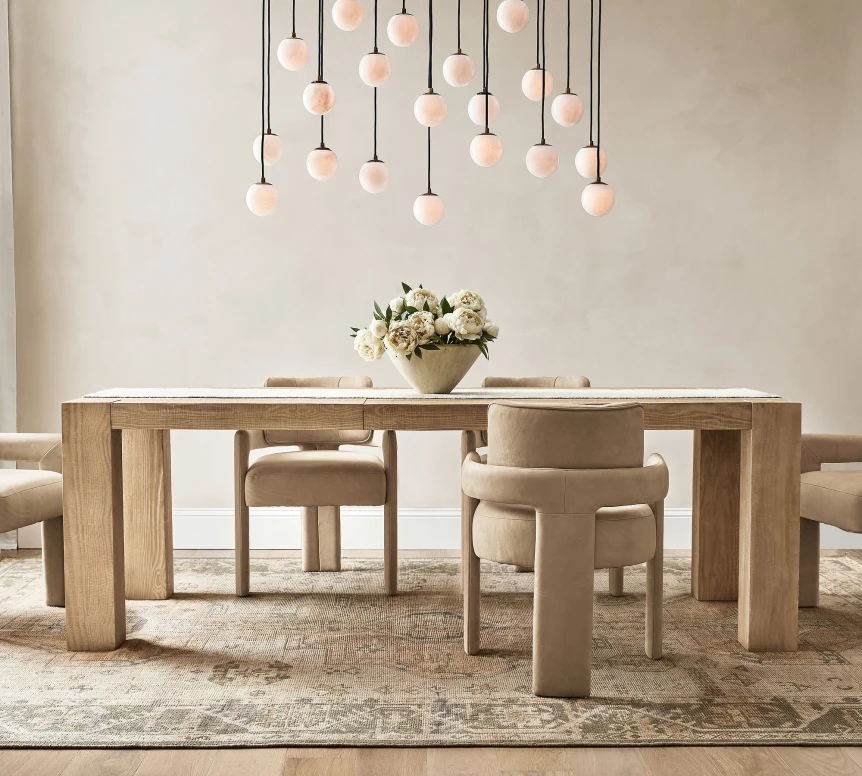
One of the most effective modern dining room techniques is mixing chair styles rather than buying a matched set. The easiest approach is to use one style for the side chairs and a different style for the heads of the table. This creates visual interest without feeling chaotic. The key is to find a connecting thread, whether that’s a shared material, color, or seat height.
For a complete breakdown of how to mix dining chairs successfully, read our guide on How to Mix and Match Dining Chairs.
Bench Seating
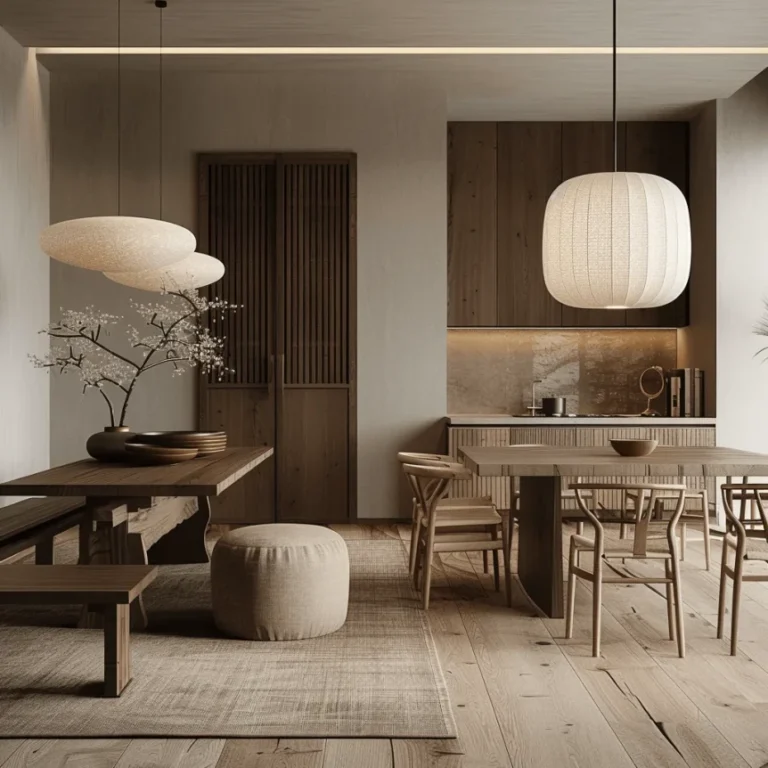
A bench on one side of a rectangular table is a practical and visually appealing option, especially in tighter dining rooms. Benches can be pushed fully under the table when not in use, freeing up floor space. They also seat more people than individual chairs and give the room a more relaxed, gathered feel. Pair a bench on one side with individual chairs on the other for the best of both approaches.
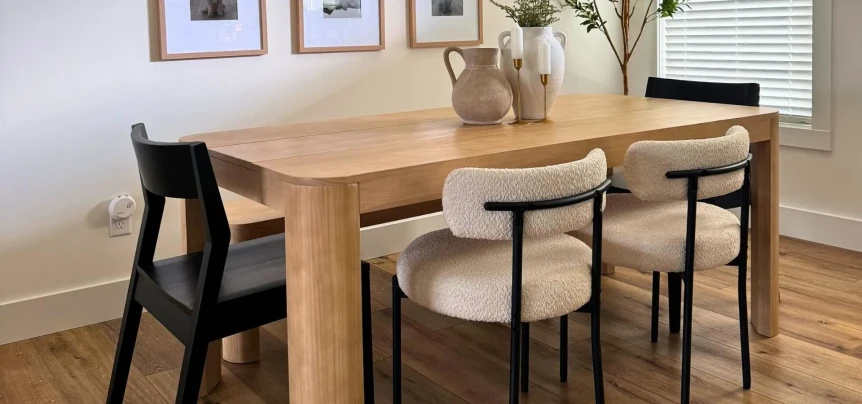
Lighting a Dining Room Properly
Dining room lighting has one primary job: make the table look inviting and the people around it look good. Everything else is secondary.
The Pendant or Chandelier
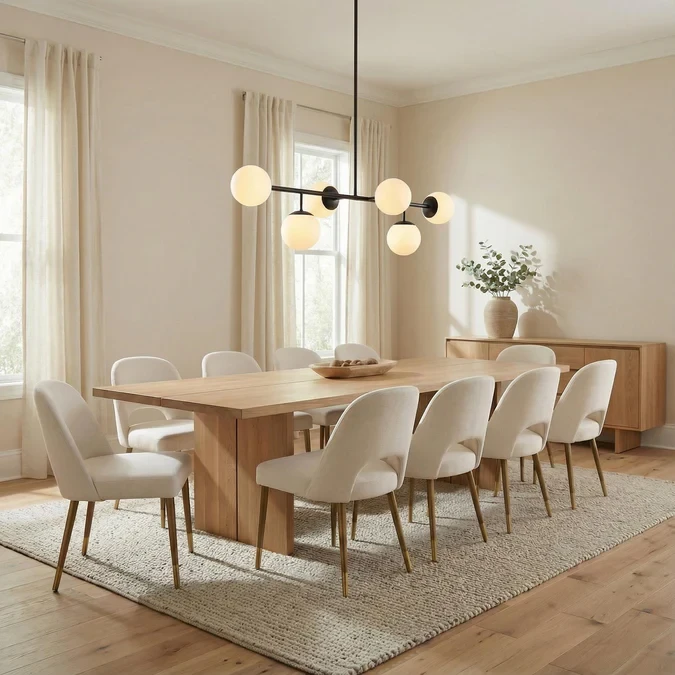
A pendant light or modern chandelier centered over the table is the anchor fixture in most dining rooms. The bottom of the fixture should hang approximately 30 to 36 inches above the table surface. For rooms with ceilings higher than 8 feet, add about 3 inches per additional foot of ceiling height.
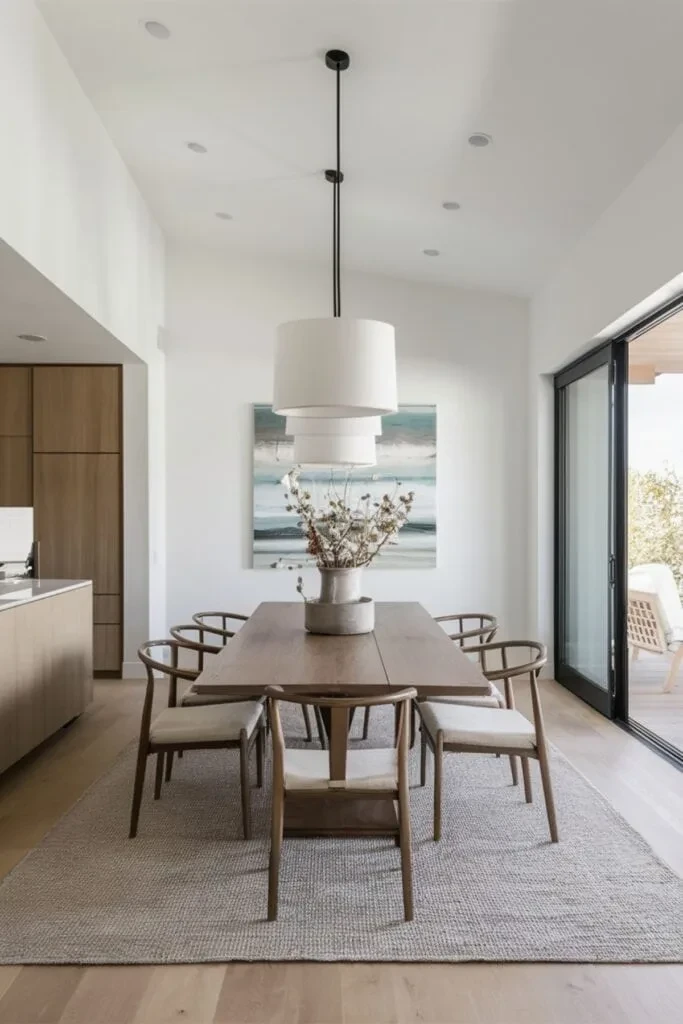
For rectangular tables, a linear pendant or a series of two to three smaller pendants in a row tends to look more proportional than a single round fixture. For round tables, a single pendant or a clustered arrangement works best.
Layered Lighting
The pendant handles ambient light over the table, but a good dining room also needs supplementary lighting. Wall sconces, a floor lamp in a corner, or recessed lights on a dimmer all contribute to a layered scheme that lets you adjust the atmosphere. The ability to dim is essential in a dining room. Bright overhead light is useful for setting the table; it’s terrible for dinner.
Our full Dining Room Lighting Guide covers fixture types, placement rules, and how to create a layered lighting plan.
Color Schemes and Palettes
Color in a modern dining room tends toward restraint. The goal is to create an atmosphere that’s warm enough for a two hour dinner but not so busy that the room competes with the food, the flowers, or the conversation.
Neutral Foundations
The most reliable approach is a neutral base on walls and larger surfaces with warmth introduced through wood tones, textiles, and accent pieces. Whites, warm grays, soft taupes, and plaster tones all work well. The key is choosing neutrals with enough warmth to avoid a clinical feel under evening light.
Bold Walls
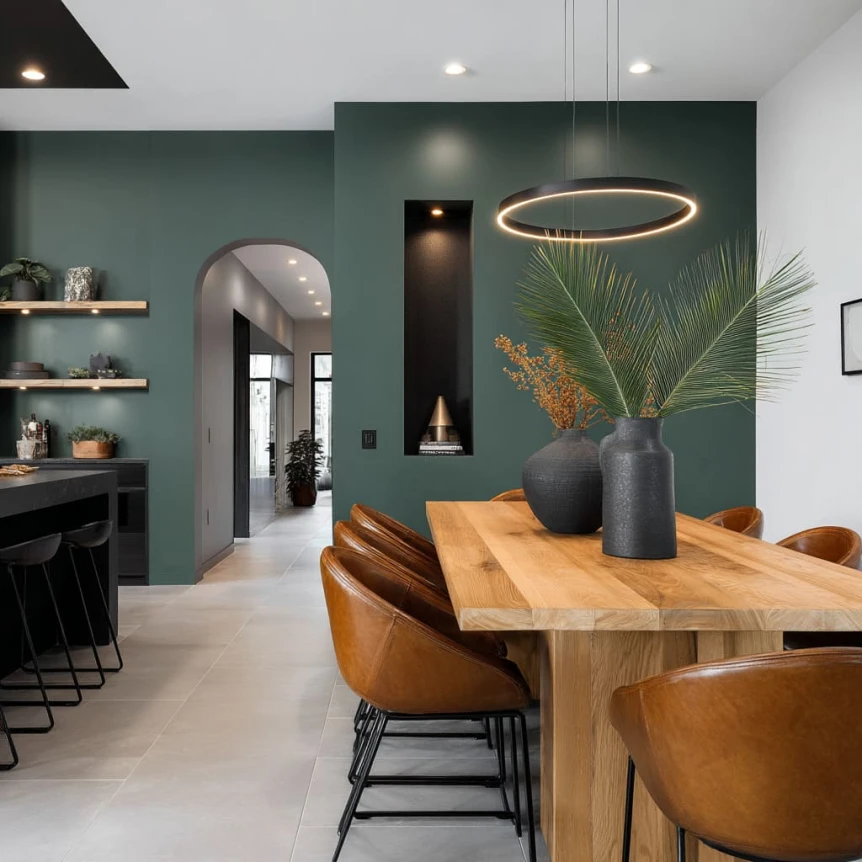
A dining room is actually one of the best rooms in the house for a bold wall color. Because dining rooms are primarily used in the evening under warm, low light, deeper tones like navy, forest green, charcoal, or burgundy create an intimate, cocooning effect that works beautifully at dinner. Colors that might feel heavy in a living room often feel rich and sophisticated in a dining room.
For a full breakdown of palettes, accent strategies, and what works in different lighting conditions, read our guide to Dining Room Color Schemes.
Layout, Spacing, and Room Proportions
Good dining room design is as much about what’s around the table as what’s on it. The way the room is proportioned and the clearances you maintain determine whether the space feels comfortable or cramped.
Minimum Clearances
Allow at least 36 inches between the table edge and the nearest wall or piece of furniture. This gives enough room for someone to pull out a chair and sit down without bumping into anything. If the path behind the chairs is also a main walkway through the room, increase that to 44 to 48 inches.
Open Plan Dining Areas
In an open floor plan, the dining area doesn’t have four walls to define it. You need to create a sense of zone without building barriers. The most effective tools are a rug under the table (large enough that all chairs remain on it when pulled out), a statement pendant light that anchors the space from above, and a consistent material or color palette that distinguishes the dining zone from the adjacent kitchen or living area.
Sideboards and Storage
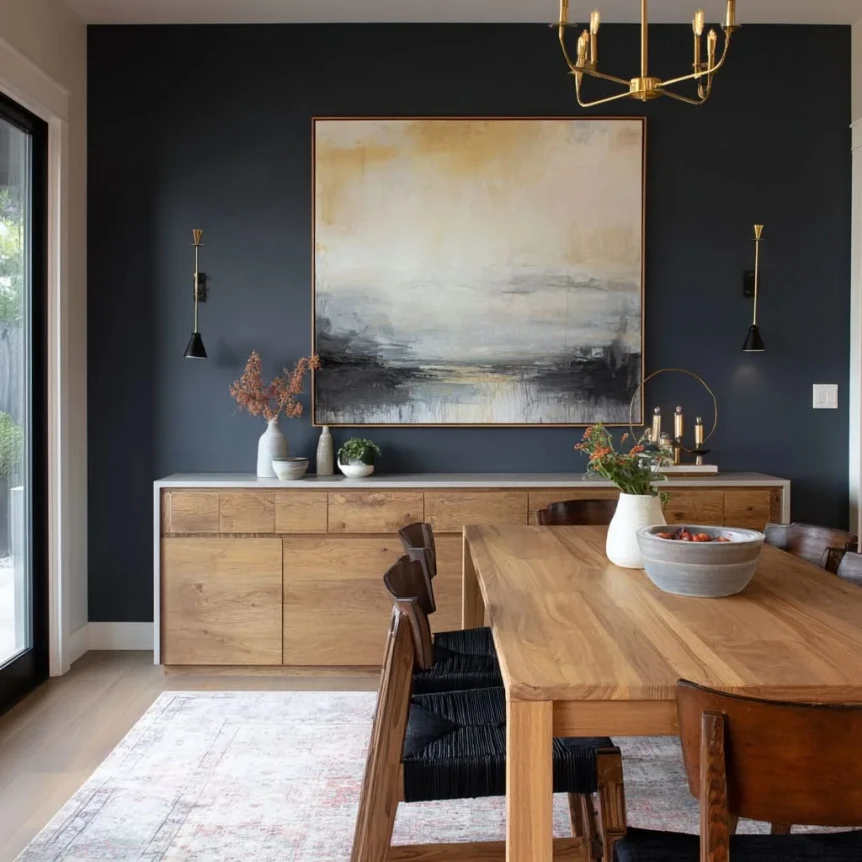
A sideboard or credenza along one wall provides storage for table linens, serving pieces, and candles while also offering a surface for plating during meals. In modern dining rooms, the sideboard often doubles as a display surface, holding a few considered objects or a piece of art. Keep it spare. A sideboard piled with clutter undermines the clean lines of the room.
Making Small Dining Rooms Work
A small dining room is not a lesser dining room. With the right table, proportional furniture, and smart layout choices, a compact space can feel intimate rather than cramped.
Scale Down the Table
The most common mistake in small dining rooms is choosing a table that’s too large for the space. A round table with a 42 to 48 inch diameter seats four comfortably and takes up less visual and physical space than a rectangular table in a tight room. If you need a rectangular table, look for designs with slim profiles and tapered legs that don’t feel heavy.
Use Light and Reflection
Light colors on walls, a mirror on one wall, and a pendant with a translucent or open shade all help a small dining room feel more spacious. Avoid heavy curtains or dark wood furniture that absorbs light and makes the room feel closed in.
For a full collection of strategies, furniture choices, and layout ideas for compact spaces, see our guide to Small Dining Room Ideas.
Wall Decor and Finishing Touches
Dining room walls tend to be more visible than in other rooms because furniture is concentrated in the center. That makes wall decor more impactful here than almost anywhere else in the house.
Art
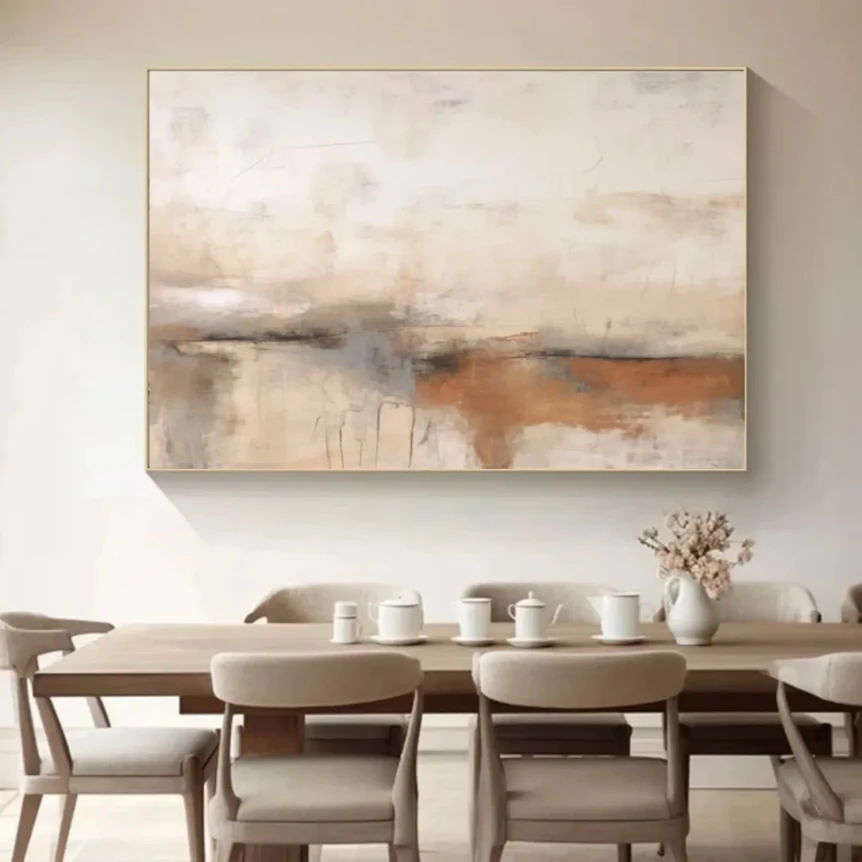
A single large piece of art on the most visible wall is one of the strongest moves in a dining room. It gives the eye a focal point and sets the tone for the entire space. For a modern dining room, lean toward abstract work, photography, or graphic pieces rather than ornate frames and traditional still lifes. The art should complement the room’s palette without matching it too precisely.
Shelving and Objects
A set of floating shelves displaying a curated mix of ceramics, books, and small objects can add personality to a dining room without the commitment of a gallery wall. Keep the arrangement loose and edited. Three to five objects per shelf is usually the right density.
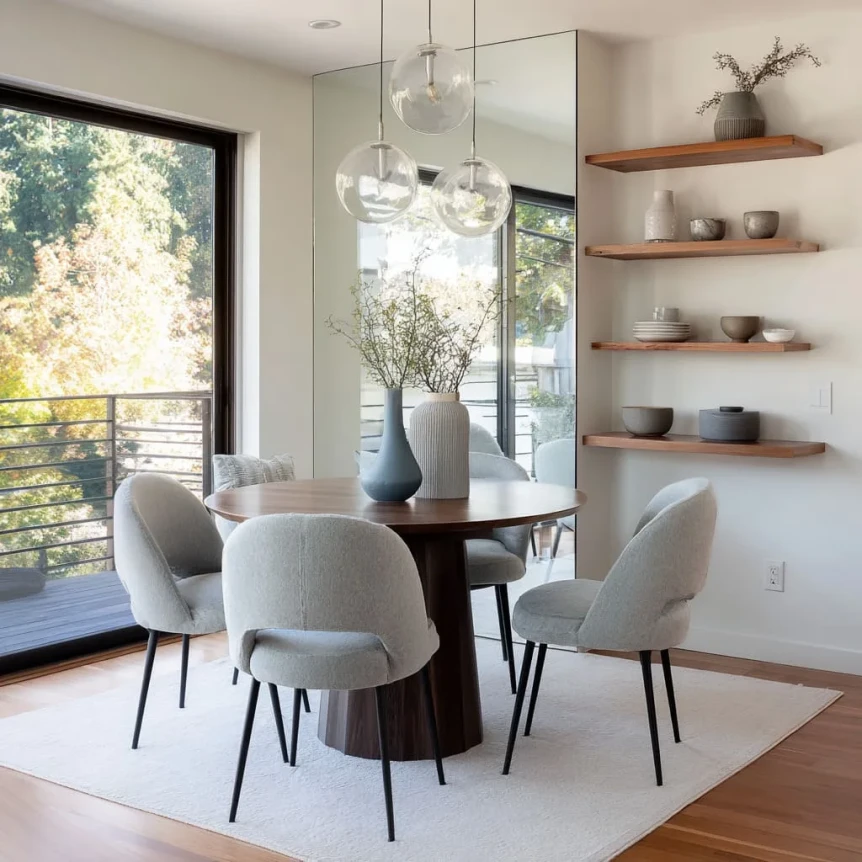
For more ideas, see our full guide to Dining Room Wall Decor Ideas.
Formal vs. Casual: Finding Your Level
One of the biggest decisions in dining room design is where you land on the formal to casual spectrum. This isn’t about choosing one or the other. It’s about understanding where your household lives on that scale and designing accordingly.
The Modern Formal Dining Room
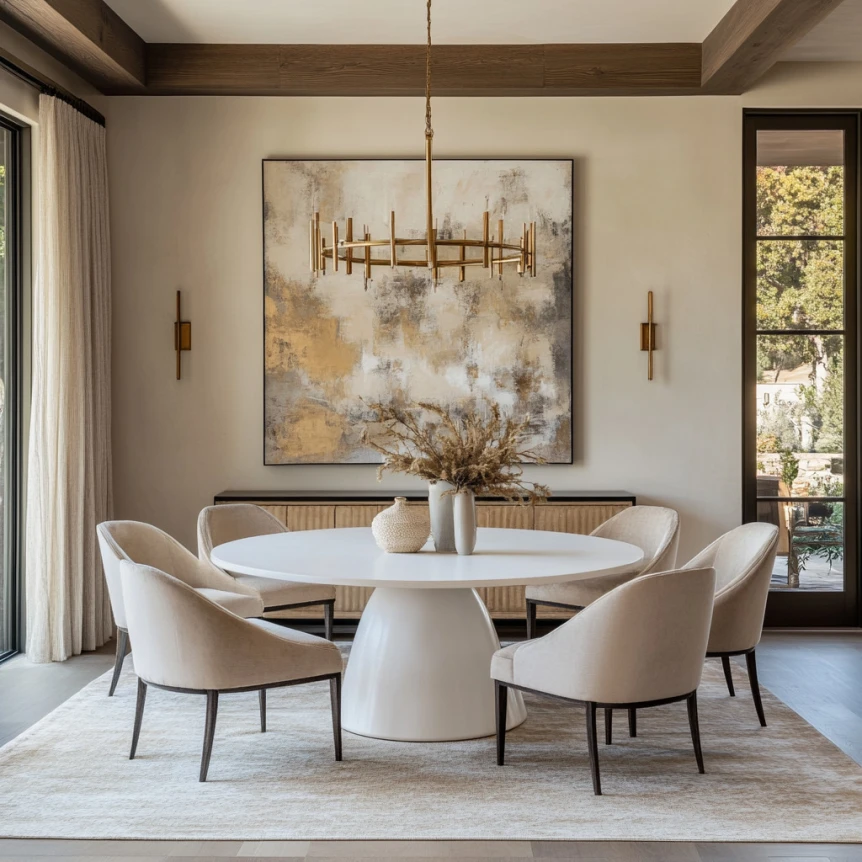
A modern formal dining room keeps the sense of occasion without the stuffiness. Think upholstered chairs, a longer table, a dramatic light fixture, and a deeper wall color. The furniture is more refined, the materials are higher end, and the room has a sense of intentional ceremony. But it still feels livable, not like a museum exhibit.
The Modern Casual Dining Room
A casual modern dining room leans into comfort and versatility. Bench seating, a sturdy wood table that can handle daily use, open shelving instead of a formal china cabinet, and lighting that’s warm and unfussy. This is a room built for pancake breakfasts and board games as much as dinner parties.
For a full comparison and guidance on finding your approach, read our guide: Formal vs. Casual Dining Room Design.
The Practical Middle Ground
Most modern dining rooms land somewhere between the two extremes. A solid wood table, comfortable chairs that aren’t overly formal, a good pendant light, and a wall color with some personality. The room works for Wednesday night takeout and Saturday dinner with friends. This middle ground is where most people end up, and it’s a perfectly good place to be.
Textiles and Table Styling
Textiles bring softness and warmth to a space that can otherwise feel hard edged, especially in a modern dining room built around wood, stone, and metal.
Rugs
A rug under the dining table grounds the space and adds warmth underfoot. Choose a rug large enough that all chairs stay on it when pulled out. For a rectangular table, this typically means a rug that extends at least 24 inches beyond the table on all sides. Flatweave rugs are the most practical choice for dining rooms because chair legs glide over them more easily and crumbs are simpler to clean.
Table Linens
Linen tablecloths and runners have made a strong comeback in modern dining. They add texture without formality, and the naturally rumpled quality of linen fits the modern aesthetic better than starched cotton ever could. A simple linen runner down the center of a wood table is one of the easiest ways to make a dining room feel finished.
Curtains and Window Treatments
If your dining room has windows, keep window treatments simple. Linen or cotton curtains in a neutral tone that puddle slightly on the floor add softness. Roman shades offer a cleaner, more structured look. Avoid heavy drapes with valances or swags, which push the room toward a traditional look that conflicts with modern design.
Recommended Resources and Related Guides
Dining Table Buying Guide
A detailed guide to choosing the right table shape, material, and size for your dining room and lifestyle.
Dining Room Lighting Guide
How to choose and place dining room lighting, from pendants and chandeliers to layered lighting plans.
Dining Room Color Schemes
Palettes, accent strategies, and guidance on how wall color looks under evening dining light.
Small Dining Room Ideas
Layout strategies, furniture choices, and design techniques for compact dining spaces.
How to Mix and Match Dining Chairs
A practical guide to combining different chair styles for a dining room that feels curated rather than chaotic.
Dining Room Wall Decor Ideas
Art, shelving, mirrors, and other wall treatments that bring personality to your dining room.
Formal vs. Casual Dining Room Design
How to decide where your dining room lands on the spectrum, and how to design for that level.Frequently Asked Questions
Frequently Asked Questions
What size dining table do I need for my room?
Allow at least 36 inches of clearance between the table edge and the nearest wall. A table for six should be at least 72 inches long, and a table for eight should be 84 to 96 inches. For tighter rooms, a round table with a 42 to 48 inch diameter seats four comfortably while taking up less floor space.
What is the best lighting for a dining room?
A pendant light or modern chandelier centered over the table is the foundation. Hang it 30 to 36 inches above the table surface. Add wall sconces or recessed lighting on dimmers to create a layered scheme that you can adjust for different occasions.
Should dining chairs match the table?
They don’t have to. Mixing chair styles is one of the most effective techniques in modern dining room design. The key is finding a connecting thread between the chairs, whether that’s a shared material, color family, or seat height. Using one style for side chairs and a different style for the heads creates visual interest without looking random.
What colors work best in a modern dining room?
Neutral foundations like warm white, soft taupe, or light gray work well for most dining rooms. For a bolder look, darker tones like navy, forest green, or charcoal create an intimate atmosphere under evening light. Dining rooms are one of the best rooms in the house for a deep wall color because they’re primarily used at night.
How do I make a small dining room feel bigger?
Choose a round table over rectangular to improve flow, use light colors on walls, place a mirror on one wall to reflect light, select furniture with slim profiles and tapered legs, and avoid heavy curtains or dark wood that absorbs light. A pendant with a translucent shade also helps keep the space feeling open.
Designing a Dining Room That Earns Its Place
A good dining room doesn’t need to be large, expensive, or formal. It needs a table that fits the space and the people who use it, lighting that creates the right atmosphere, and a palette and material selection that feel considered rather than accidental.
Start with the table. Get the proportions right. Add lighting that flatters. Then layer in the details that make the room feel like yours. Modern dining room design is really just the discipline of making thoughtful choices and then leaving well enough alone.
For detailed guidance on any element of your dining room, explore the guides linked throughout this page. Each one goes deeper on a specific topic so you can make informed decisions at every step.