Buyer's Guides

By Tereza Hower | Published March 12, 2026 | Updated March 28, 2026
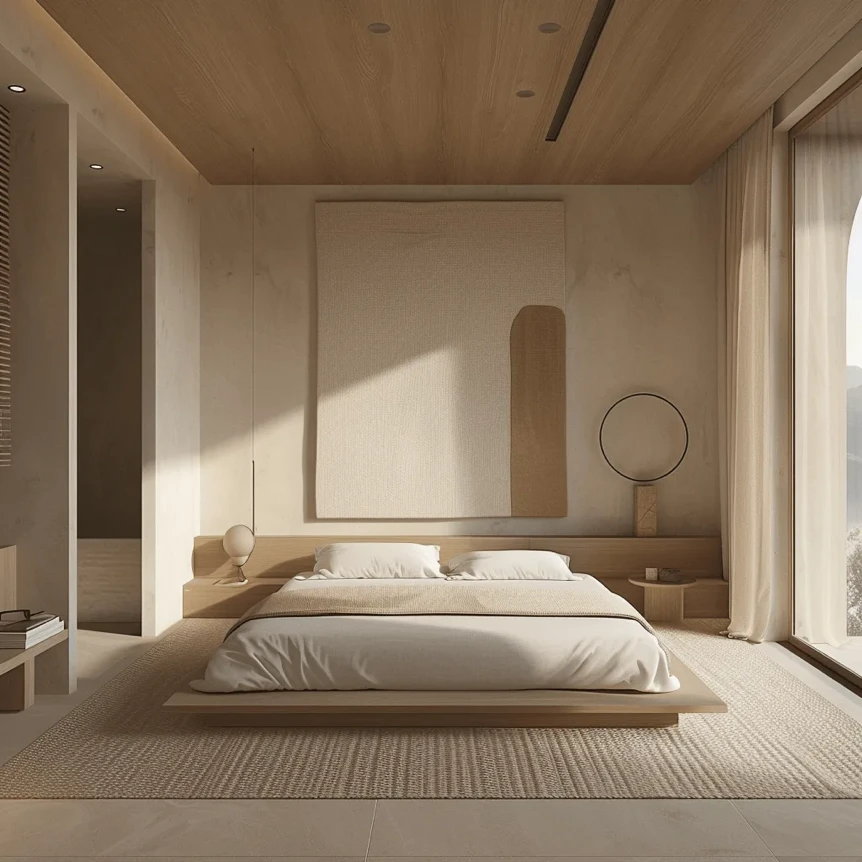
Your bedroom is the one room in the house that belongs entirely to you. It is where the day starts and ends, where you rest, recharge, and finally exhale. Yet for many people, the bedroom is also the most neglected room in terms of design. A mismatched headboard here, a forgotten corner there, and before long the space feels more like a storage unit than a sanctuary.
Modern bedroom design offers a clear path out of that chaos. Rooted in simplicity, intention, and a respect for calm, it creates rooms that feel open and easy to live in without sacrificing personality or warmth. Whether you are starting from scratch or refreshing what you already have, this guide covers everything you need to know to design a modern bedroom that genuinely works for you.
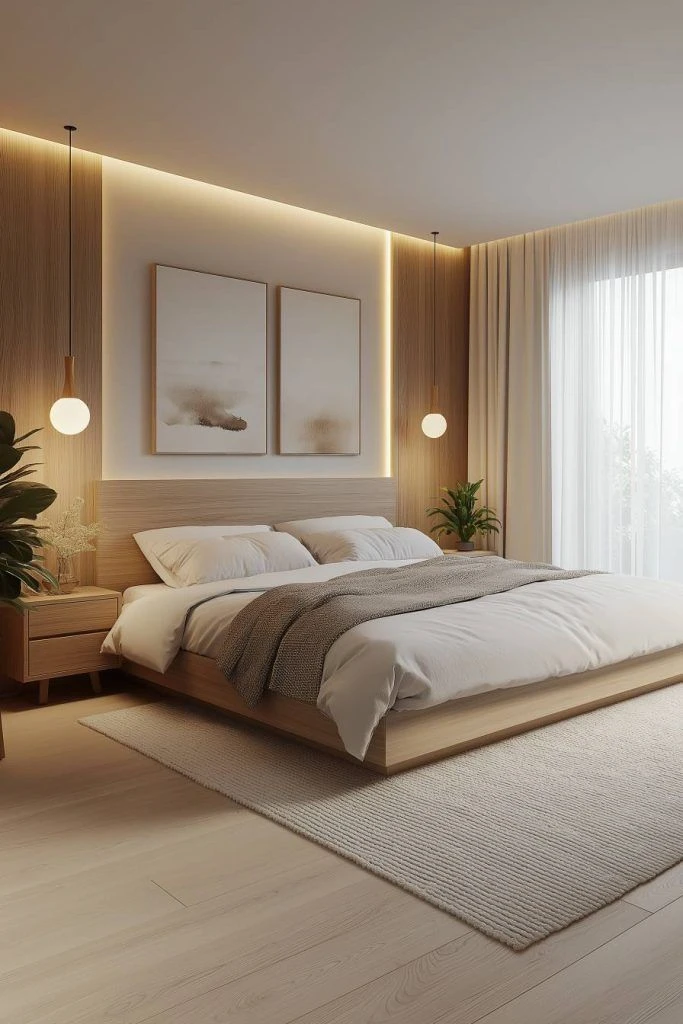
Modern bedroom design is often confused with contemporary design or, worse, with something cold and impersonal. In reality, it is neither. The modern design movement grew out of early to mid 20th century architecture and is defined by a commitment to function, clean lines, and the honest use of materials. Applied to the bedroom, it means creating a space that is thoughtfully edited, free of unnecessary clutter, and structured around how you actually use the room.
A modern bedroom does not have to feel like a hotel room. The best modern bedrooms feel personal and lived in while still maintaining a sense of order. Think of it less as a strict style and more as a guiding philosophy: every object earns its place, every decision serves a purpose, and the overall result is a room that feels restful rather than restless.
What sets modern design apart from other popular styles is its relationship with space. Modern bedrooms tend to embrace negative space, meaning the empty areas around furniture are treated as intentional design elements rather than voids waiting to be filled. This gives the room a sense of calm that other styles, with their layered accessories and busy patterns, struggle to achieve.
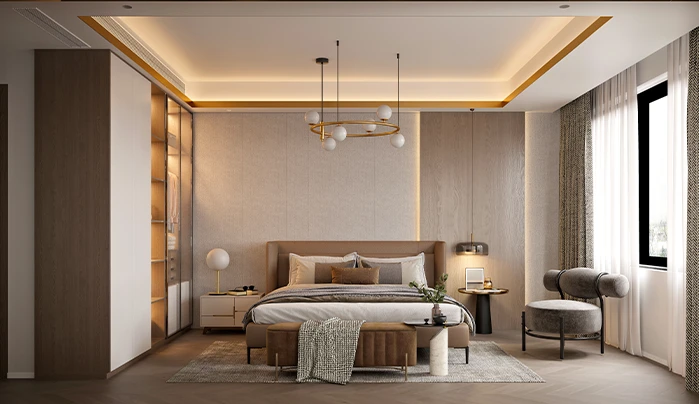
Understanding a few core principles will help you make better decisions at every stage of the design process, from choosing furniture to selecting paint colors.
Form follows function. Every piece of furniture and every design choice should have a clear reason to exist. A nightstand that doubles as storage, a bed frame with integrated drawers, a mirror that makes the room feel larger: these are all examples of function shaping form in a useful and beautiful way.
Clean lines over ornate detail. Modern design favors straight edges, simple silhouettes, and restrained decoration. This does not mean everything has to be sharp and angular. Rounded edges and organic shapes are very much part of contemporary modern design, but they still tend toward simplicity rather than fuss.
A neutral foundation with intentional accents. Most modern bedrooms start with a neutral palette of whites, grays, warm beiges, or deep earthy tones, then introduce color through textiles, art, or a single statement piece. This approach keeps the room from feeling dated and gives you flexibility to refresh the look over time without repainting or buying new furniture.
Quality over quantity. Modern design rewards restraint. A room with five well chosen pieces will almost always feel better than one crowded with fifteen average ones. Investing in fewer, better items tends to produce a more satisfying result both aesthetically and practically.
Light as a design element. Natural light is treated as a material in modern design. The placement of windows, the choice of window treatments, and the way artificial light sources are layered all contribute significantly to how the room feels.
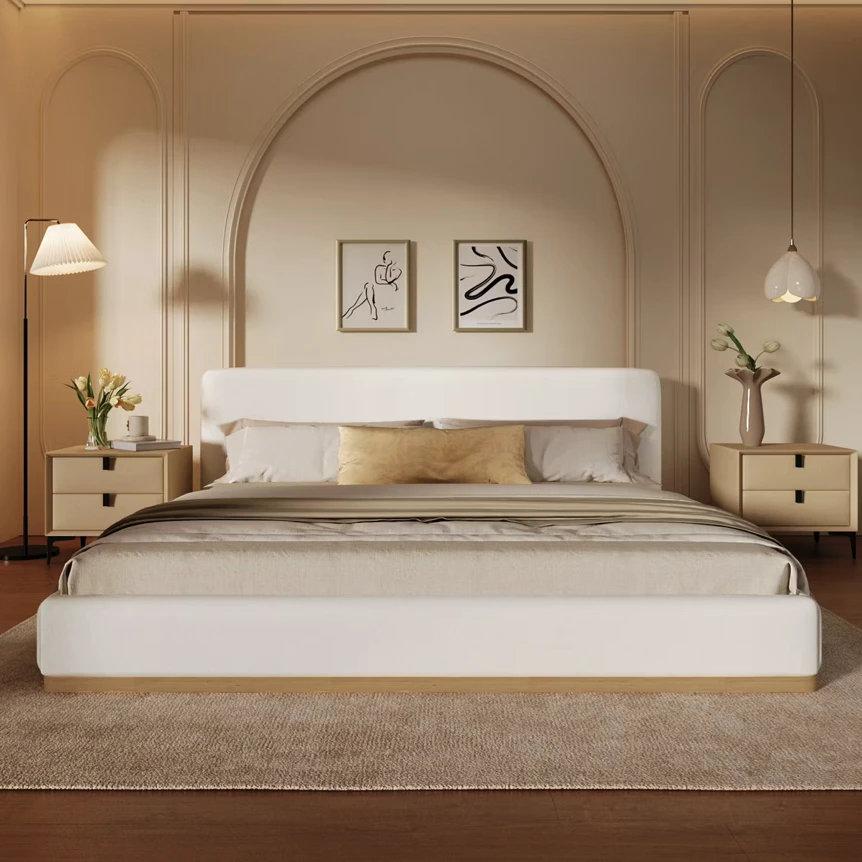
Before you buy a single piece of furniture, spend time thinking about layout. A well planned layout makes the room easier to live in and ensures that the furniture you choose actually fits and functions as intended.
Start by measuring your room carefully, including the height of the ceiling, the location of windows and doors, and the position of any electrical outlets or light switches. Draw a simple floor plan to scale, even a rough sketch on paper will do, so you can experiment with different arrangements before moving anything heavy.
The bed is the anchor of any bedroom layout. In most rooms, the most logical placement is centered on the largest wall, ideally the one opposite the door. This creates a focal point as you enter the room and gives you balanced space on either side for nightstands. If your room has architectural features like a window alcove, a chimney breast, or an angled ceiling, use them as opportunities rather than obstacles.
Once the bed is placed, think about circulation. You want at least 24 inches of clearance on the sides of the bed you use regularly, and ideally more if space allows. Avoid placing furniture so that it blocks natural pathways through the room, especially the route from the bed to the door or bathroom.
Consider what else needs to happen in the room beyond sleeping. Do you get dressed there? Do you work from the bedroom? Do you read in the evenings? Each activity benefits from its own small zone, and planning for them from the start prevents the room from feeling improvised.
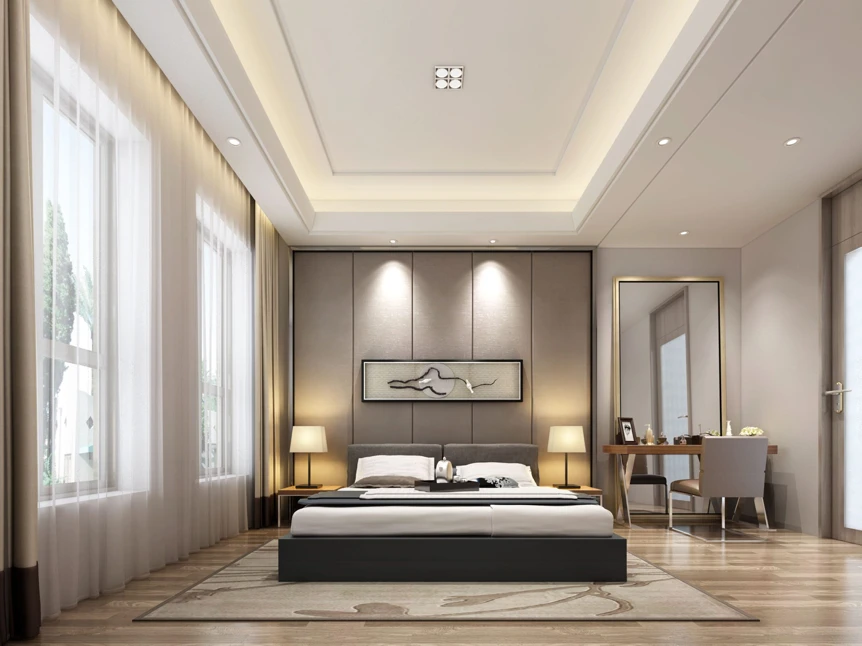
Furniture is where modern bedroom design gets tangible. The pieces you choose set the tone for everything else, so it is worth thinking carefully about both style and practicality before committing.
The bed frame is the single most important piece of furniture in the room. In a modern bedroom, bed frames tend to be low to the ground, with a platform or slatted base that replaces the need for a box spring. Upholstered headboards in linen, boucle, or velvet add softness and warmth without straying from a modern aesthetic. Wood frames in walnut, oak, or ash bring natural texture that balances the clean lines typical of modern design.
Nightstands should be proportional to the bed and the room. In smaller bedrooms, floating wall mounted nightstands are an excellent solution because they free up floor space and contribute to that clean, airy feel. In larger rooms, you have more freedom to choose pieces with drawers and more visual presence.
Storage furniture, including dressers, wardrobes, and chests of drawers, should ideally have a similar finish or tone so the room feels cohesive. Mixing too many different wood tones or materials can make even a beautifully planned room feel unsettled. If you have a walk-in closet or built-in wardrobes, you may be able to keep the visible furniture in the room quite minimal, which has a noticeably calming effect.
Seating at the foot of the bed is a classic modern bedroom feature. A simple upholstered bench, a low chair, or even a pair of ottomans give you somewhere to sit while putting on shoes and adds a layer of comfort that makes the room feel more intentional.
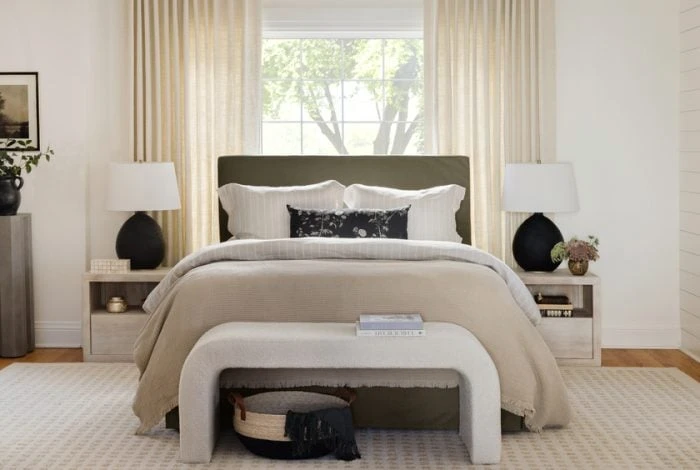
Read our full guide: Best Modern Bedroom Furniture for 2026
Color has a profound effect on how a bedroom feels. The right palette makes the room feel restful, while the wrong one can leave it feeling tense or uncomfortable, even if everything else is well designed.
Modern bedrooms often lean on soft neutrals as a base. Warm whites, pale creams, soft grays, and earthy taupes create a backdrop that is easy to live with and easy to layer onto. These colors reflect light well, which makes rooms feel larger and more open.
Deeper tones are increasingly popular in modern bedroom design and with good reason. A wall in sage green, dusty blue, terracotta, or deep charcoal creates a sense of enclosure and calm that many people find deeply restorative. These colors work especially well in bedrooms because the lower light levels typical of bedtime make deeper hues feel cozy rather than oppressive.
Accent colors are best introduced through textiles and accessories rather than painted walls. A rust colored throw, deep navy cushions, or a forest green rug can add richness and personality without committing you to a color in a way that is difficult to change.
One approach that consistently produces beautiful results is the tonal bedroom: picking one color family and working through its shades from light to dark across different surfaces and materials. A room that moves from pale linen walls to a mid-toned oak floor to a darker olive headboard has a sophisticated harmony that is hard to achieve with multiple competing colors.
Read our full guide: Modern Bedroom Color Schemes That Actually Work
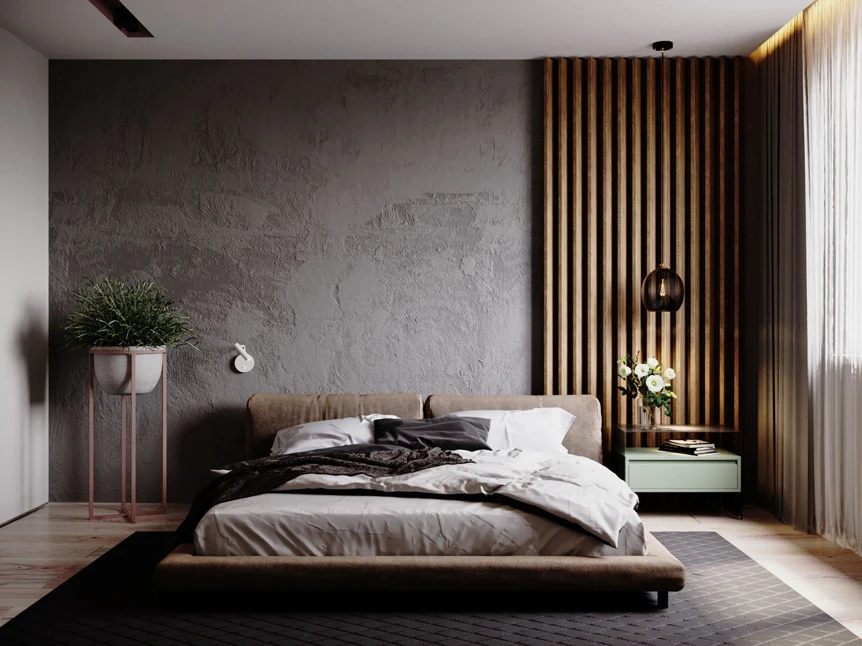
Lighting is one of the most transformative elements of bedroom design and one of the most commonly underthought. Many bedrooms rely on a single overhead light source, which creates a flat, clinical feel that works against the restful atmosphere you are trying to create.
Modern bedroom lighting works in layers. The three layers to consider are ambient, task, and accent lighting. Ambient light provides overall illumination and typically comes from an overhead fixture, recessed downlights, or a statement pendant. Task lighting serves specific functions like reading and usually takes the form of bedside wall sconces, table lamps, or clip-on reading lights. Accent lighting adds depth and mood, highlighting architectural features, artwork, or the texture of materials.
Dimmers are non negotiable in a well designed bedroom. The ability to shift from bright, energizing light in the morning to a warm, low glow in the evening dramatically improves the room’s versatility and supports better sleep.
Natural light deserves as much attention as artificial light. The orientation of your bedroom windows affects when and how light enters the room. East facing rooms get morning light, which is energizing. West facing rooms catch the warm afternoon and evening sun. Understanding your room’s natural light helps you choose the right window treatments, whether that is sheer curtains that diffuse harsh midday light, blackout blinds for shift workers or light sleepers, or layered treatments that give you flexibility throughout the day.
Read our full guide: Modern Bedroom Lighting Ideas for Every Style
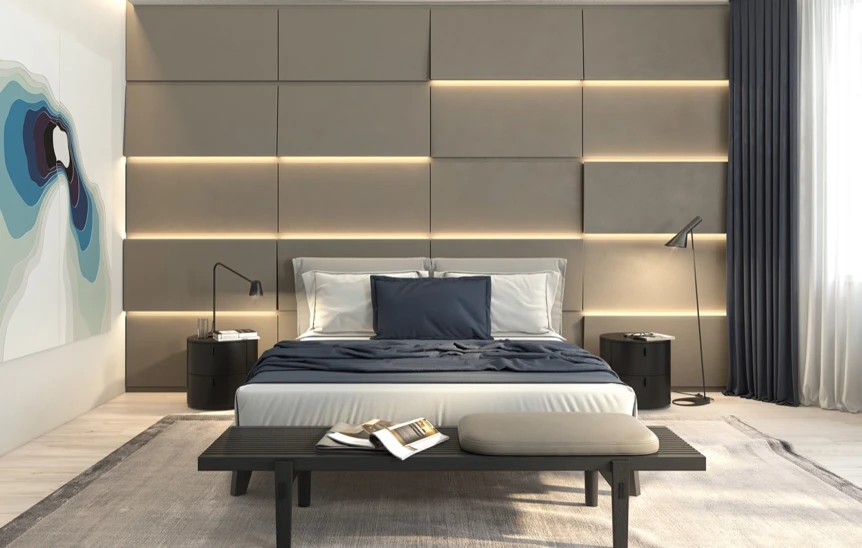
A modern bedroom without adequate storage quickly becomes a cluttered one, and clutter is the enemy of the calm atmosphere you are working toward. Getting storage right is therefore not just a practical concern but a design one.
Built-in storage is the gold standard in modern bedroom design. A run of floor to ceiling wardrobes with flush fronts and integrated handles disappears into the walls and frees the rest of the room from the visual weight of freestanding furniture. If built-ins are not an option, look for freestanding wardrobes and dressers with clean, simple profiles and minimal hardware.
Under bed storage is one of the most underused resources in the bedroom. Platform beds with integrated drawers, or even simple rolling storage boxes on casters, can dramatically increase your storage capacity without taking up any additional floor space.
The key to making storage work in a modern bedroom is to keep it out of sight as much as possible. Closed storage, whether behind doors, in drawers, or in baskets on shelves, keeps the room looking intentional. Open shelving can work beautifully but requires discipline and regular editing to prevent it from becoming a catch-all.
Read our full guide: Smart Bedroom Storage Ideas for a Clutter-Free Space
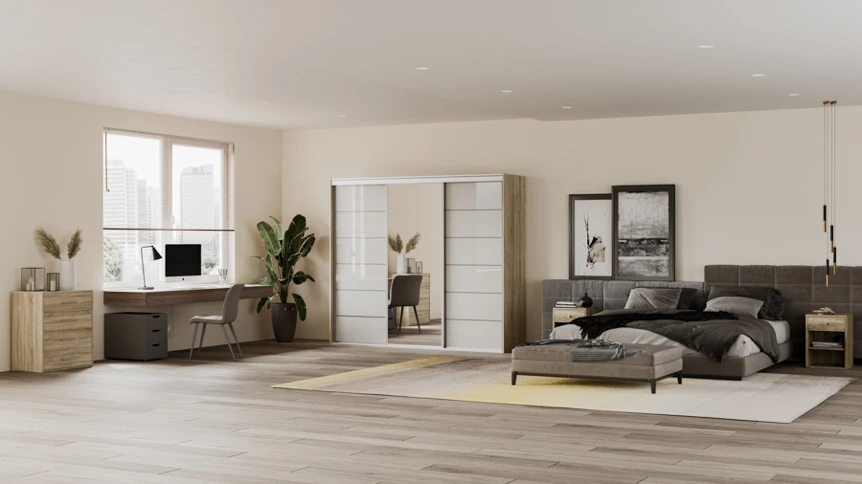
If furniture provides the structure of a bedroom, textiles provide its warmth and personality. In a modern bedroom, where the furniture and architecture tend toward simplicity, textiles do a great deal of heavy lifting.
Bedding is the obvious starting point. A well dressed bed anchors the room visually and communicates a great deal about the overall aesthetic. In modern bedrooms, the tendency is toward natural materials: linen, cotton, and washed percale all have a relaxed, lived-in quality that suits the style well. A simple approach works best, a duvet with a good cover, a pair of sleeping pillows, and perhaps two or three decorative cushions is plenty.
Throws are one of the most versatile tools in a bedroom. Folded at the foot of the bed or draped over a chair, they add texture, warmth, and color without any permanent commitment. A single well chosen throw in a complementary tone can do more for a bedroom than a dozen carefully arranged cushions.
Rugs bring warmth, softness, and a sense of definition to a bedroom. In a room that typically has hard floors, a generous rug under the bed or in a seating area transforms the feel entirely. The rule of thumb is to go larger than you think you need: a rug that extends well beyond the sides of the bed creates a much more luxurious effect than one that just peeks out from underneath it.
Read our full guide: How to Choose the Right Rug for Your Bedroom
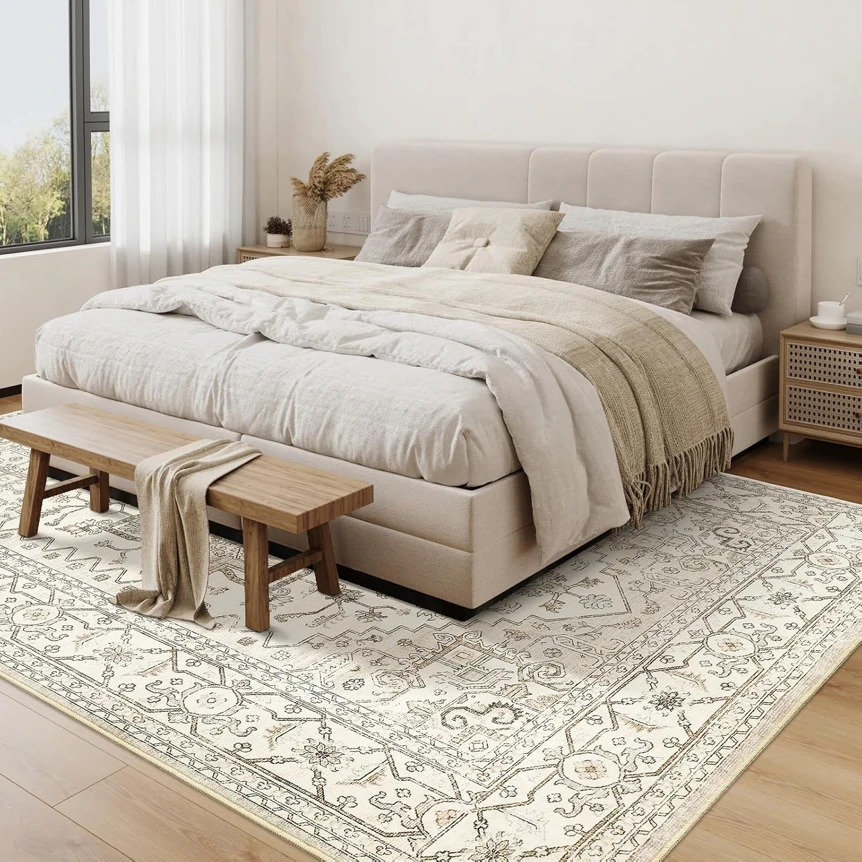
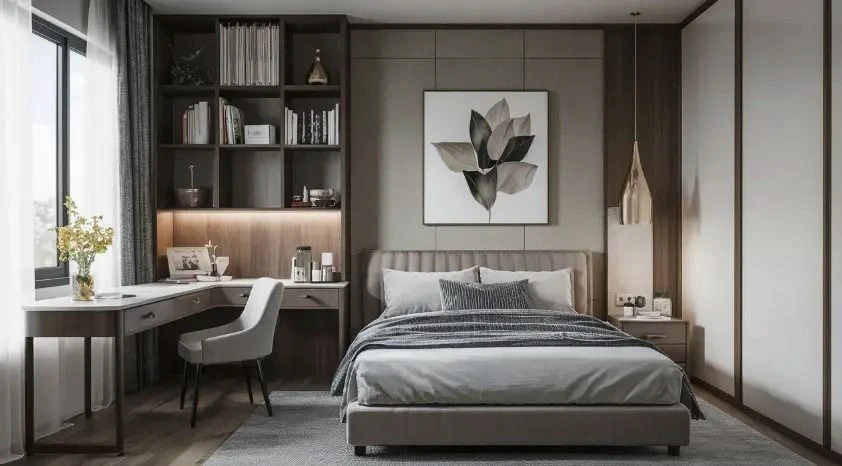
Small bedrooms present a particular set of challenges, but they also offer an opportunity for tight, well considered design that can feel surprisingly sophisticated. The most successful small bedrooms share a few common traits: they are honest about the constraints of the space, they prioritize function without sacrificing style, and they use every available inch with intention.
Scale is everything in a small bedroom. Furniture that is too large makes the room feel cramped and difficult to navigate. Choosing a bed with a lower profile, opting for wall mounted nightstands, and selecting a wardrobe that fits precisely into an alcove rather than standing free in the room can all make a significant difference to how the space feels.
Color is a powerful tool in small bedrooms, though not always in the way people expect. The conventional advice to paint small rooms white is not always the best approach. A room painted in a single deep tone, walls, ceiling, and woodwork all the same color, can actually feel larger because the eye is not drawn to the boundaries of the space. Monochromatic schemes, where everything is in the same color family, also create a sense of depth and continuity that makes small rooms feel more cohesive.
Mirrors deserve a mention here because they are genuinely effective at making small bedrooms feel more spacious. A large mirror on a wall opposite a window doubles the apparent depth of the room and bounces light around in a way that opens up even tight spaces.
Read our full guide: Small Bedroom Design Ideas That Make the Most of Your Space
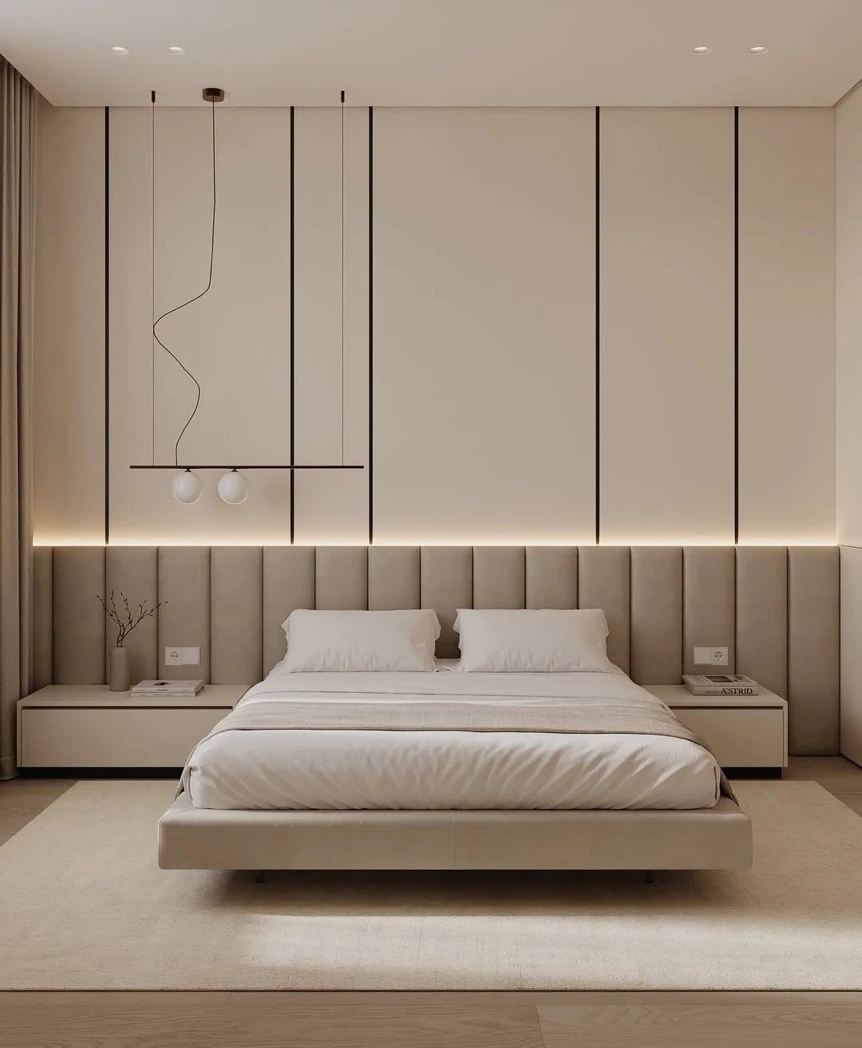
Minimalism and modern design are closely related but not identical. Minimalism is more of a philosophy, a commitment to reducing what you own and display to only what you truly need or love. Modern design is more of a visual style. In the bedroom, the two work together beautifully.
A minimalist approach to the bedroom starts not with what to add but with what to remove. Going through the room with fresh eyes and asking honestly whether each object earns its place is often a more useful exercise than shopping for new things. The absence of clutter has a calming effect that no amount of new furniture can replicate.
In practical terms, a minimalist bedroom tends to have a limited number of furniture pieces, a restrained color palette, and surfaces that are largely clear. It does not have to be sparse or cold. The warmth comes from the quality of the materials you choose: a beautiful linen duvet, a worn oak floor, a single piece of meaningful art on the wall. These things have more impact in a minimal room precisely because there is nothing competing with them.
The challenge of minimalism is maintenance. A room designed with minimal clutter will only stay that way if there is sufficient storage to accommodate everything that would otherwise sit on surfaces. This is why storage planning and minimalist design go hand in hand.
Read our full guide: How to Design a Minimalist Bedroom You’ll Love
Once the major decisions have been made, the finishing touches are what give a bedroom its character and make it feel like yours. In a modern bedroom, the key is to be selective. Every object you put in the room should feel chosen, not defaulted to.
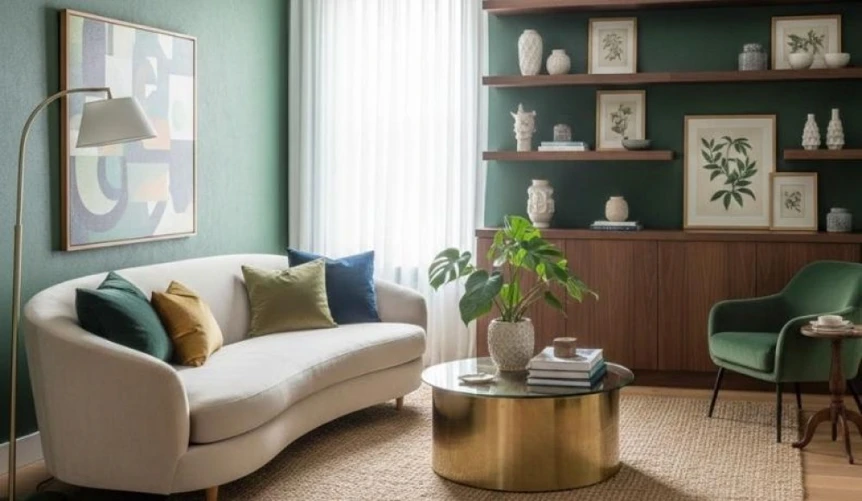
Art is one of the most personal ways to bring a bedroom to life. In a modern room, a single large piece tends to have more impact than a wall covered in smaller frames. Abstract work, photography, and simple line drawings all sit comfortably within a modern aesthetic without overwhelming the calm that the design is working to create.
Plants are another welcome addition to modern bedrooms. A large-leaved plant in a simple pot brings a sense of life and softness to a room full of hard surfaces and clean lines. Choose low-maintenance varieties if the bedroom is not particularly bright, as many bedrooms do not have the light levels that more demanding plants require.
Scent is often overlooked as a design tool but has a direct and powerful effect on how a room feels. A simple candle, a reed diffuser, or linen spray in a calming fragrance reinforces the sense of sanctuary that good bedroom design aims to create.
Finally, keep surfaces curated. A nightstand with a lamp, a book, a glass of water, and perhaps a small plant or candle is perfectly composed. The same nightstand with chargers, receipts, half-read magazines, and a collection of items that have nowhere else to go undermines everything else in the room. Good habits and good design support each other.
A detailed look at the furniture pieces that work hardest in a modern bedroom, from bed frames and nightstands to storage solutions and seating, with guidance on what to prioritize at different budget levels.
Everything you need to know about choosing a color palette for your bedroom, including the neutrals that never fail, the deeper tones worth considering, and how to use accent colors without overcomplicating the room.
A practical guide to layering light in the bedroom, covering ambient, task, and accent lighting, the fixtures worth investing in, and how to use natural light as a design asset.
Practical strategies for maximizing storage in any bedroom, including built-in solutions, under bed options, and the organizing habits that keep a well designed room looking its best.
A guide to applying minimalist principles to the bedroom, with advice on editing your space, choosing materials with impact, and maintaining a calm, clutter-free environment over time.
How to choose the right rug for your bedroom in terms of size, material, color, and placement, with specific advice for different room configurations and floor types.
Design strategies tailored specifically to smaller bedrooms, covering furniture selection, color, layout, and the visual tricks that make compact spaces feel generous and well considered.
A well designed bedroom does not happen by accident. It is the result of a series of considered decisions, each one building on the last, that together create a space with a clear identity and a genuine sense of purpose. Modern design gives you a useful framework for making those decisions: favor simplicity, prioritize function, invest in quality, and resist the urge to fill every corner.
The guides linked throughout this page go deeper on each of the topics covered here. Whether you are choosing paint colors, working out how to fit a wardrobe into an awkward space, or trying to understand what kind of lighting your bedroom actually needs, you will find practical, specific guidance in each one.
Start with the decisions that matter most, the layout, the bed, the light, and work outward from there. Take your time. A bedroom designed with care and patience is one you will genuinely enjoy coming home to.