The Complete Guide to Bohemian Interior Design

By Tereza Hower | Published April 3, 2026
Bohemian interior design is one of those rare styles that actually encourages you to break the rules. There are no strict formulas, no rigid color codes, and no pressure to match every piece of furniture to a single finish. Instead, boho design is built on self expression, cultural richness, and the kind of lived in beauty that makes a home feel genuinely personal.
Whether you’re starting from scratch or looking to layer boho elements into your current space, this guide walks you through every aspect of the style. From foundational color palettes and pattern mixing strategies to furniture choices and budget friendly approaches, you’ll find everything you need to design a bohemian home that feels both intentional and free spirited.
What’s Covered in This Guide
- What Is Bohemian Interior Design?
- The History and Origins of Boho Style
- Key Elements of Bohemian Design
- Boho Color Palettes That Set the Tone
- How to Mix Patterns Without the Chaos
- Choosing Bohemian Furniture
- Bohemian Design Room by Room
- Boho Wall Decor and Art
- Plants and Natural Elements
- Getting the Boho Look on a Budget
- Boho vs. Other Popular Styles
- Common Bohemian Design Mistakes
- Recommended Resources and Related Guides
- Frequently Asked Questions
What Is Bohemian Interior Design?
Bohemian interior design is a decorating style rooted in creative freedom, global influences, and an eclectic mix of colors, textures, and patterns. It draws from various cultures, time periods, and artistic movements to create spaces that feel collected over time rather than purchased all at once.
At its core, boho style celebrates individuality. It’s the opposite of cookie cutter design. A bohemian room might feature a Moroccan rug alongside a mid century armchair, vintage brass candleholders next to a modern plant stand, and handwoven baskets stacked beside a contemporary bookshelf. The key is that each piece has character and tells a story.
Unlike minimalist or modern design, bohemian interiors thrive on abundance. More isn’t necessarily too much when every item serves a visual or emotional purpose. But that doesn’t mean boho rooms are cluttered. The best bohemian spaces have an underlying sense of balance, even when they’re filled with color and texture.
The History and Origins of Boho Style
The word “bohemian” originally referred to the Roma people of France, who were believed to have come from the Bohemia region of Central Europe. Over time, the term became associated with artists, writers, and freethinkers who lived unconventional lifestyles, often outside the norms of mainstream society.
In the 19th century, the bohemian movement gained traction in cities like Paris and London. Artists who rejected bourgeois values decorated their studios with eclectic finds, hand dyed fabrics, and objects collected from their travels. This laid the groundwork for what we now recognize as boho interior design.
The modern bohemian style experienced a major revival in the 1960s and 1970s, fueled by the counterculture movement. Earthy tones, macrame, rattan, and tie dye became household staples. Today’s boho aesthetic takes those influences and refines them, blending vintage nostalgia with a more polished, contemporary sensibility.
From Counterculture to Mainstream
What was once considered fringe has become one of the most popular design aesthetics on social media and in home decor retail. The appeal is easy to understand. Bohemian style is accessible. It doesn’t demand expensive designer furniture or a perfectly coordinated palette. It invites you to start with what you have and build from there.
Key Elements of Bohemian Design
While bohemian interiors don’t follow a rigid formula, there are several defining characteristics that separate boho from simply being disorganized. Understanding these elements will help you make intentional choices as you design each room.
Layered Textiles
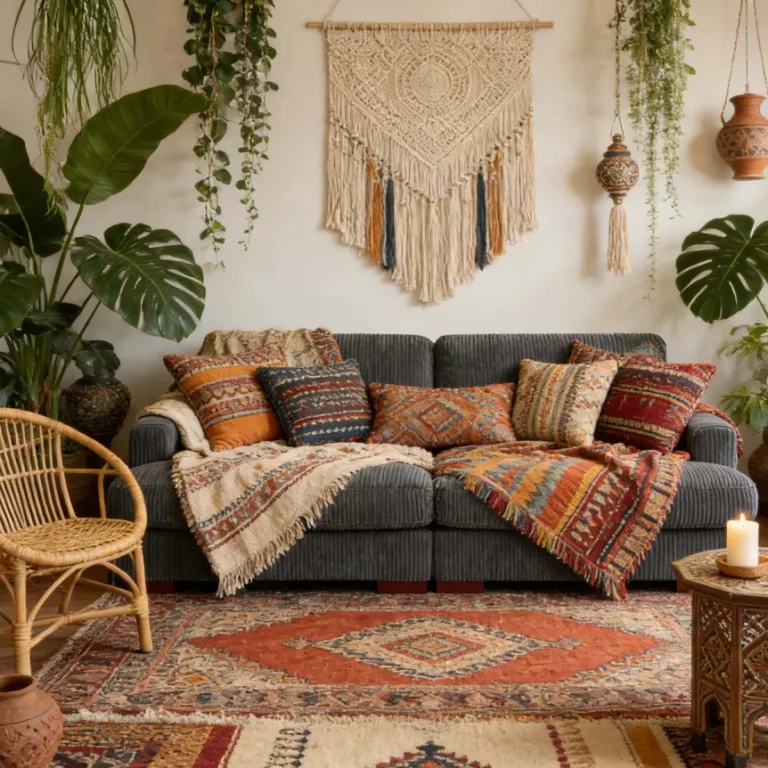
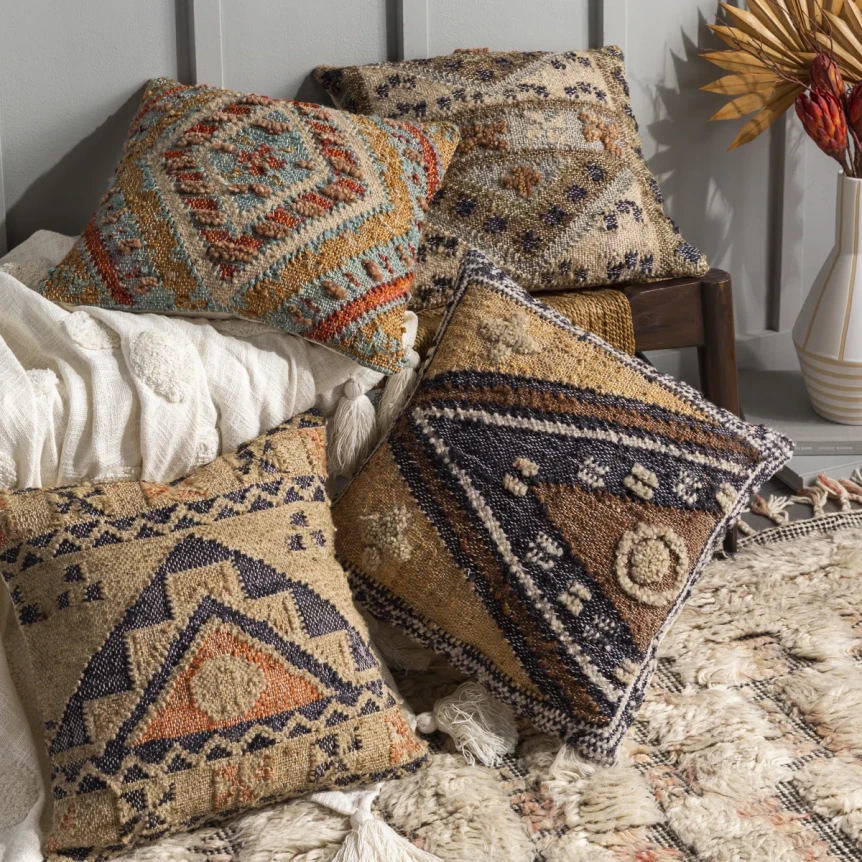
Textiles are the backbone of bohemian design. Think woven throws draped over armchairs, embroidered cushions stacked on a daybed, and a vintage kilim rug anchoring the floor. Layering different fabrics adds visual depth and warmth. The more varied the textures, the richer the space feels.
Common boho textiles include linen, cotton, jute, wool, velvet, and silk. Mixing rough and smooth textures in the same room creates a tactile experience that feels inviting and lived in.
Natural Materials
Wood, rattan, bamboo, stone, clay, and leather all play a major role in bohemian interiors. These materials ground the space and prevent it from feeling too artificial or overly styled. A rattan hanging chair, a reclaimed wood coffee table, or a set of handmade ceramic bowls can instantly bring boho character into a room.
Global and Cultural Influences
Boho design pulls from a wide range of cultural traditions. Moroccan lanterns, Indian block print fabrics, Turkish kilim rugs, Mexican Talavera pottery, and Japanese wabi sabi ceramics can all coexist in a single space. The key is to approach these elements with respect and genuine appreciation rather than treating them as mere decor trends.
Warm, Earthy Color Schemes
Most bohemian spaces start with a warm, neutral foundation and build color through accessories, textiles, and art. Earth tones like terracotta, ochre, burnt sienna, and olive are staples. Jewel tones like deep teal, burgundy, and amber add richness and depth. For more on this topic, explore our dedicated guide to boho color palettes for every room.
Vintage and Handmade Pieces
Nothing says bohemian like a one of a kind find. Vintage furniture, antique mirrors, handwoven baskets, and artisan pottery give a room history and character. These pieces don’t need to be expensive. Flea markets, thrift stores, and estate sales are excellent sources for unique bohemian decor.
Plants and Greenery
Indoor plants are practically non negotiable in bohemian design. From trailing pothos and fiddle leaf figs to hanging ferns and clusters of succulents, greenery adds life and color while reinforcing the connection to nature that boho style values.
Boho Color Palettes That Set the Tone
Color sets the emotional foundation of any room, and in bohemian design, it plays an especially important role. The right palette can make a space feel warm and grounded or vibrant and energetic, depending on the direction you choose.
Warm Earth Tones
The most classic bohemian palette centers on earth tones. Think warm beige, terracotta, rust, ochre, and chocolate brown, paired with creamy whites and soft sand. This combination creates a cozy, organic feel that works particularly well in living rooms and bedrooms.
Jewel Tone Boho
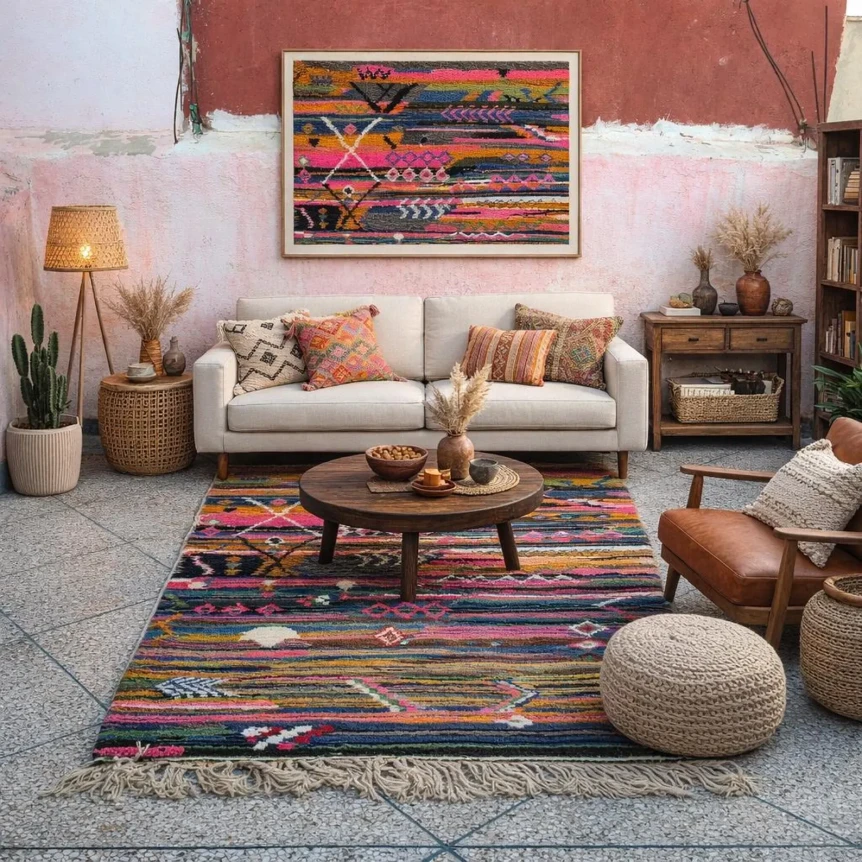
For a bolder take on bohemian design, jewel tones offer rich, saturated color. Deep emerald, sapphire blue, burnt orange, and plum can be used on accent walls, upholstered furniture, or large scale textiles. The trick is to balance these intense colors with plenty of neutral grounding elements.
Neutral and Natural Boho
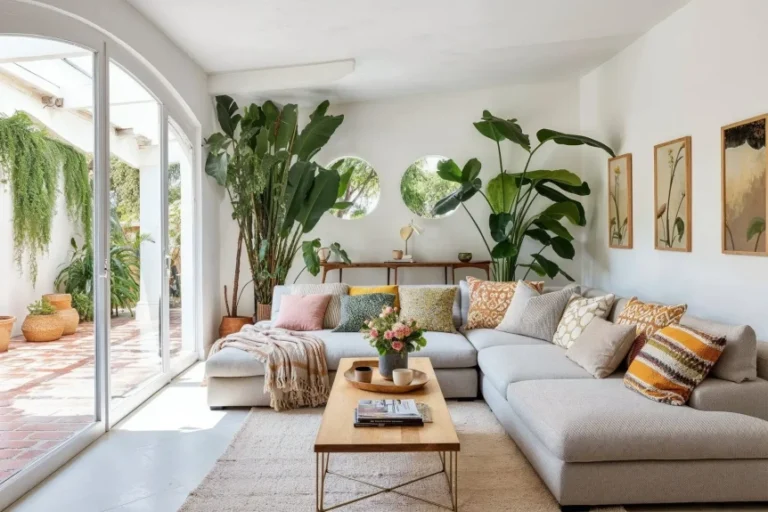
A softer, more restrained approach uses a palette of whites, creams, warm grays, and light wood tones. This version of boho style relies more on texture and shape than color for visual interest. It pairs beautifully with Scandinavian and Japandi influences. Our guide to boho color palettes for every room breaks down specific combinations you can use in different spaces throughout your home.
How to Mix Patterns Without the Chaos
Pattern mixing is one of the most distinctive features of bohemian design, and it’s also one of the most intimidating. The fear of creating a room that looks chaotic keeps many people from fully committing to the style. But with a few guiding principles, you can combine patterns confidently.
Vary the Scale
The simplest rule for successful pattern mixing is to vary the scale. Pair a large, bold print with a medium geometric pattern and a small, delicate motif. This creates visual interest without overwhelming the eye. For example, a large floral rug can work alongside striped throw pillows and a small geometric print on a lamp shade.
Anchor With a Dominant Pattern
Every well designed boho room has a visual anchor. This is usually the largest pattern in the space, often a rug or a statement piece of furniture. Other patterns in the room should support this anchor rather than compete with it.
Use a Consistent Color Thread
Even when your patterns vary widely in style and scale, a shared color thread ties everything together. If your anchor rug features rust, navy, and cream, pull those same colors into your pillows, throws, and curtains, even if the patterns are completely different.
For a deeper dive into this topic, read our full guide on how to mix patterns in bohemian style
Choosing Bohemian Furniture
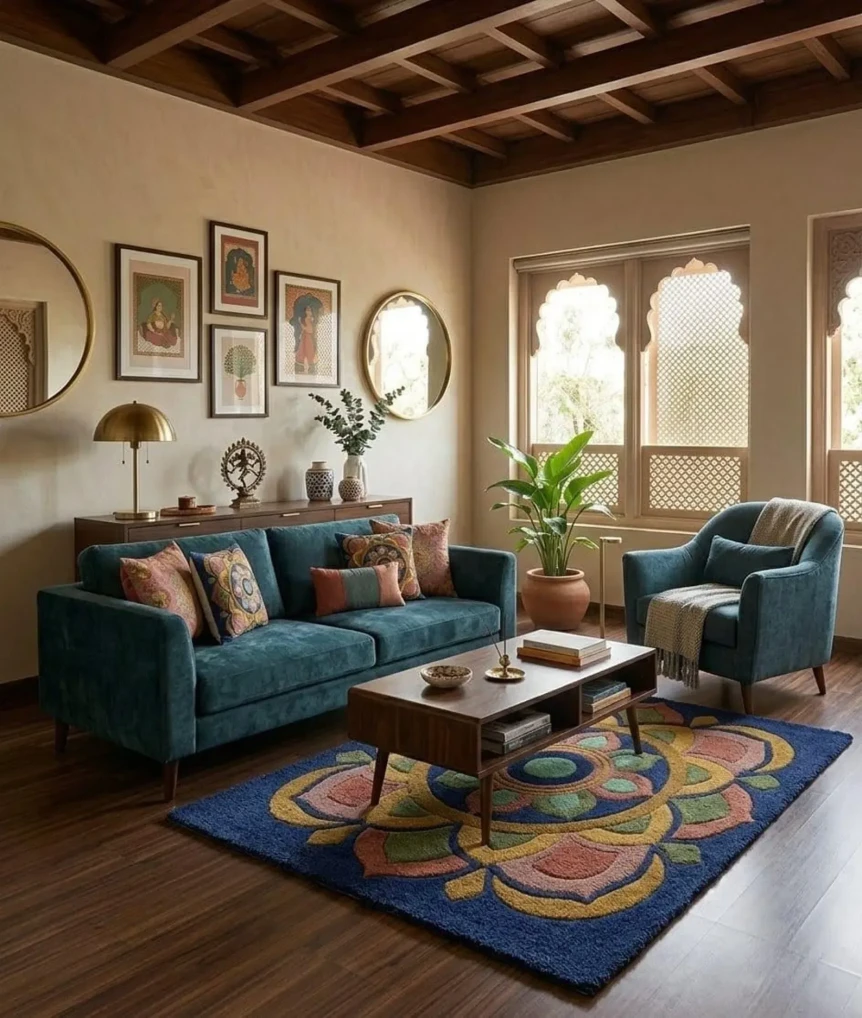
Bohemian furniture doesn’t follow a single era or aesthetic. Instead, it’s about mixing pieces that have character and feel collected over time. The best boho rooms feature a combination of vintage finds, artisan made pieces, and a few modern basics that serve as a neutral backdrop.
Key Furniture Pieces
A low profile sofa or daybed is a bohemian staple, especially when draped with colorful throws and piled with cushions. Rattan and wicker chairs add warmth and texture. Carved wood side tables, brass tray tables, and live edge coffee tables all bring organic shapes into the space.
Floor seating is another hallmark of boho design. Oversized floor cushions, poufs, and even meditation pillows offer flexible, relaxed seating options that encourage a casual, communal atmosphere.
Mixing Old and New
One of the strengths of bohemian design is that it doesn’t require you to invest in an entirely new set of furniture. A modern sofa can sit comfortably alongside a vintage trunk used as a coffee table. A brand new bookshelf can display a collection of antique vases and secondhand books.
For detailed recommendations on specific furniture types and how to source them, explore our bohemian furniture guide.
Bohemian Design Room by Room
Boho Living Room
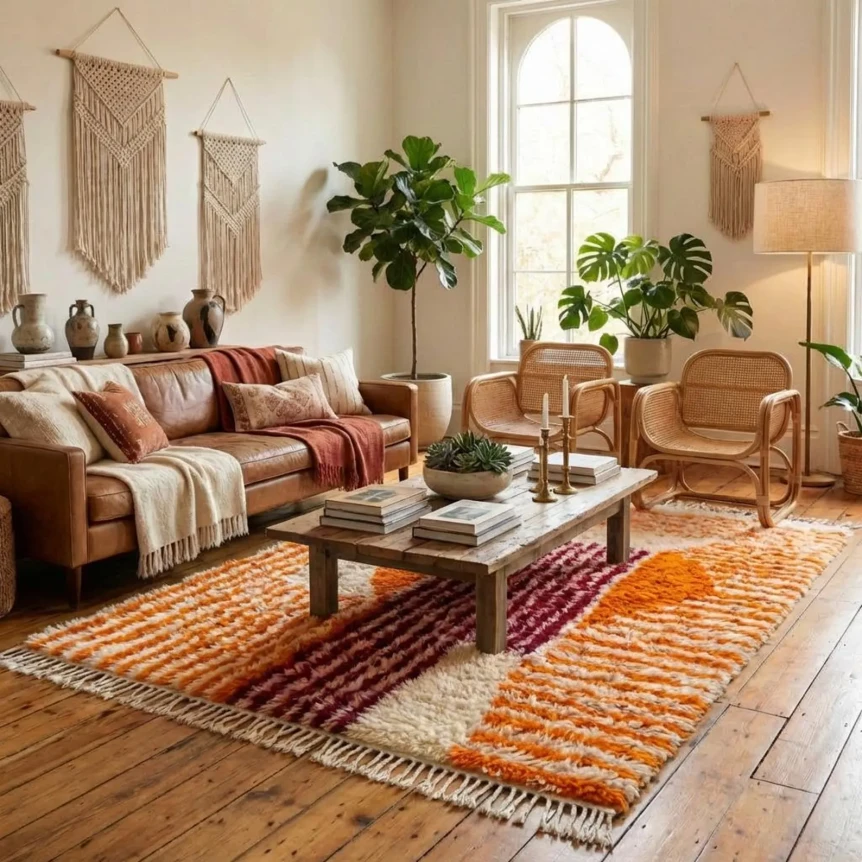
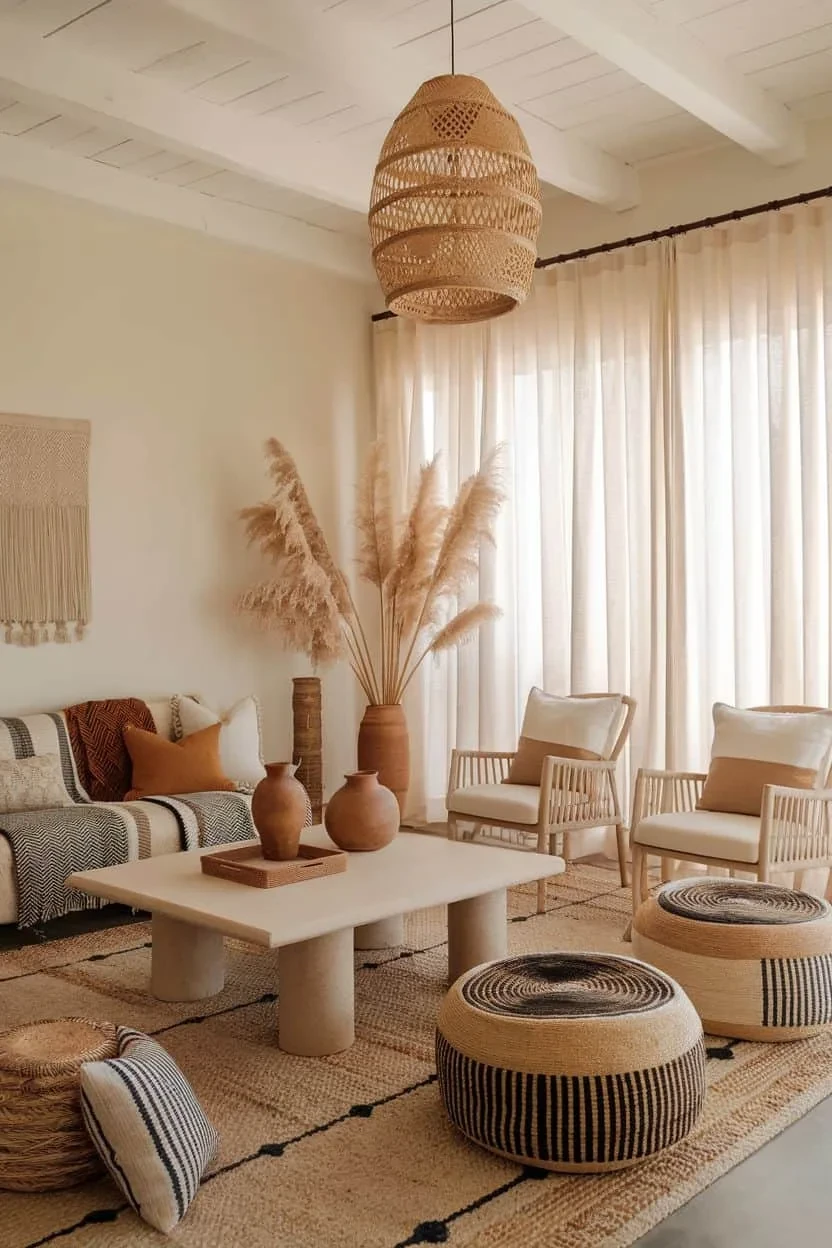
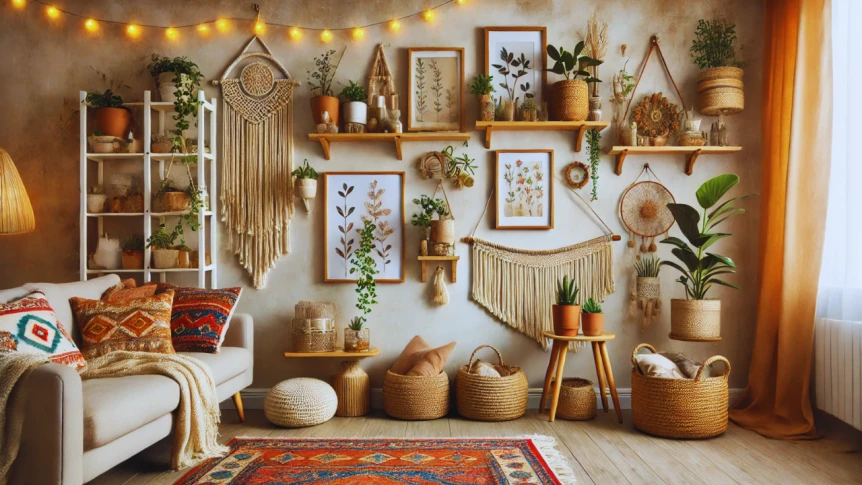
The living room is typically the focal point of a bohemian home. Start with a large area rug to anchor the seating area, then layer in textiles through throw pillows, blankets, and curtains. Mix seating types, combining a main sofa with accent chairs, floor cushions, and a woven pouf or two. Add warmth with ambient lighting from floor lamps and string lights, and don’t forget plenty of plants to bring the space to life.
For a complete breakdown of boho living room strategies, read our guide to boho living room ideas and inspiration.
Boho Bedroom
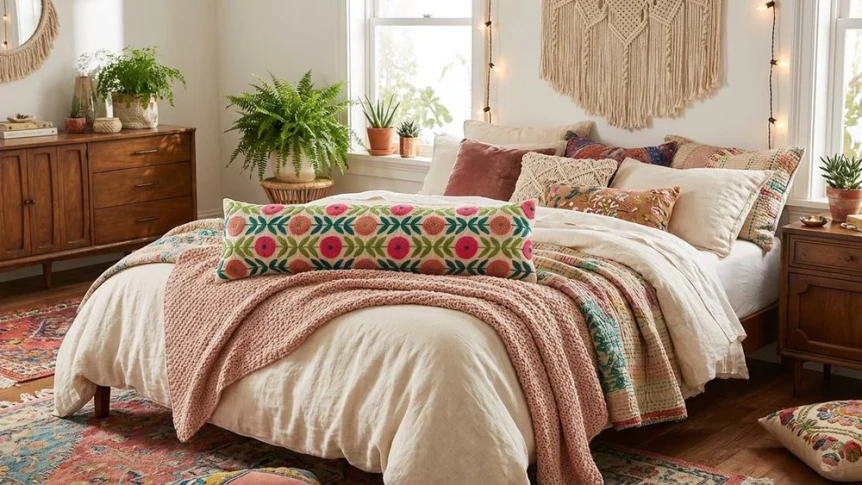
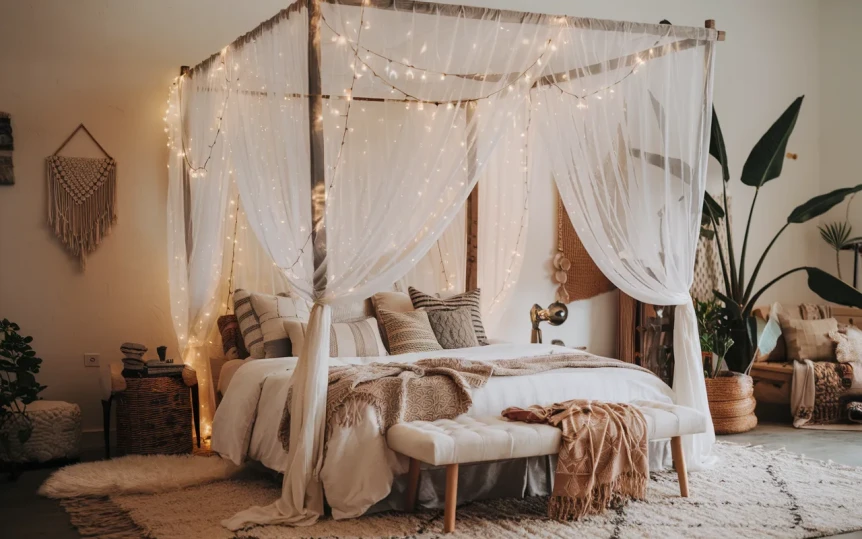
In the bedroom, bohemian design creates a sanctuary. A canopy bed or a simple bed frame draped with flowing fabric instantly sets a relaxed, romantic tone. Layer the bed with linen sheets, a textured quilt, and an assortment of patterned pillows. Hang a macrame wall piece or a gallery wall of collected art above the headboard. Bedside tables don’t need to match; a vintage stool on one side and a small carved table on the other adds character.
Discover more ideas in our guide to bohemian bedroom decor ideas.
Boho Kitchen and Dining
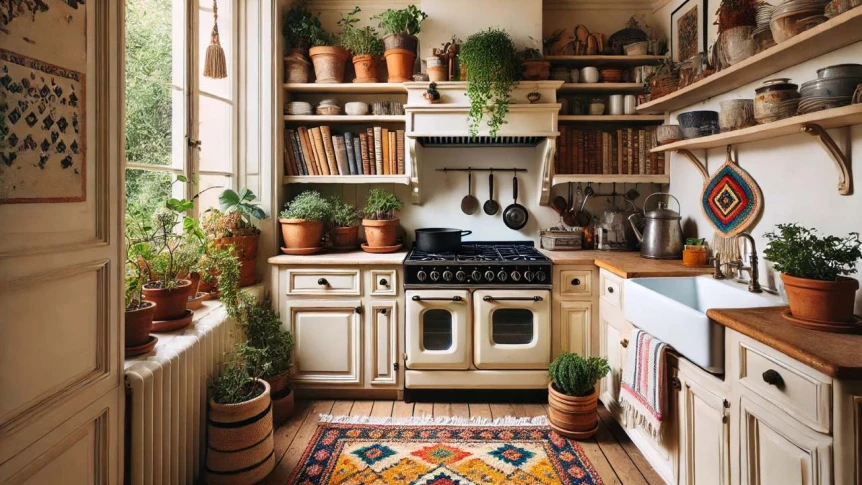
Bohemian kitchens and dining spaces often feature open shelving to display handmade pottery and vintage dishes. A rustic wooden dining table with mismatched chairs is a classic boho move. Woven placemats, colorful napkins, and a centerpiece of dried flowers or a potted herb garden complete the look.
Boho Bathroom
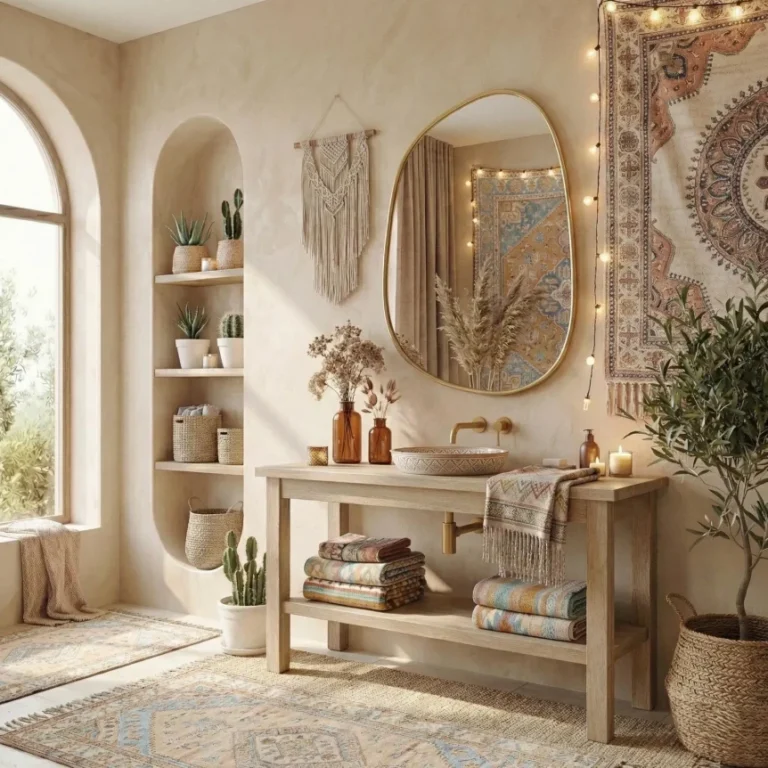
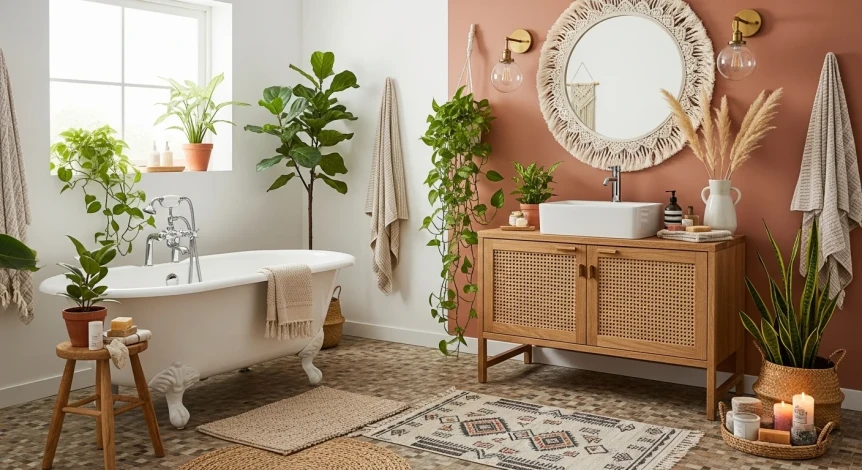
Even small bathrooms can embrace boho style. A woven basket for storage, a vintage mirror with an ornate frame, a Turkish towel in place of standard bath towels, and a few trailing plants on a shelf can make a big difference. If you’re able to make structural changes, patterned tile or a wooden vanity adds lasting bohemian character.
Boho Wall Decor and Art
Walls in a bohemian home are rarely left bare. They serve as a canvas for personal expression, whether through collected art, textiles, or handmade pieces. The approach should feel curated but not overly formal.
Gallery Walls
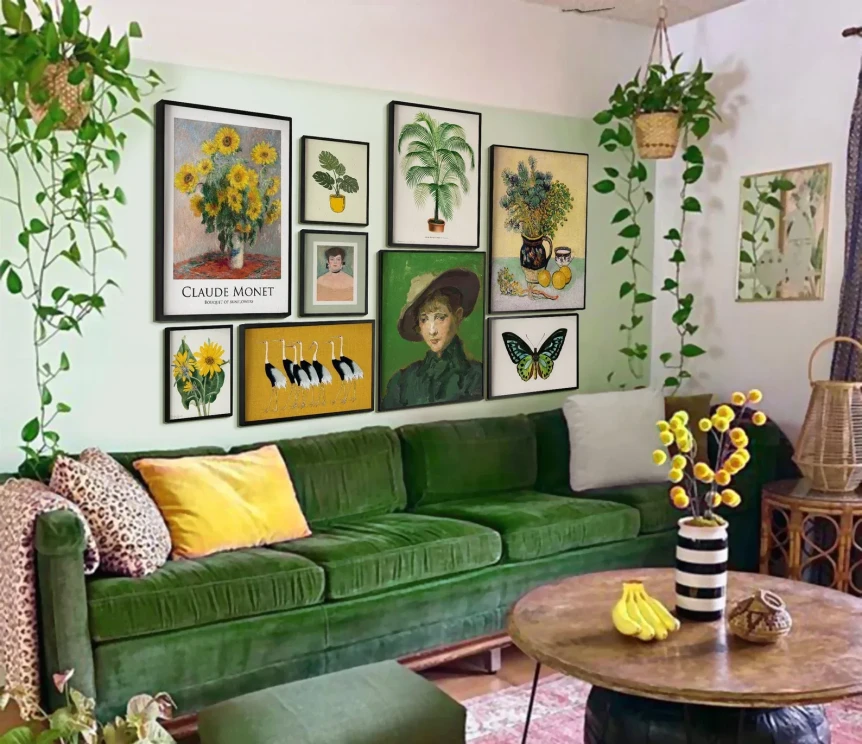
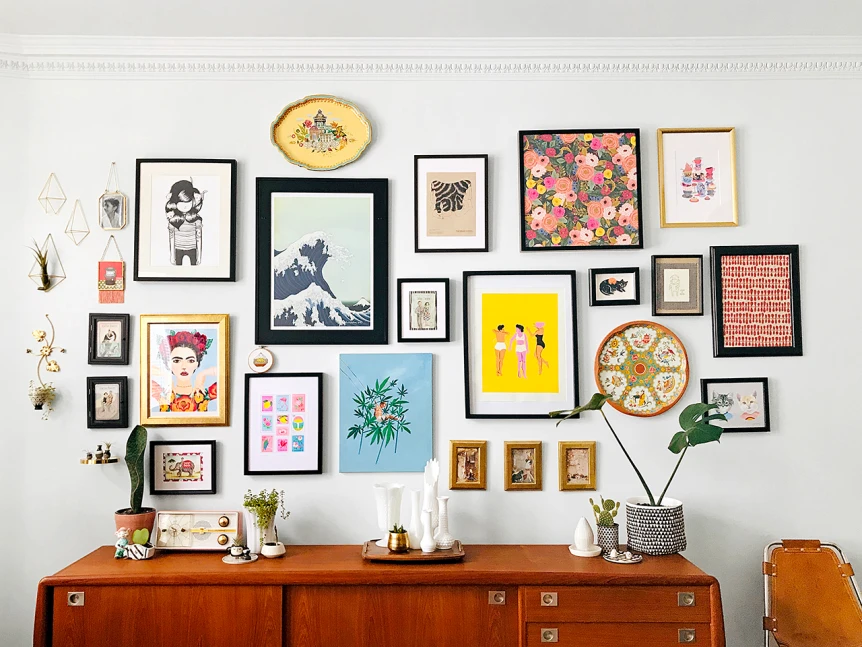
A bohemian gallery wall mixes framed prints, photographs, small paintings, and three dimensional objects like woven baskets or small shelves. The key is to avoid a perfectly symmetrical grid. Instead, arrange pieces in an organic, slightly asymmetrical layout that feels like it grew over time.
Textile Wall Hangings
Macrame wall hangings, woven tapestries, and vintage textiles are classic boho wall decor options. A large macrame piece above a bed or sofa creates a stunning focal point, while smaller woven pieces can fill in gaps on a gallery wall.
Explore more ideas in our guide to boho wall decor ideas for every room.
Plants and Natural Elements
Plants deserve their own section because they’re that important to bohemian design. They add color, texture, and a sense of vitality that no other decor element can replicate. Beyond aesthetics, plants improve air quality and create a calming atmosphere.
Best Plants for Boho Interiors
Trailing plants like pothos, string of pearls, and philodendron work beautifully in hanging planters or cascading down bookshelves. Statement plants like fiddle leaf figs, monstera, and bird of paradise add bold, sculptural shapes. Clusters of smaller plants in varied pots on a windowsill or shelf create a lush, garden like feel.
Plant Display Ideas
Use a variety of planters for visual interest. Mix materials like terracotta, ceramic, woven baskets, and brass. Hang plants from the ceiling with macrame holders or wall mounted brackets. Stagger plant heights using shelves, plant stands, and floor pots to create layers of greenery throughout the room.
Getting the Boho Look on a Budget
One of the great advantages of bohemian style is that it doesn’t require a large budget. In fact, some of the best boho interiors are built almost entirely from thrifted finds, DIY projects, and nature inspired elements that cost nothing at all.
Thrift and Vintage Shopping
Thrift stores, flea markets, estate sales, and online resale platforms are goldmines for bohemian decor. Look for vintage rugs, brass candleholders, ceramic vases, wooden frames, and unique furniture pieces. The imperfections and patina of older items add exactly the kind of character that boho style celebrates.
DIY Boho Projects
Macrame wall hangings, tie dyed pillow covers, hand painted pots, and woven baskets are all achievable DIY projects that add handmade character to your space. You don’t need to be an expert crafter. The slight imperfections of handmade pieces actually enhance the bohemian aesthetic.
For more detailed budget strategies, check out our guide to boho decor on a budget.
Boho vs. Other Popular Styles
Understanding how bohemian design relates to other styles can help you refine your approach, especially if you’re drawn to more than one aesthetic.
Boho vs. Minimalism
These two styles sit at opposite ends of the spectrum. Minimalism values restraint, clean lines, and open space. Boho thrives on layers, color, and visual richness. However, a growing trend blends both approaches into what’s often called “minimal boho,” which uses a neutral palette and fewer objects but keeps the organic textures and handmade quality of bohemian design.
Boho vs. Scandinavian
Scandinavian design shares boho’s love of natural materials and cozy textiles, but it leans toward a more pared back, functional aesthetic. Combining these styles creates a look that feels warm but not cluttered, with plenty of white space balanced by textured accents and greenery.
Boho vs. Mid Century Modern
Mid century modern pieces, with their clean lines and organic shapes, mix surprisingly well with bohemian elements. A mid century sofa in a warm tone can anchor a boho room perfectly, while vintage mid century lighting adds a retro touch that complements eclectic decor.
Boho vs. Coastal
Coastal and bohemian styles overlap in their use of natural materials like rattan, jute, and linen. The difference lies in color palette and mood. Coastal leans toward blues, whites, and sandy neutrals, while boho embraces warmer, more saturated tones. Blending the two creates a relaxed, beachy boho look that’s perfect for warmer climates.
Common Bohemian Design Mistakes
Even the most forgiving design style has its pitfalls. Avoiding these common mistakes will help your boho space feel curated rather than chaotic.
No Focal Point
A room full of interesting objects without a clear focal point can feel overwhelming. Choose one statement piece per room, whether it’s a bold rug, a large piece of art, or a stunning piece of furniture, and build the rest of the design around it.
Ignoring Negative Space
Bohemian doesn’t mean filling every surface. Leave some breathing room. Empty wall space, clear tabletops, and visible floor area give the eye a place to rest and prevent the room from feeling suffocating.
All Pattern, No Solids
Too many patterns without solid colored pieces to break them up creates visual noise. Use solid textiles and simple forms as buffers between patterned elements.
Skipping the Edit
The best bohemian rooms go through an editing process. Live with your pieces for a while, then remove anything that doesn’t contribute to the overall feel. Just because something is beautiful on its own doesn’t mean it belongs in that particular room.
Recommended Resources and Related Guides
Boho Living Room Ideas and Inspiration
A complete guide to designing a bohemian living room, covering layout tips, seating options, color schemes, and styling strategies for every budget.
Bohemian Bedroom Decor Ideas
Everything you need to create a cozy, layered boho bedroom, from bedding and textiles to lighting and wall decor.
Boho Color Palettes for Every Room
Explore curated color combinations that capture the bohemian spirit, organized by mood and room type.
How to Mix Patterns in Bohemian Style
Learn the rules of pattern mixing that make boho rooms feel intentional, not chaotic. Includes visual examples and practical tips.
Boho Wall Decor Ideas for Every Room
From gallery walls to textile hangings, discover creative ways to fill your walls with bohemian character.
Bohemian Furniture Guide: What to Buy and Where
A practical guide to sourcing and selecting furniture that fits the bohemian aesthetic, including vintage shopping tips and key pieces to invest in.
Boho Decor on a Budget
Proven strategies for achieving a beautiful bohemian look without overspending, from thrift store finds to easy DIY projects.
Frequently Asked Questions
What is bohemian interior design?
Bohemian interior design is a style rooted in creative freedom that combines eclectic colors, layered textiles, global influences, and natural materials to create spaces that feel personal and collected over time. It celebrates individuality over rigid rules and draws from various cultures and artistic traditions.
Is bohemian style hard to pull off?
Not at all. Bohemian design is one of the most forgiving styles because it embraces imperfection and variety. The key is to anchor your space with a focal point, use a consistent color thread, and edit as you go. Start with a few key pieces and build over time.
Can you mix bohemian with modern design?
Yes. Modern boho is one of the most popular hybrid styles right now. It pairs the clean lines and neutral tones of modern design with the warmth, texture, and handmade quality of bohemian pieces. The result is a space that feels curated and comfortable without being cluttered.
What colors are most common in bohemian interiors?
Earth tones like terracotta, ochre, rust, and olive are bohemian staples. Jewel tones such as deep teal, burgundy, and amber are also popular for adding richness. Many boho spaces start with a warm neutral base and layer in color through textiles, art, and accessories.
How do I do bohemian style on a budget?
Bohemian style is naturally budget friendly. Shop thrift stores, flea markets, and online resale platforms for vintage finds. Try DIY projects like macrame wall hangings or painted pots. Use nature inspired elements like dried flowers and foraged branches. Start with what you already own and layer in new pieces gradually.
Conclusion
Bohemian interior design is ultimately about creating a home that reflects who you are. There are no wrong answers, only choices that resonate with your personal taste, your experiences, and the way you want your space to feel. Start with the elements that speak to you most, whether that’s a bold rug, a collection of handmade pottery, or a room full of trailing plants, and let the rest unfold naturally.
The guides linked throughout this page are designed to help you dive deeper into specific areas of boho design, from choosing the right color palette to mixing patterns with confidence. Take your time, trust your instincts, and enjoy the process of building a space that’s truly yours.