Small Bedroom Design Ideas That Make the Most of Your Space

By Tereza Hower | Published March 11, 2026 | Updated March 27, 2026
Small bedrooms are one of the most common design challenges people face, and one of the most solvable. The instinct when working with a small room is often to try to make it feel bigger by keeping everything pale and minimal. That can work, but it is only one approach among many, and not always the best one.
This guide covers the strategies that genuinely work in small bedrooms: the layout decisions, the furniture choices, the color approaches, and the visual tricks that make compact spaces feel considered, personal, and surprisingly generous.
Start With an Honest Layout
In any bedroom, the layout is the most important decision. In a small bedroom, it is even more critical because poor placement of even a single piece of furniture can make the room feel cramped and difficult to navigate.
Begin by measuring everything accurately: the room dimensions, the ceiling height, the position and swing direction of the door, the size and placement of windows, and the location of radiators or heating units. These are your fixed constraints and the layout has to work around them.
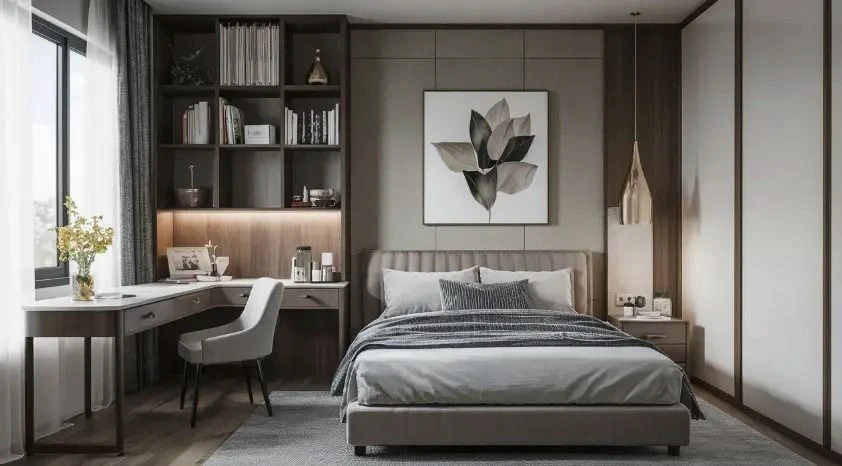
The bed will take up the largest proportion of floor space in a small bedroom, so its placement is the first decision to make. In most small rooms, the wall directly opposite the door is the best position: this creates a clear focal point as you enter, keeps the rest of the floor as open as possible, and gives you the most flexibility with what remains.
Check the door swing carefully before deciding on any layout. A door that opens into the room and hits a bed or a wardrobe is a daily frustration that is entirely avoidable with a little planning. In some rooms, reversing the door hinge or changing it to a sliding or barn door style frees up significant floor space.
Aim for at least 24 inches of clearance on the sides of the bed you use regularly. If the room is very small, you may only be able to achieve this on one side, with the other side of the bed pushed closer to the wall. This is a perfectly workable arrangement, especially in a single occupancy room.
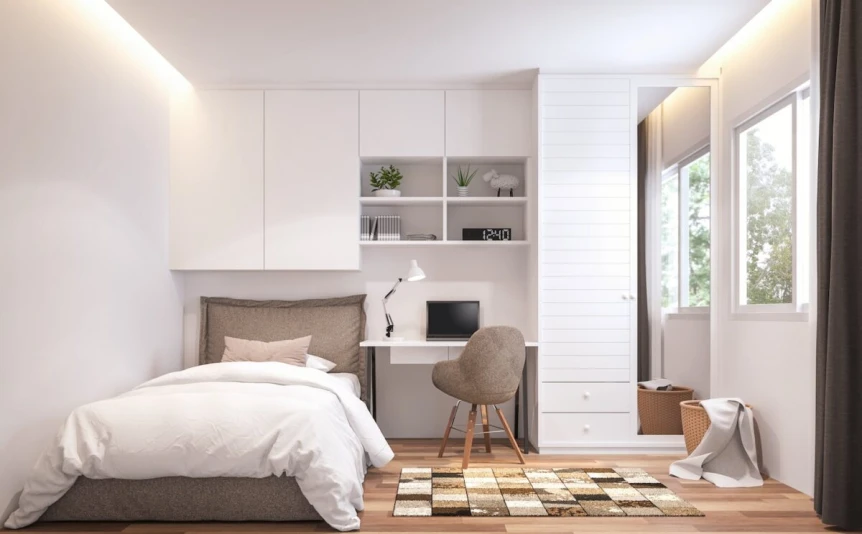
Choose Furniture That Fits the Scale of the Room
One of the most common small bedroom mistakes is furniture that is too large for the space. A king-size bed in a room that struggles to accommodate it, a wardrobe that blocks the window, a dresser that forces you to squeeze past it every morning: these create physical and visual discomfort that no amount of styling will fix.
Be honest about what size bed the room can actually accommodate comfortably, with reasonable circulation space on each side, without dominating the entire floor. A double bed in a room that genuinely only suits a double will look and feel better than a squeezed-in king.
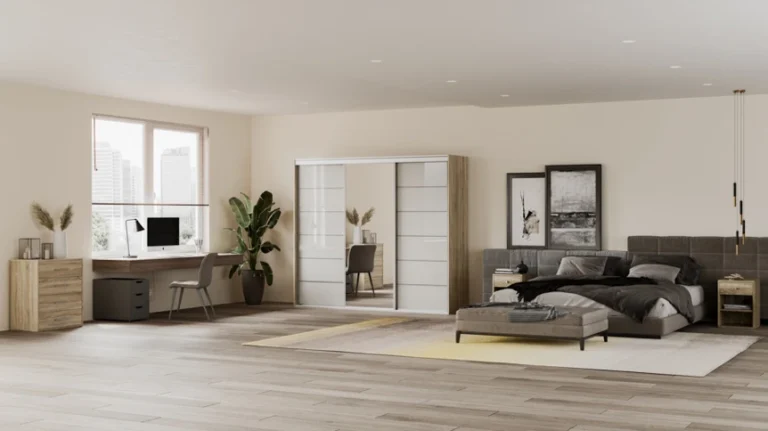
Low-profile furniture is particularly effective in small bedrooms. A bed frame without a footboard, low nightstands, and a wardrobe that stops short of the ceiling all keep the visual plane of the room lower, which makes it feel less confined. Furniture with legs, as opposed to pieces that sit directly on the floor, helps too: the visible floor beneath a bed or chair creates a sense of depth and space that solid, floor-based pieces do not.
Wall-mounted nightstands are one of the most useful additions to a small bedroom. By clearing the floor beneath the nightstand area, they make the room easier to clean and create a genuinely more open feel. They also allow you to position the nightstand surface at exactly the height you want, which freestanding options do not always permit.

Built-In Storage: Essential in Small Bedrooms
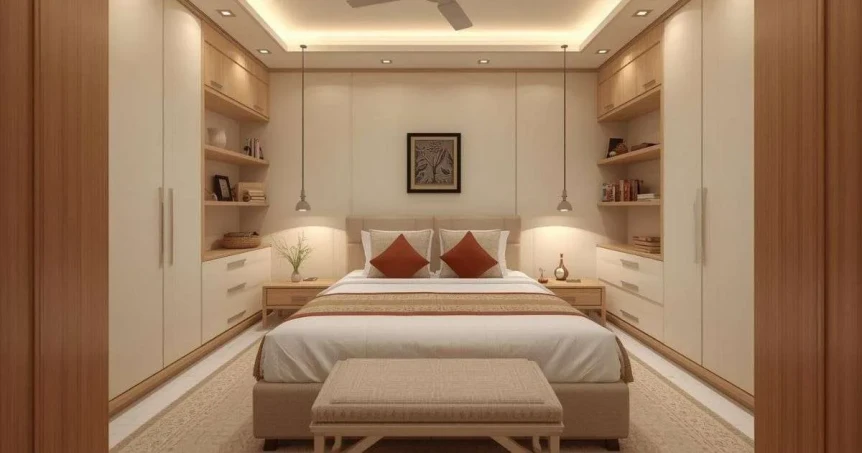
In a small bedroom, freestanding furniture takes up floor space that is already limited. Built-in storage, particularly floor-to-ceiling wardrobes fitted across a full wall, reclaims that floor space by incorporating storage into the architecture of the room itself.
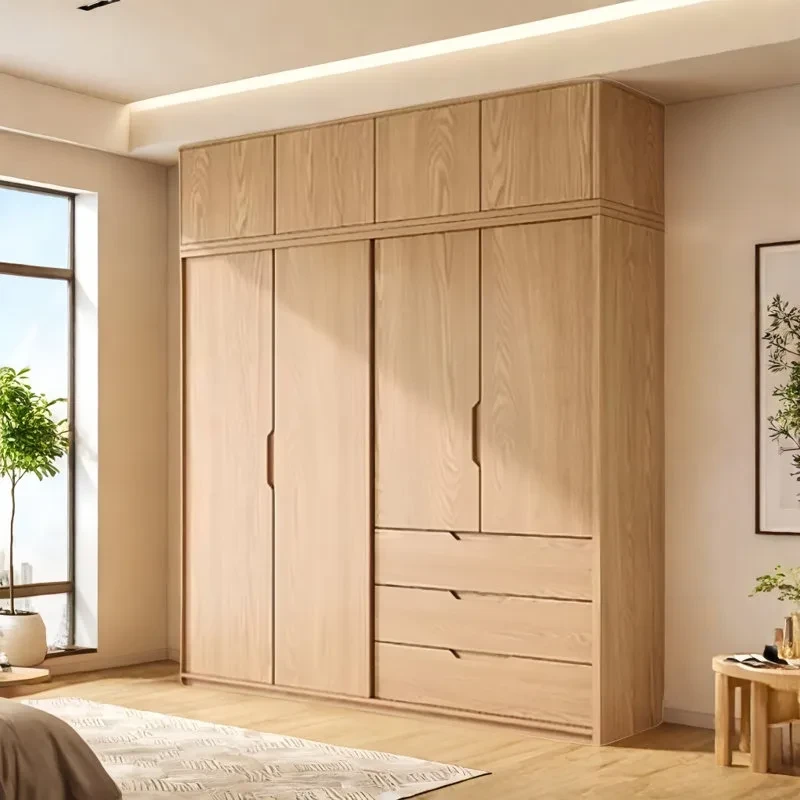
A fitted wardrobe that spans an entire wall looks much less bulky than the same amount of storage distributed across multiple freestanding pieces. With flush doors, it almost disappears into the room and creates an architectural backdrop that makes the bedroom feel more considered rather than more crowded.
Alcoves are particularly valuable in small bedrooms. If your room has a chimney breast or other projection that creates flanking alcoves, fitting shelving or wardrobes into them is almost always the best use of that space. A wardrobe in an alcove sits tidily within the room’s footprint without projecting into the floor area.
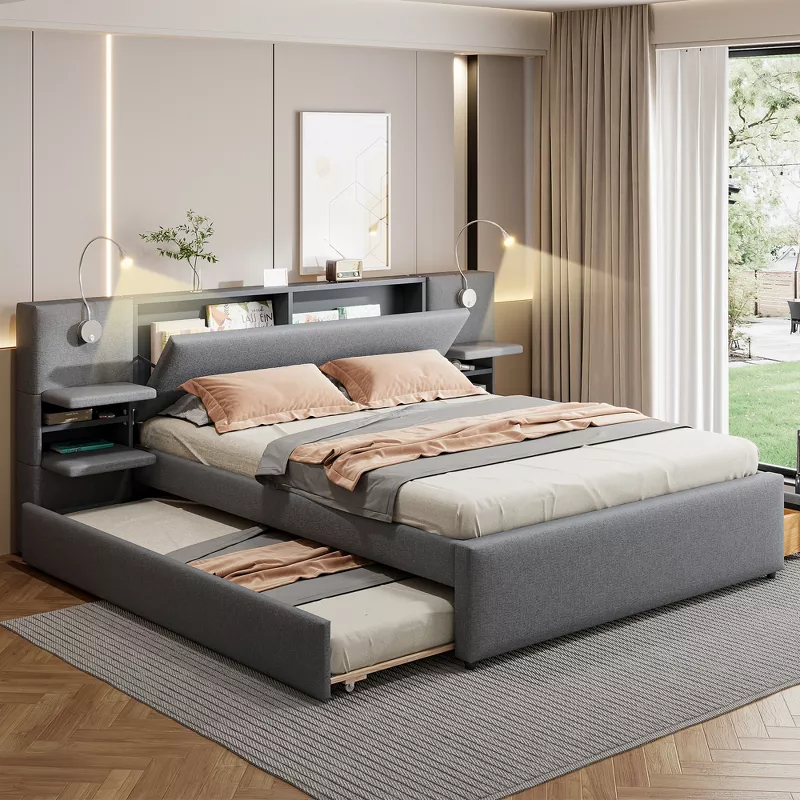
Under-bed storage is non-negotiable in a small bedroom. A storage bed with integrated drawers, or a bed raised on legs with rolling storage boxes beneath, can provide enough additional capacity to make other storage pieces unnecessary. This kind of invisible storage, which does not visually clutter the room, is particularly valuable in tight spaces.
Color: Break the All-White Rule
The conventional wisdom for small rooms is to paint them white to make them feel bigger. This is not wrong exactly, but it is incomplete, and in many cases a different approach produces a better result.
White walls can work beautifully in small bedrooms, particularly if the room receives good natural light and the furniture and textiles introduce enough warmth and texture to prevent it from feeling clinical. But white is not the only path to a spacious-feeling room, and in rooms with limited natural light, a stark white can actually emphasize the room’s limitations rather than overcome them.
A monochromatic deep-tone approach, where walls, ceiling, and woodwork are all painted in the same shade, can make a small bedroom feel intentionally cocooning rather than accidentally small. When the boundaries of the room are all the same color, the eye does not land on them in the same way. The room reads as a whole rather than as a series of walls at close range. Deep sage, dusty blue, warm terracotta, and soft charcoal all work well with this approach.
Whatever color you choose, painting the ceiling the same tone as the walls, or very close to it, is one of the most effective small room tricks available. Contrasting ceiling colors draw attention upward and make the ceiling feel lower. A continuous tone does the opposite.
Mirrors: A Genuine Spatial Tool
Mirrors deserve their reputation as a small room trick because they genuinely work. A large mirror on a wall opposite or adjacent to a window doubles the apparent depth of the room and bounces light around in a way that smaller rooms benefit from enormously.
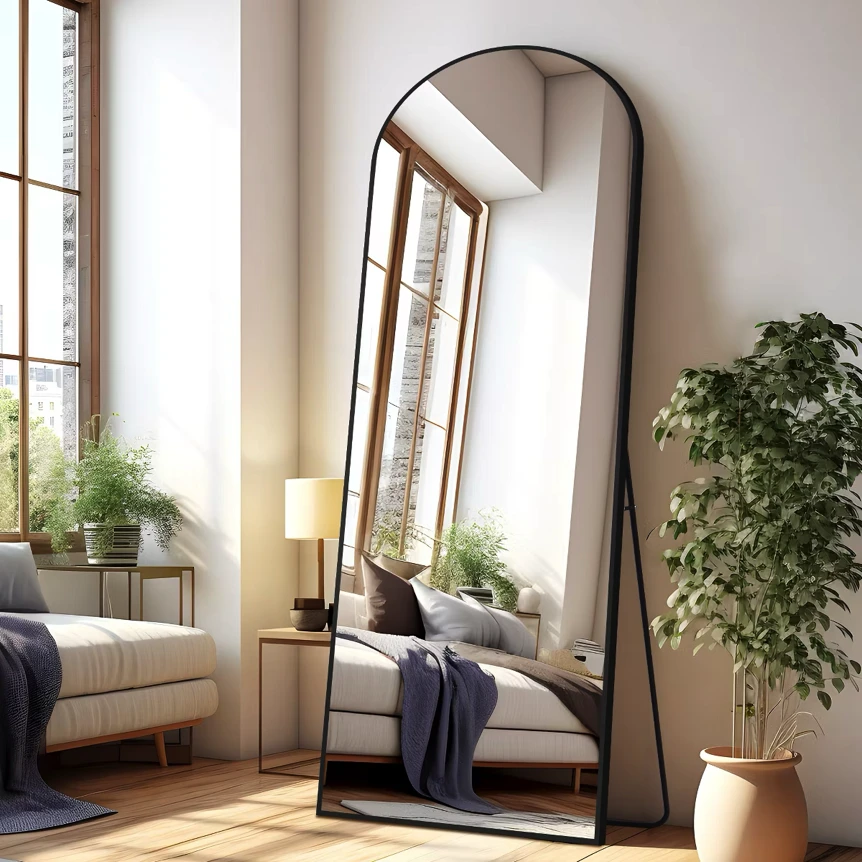
A full-height mirror leaning against a wall or mounted on the inside of a wardrobe door is the most space-efficient option. It serves a practical purpose while doing real spatial work. A large, simply framed mirror hung on a wall works similarly and has more decorative presence.
Avoid lots of small mirrors in different positions: they fragment the reflection and create visual busyness without the spatial benefit of a single large piece.
Smart Lighting for Small Bedrooms
Lighting has a significant effect on how a small room feels, often more than the color of the walls. A well-lit small bedroom can feel open and welcoming. A poorly lit one, regardless of its decor, feels cramped and uninviting.
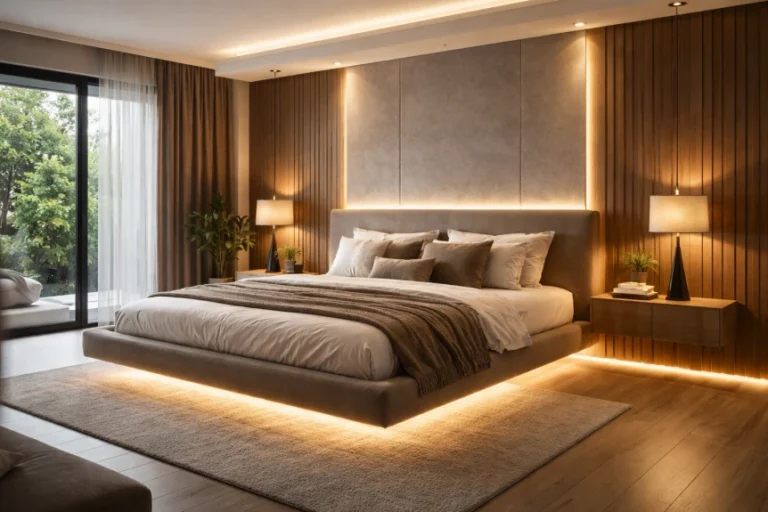
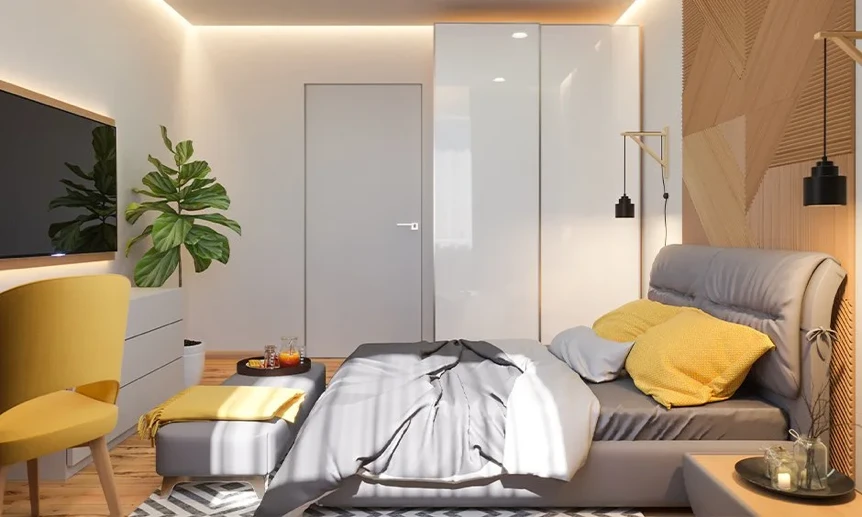
Avoid relying on a single overhead light, which creates a flat, even illumination that eliminates the shadow and depth that make rooms feel interesting and spacious. Wall-mounted sconces, small table lamps, and indirect lighting all contribute to a more layered feel that actually makes a room feel larger by creating a sense of depth.
In small bedrooms, wall-mounted lighting is particularly useful because it does not take up any surface or floor space. A pair of wall sconces flanking the bed replaces two table lamps and two nightstand surfaces, freeing up those surfaces for other things, or making it possible to use smaller, more delicate nightstands.
Textiles: Keep Them Simple
In a small bedroom, it is tempting to use textiles to add personality and warmth, which they can, but overloading the bed with cushions, throws, and multiple layers of bedding creates a visual complexity that makes the room feel busier than it is.
A simple, well-chosen bed scheme works best: a good duvet cover, two sleeping pillows, and one or two well-placed cushions or a single folded throw. The bed will still feel warm and inviting without the density of layering that suits larger rooms better.
A rug is still worth using in a small bedroom, but proportioning it correctly is important. A rug that is too small will emphasize the room’s limitations. Bedside runners, one on each side of the bed, are a practical and visually appropriate solution in rooms where a larger rug under the bed is not feasible.
These related guides cover the other elements of a great small bedroom:
- Best Modern Bedroom Furniture for 2026
- Smart Bedroom Storage Ideas for a Clutter-Free Space
- Modern Bedroom Color Schemes That Actually Work
- Modern Bedroom Lighting Ideas for Every Style
- How to Choose the Right Rug for Your Bedroom
For the full bedroom design walkthrough, read The Complete Guide to Modern Bedroom Design.