Modern Bedroom Lighting Ideas for Every Style

By Tereza Hower | Published March 12, 2026 | Updated March 27, 2026
Lighting is the design element that most people get right in theory and wrong in practice. We all know that a single overhead bulb is not enough, and yet bedrooms all over the world rely on exactly that. The result is rooms that feel flat, uncomfortably bright at night, and oddly uninviting despite perfectly good furniture and a thoughtful color scheme.
Good bedroom lighting is not complicated, but it does require a little planning. This guide walks through everything you need to know to light a modern bedroom well, from the principles behind layered lighting to the specific fixtures that work best and how to make the most of natural light.
Why Layered Lighting Matters in a Bedroom
The bedroom is the most multi-functional room in most homes, even though we rarely think of it that way. It is a place to sleep, to get ready in the morning, to read in the evenings, occasionally to work or exercise, and always to wind down. Each of these activities benefits from a different quality and intensity of light.
Layered lighting addresses this by combining multiple light sources that serve different purposes and can be used in different combinations. The three layers are ambient, task, and accent. Used together, they give the room tremendous flexibility and allow you to shift the atmosphere of the space dramatically with nothing more than a few switches or a dimmer control.
A bedroom with only one light source, regardless of how good that source is, will always feel limited. A bedroom with well planned layers feels alive and responsive to whatever you need from it at any given moment.
Ambient Lighting: The Foundation
Ambient light is the room’s primary illumination. It does not have to be bright, and in a bedroom it probably should not be, but it needs to be sufficient to move around safely, get dressed, and generally function in the space without straining your eyes.
In modern bedrooms, the most common ambient light sources are recessed downlights, pendant fixtures, and flush ceiling lights. Each has its merits depending on the room.
Recessed downlights are the most versatile option for ambient lighting. They are unobtrusive, distribute light evenly, and disappear into the ceiling in a way that keeps the room feeling clean and uncluttered. The key is to position them thoughtfully so that the light falls where you need it without creating harsh pools of brightness or deep shadows. A common mistake is to position downlights directly above the bed, which puts a beam of light directly in your eyes when you are lying down. Position them toward the perimeter of the room instead.
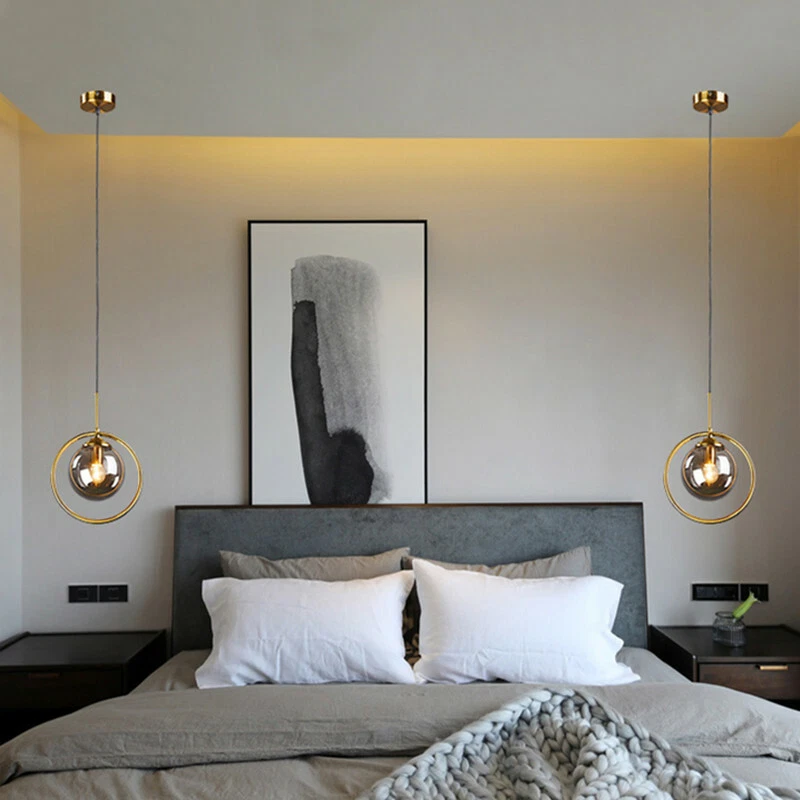
Pendant lights add a decorative dimension to ambient lighting and can become a real focal point in a modern bedroom. A single large pendant above or near the bed brings warmth and character while providing general illumination. In rooms with lower ceilings, a flush or semi-flush fixture achieves a similar effect without the drop.
Whatever fixture you choose for ambient light, install it on a dimmer. This single step transforms a bedroom more than almost any other change you can make. The ability to drop the ambient light to a very low level in the evenings supports the body’s natural wind-down process and extends the functional range of the room considerably.
Task Lighting: Reading and Getting Ready
Task lighting in a bedroom serves two main functions: reading in bed and getting ready in the morning. Both require a quality of light that is different from ambient illumination, and both benefit from being on independent controls so they do not affect the rest of the room’s lighting.
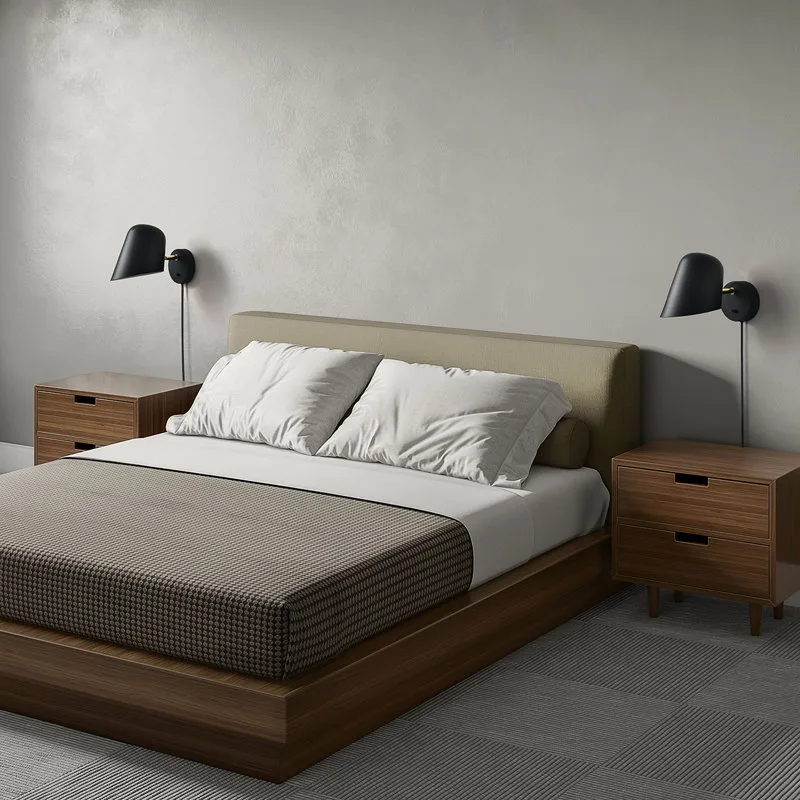
Bedside reading light is where wall-mounted sconces earn their place in a modern bedroom. Fixed at the right height, a wall sconce directs light precisely where you need it without spilling brightness across the whole room or disturbing a partner who is trying to sleep. Look for sconces with a directional shade or arm that you can angle toward the page. Plug-in versions are widely available and a good option if your walls do not have wiring in the right position.
Table lamps on nightstands are the more traditional approach and still work beautifully in modern bedrooms. The lampshade material matters: a fabric shade diffuses light softly, while a metal or opaque shade creates a more focused beam. For reading, a slightly more focused lamp tends to work better. For ambiance, a softly diffused shade is more effective.
Getting-ready lighting is often neglected in bedroom design. If you have a dressing area, a vanity mirror, or even just a full-length mirror in the room, the quality of light around it matters for the practical business of getting dressed and applying makeup. Ideally, this light source should be at face level rather than overhead, which eliminates the unflattering shadows that ceiling-only lighting creates. A pair of wall-mounted lights flanking a mirror is the most effective approach.
Accent Lighting: Depth and Atmosphere
Accent lighting is the layer most people skip, which is a shame because it contributes more to atmosphere than either of the other two layers. Accent lighting highlights architectural features, adds depth and shadow, and creates a warmth that ambient lighting alone cannot provide.
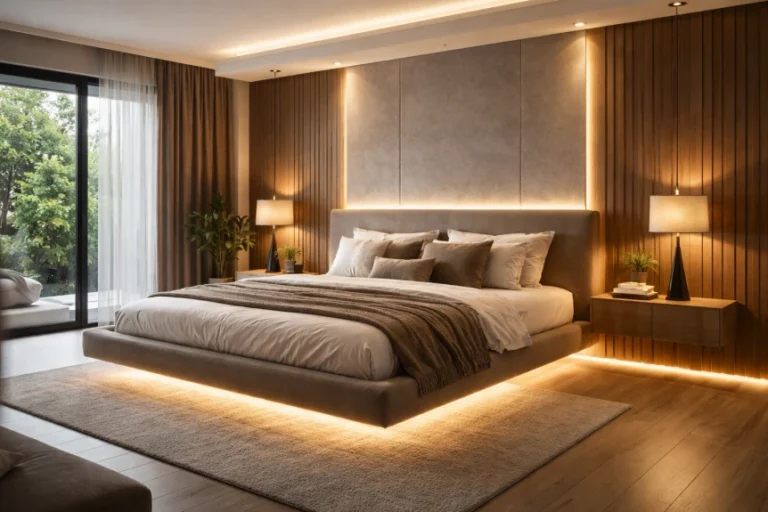
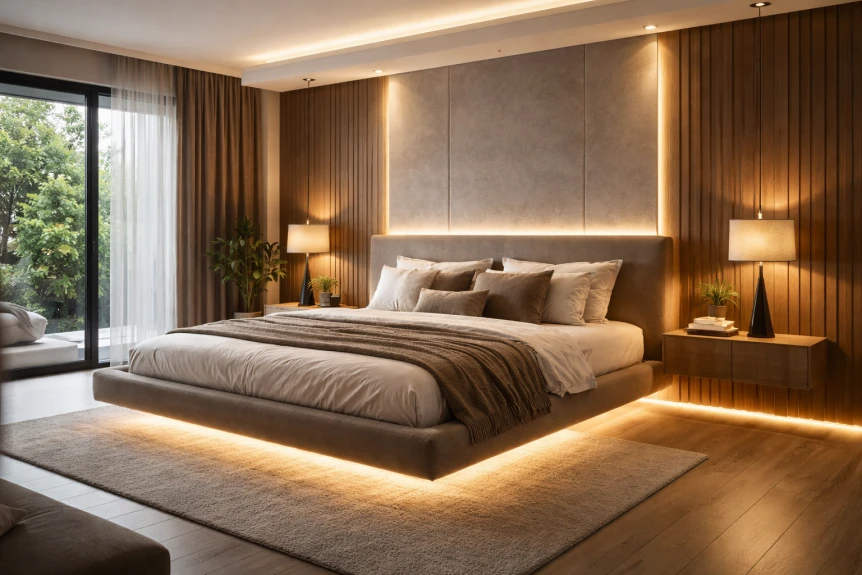
In a modern bedroom, accent lighting options include LED strip lights fitted behind a headboard or beneath the bed frame, creating a soft halo of light at floor level. This kind of indirect lighting has a grounding effect and makes the furniture appear to float slightly, which is a subtle but satisfying visual trick. Up-lights behind a plant or in a corner add depth by bouncing light off the ceiling and walls. A picture light above a piece of artwork draws attention to it in the evenings in a way that daytime ambient light never quite achieves.
Accent lights should be warm in color temperature, typically in the 2700K to 3000K range, and should always be dimmable. Their job is to create atmosphere, not to illuminate, and overly bright accent lights undermine their own purpose.
Natural Light: Working With What You Have
Artificial lighting is only part of the story. The natural light your bedroom receives has an enormous influence on how the room feels throughout the day, and understanding it helps you make better decisions about both window treatments and artificial light placement.
East-facing bedrooms receive morning light, which is bright, cool, and energizing. If you value a well-lit start to the day, an east-facing room is a genuine asset. If you are a light sleeper or like to sleep late on weekends, good blackout coverage becomes essential.
West-facing bedrooms receive afternoon and evening light, which is warm, golden, and flattering. These rooms tend to look best in the late afternoon and early evening and can feel somewhat dark in the morning.
North-facing bedrooms receive the least direct sunlight and tend to have a cooler, more consistent light throughout the day. The lack of direct sun can make these rooms feel a little flat. Warm color palettes and warm artificial lighting both help to counteract this.
South-facing bedrooms get the most light overall but can also get uncomfortably bright at midday in warmer months. Layered window treatments, combining a sheer to diffuse the direct light with a blackout blind for full coverage, give you the most flexibility.
Window Treatments and Light Control
How you manage natural light is as important as how you introduce artificial light. Window treatments in a bedroom need to serve two sometimes competing purposes: letting in the right amount of light when you want it and blocking it when you do not.
The most versatile approach is a layered treatment: a roller blind or Roman blind in a blackout fabric for full light block, with a sheer curtain in front to diffuse light on days when you want some natural illumination without direct sun. This combination gives you total flexibility and also looks layered and considered in a way that a single blind does not.
In terms of materials, linen curtains are a natural partner for modern bedroom design. They filter light beautifully, have a relaxed quality that suits the bedroom, and age well. For a more polished, architectural look, roller blinds in a woven or textured fabric give cleaner lines while still providing warmth.
Good bedroom lighting sets the mood for the whole room. Build on that foundation with these related guides:
- Best Modern Bedroom Furniture for 2026
- Modern Bedroom Color Schemes That Actually Work
- How to Design a Minimalist Bedroom You’ll Love
- Smart Bedroom Storage Ideas for a Clutter-Free Space
- Small Bedroom Design Ideas That Make the Most of Your Space
For the full bedroom design picture, read The Complete Guide to Modern Bedroom Design.