How to Mix Patterns in Bohemian Style Without the Chaos

By Tereza Hower | Published April 2, 2026 | Updated April 3, 2026
Pattern mixing is what gives bohemian rooms their energy and visual richness. A striped throw next to a floral pillow, a geometric rug beneath an ikat curtain, a block print bedspread layered with an embroidered quilt. When it works, it looks effortless. When it doesn’t, it looks like a yard sale.
The good news is that pattern mixing isn’t random. There are practical principles that guide the process, and once you understand them, combining different prints becomes intuitive rather than stressful. This guide breaks down those principles so you can layer patterns with confidence in any room.
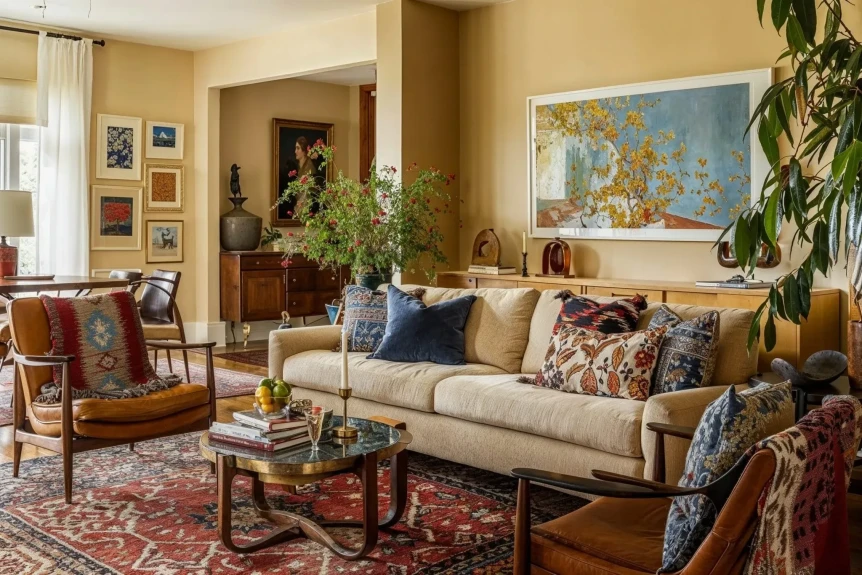
Why Pattern Mixing Matters in Boho Design
Bohemian style is, by nature, eclectic. It draws from different cultures, time periods, and artistic traditions, which means the textiles and decor in a boho room naturally feature a variety of patterns. Trying to limit yourself to a single pattern type would actually work against the style.
Pattern mixing adds depth, visual interest, and a sense of collected history to a room. It’s one of the key differences between a bohemian interior and a more uniform, catalog style space. For a broader understanding of what makes bohemian design work, our complete guide to bohemian interior design covers the full picture.
The Foundational Rules
Rule 1: Vary the Scale
This is the single most important rule. When you combine patterns, make sure they vary in scale. Use one large scale pattern, one medium scale, and one small scale in the same space can coexist beautifully because the eye processes each pattern differently based on its size.
If all your patterns are the same scale, they compete for attention and the room feels noisy. Varying the scale creates a visual hierarchy that’s much easier to take in.
Rule 2: Share a Color Thread
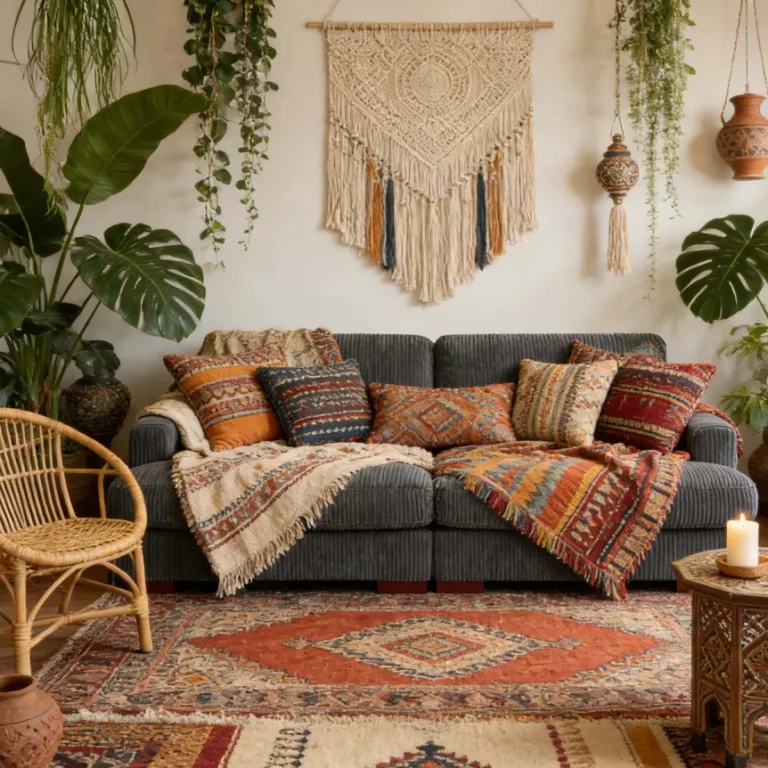
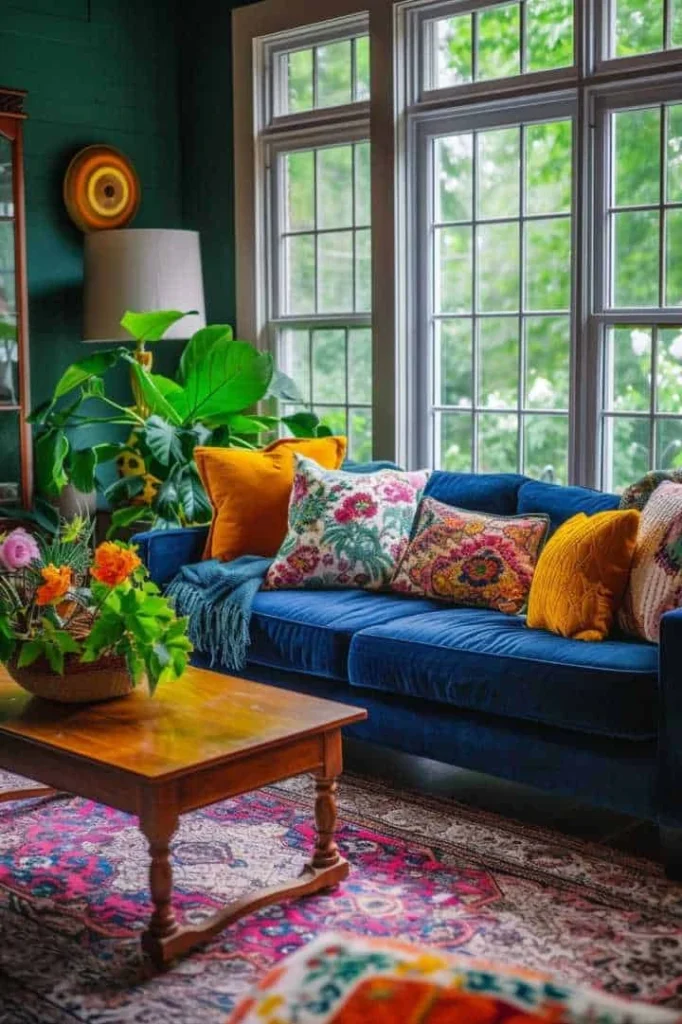
Even when your patterns are wildly different in style, a shared color keeps them connected. If your rug features rust, navy, and cream, choose pillows and throws that include at least one of those colors. The patterns can be completely different, but the color overlap tells your eye that they belong together.
For guidance on choosing a unifying color scheme, see our guide to boho color palettes for every room.
Rule 3: Mix Pattern Types
Combining different categories of pattern is easier on the eye than repeating the same category. The main pattern families are:
- Organic: florals, botanicals, paisleys, and nature inspired motifs
- Geometric: stripes, chevrons, diamonds, and grid patterns
- Textural: woven textures, subtle damasks, and tone on tone patterns
- Cultural: ikat, kilim, Moroccan tile, Indian block print, and tribal motifs
A successful boho room typically includes patterns from at least two or three of these categories. A floral rug (organic) paired with striped pillows (geometric) and a woven throw (textural) creates a layered look that feels dynamic but balanced.
Rule 4: Anchor With a Dominant Pattern
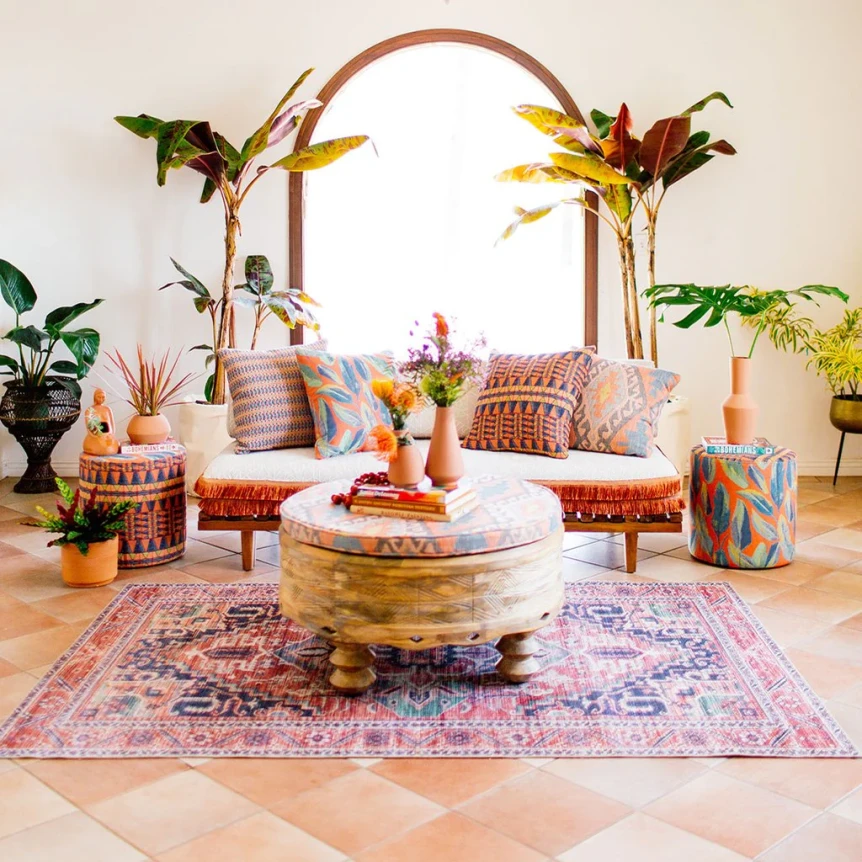
Every room needs a visual anchor, and in pattern heavy boho spaces, that anchor is usually the largest pattern. This is often a rug, but it could also be curtains, a large upholstered piece, or wallpaper. The dominant pattern sets the tone, and all other patterns in the room play a supporting role.
Rule 5: Use Solids as Rest Stops
Solid colored pieces give the eye a place to rest between patterns. A solid sofa, a plain linen curtain, or a set of unpatterned cushions creates visual breathing room. Without these pauses, pattern on pattern on pattern becomes exhausting to look at.
Practical Pattern Mixing Strategies
The 60-30-10 Approach
Borrow this classic design ratio and apply it to patterns. About 60% of the room should feature your dominant pattern or solid colors. Around 30% should feature your secondary pattern. The remaining 10% is for your accent or third pattern. This keeps the mix from overwhelming the space.
Start With the Rug
In most boho rooms, the rug is the starting point. Choose a rug you love, then pull colors and scale cues from it to guide the rest of your pattern choices. If the rug is a large scale traditional kilim, your pillows might feature a medium geometric and a small floral that echo colors from the rug.
Layer Gradually
Don’t try to achieve the perfect pattern mix all at once. Start with two patterns and live with them for a while. Add a third when you find something that complements what’s already there. This gradual approach mimics the collected over time quality that makes bohemian rooms feel authentic.
Pattern Mixing by Room
Living Room
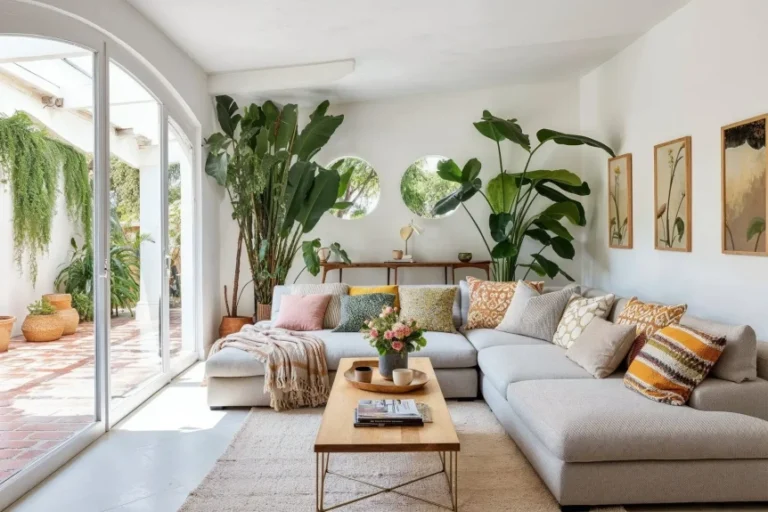
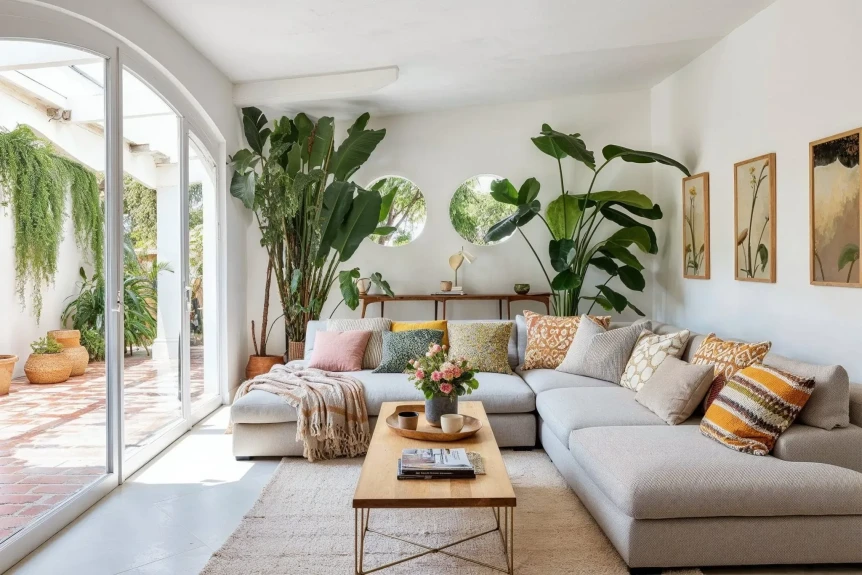
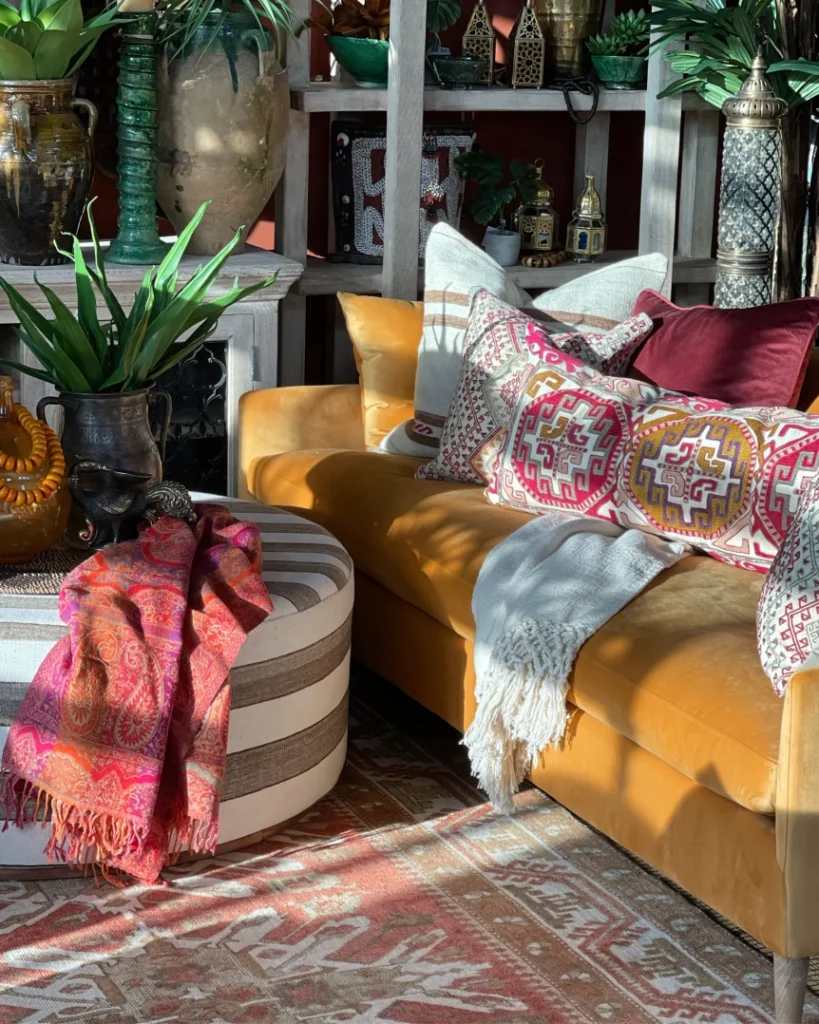
The living room offers the most surface area for pattern play. A patterned rug anchors the room. Throw pillows in two or three complementary patterns dress the sofa. A patterned throw adds another layer. Curtains can be patterned or solid, depending on how much visual activity the room can handle. If your rug and pillows are already bold, solid curtains provide a welcome rest. For full living room strategies, explore our boho living room ideas and inspiration.
Bedroom
In the bedroom, pattern mixing centers on the bed. Combine a patterned quilt with a different patterned set of pillows and a solid sheet set. A textured throw at the foot adds another layer without introducing a new print. A patterned rug beside or under the bed connects the bedding to the rest of the room. For more bedroom specific ideas, read our guide to bohemian bedroom decor ideas.
Dining Area
Pattern mixing in dining spaces often happens through textiles like table runners, placemats, and napkins. A patterned table runner on a wood table with woven placemats and a small vase of dried flowers creates a simple but effective boho look without overwhelming the eating space.
Bathroom
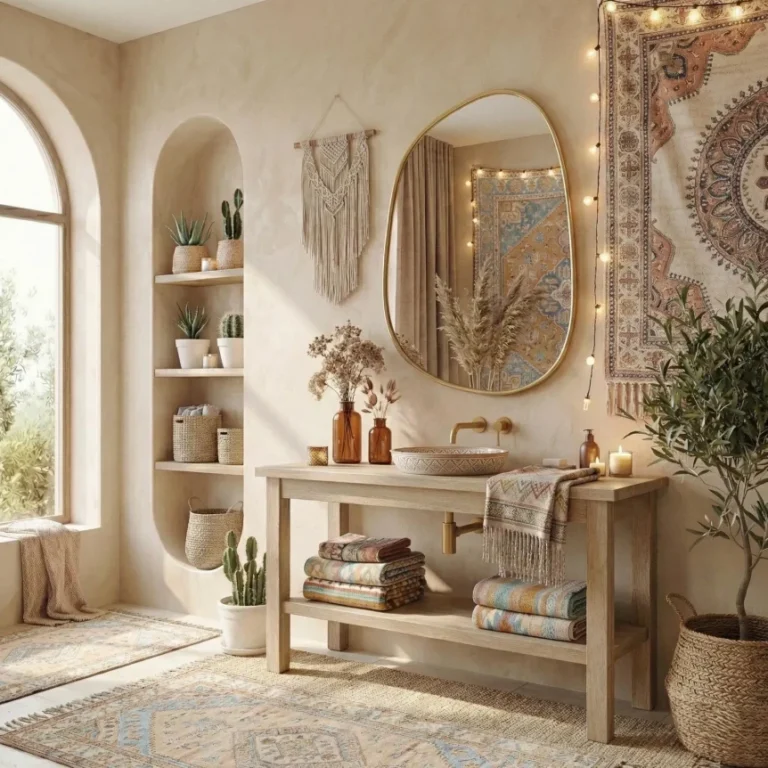
Bathrooms are great places to experiment with bold patterns on a smaller scale. Patterned tile, a colorful shower curtain, or a small vintage rug can add plenty of personality. Because the room is small, one or two patterns is usually enough.
Common Pattern Mixing Mistakes
Too Many Patterns of the Same Scale
If everything in the room is a medium scale geometric, the patterns blend together and nothing stands out. Make sure you have clear variation in size.
No Color Connection
Patterns that share no common color feel disjointed. Even one shared hue, like a warm cream that appears in both your rug and your pillows, creates enough connection to hold the mix together.
Forgetting About Texture
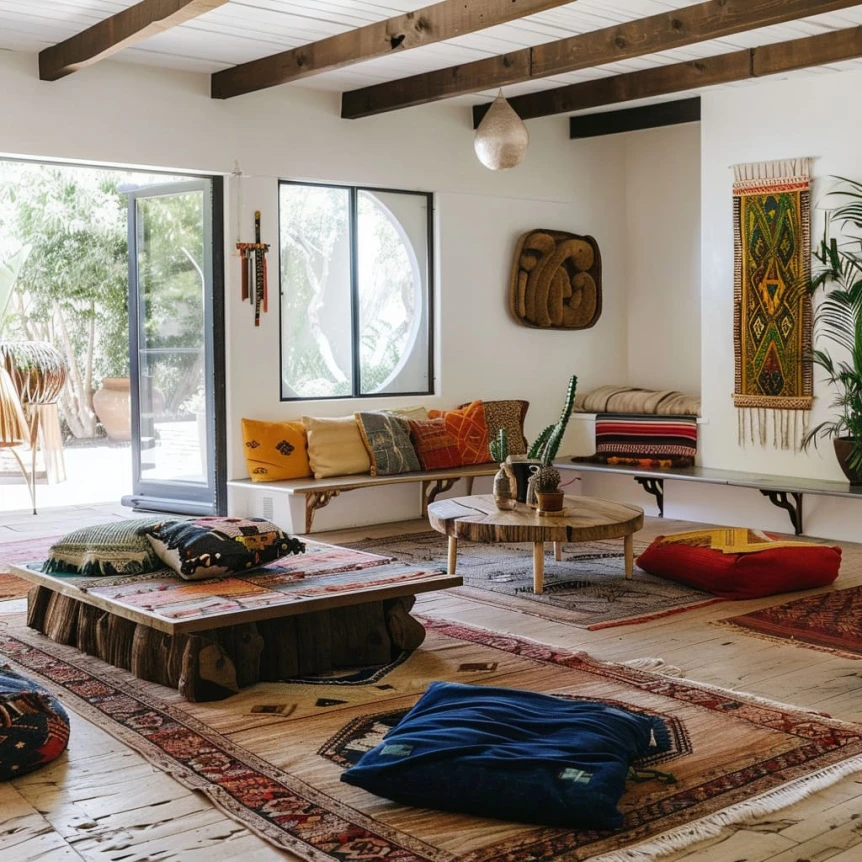
Flat, printed patterns on the same type of fabric can feel one dimensional. Mix textures along with patterns. A printed cotton pillow next to an embroidered linen pillow and a chunky woven throw creates far more visual interest than three different printed cotton pieces.
Overdoing It
More patterns doesn’t automatically mean more bohemian. If the room feels chaotic, remove one pattern rather than adding another. Sometimes the solution is subtraction, not addition. Strong boho rooms have a few standout patterns surrounded by supporting solids and simpler textures.
Patterns That Always Play Well Together
Some pattern combinations are nearly foolproof for bohemian interiors:
- Kilim or tribal rug + striped pillows + solid throw
- Floral curtains + geometric rug + textural cushions
- Ikat pillows + block print bedspread + woven blanket
- Moroccan tile pattern + simple stripes + linen solid
- Paisley throw + small scale dot cushion + large abstract rug
These combinations work because they naturally vary in scale, category, and texture while sharing enough visual weight to feel balanced.
Conclusion
Pattern mixing is one of the most rewarding aspects of bohemian design. Once you understand the basic principles of scale variation, color connection, and pattern type diversity, combining prints becomes a creative exercise rather than a source of anxiety. Start with a single pattern you love, build from there, and trust the process.
For the full framework of bohemian design, including color theory, furniture choices, and wall decor strategies, explore our complete guide to bohemian interior design.
Frequently Asked Questions
How many patterns can you mix in one room?
There’s no strict limit, but most well designed boho rooms feature three to five distinct patterns. The key is varying the scale and type of each pattern, sharing at least one common color, and using solid colored pieces as visual breaks between patterned elements.
What is the easiest way to start mixing patterns?
Start with a rug or large textile you love. Pull two or three colors from it and choose smaller patterns in different scales that echo those colors. Begin with just two patterns, live with them for a while, then add a third when you find something that complements the mix.
Do all patterns in a boho room need to match?
No. Matching patterns defeats the purpose of bohemian design. The goal is to combine patterns that are different in style and scale but connected by a shared color thread. The contrast between different pattern types is exactly what gives boho rooms their layered, eclectic character.
Can you mix floral and geometric patterns?
Absolutely. Florals and geometrics are actually one of the most natural pattern combinations because they differ in style, which prevents them from competing visually. Just make sure they share at least one common color and vary in scale for the best results.