How to Mix and Match Dining Chairs: A Practical Guide to Getting It Right

By Tereza Hower | Published March 31, 2026 | Updated April 3, 2026
A matched set of dining chairs is the default, not the rule. Some of the most visually interesting dining rooms use two or more chair styles around a single table. When done well, mixed chairs make a room feel collected and personal rather than purchased as a set from a catalog. When done poorly, it looks like you raided three different yard sales.
The difference between the two outcomes is not taste or budget. It’s method. There are specific principles that make mixed chairs look intentional, and this guide covers all of them.
Why Mixed Chairs Work
Matching dining sets were the standard for decades because furniture was sold that way. You bought a table and six chairs from the same collection, and that was considered the “correct” approach. But in practice, a perfectly matched set can feel rigid and showroom like. It communicates that the room was assembled in a single transaction rather than curated over time.
Mixed chairs, on the other hand, create visual texture. They give the room a layered quality that suggests the space has evolved. More practically, they let you optimize for different needs: more comfortable chairs at the heads of the table for the people who sit there longest, lighter chairs on the sides for easier movement, or a bench on one side for kids.
The Core Principle: Find a Connecting Thread
The single most important thing when mixing chairs is to find at least one connecting thread between them. That thread can be any of the following:
- Material (all wood, all with upholstered seats, all metal frame)
- Color (same upholstery tone, same wood finish, or same painted color)
- Era or design family (both mid-century, both Scandinavian, both industrial)
- Seat height (this one is functional as much as visual; mismatched heights are uncomfortable)
- Scale (chairs of similar visual weight, even if the style differs)
You don’t need all of these to align. One strong connection is enough. Two connections make it feel almost effortless.
The Most Reliable Mixing Strategies
Strategy 1: Different Head Chairs
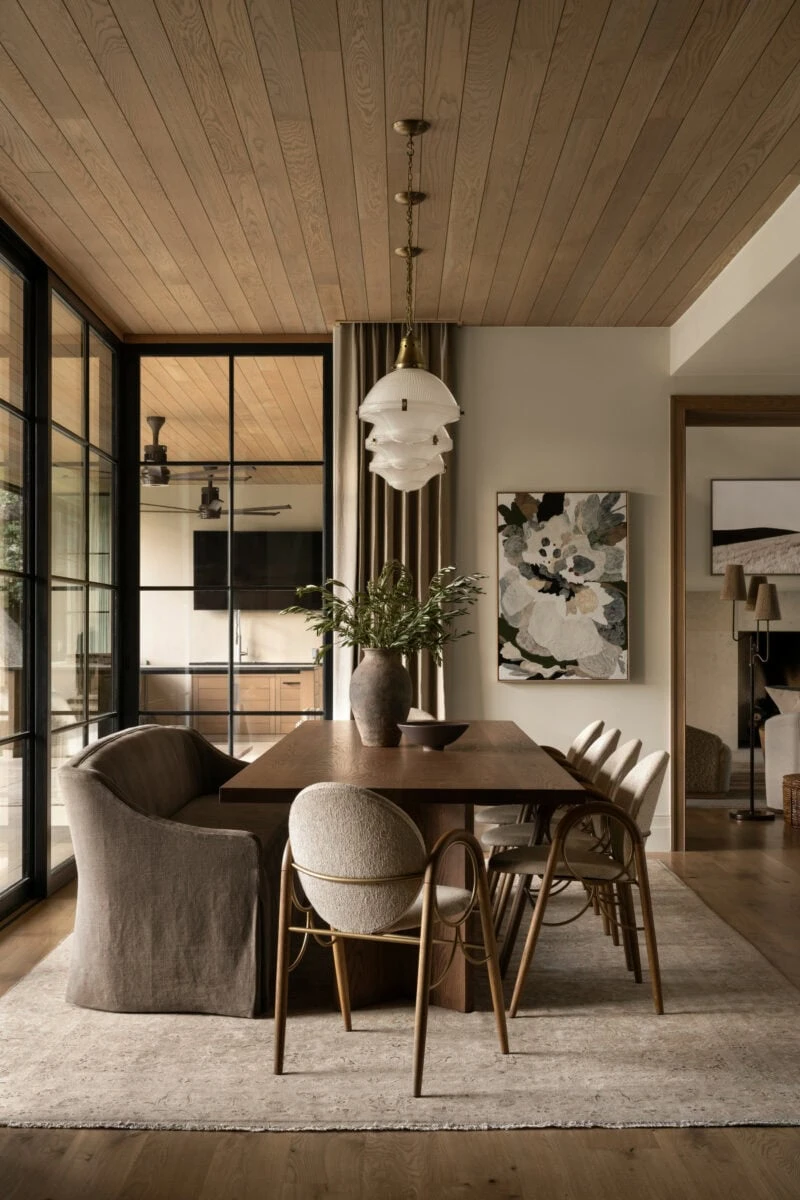
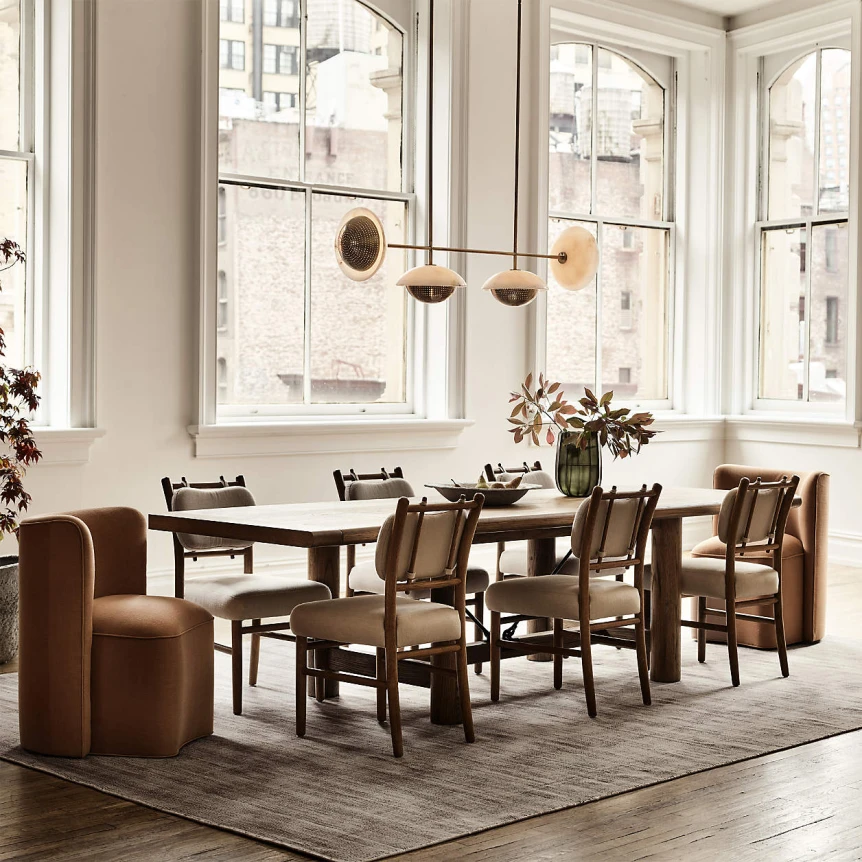
The easiest and most commonly used approach: use one style for the side chairs and a different style for the two heads of the table. The head chairs typically have more presence, whether that’s a higher back, upholstered seat, arm rests, or a different material. The side chairs are simpler and lighter.
This strategy works because it has built in logic. The hierarchy of head and side seating gives the arrangement a clear structure, so it reads as deliberate rather than random.
Strategy 2: Two Sets of Two or Three
For a table that seats six, use three chairs of one style on one side and three of another on the other. For eight, do four and four. This creates a balanced, symmetrical arrangement where each side has its own identity but the overall table feels unified.
This works best when the two styles share at least one material or color in common. Two sets of completely unrelated chairs facing each other can look like two different dinner parties happening at the same table.
Strategy 3: Bench Plus Chairs
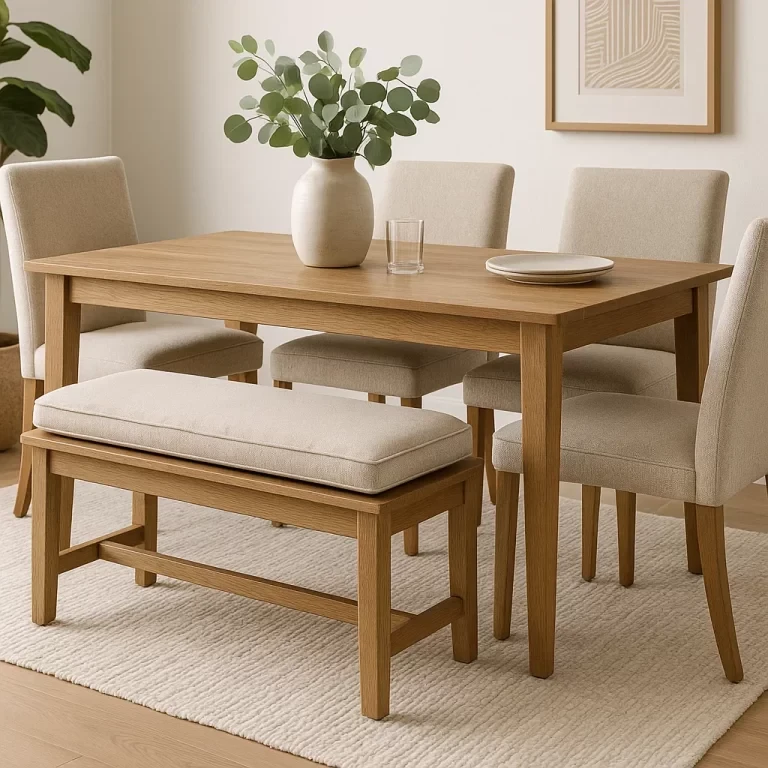
A bench on one side with individual chairs on the other is a natural way to introduce variety. The bench simplifies one side of the table, the chairs add visual interest on the other, and the contrast between the two feels intentional by default. This approach also works well in small dining rooms where the bench can be pushed under the table to save space.
Strategy 4: All Different, One Connection
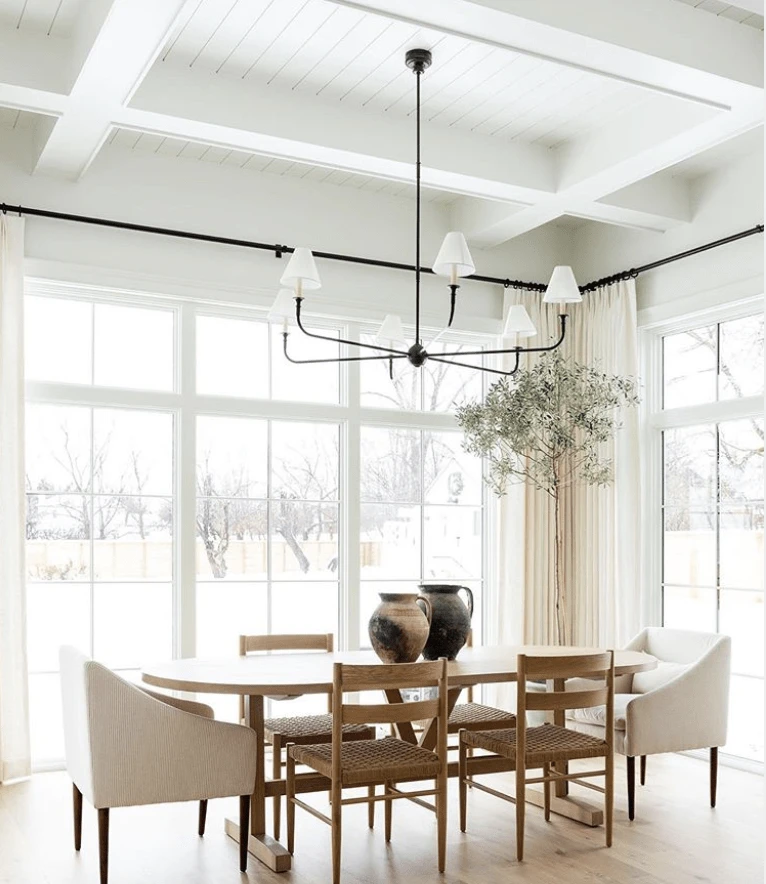
This is the most advanced approach and the hardest to execute. Every chair around the table is different, but they share one strong unifying element: the same color, the same wood tone, or the same general era. This creates a deliberately eclectic look that works in casual, bohemian, or artist’s loft dining rooms. It requires confidence and a good eye, but when it works, it’s the most visually compelling option.
Color Coordination When Mixing Chairs
Same Color, Different Style
Painting or choosing chairs in the same color (all black, all white, all natural oak) is one of the most effective ways to unify mismatched styles. Color is the first thing the eye registers, so if the colors match, the style differences feel like a deliberate design choice rather than an accident.
Tonal Range
Chairs don’t need to be the same exact color. A range of tones within the same family (light oak, medium walnut, and dark ebony, for example) can work if the overall palette of the room supports it. This approach feels more organic and less precise, which suits rooms with a relaxed, collected aesthetic.
Upholstery as the Unifier
If you’re mixing chair frames, using the same upholstery fabric on the seats creates a strong visual connection. Linen in a neutral tone is one of the most versatile choices because it bridges different wood types and metal finishes without competing for attention.
If you’re thinking about how your chair colors interact with the room’s overall palette, our Dining Room Color Schemes guide covers coordination strategies in depth.
Scale and Proportion: The Overlooked Detail
Chairs of wildly different scales around the same table look uncomfortable even before anyone sits down. A large, fully upholstered wingback next to a slim wire chair creates a visual imbalance that no amount of color coordination can fix.
When mixing chairs, check three dimensions:
- Seat height: should be within 1 inch across all chairs (typically 17 to 19 inches)
- Back height: doesn’t need to match exactly, but avoid mixing very tall backs with very short backs unless it’s a deliberate head chair contrast
- Visual weight: a bulky chair and a skeletal chair at the same table create tension; aim for chairs of roughly similar mass
Combinations That Consistently Work
If you want a starting point, these pairings have a strong track record:
- Upholstered end chairs + wood side chairs in the same tone
- Wood chairs on one side + a bench on the other
- Molded shell side chairs (like the Eames style) + upholstered head chairs
- Metal frame chairs + wood frame chairs with matching seat heights
- Two styles of Scandinavian chairs in the same light wood
These work because each pairing has a built in connecting thread, whether that’s material, color, or design era.
What to Avoid
- Mixing more than three distinct chair styles unless you have a very strong unifying element
- Chairs with significantly different seat heights at the same table
- Combining very formal chairs (tufted, carved, ornate) with very casual ones (folding, stacking, industrial)
- Mixing chairs without any connecting thread at all, which just looks unplanned
- Overthinking it to the point where the arrangement feels like a design exercise rather than a natural collection
How Table Choice Affects Chair Mixing
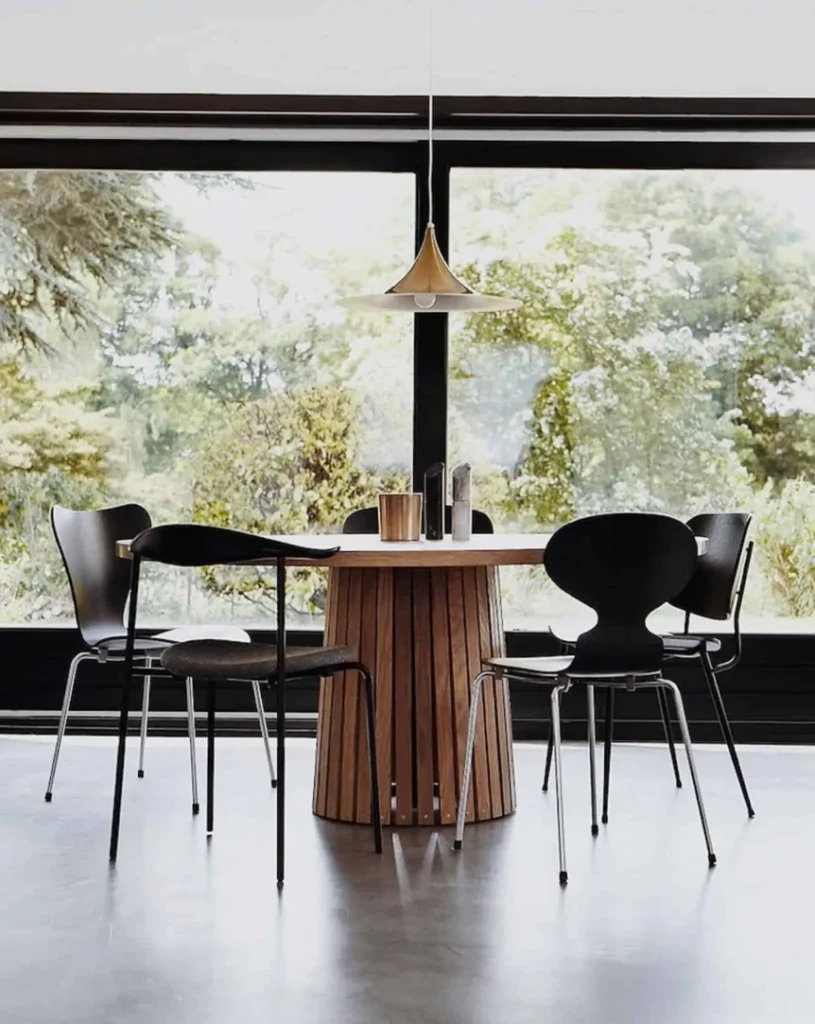
The table acts as neutral ground. A simple table with clean lines provides the most flexibility for mixed chairs because it doesn’t compete for visual attention. A highly designed or ornate table, on the other hand, narrows your chair options because the table itself is already a statement.
If you’re still selecting a table, our Dining Table Buying Guide covers how to choose a table that works as a foundation for any chair arrangement.
Frequently Asked Questions
Do dining chairs have to match the table?
No. In modern dining room design, mismatched chairs and tables are not only acceptable but often preferred. The key is finding a connecting thread between all the pieces, whether that’s a shared material, color family, or design era.
How many different chair styles can you mix at one table?
Two styles is the easiest to execute and the most widely used. Three can work with a strong unifying element. Beyond three, the arrangement requires a very clear connecting thread (like identical color) to avoid looking chaotic.
What is the easiest way to mix dining chairs?
Use one style for the side chairs and a different, more substantial style for the two head chairs. This approach has built-in logic because the head and side positions naturally call for different seating, so the mix reads as intentional.
Collected, Not Random
The goal of mixing dining chairs isn’t to create a showpiece. It’s to build a table that looks like it was assembled by someone with taste and intention rather than someone who ordered a six piece set online. Start with one clear connecting thread, choose a strategy that suits your table and room, and trust that the slight variation will give the room more personality than a matched set ever could.
For the full dining room design guide, head to The Complete Guide to Modern Dining Room Design.
More guides that pair well with this one:
- Dining Table Buying Guide
- Dining Room Color Schemes
- Dining Room Wall Decor Ideas
- Formal vs. Casual Dining Room Design