
How to Choose the Right Rug for Your Bedroom

By Tereza Hower | Published March 12, 2026 | Updated March 28, 2026

A rug might seem like a finishing touch, the last thing you think about after the furniture and the paint color are sorted. In practice it is one of the most transformative single purchases you can make in a bedroom. The right rug adds warmth underfoot, softens the acoustics of the room, defines the sleeping zone, and brings texture and personality in a way that almost nothing else does.
The wrong rug, or a rug that is the wrong size, can undermine a beautifully designed room just as effectively. This guide covers every decision you need to make to get the bedroom rug right: size, material, pile height, color, pattern, and placement.
Size: The Most Important Decision You Will Make
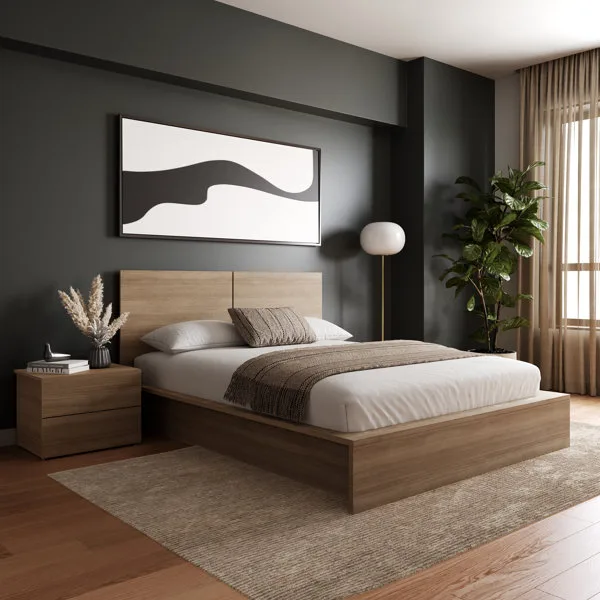
If there is one piece of rug advice that is worth drilling in, it is this: go larger than you think you need. Undersized rugs are the single most common rug mistake in bedrooms, and the effect is immediately apparent. A small rug that sits entirely under the bed with nothing extending beyond it is barely visible and contributes almost nothing to the room. A generous rug that extends well beyond the sides and foot of the bed anchors the entire sleeping area and gives the room a sense of luxury and intention that a smaller version simply cannot.
The standard guidance is to have at least 18 to 24 inches of rug extending beyond each side of the bed and beyond the foot. For a king-size bed, this typically means a rug of at least 9 by 12 feet. For a queen, an 8 by 10 or 9 by 12 will both work depending on the room. For a double or full, a 6 by 9 is usually the minimum for a good result.
Before buying, mark out the rug dimensions on your floor with masking tape. This is one of the most useful things you can do when buying any large piece, and it is especially valuable for rugs where the size is easy to misjudge from a product photo. Stand in the doorway and look at the marked area: does it feel proportional to the bed? Is there enough rug visible on the sides? Adjust before you commit.
In smaller bedrooms where a full-size rug under the bed is not practical, two smaller rugs placed on either side of the bed, sometimes called bedside runners, are an effective alternative. They bring the warmth and softness of a rug right where you need it most: where your feet land when you get out of bed in the morning.
Placement: How to Position Your Rug
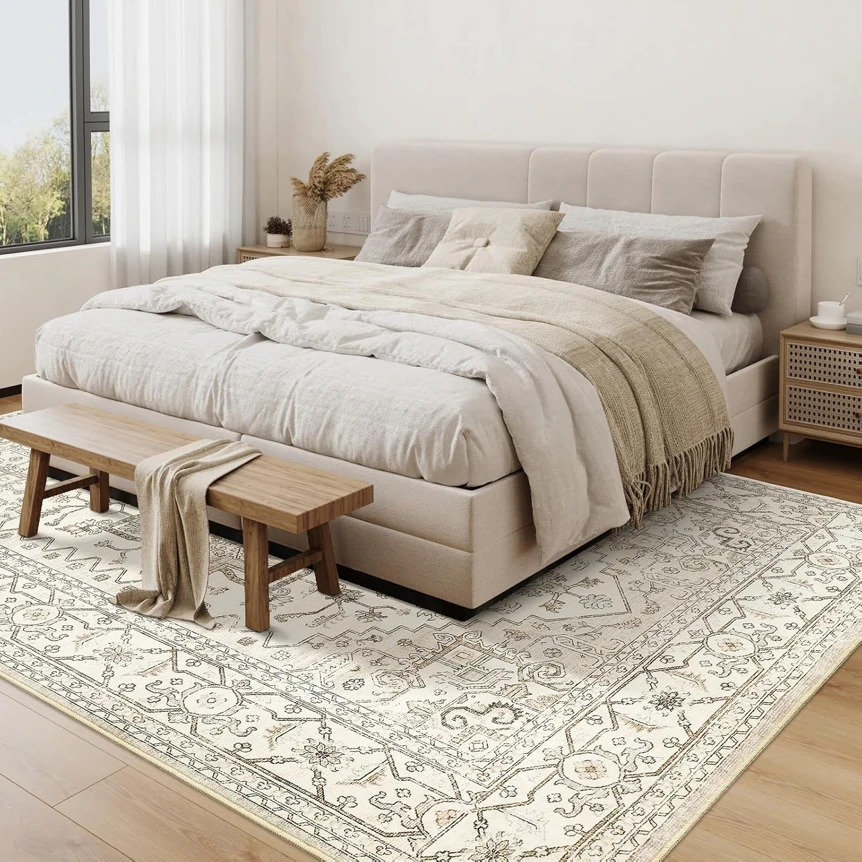
The most common placement for a bedroom rug is centred under the bed with roughly equal extensions on each side and beyond the foot. The headboard end usually sits on the floor with no rug visible, as it is against the wall or close to it. This placement works well in most room configurations and looks clean and intentional.
An alternative approach is to place the rug so that only the lower two thirds of the bed sits on it, with the head of the bed on the bare floor. This works particularly well in longer rooms and with larger rugs, as it creates a defined sitting and landing zone at the foot of the bed without extending the rug all the way under the headboard.
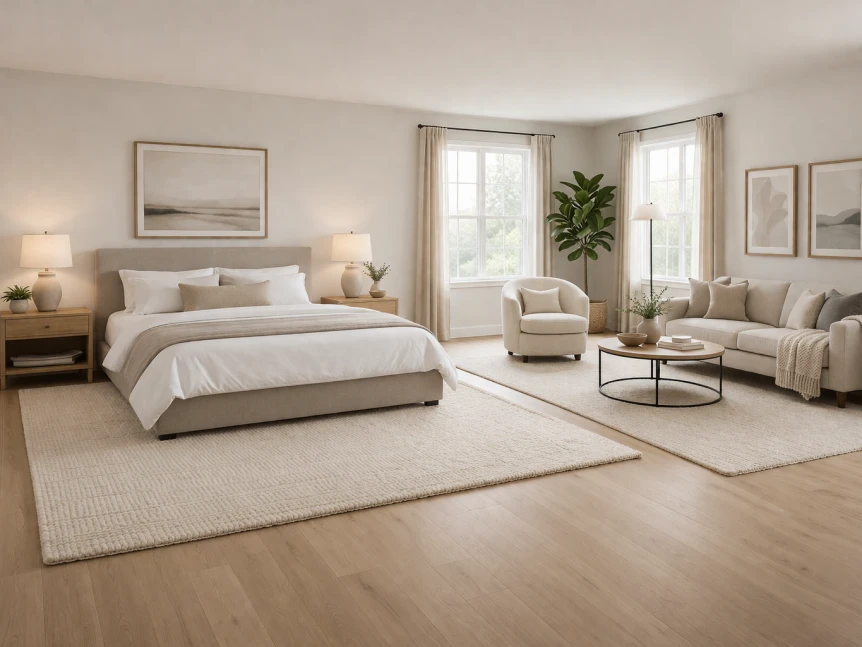
In open-plan bedroom spaces or rooms with distinct zones for sleeping and sitting, two rugs, one under the bed and a smaller one defining the seating area, can work well. Keep the materials and colors within the same family so the two rugs feel like a considered pair rather than an accident.
Material: Comfort, Durability, and Character
Bedroom rugs are easier on materials than rugs in living rooms or hallways because foot traffic is lower and there is less risk of spills and heavy wear. This opens up some beautiful options that might not be practical elsewhere in the home.
Wool is the most versatile and enduring bedroom rug material. It is naturally soft underfoot, resilient, easy to clean, and has a depth and richness that synthetic alternatives struggle to match. Wool rugs are available in everything from tight, low-pile flatweaves to deep, fluffy shearling-style options. They tend to be more expensive than synthetic options but outlast them significantly.
Cotton flatweaves and dhurries are a lighter, more affordable option that works well in bedrooms with a more relaxed or bohemian aesthetic. They are easy to wash in many cases, which is a practical advantage, but they are thinner and less cushioning than wool, which can feel less luxurious underfoot.
Jute and sisal natural fibers bring texture and an earthy quality that suits modern and Scandi-influenced bedrooms very well. They are not the softest option underfoot, especially with bare feet, so they work best in rooms where a rug pad is used or where they are not the primary surface you step onto when getting out of bed.
Sheepskin and shearling rugs, whether genuine or high-quality synthetic, add a layer of warmth and softness that is hard to beat for the area right beside the bed. They work beautifully as a standalone bedside rug or layered over a larger flatweave.
Synthetic options have improved significantly in quality over recent years and can be a good choice if budget is a constraint or if the bedroom is prone to spills or damp. Look for options with a natural-feeling texture rather than the plasticky feel of older synthetic rugs.
Pile Height: Flat, Mid, or Deep?
Pile height affects how a rug feels underfoot, how it looks in the space, and how easy it is to maintain. In a bedroom, all three options can work well depending on the overall design direction.
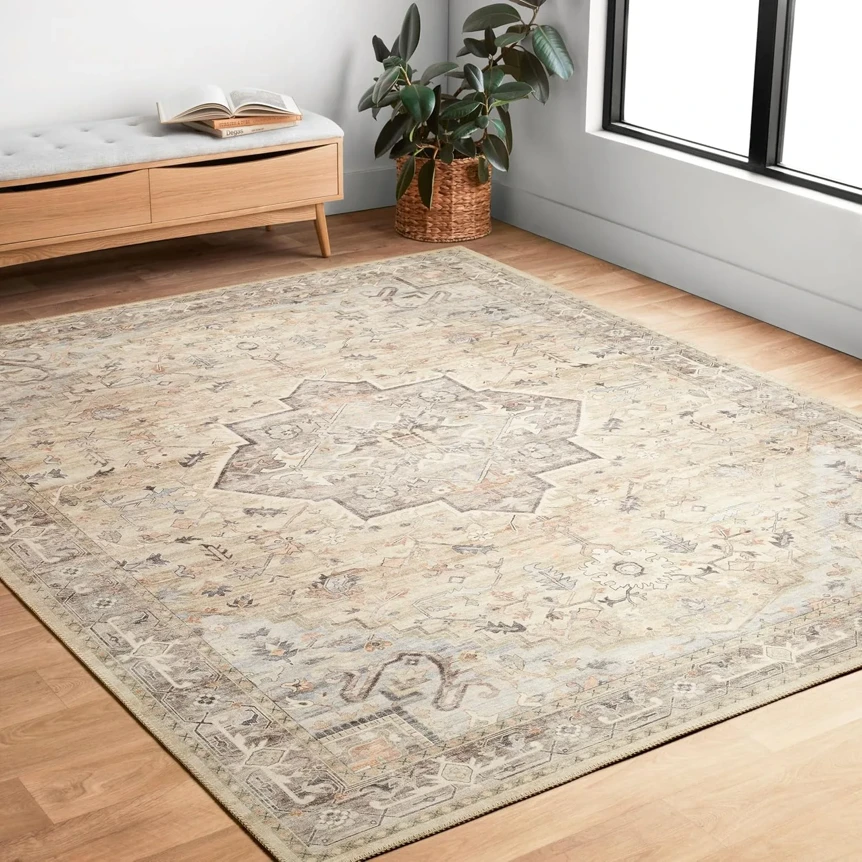
Low pile and flatweave rugs are the most versatile. They work under most furniture without creating an uneven surface, they are easy to vacuum, and they photograph beautifully, which makes them popular on interiors accounts if that is relevant to your choices. They tend to show pattern and color clearly, which makes them a good choice when the design of the rug is a feature.
Mid-pile rugs in wool or wool blends are the classic bedroom choice. Soft enough to feel good underfoot but not so deep that they trap dust or make furniture placement awkward. They tend to have a slightly more textured, lived-in quality that suits the bedroom particularly well.
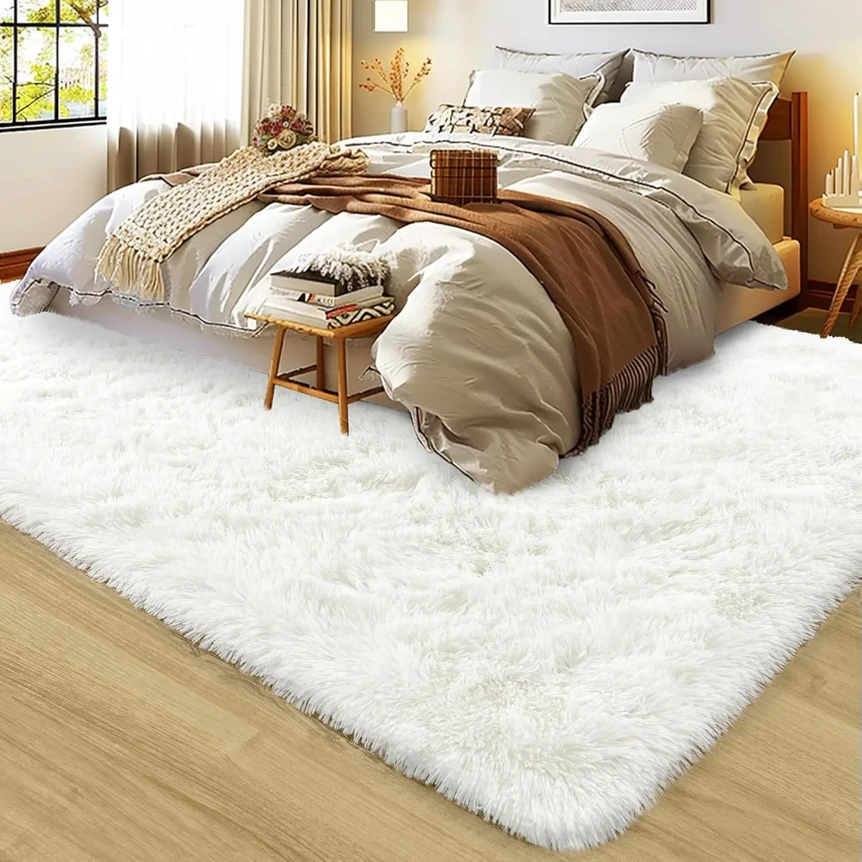
Deep pile and shag rugs have had a significant revival in modern bedroom design and it is easy to understand why. A deep, soft rug beside the bed is genuinely luxurious in a way that a flat rug cannot match. The practical trade-off is that deep pile rugs are harder to vacuum thoroughly and can mat down in areas of regular foot traffic. In a bedroom, where traffic is light, this is less of an issue than it would be in a hallway or living room.
Color and Pattern: Tying the Room Together
The rug is typically the largest single color and texture block in a bedroom after the walls and floor, and it has a significant influence on the overall palette of the room. Getting the color relationship right is important.
The most reliable approach is to choose a rug that picks up a tone already present somewhere in the room, in the bedding, the curtains, the furniture, or the wall color. This creates a sense of intention and harmony without requiring the rug to match anything exactly.
Neutral rugs in natural tones, warm whites, oatmeal, pale gray, or natural jute tones give you the most flexibility and tend to work across a wide range of room palettes. They are the safe choice but not a boring one: a beautifully textured neutral rug can anchor a room as effectively as a more colorful one.
If the room is predominantly neutral, a rug with more color or pattern is an opportunity to introduce warmth and personality. A terracotta-toned Moroccan-style rug, a soft geometric in dusty blue and cream, or a vintage-influenced piece with faded warmth can all do a great deal for a room that might otherwise feel a little flat.
Avoid patterns that are too busy or too bright in a bedroom: the room’s primary purpose is rest, and a visually complex rug can subtly undermine the calming effect you are working toward with everything else in the space.
With your rug sorted, explore these related guides to finish your bedroom:
- Modern Bedroom Color Schemes That Actually Work
- Best Modern Bedroom Furniture for 2026
- How to Design a Minimalist Bedroom You’ll Love
- Modern Bedroom Lighting Ideas for Every Style
- Small Bedroom Design Ideas That Make the Most of Your Space
For the full bedroom design guide, visit The Complete Guide to Modern Bedroom Design.