Dining Table Buying Guide: How to Choose the Right Size, Shape, and Material

By Tereza Hower | Published March 30, 2026 | Updated April 1, 2026
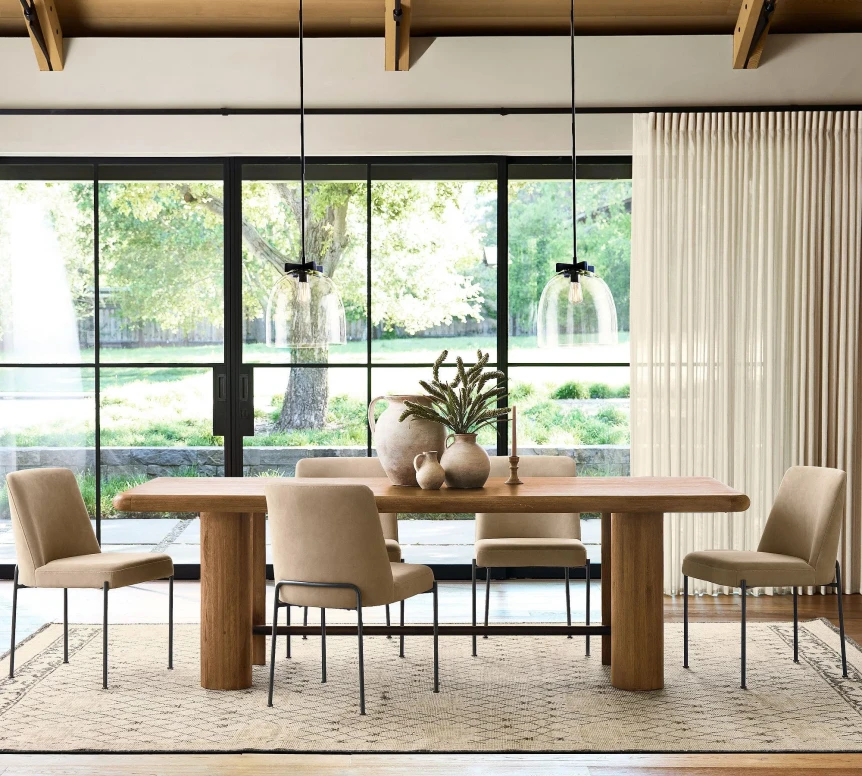
A dining table is one of the few pieces of furniture that anchors an entire room. It determines the seating layout, the flow of the space, and the visual tone. It’s also one of the pieces you’ll live with the longest. Sofas get replaced every decade. A good dining table can last a lifetime.
Choosing the right one means balancing room proportions, daily use, material preference, and the number of people you need to seat on a regular basis. This guide walks through each of those decisions so you end up with a table that works for your space and the way you actually use it.
How to Determine the Right Table Size
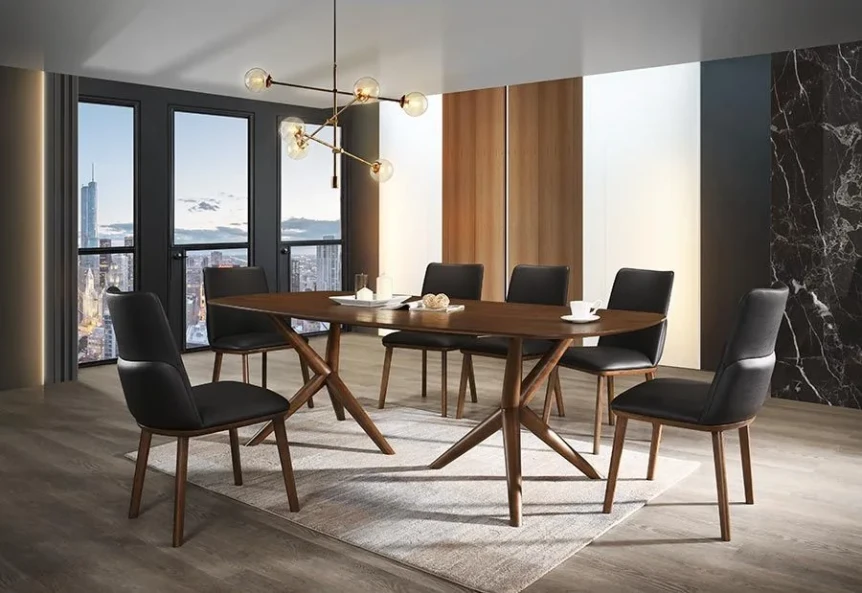
Table size is the most common place people get it wrong. A table that’s too big for the room makes the space feel cramped and difficult to navigate. A table that’s too small looks lost and wastes usable floor space.
Seating Capacity Rules
The standard rule is 24 inches of table width per person. That gives each person enough room to eat comfortably without bumping elbows. Here’s how that translates to common table lengths:
- 4 people: 48 to 60 inches long
- 6 people: 72 inches long
- 8 people: 84 to 96 inches long
- 10 people: 108 to 120 inches long
Table width matters too. A table less than 36 inches wide starts to feel narrow once you place a centerpiece or serving dishes on it. Most standard dining tables are 36 to 42 inches wide, which provides enough surface for a proper table setting on each side with room in the middle.
Room Clearance
Leave at least 36 inches between the edge of the table and the nearest wall or piece of furniture. This allows chairs to be pulled out and occupied without anyone feeling trapped. If the space behind the chairs is also a main walkway, increase that clearance to 44 to 48 inches. In a small dining room, it’s better to go with a slightly smaller table and maintain proper clearance than to squeeze in a larger table that makes the room feel tight.
For more layout strategies in compact spaces, see our guide to Small Dining Room Ideas.
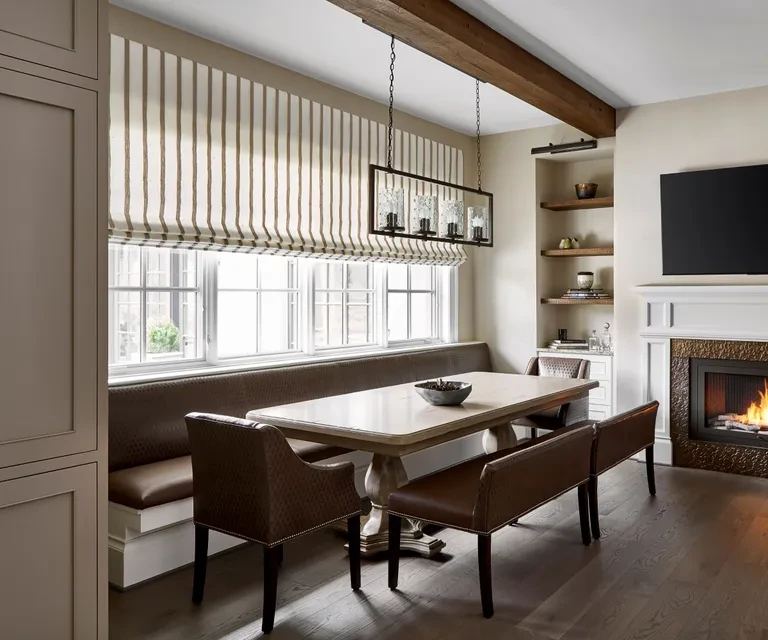
Table Shapes: Which Works Best?
Rectangular
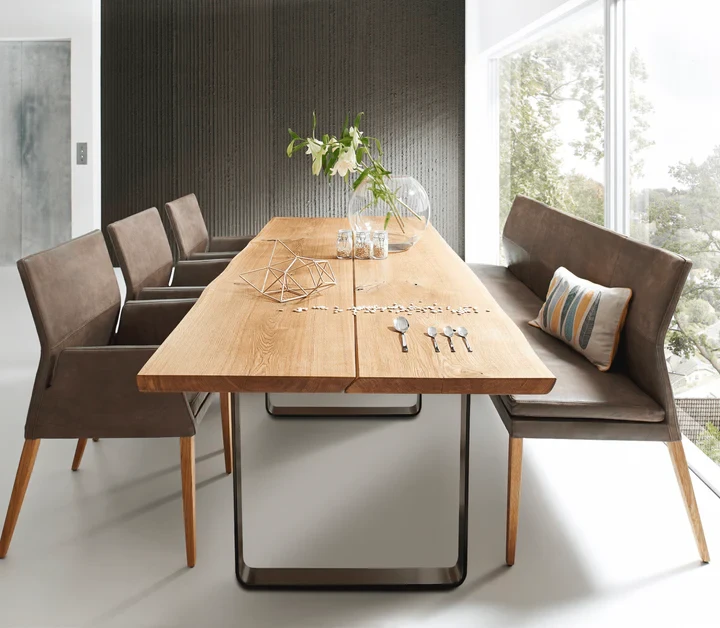
The most common and most versatile shape. Rectangular tables seat the most people per square foot of floor space and fit naturally in rooms that are longer than they are wide. They also work well pushed against a wall or anchored by a bench on one side in tighter layouts. If you’re unsure which shape to choose, rectangular is the safest bet.
Round
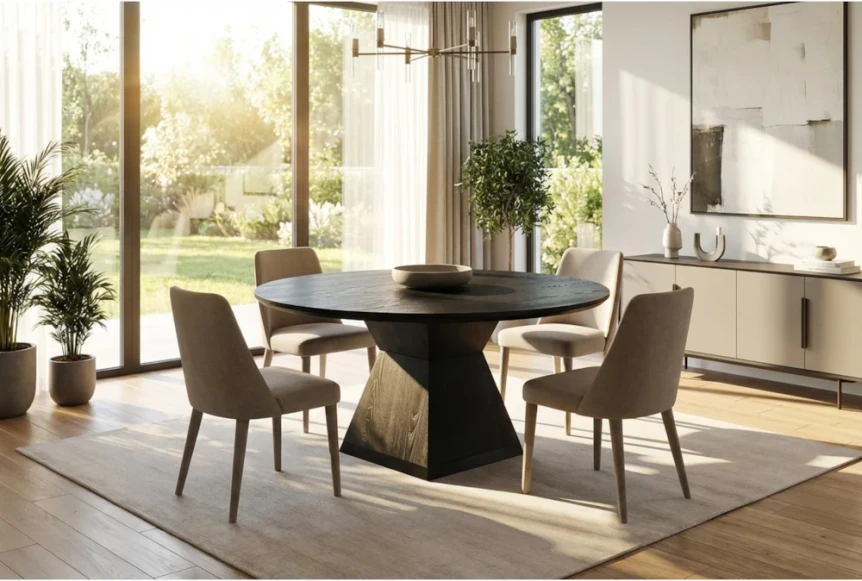
Round tables work best in square rooms or open plan dining areas where the table isn’t pushed against any wall. They encourage conversation because everyone faces the center and there’s no head of the table. A round table with a 48 inch diameter seats four comfortably and fits in tighter spaces than a rectangular table with equivalent seating capacity. The tradeoff is that round tables don’t scale as well. A round table for eight becomes very large, and conversation across that distance starts to break down.
Oval
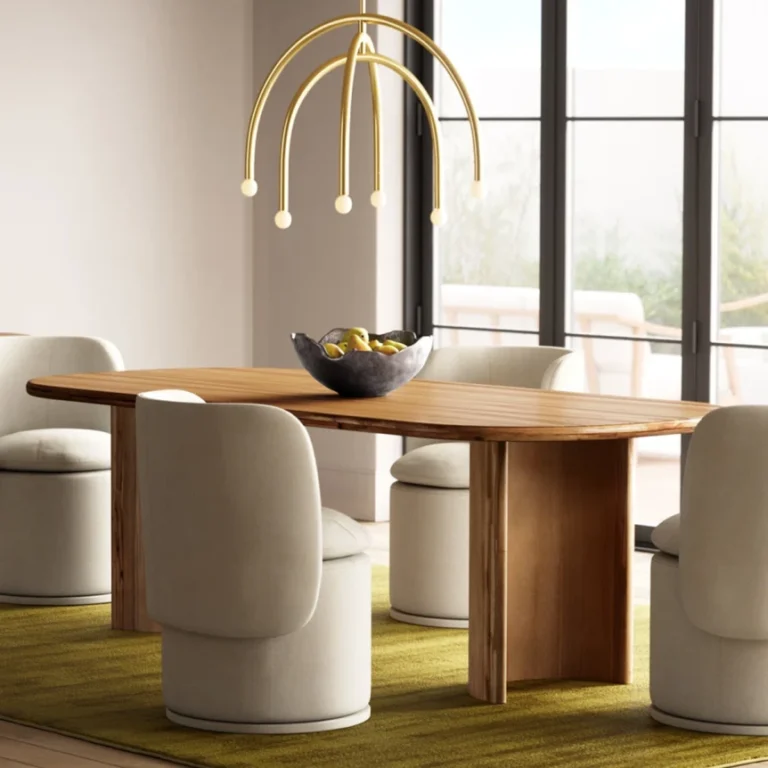
An oval table offers the seating capacity of a rectangular table with the softer, more approachable feel of a round one. The absence of corners also makes it easier to navigate around in tighter rooms. Oval tables are an underused option that deserves more consideration, especially for open plan spaces where hard angles can feel abrupt.
Square
Square tables work well for four people and fit neatly in square rooms or breakfast nooks. Beyond four seats, they become impractical because the surface area grows faster than the seating capacity. A square table for eight would be enormous and leave a vast empty center. If you regularly host more than four, look at rectangular or oval instead.
Materials: What to Look For
Solid Wood
Solid wood is the most popular dining table material for good reason. It’s durable, repairable, and develops a patina over time that gives it more character, not less. Oak is the workhorse of dining tables: hard, stable, and available in a wide range of finishes from light Scandinavian tones to deep, fumed darks. Walnut is warmer and richer, with a natural depth of color that makes it a strong choice for modern and mid-century spaces. Ash is lighter in color and weight, with a clean grain that suits minimal interiors.
The main consideration with solid wood is that it moves. It expands and contracts with humidity and temperature changes. Quality construction accounts for this movement. Cheap construction doesn’t, which is how you end up with cracked tabletops and wobbly joints after a few years.
Engineered Wood and Veneer
A well made veneered table uses a thin layer of real wood over an engineered core. It’s more stable than solid wood, often less expensive, and can look nearly identical on the surface. The drawback is repairability. A deep scratch in solid wood can be sanded out. A deep scratch in veneer goes through to the substrate, and that’s harder to fix. Quality varies enormously in this category, so inspect construction carefully.
Stone and Marble
Marble and stone tables are striking. They add weight and permanence to a room in a way no other material can. They’re also cold to the touch, heavy to move, and require more careful maintenance. Marble is porous and will stain if acidic liquids sit on it. If you love the look, consider using marble for the table base or a stone inlay rather than a full marble top, or accept the patina as part of the material’s story.
Metal and Glass
Metal bases are common in modern dining tables, often paired with a wood top. Steel, iron, and brass all bring a different character. Glass tops fell out of favor in recent years as the design world moved toward warmer, more tactile materials. They still have their place in very small or very modern spaces where visual lightness is the priority.
If you’re coordinating your table material with the rest of your dining room, our Dining Room Color Schemes guide covers how different wood tones and material palettes interact with wall colors and textiles.
Bases and Leg Styles
Four Legs
The most traditional and stable configuration. Four legs at the corners provide even support and are the most forgiving structurally. The main downside is that corner legs can interfere with chair placement, especially at the ends of the table. Look for legs that are set in from the corners slightly to give end chairs more clearance.
Pedestal
A single central pedestal or a double pedestal on a longer table frees up leg room entirely. Chairs can be placed anywhere around the table without hitting a table leg. Pedestal bases work especially well with round and oval tops. The tradeoff is that some single pedestal tables can feel less stable, especially at the edges. Push down on the corner of a pedestal table before buying it to check for tipping.
Trestle
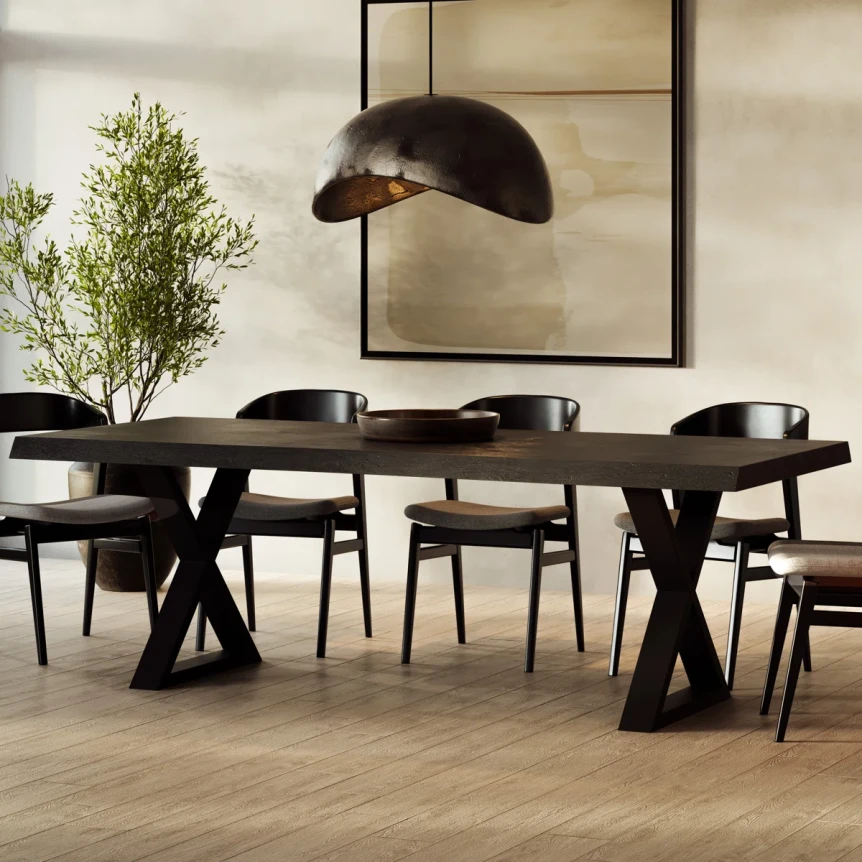
Trestle bases run along the length of the table with a connecting stretcher bar. They’re visually interesting and structurally solid, but the stretcher bar can be an obstacle for legs depending on its height. They’re a strong choice for longer tables and lend a slightly more rustic or farmhouse character to the room, though modern trestle designs in metal have moved this style into more contemporary territory.
Extendable Tables: When They’re Worth It
An extendable table is the right choice if you regularly need seating flexibility. Modern extension mechanisms have improved significantly. The best designs use a self-storing leaf that folds out from the center of the table, so there’s no separate piece to stash in a closet. Some models can be extended by one person, which matters more than you’d think.
The tradeoff is that extendable tables always have a visible seam in the center, and the extension mechanism adds complexity (and potential failure points) to the construction. A fixed table will almost always feel more solid and substantial than an extendable one at the same price point.
For households that host regularly or have a dining room that needs to work for both daily meals and dinner parties, the flexibility is worth the compromise.
How to Match Your Table to Your Dining Chairs
The height of most dining tables falls between 28 and 30 inches. Standard dining chairs have a seat height of 17 to 19 inches. That leaves 10 to 12 inches between the chair seat and the table surface, which is comfortable for most adults. If you’re buying chairs and a table separately, check this measurement. A mismatch of even an inch or two can make dining uncomfortable over the course of a meal.
Arm chairs need enough clearance to slide under the table. Measure the height from the floor to the bottom of the table apron (the horizontal frame below the tabletop), and make sure the chair arms fit beneath it with a small margin. Nothing is more frustrating than armchairs that can’t be pushed in.
For more on choosing and combining dining chairs, see our guide to How to Mix and Match Dining Chairs.
Budget Considerations
Dining tables span a huge price range. A solid wood table from a reputable manufacturer will typically start around $800 and can easily reach $3,000 or more for larger sizes or premium woods. Veneered and engineered options start lower, sometimes around $300 to $500 for a table that looks presentable and holds up to daily use.
The best value is usually found in the mid range: $1,000 to $2,000 for a solid wood table that’s well constructed and finished. At this price point, you’re getting good materials and joinery without paying for a luxury brand name. Avoid the very bottom of the market, where corners are cut on construction and finish in ways that shorten the table’s lifespan considerably.
Frequently Asked Questions
What is the best shape for a dining table?
Rectangular is the most versatile and seats the most people per square foot. Round tables are better for square rooms and encourage conversation. Oval tables offer the best of both. Choose based on your room shape and how many people you typically seat.
How much should I spend on a dining table?
For a solid wood table that’s well built and will last, expect to spend between $1,000 and $2,000. Veneered options start lower, around $300 to $500. Avoid the cheapest options, which often use poor joinery and finishes that won’t hold up to daily use.
Is a round or rectangular table better for a small dining room?
A round table is usually better for a small room because it has no corners to bump into, improves traffic flow, and fits more naturally in tight or square spaces. A 42 to 48 inch round table seats four comfortably with less floor space than a rectangular equivalent.
Choosing a Table You’ll Actually Keep
The best dining table is one that fits your room, suits your daily life, and still feels right when guests come over. Measure your space carefully, decide which material and shape work for your room’s proportions, and invest in the best construction you can afford. A good table rewards you for decades.
For the full picture on designing every element of your dining room, read The Complete Guide to Modern Dining Room Design.