Dining Room Wall Decor Ideas: Art, Shelving, and Styling That Actually Works

By Tereza Hower | Published March 30, 2026 | Updated April 1, 2026
Dining room walls get more visual attention than walls in almost any other room. The furniture is concentrated in the center (table, chairs, maybe a sideboard), so the perimeter is open and visible from every seat. What you put on those walls has an outsized effect on the room’s character.
Modern dining room wall decor leans toward restraint. A few well chosen pieces create more impact than a crowded arrangement. This guide covers the main approaches to dining room walls, from a single large piece of art to floating shelves and mirrors, and how to execute each one well.
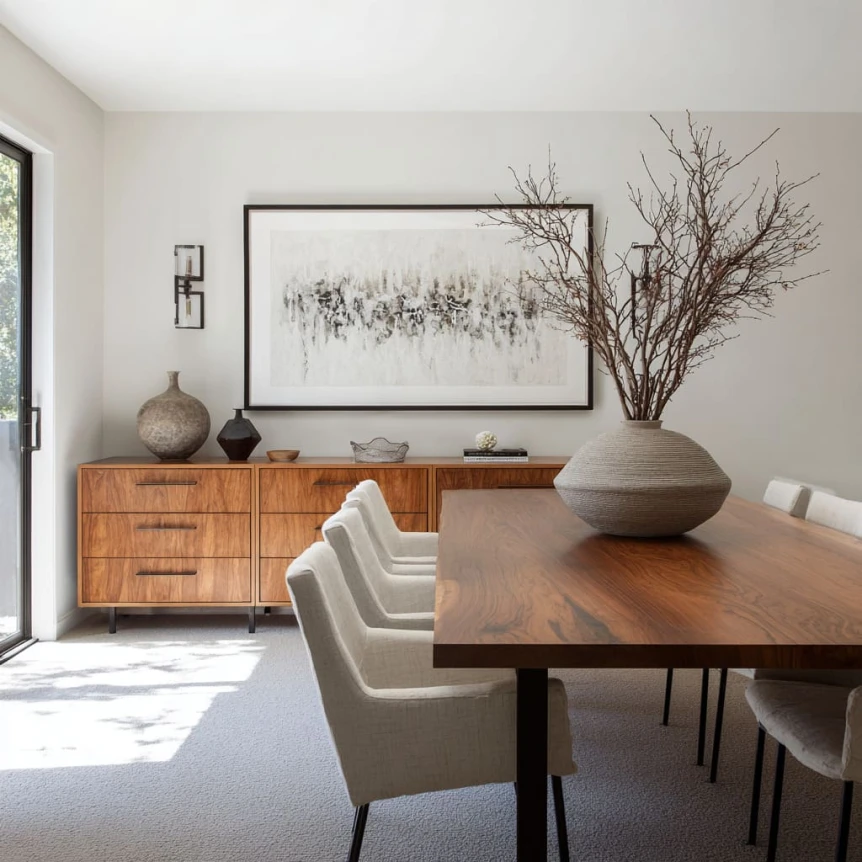
The Single Statement Piece
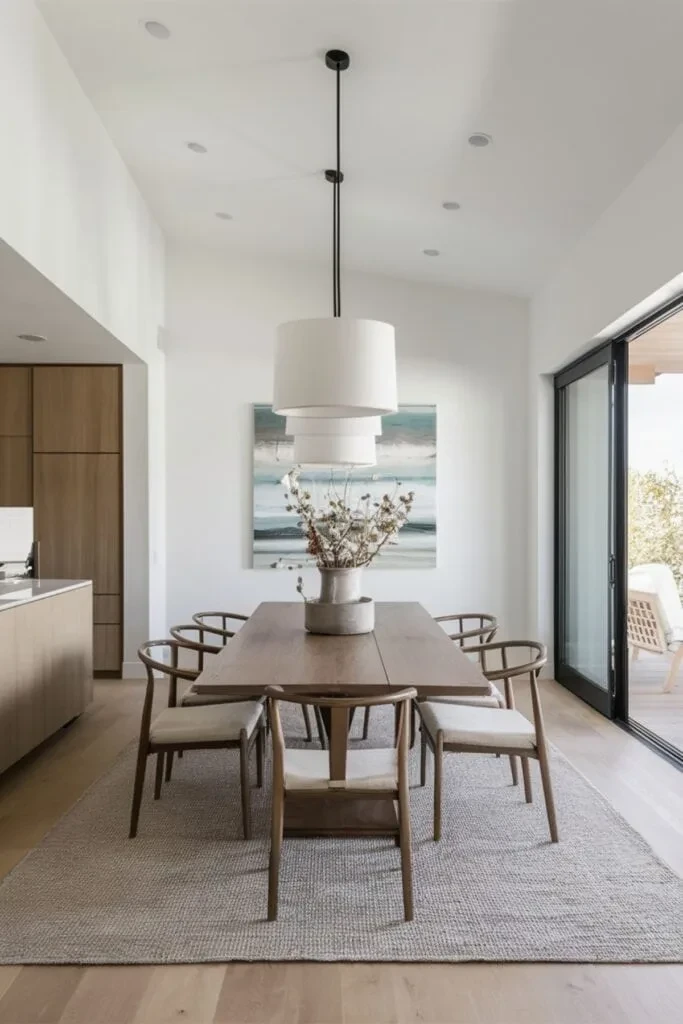
One large piece of art on the most visible wall is the simplest and often the most effective approach to dining room wall decor. It gives the room a clear focal point, sets the tone for the space, and provides something to look at and talk about during meals.
Sizing
The art should be proportional to the wall. On a wall above a sideboard, the piece should be roughly two thirds the width of the sideboard and centered above it. On an open wall, go large. A single small print on a big empty wall looks like an afterthought. The piece should feel like it was chosen for that wall, not hung there because it needed somewhere to go.
Style and Subject
For modern dining rooms, abstract work, photography, and graphic pieces tend to feel most at home. Landscapes, still lifes, and figurative work can work too, especially in more transitional spaces. The key is that the art should complement the room’s palette and mood without matching it too precisely. A painting that’s too perfectly color coordinated with the room’s textiles can look like it was bought at the same time as the curtains.
Framing
Simple frames in natural wood, black, or white keep the focus on the work. Ornate gilt or baroque frames push the room toward a traditional aesthetic that usually conflicts with modern furniture. For a more contemporary look, consider unframed canvas or a floating frame that creates a shadow gap between the art and the frame edge.
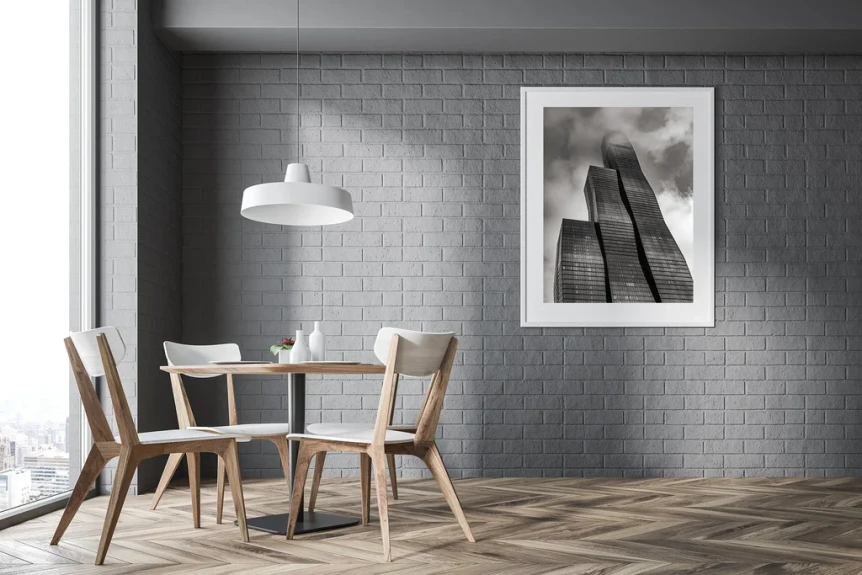
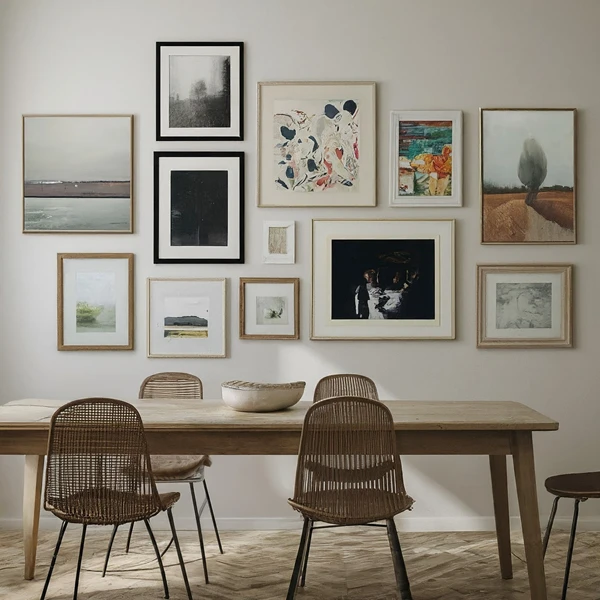
A gallery wall brings visual energy and personality to a dining room. It works best on the longest uninterrupted wall and creates a backdrop that gives the room a collected, lived in quality.
Grid Layout
A grid arrangement uses identically sized and framed pieces arranged in even rows and columns. This is the most structured gallery wall option and works well in modern and minimal dining rooms because the repetition and order feel clean rather than busy. It’s also the easiest to execute because the spacing is uniform and predictable.
Salon Style
A salon style gallery wall uses pieces of different sizes arranged in an asymmetrical but balanced composition. This approach has more personality than a grid but requires a better eye for spacing and proportion. Start by laying the arrangement on the floor first to get the spacing right before putting holes in the wall.
What to Include
The best gallery walls in dining rooms mix media: a print, a photograph, a small painting, and maybe a simple object like a woven plate or a small mirror. This variety creates texture and depth. Avoid making every piece the same type (all photos or all prints), which can flatten the arrangement.
Keep the color palette of the gallery wall related to the room’s overall palette. This doesn’t mean everything has to match, but framing, matting, and the dominant tones of the artwork should feel like they belong in the same space.
Floating Shelves
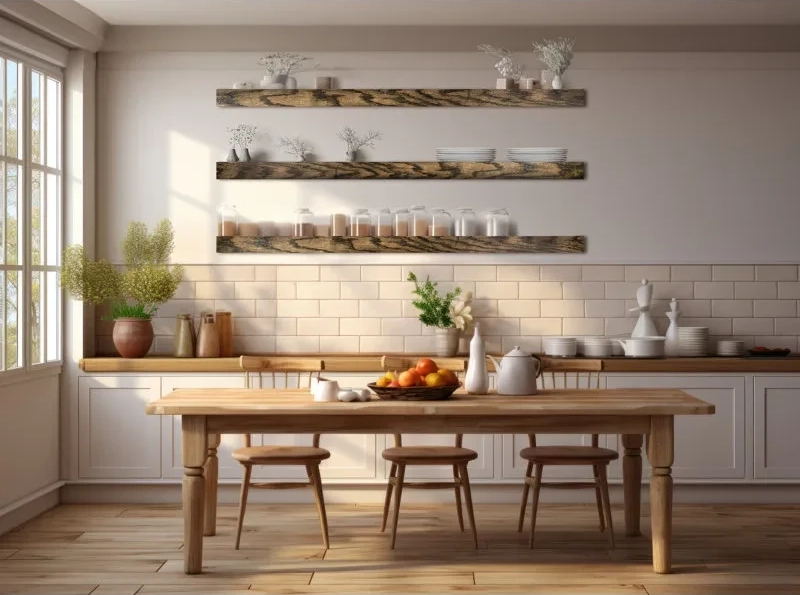
Floating shelves offer a flexible alternative to hanging art. They allow you to display a rotating mix of objects, art, books, and small plants, and they can be restyled seasonally without making new holes in the wall.
Placement
One or two shelves on the wall behind or adjacent to the table is the typical setup. Mount the bottom shelf at approximately 48 to 54 inches from the floor (roughly eye level when seated). If using two shelves, space them 10 to 14 inches apart vertically.
Styling
Keep shelf displays edited. Three to five objects per shelf is usually the right density for a dining room. A small piece of art leaning against the wall, a ceramic vase, a candle, and a short stack of books creates a natural, unhurried arrangement. Avoid crowding the shelves with too many items, which competes with the table for attention and makes the room feel cluttered.
Objects on shelves should vary in height and shape. Alternate tall and short pieces, and leave some breathing room between items. The shelf itself should read as a deliberate composition, not a storage surface.
Mirrors
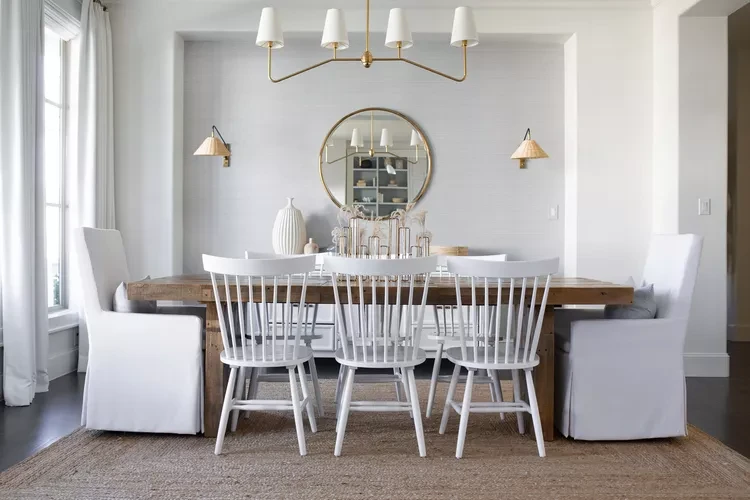
A mirror on a dining room wall serves both decorative and functional purposes. It reflects light (both natural and candlelight), creates the impression of additional depth, and adds a focal point that’s dynamic rather than static.
Sizing and Placement
A single large mirror has the most impact. Hang it on the wall opposite a window to maximize reflected natural light during the day, or on the wall most visible from the table to create depth. An oversized mirror leaned against a wall (rather than hung) gives a more relaxed, contemporary feel.
Frame Style
For modern dining rooms, choose a frame that’s simple and proportional. A thin metal frame, a natural wood frame, or a frameless mirror with a beveled edge all work well. Avoid ornate or heavily detailed frames unless the room intentionally mixes modern and traditional elements.
Mirrors are especially effective in small dining rooms, where the added visual depth can make the space feel significantly larger.
Architectural Details as Decor
Wall Paneling and Wainscoting
Modern wall paneling has moved away from ornate raised panels toward simple flat panel or shiplap styles. A half wall of paneling (wainscoting height, about 36 inches) with a contrasting paint color above and below adds architectural interest without hanging a single thing on the wall. Vertical slat paneling is another contemporary option that adds texture and rhythm to an otherwise flat surface.
Wallpaper or Textured Paint
A textured wallpaper on one wall can serve as a backdrop that replaces the need for additional art. Subtle textures like grasscloth, linen weave, or a muted geometric pattern add depth without overwhelming the space. In a modern dining room, keep wallpaper patterns understated. The texture should enhance the wall’s surface rather than dominate the room.
Wall Decor and Lighting Interaction
How wall decor looks depends heavily on how it’s lit. A beautiful painting hung on a dark wall will disappear at dinner if there’s no light on it. Consider adding a picture light above a statement piece, directing a recessed downlight toward the wall, or positioning sconces to wash light across the wall surface.
The interaction between wall decor and lighting is another reason to plan both together rather than treating them as separate decisions. Our Dining Room Lighting Guide covers how to light walls effectively as part of a layered lighting plan.
How Much Wall Decor Is Enough?
The most common mistake in dining room wall decor is doing too much. A strong piece of art on one wall, a mirror or shelving on another, and leaving one or two walls mostly bare is a perfectly balanced approach. Negative space is part of the design. A room where every wall is covered feels more cluttered than curated.
In a modern dining room, the walls should support the room’s atmosphere, not compete with the table, the food, or the conversation happening there.
Frequently Asked Questions
What should I put on my dining room walls?
A single large piece of art, a gallery wall, floating shelves, or a mirror are the most effective options. In modern dining rooms, a restrained approach works best. One strong element on the main wall and a secondary piece on another wall is usually more impactful than covering every surface.
How high should I hang art in a dining room?
Center the art at roughly 57 to 60 inches from the floor, which is standard museum hanging height. If the art is above a sideboard, hang it 6 to 8 inches above the top of the sideboard and ensure the piece is no wider than two thirds the width of the furniture below it.
Should a dining room have a mirror?
A mirror is an excellent choice for a dining room, especially a small one. It reflects light, creates depth, and adds a dynamic element to the wall. Place it opposite a window or across from the main light source for the best effect.
Walls That Support the Room
The best dining room wall decor doesn’t shout. It sets a tone, provides a focal point, and then lets the table do what it’s there for. Start with one strong element on the main wall, consider a secondary piece elsewhere, and resist the urge to fill every surface. The space you leave empty is just as important as what you hang.
For the full dining room design guide, read The Complete Guide to Modern Dining Room Design.
Related guides:
- Dining Room Color Schemes
- Dining Room Lighting Guide
- Formal vs. Casual Dining Room Design
- Small Dining Room Ideas