Dining Room Lighting Guide: How to Choose the Right Fixtures and Placement

By Tereza Hower | Published April 1, 2026
Lighting makes or breaks a dining room. A beautifully furnished room with bad lighting feels flat and unwelcoming. A simple room with good lighting feels warm, intimate, and intentional. Yet dining room lighting is one of the most commonly botched elements in home design, usually because people pick a fixture they like without thinking about placement, scale, or how the light actually falls on the table.
This guide covers everything you need to get dining room lighting right: fixture types, sizing, hanging heights, layered lighting plans, and the single most important thing most people forget (it’s the dimmer).
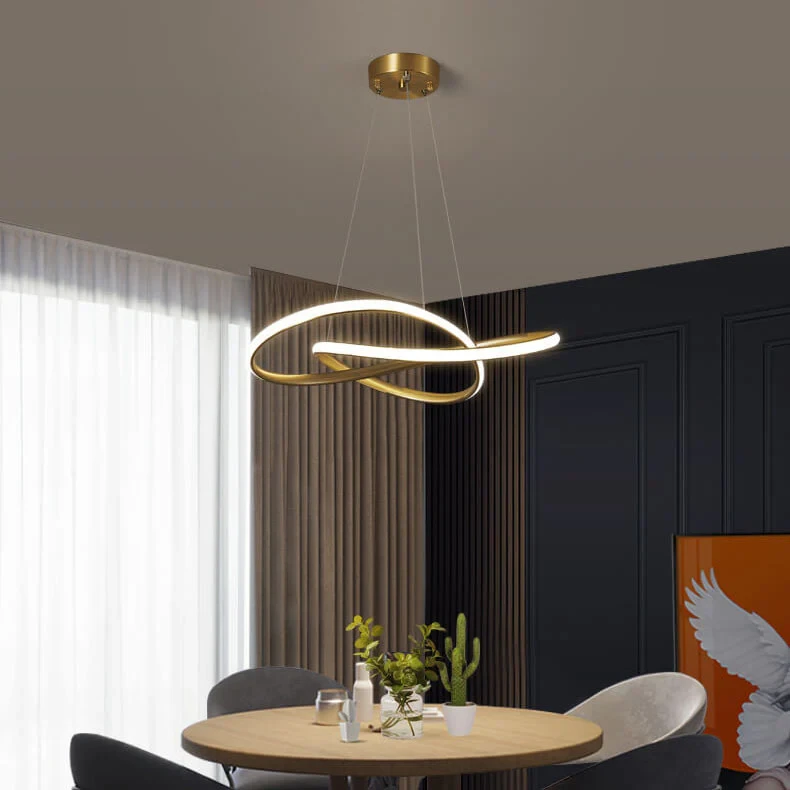
The Anchor Fixture: Pendants and Chandeliers
Every dining room needs one statement fixture over the table. This is the anchor. It provides the primary ambient light for the table surface and sets the visual tone for the room. In modern dining rooms, this is almost always a pendant light or a contemporary chandelier.
Pendant Lights
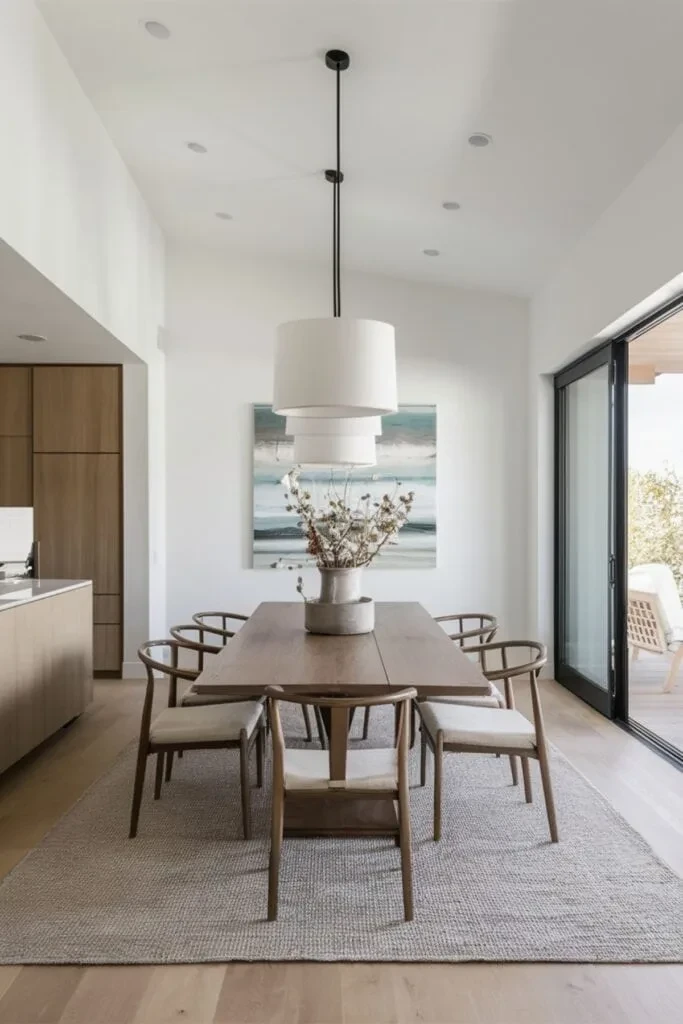
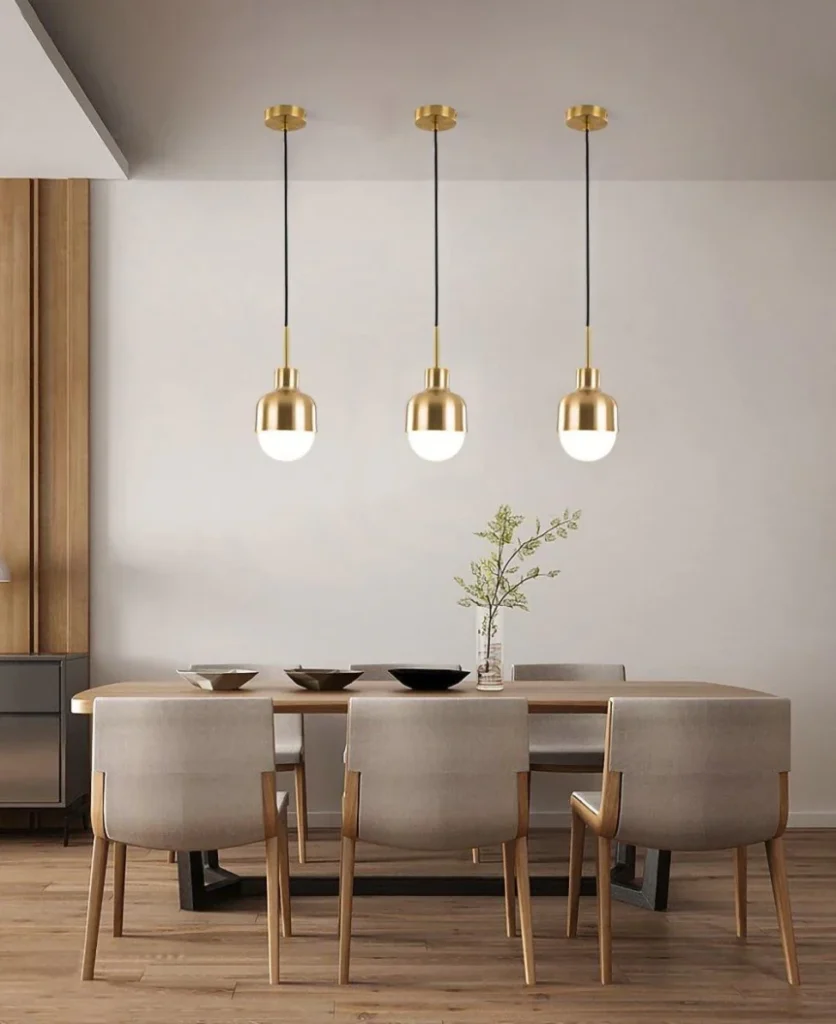
A single large pendant works well over round and smaller rectangular tables. For longer tables, a linear pendant (sometimes called a horizontal chandelier) or a series of two to three smaller pendants hung in a row is more proportional. The goal is for the fixture to cover roughly two thirds of the table’s length without extending beyond the table’s edges.
Modern Chandeliers
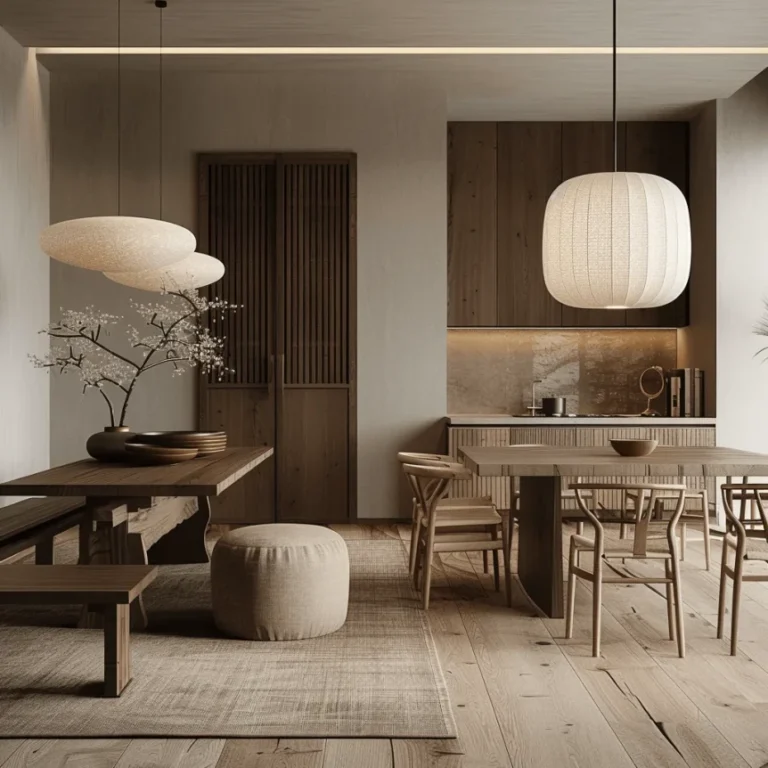
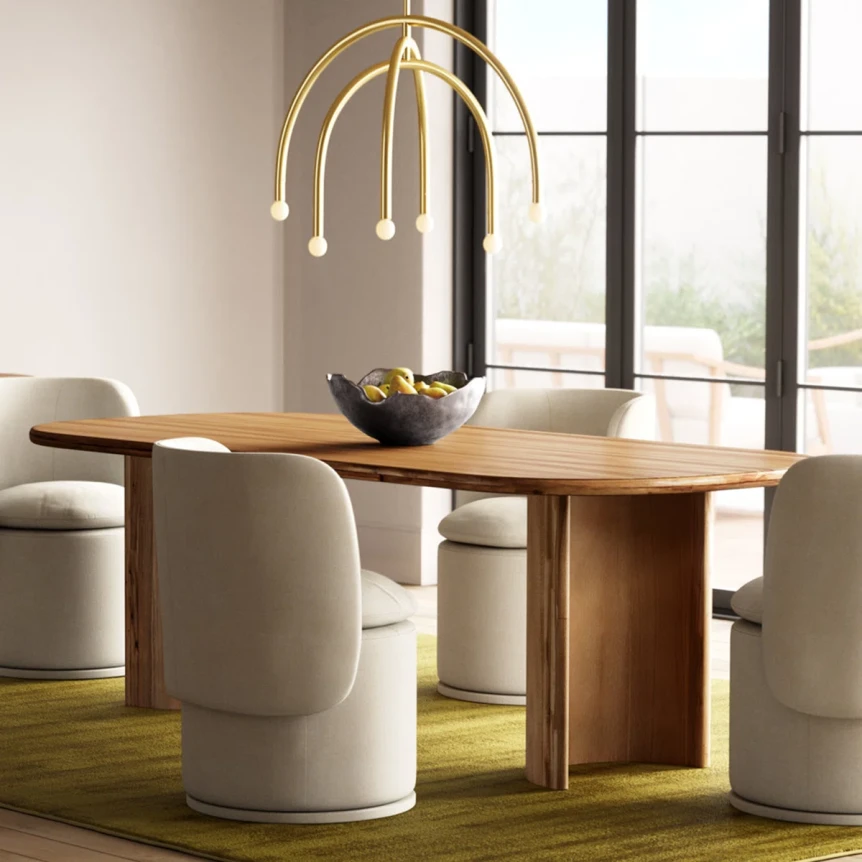
The modern chandelier has moved well beyond crystal and candle arms. Today’s options include sculptural metal forms, clustered globe configurations, geometric wireframes, and organic shapes made from materials like paper, wood, or hand-blown glass. A chandelier adds a layer of visual complexity that a simple pendant doesn’t, which can be useful in rooms that are otherwise quite spare.
How to Size Your Fixture
A simple rule for fixture width: add the room’s length and width in feet, and that number in inches is a good starting diameter for the fixture. A 12 by 14 foot room, for example, suits a fixture that’s roughly 26 inches wide. For linear pendants over long tables, the fixture should be about two thirds the length of the table and no wider than the table’s narrow dimension.
Hanging Height: The Most Common Mistake
The bottom of the fixture should hang 30 to 36 inches above the table surface. This is the range that puts enough light on the table while keeping the fixture out of sightlines when people are seated across from each other.
For ceilings higher than 8 feet, add approximately 3 inches of drop for every additional foot of ceiling height. A room with 10 foot ceilings, for example, would hang the fixture 36 to 42 inches above the table.
The most common mistake is hanging the fixture too high. When a pendant floats near the ceiling, it loses its relationship with the table and becomes just another ceiling light. The whole point of a dining room pendant is to create a pool of warm, focused light over the table. That only happens when the fixture is close enough to do its job.
Layered Lighting: Beyond the Pendant
A pendant alone handles ambient light over the table, but a well lit dining room needs more than one source. Layered lighting means combining multiple types of light at different heights and intensities to create depth and flexibility.
Wall Sconces
Sconces on one or two walls add a warm mid-level glow that fills in the shadows around the room’s perimeter. They’re especially effective in dining rooms with darker wall colors, where the pendant’s light doesn’t reach the corners. Mount sconces with the center of the fixture approximately 60 to 66 inches from the floor.
Recessed Lighting
Recessed downlights provide a subtle layer of overall room illumination. They’re useful for general tasks like setting the table and cleaning up, and they add definition to wall art or a sideboard when aimed correctly. Always put recessed lights on a separate dimmer from the pendant so you can adjust each layer independently.
Accent Lighting
A floor lamp in a corner, LED strip lights inside a china cabinet, or a table lamp on a sideboard all qualify as accent lighting. These aren’t essential, but they add warmth and dimension, especially in rooms used frequently in the evening. Accent light creates the sense that the room has been thoughtfully considered rather than illuminated by a single overhead source.
The Dimmer: The Most Important Thing You’ll Install
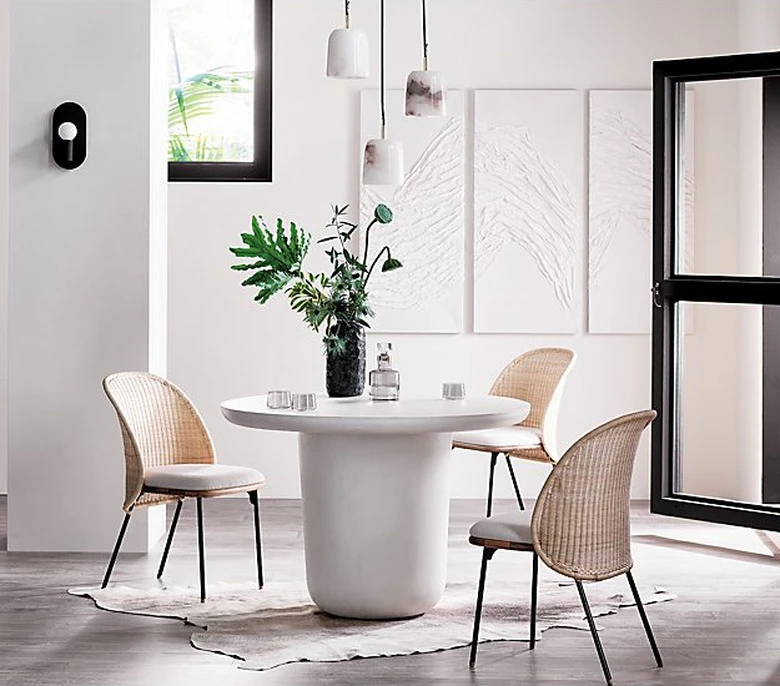
If you take one thing from this guide, let it be this: put every light in your dining room on a dimmer. A dining room without dimming capability is a room with only two settings: too bright and off.
Bright light is useful for setting the table and seeing what you’re cooking. It’s terrible for dinner. Once food is served, you want light levels to drop significantly. Dimmed light is warmer in color temperature (bulbs shift toward amber as they dim), more flattering to faces, and more conducive to conversation. The difference between a dining room at full brightness and one dimmed to 40 percent is the difference between a cafeteria and a restaurant.
Modern dimmer switches are inexpensive and straightforward to install. Smart dimmers allow you to create presets and control levels from your phone.
Bulb Choice: Color Temperature Matters
The color temperature of your bulbs has an outsized impact on how the room feels. For dining rooms, aim for bulbs in the 2700K range, which produces a warm, amber toned light similar to incandescent bulbs. Avoid anything above 3000K for the pendant and sconces. Higher color temperatures (4000K and above) produce a blueish white light that makes food look unappetizing and faces look washed out.
Choose bulbs with a CRI (Color Rendering Index) of 90 or above. CRI measures how accurately a bulb renders colors. A high CRI bulb makes food look more vivid, wood tones look richer, and skin tones look more natural. Low CRI bulbs flatten everything and make even a beautifully set table look dull.
Lighting for Different Table Shapes
Rectangular Tables
A linear pendant or a row of two to three pendants works best. The fixture arrangement should follow the table’s long axis so light is distributed evenly across the surface. Avoid a single round fixture over a long rectangular table, which concentrates light in the center and leaves the ends in shadow.
Round Tables
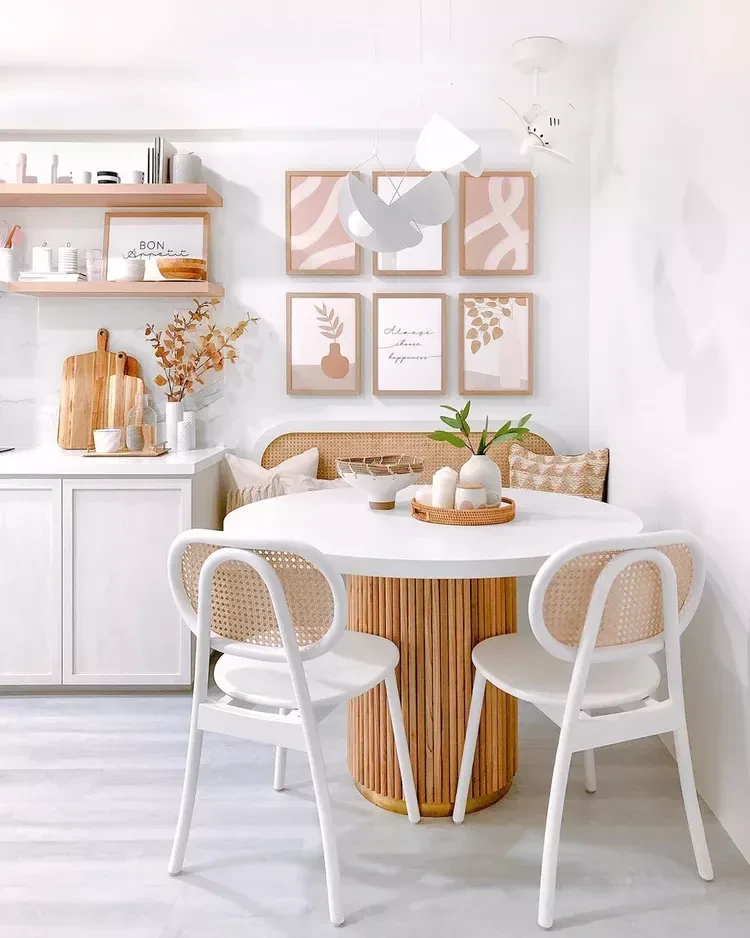
A single round pendant or a clustered arrangement centered directly over the table is the natural fit. The fixture diameter should be roughly half to two thirds the table’s diameter. A 48 inch round table, for example, pairs well with a pendant that’s 24 to 32 inches wide.
Oval Tables
Oval tables can go either way. A single oblong or organic shaped fixture echoes the table’s shape nicely. A pair of round pendants spaced along the table’s length also works. The key is that the fixture arrangement should follow the table’s proportions.
Choosing the right table is the foundation of all these lighting decisions. If you’re still working on that, our Dining Table Buying Guide covers shapes, sizes, and materials in detail.
Natural Light in the Dining Room
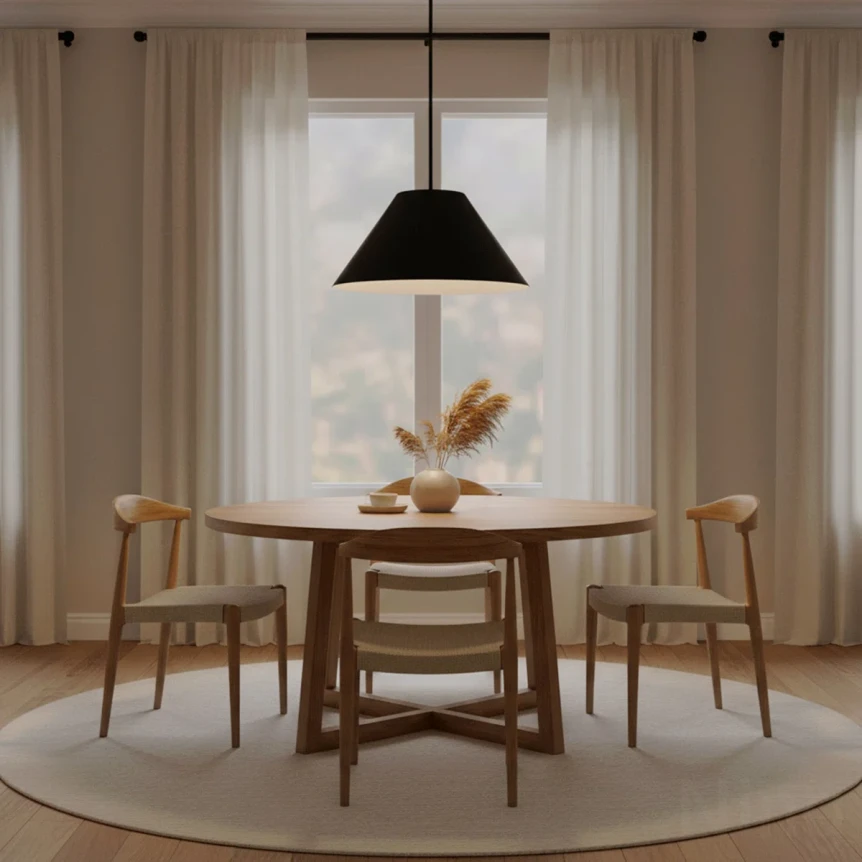
Natural light is an asset during the day, but dining rooms are primarily evening spaces. Window treatments should allow you to control how much daylight enters the room. Sheer linen curtains diffuse harsh sunlight during daytime meals while still letting in ambient light. For evening dining, heavier curtains or shades that close fully help the room feel contained and intimate rather than exposed to dark windows.
If your dining room has a lot of natural light, consider how it interacts with your wall color. Colors that look soft and warm under artificial light can look washed out in direct sunlight. Our Dining Room Color Schemes guide addresses how different palettes behave under varying light conditions.
Common Lighting Mistakes to Avoid
- Hanging the fixture too high, which disconnects it from the table and eliminates the pool of focused light
- Using a fixture that’s too small for the table, which makes the room look under designed
- Relying on a single overhead source without supplementary lighting, which creates harsh shadows
- Choosing cool white bulbs (4000K or above) that make the room feel sterile
- Forgetting the dimmer, which leaves you with no way to adjust atmosphere
- Positioning recessed lights directly over seated diners’ heads, which creates unflattering top-down shadows on faces
Light It Like You Mean It
Good dining room lighting is really just three things: the right fixture at the right height, supplementary sources that fill in the gaps, and a dimmer on everything. Get those three elements in place and the room will look better at dinner than you thought possible.
For a complete dining room design plan that ties lighting into table selection, color, chairs, and layout, read The Complete Guide to Modern Dining Room Design.
Once you’ve sorted the lighting, these guides will help with the next decisions:
Frequently Asked Questions
How high should a dining room light hang above the table?
The bottom of the fixture should be 30 to 36 inches above the table surface for standard 8-foot ceilings. For higher ceilings, add about 3 inches of drop per additional foot of ceiling height.
How big should a dining room chandelier be?
Add the room’s length and width in feet, and use that number in inches as the fixture’s approximate diameter. For linear pendants over rectangular tables, the fixture should be about two thirds the length of the table.
What is the best light bulb color for a dining room?
Use bulbs in the 2700K color temperature range for warm, flattering light. Avoid anything above 3000K for the main fixtures. Look for a CRI of 90 or above so colors render accurately and food looks appetizing.