The Best Faux Indoor Plants at Target That Actually Look Real

By Tereza Hower | Published February 24, 2026 | Updated March 26, 2026
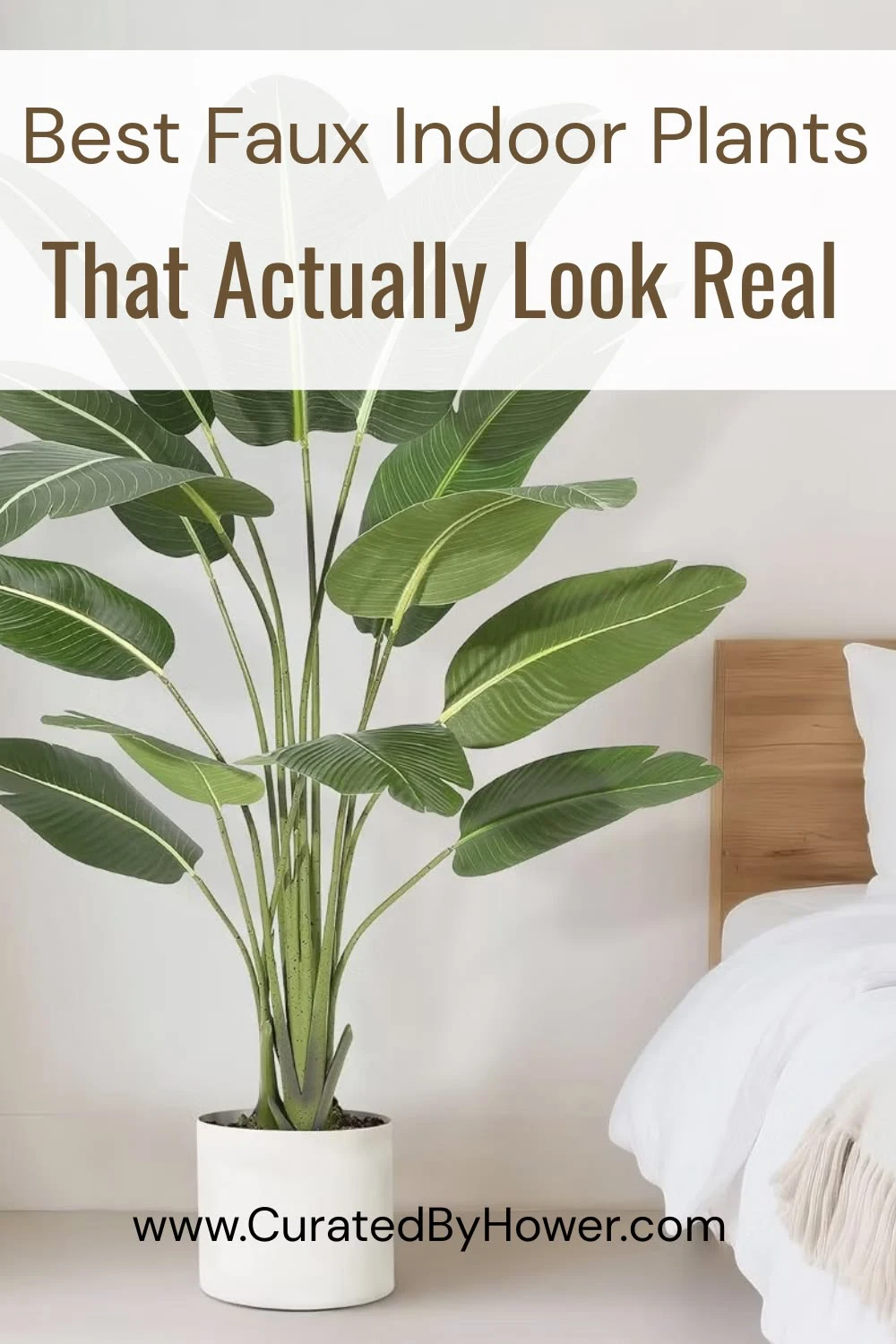
At some point most of us have killed a plant we genuinely meant to keep alive. A fiddle leaf fig that never forgave a missed watering. A pothos that somehow withered despite everyone claiming it was indestructible. The experience leaves you wanting the aesthetic of greenery without the recurring guilt, and that is exactly where well made artificial plants come in.
The problem is that most fake plants look fake. There is a flatness to the leaves, a stiffness in the arrangement, a pot that screams “discount bin.” That has changed significantly over the past few years, and nowhere is that shift more visible than in the Threshold designed with Studio McGee collection. These are artificial plants that stop guests in their tracks. They ask which one is real. They take the photo and send it to their designer friend.
This guide covers the best faux indoor plants available right now, from affordable tabletop arrangements to full size floor trees that anchor an entire room.
How to Choose a Faux Indoor Plant That Looks Real
Start with Scale
The biggest mistake people make with faux plants is choosing something too small for the space. A 6 inch succulent on a 9 foot bookcase disappears. A 72 inch floor tree in a studio apartment overwhelms. Measure the space before you shop. As a rough rule, tabletop arrangements work best on coffee tables, consoles, and dining tables, while floor trees are meant for corners, entryways, and flanking a fireplace or sofa.
Look at the Leaves Closely
Realistic faux plants invest in leaf detail: the veining, the slight variation in color from leaf to leaf, the natural droop or curl of individual branches. In product photos, zoom in on the leaves rather than the overall silhouette. Flat, uniform, glossy leaves are a giveaway. Look for polyester or polyurethane construction with textured surfaces, which read as more natural than painted plastic.
Pay Attention to the Container
The pot sells the plant as much as the plant itself does. A faux olive tree in a plastic nursery pot looks like a prop. The same plant in a hand thrown ceramic or textured cement vessel looks intentional and designed. The Studio McGee line consistently pairs its faux plants with quality pots, from white ceramic to distressed cement to woven baskets, that hold their own as standalone decor pieces.
Think in Groups, Not Singles
Interior designers rarely place a single plant alone. Clustering two or three pieces of different heights creates the layered, organic quality of a real plant collection. Consider pairing a tall floor tree with a medium tabletop arrangement nearby, or grouping two or three small potted pieces on a windowsill or kitchen shelf. The mix of heights and textures is what reads as “styled” rather than “decorated.”
Indoor vs. Indoor/Outdoor
Some faux plants in the Studio McGee line are rated for indoor use only, while others carry an indoor/outdoor designation that makes them versatile for covered porches, entryways with natural light variation, or sunrooms. If you are shopping for a space with temperature swings or occasional humidity, pay attention to this detail on the product page.
The 10 Best Faux Indoor Plants That Actually Look Real
1. Small Olive Leaf Arrangement — Threshold x Studio McGee
Small Olive Leaf Arrangement
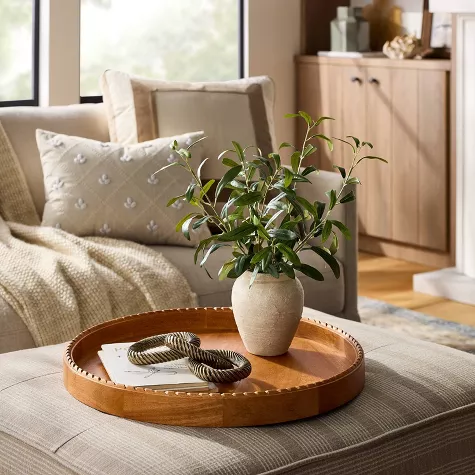
The olive branch is having a design moment, and it is easy to see why. Its silvery green leaves and slightly informal branching pattern work in farmhouse, Mediterranean, coastal, and modern spaces equally, making it one of the most versatile pieces in this collection.
At 17 inches tall and 20 inches wide, this sits perfectly on a dining table, coffee table, console, or kitchen island without dominating the surface. It arrives in a white ceramic pot with polyurethane foam filler that reads as a clean, finished base. The branches have enough movement and variation that the arrangement looks genuinely gathered rather than factory assembled.
This is arguably one of the best value faux plants on the market right now. Buy two and place them together at different heights for an instant “curated shelf” moment.
2. Set of 3 Mini Potted Herbs — Threshold x Studio McGee
Set of 3 Mini Potted Herbs
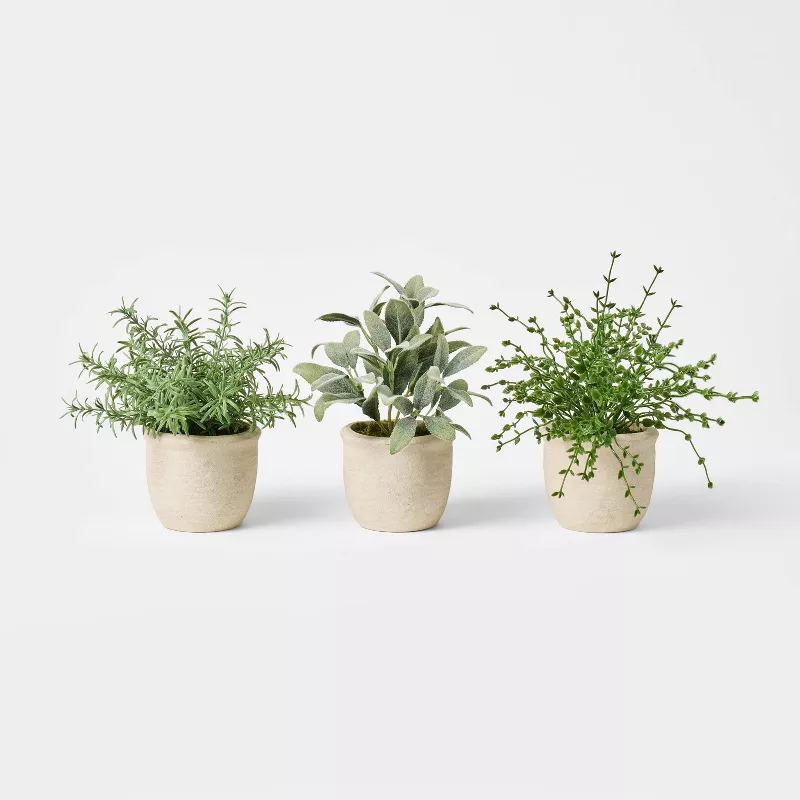
This three piece set earns its spot on the list for sheer usefulness. Three individually potted faux herb plants, the kind that would actually live on a kitchen windowsill or a butcher block counter, come as a group that works out to a great per pot value. They arrive in coordinating textured ceramic pots that look handmade even though they are not.
The styling play here is the grouping. Set all three together on a kitchen shelf and they create a convincing “herb garden” moment. Spread them around, one on the counter, one on the windowsill, one on the breakfast table, and they act as subtle green accents throughout the room. They look particularly good in kitchens with white or light wood cabinetry.
For anyone who wants greenery in a space that gets varying light (kitchens, bathrooms, dim dining rooms), this is the obvious choice. No natural light requirement, no soil, no mess.
3. 14″ Privet Artificial Plant — Threshold x Studio McGee
14″ Privet Artificial Plant
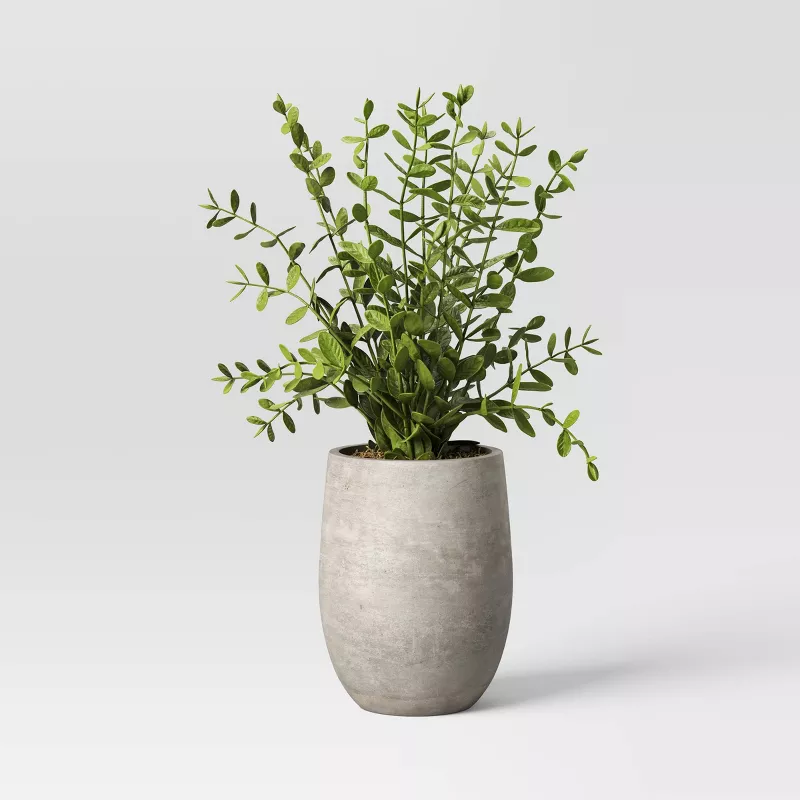
Privet shrubs have a compact, full look with dense clusters of small leaves that read as substantial even in a small pot. This 14 inch faux version captures that quality in a distressed gray cement pot that has an earthy, artisan quality. It works beautifully on a mantel, bookshelf, entryway table, or flanking a doorway in pairs.
What makes this particularly useful is its indoor/outdoor designation. Unlike most pieces in this collection, the privet plant can handle a covered porch, a sunroom, or an entryway that gets temperature variation. That flexibility makes it a strong choice if you want continuity between indoor and outdoor spaces.
This is one of the more proven pieces in the line, and buyers consistently praise its realistic appearance. The cement pot is heavy enough that the plant does not tip, which sounds minor until you have knocked over a lighter pot.
4. Blossom Arrangement Pink — Threshold x Studio McGee
Blossom Arrangement Pink
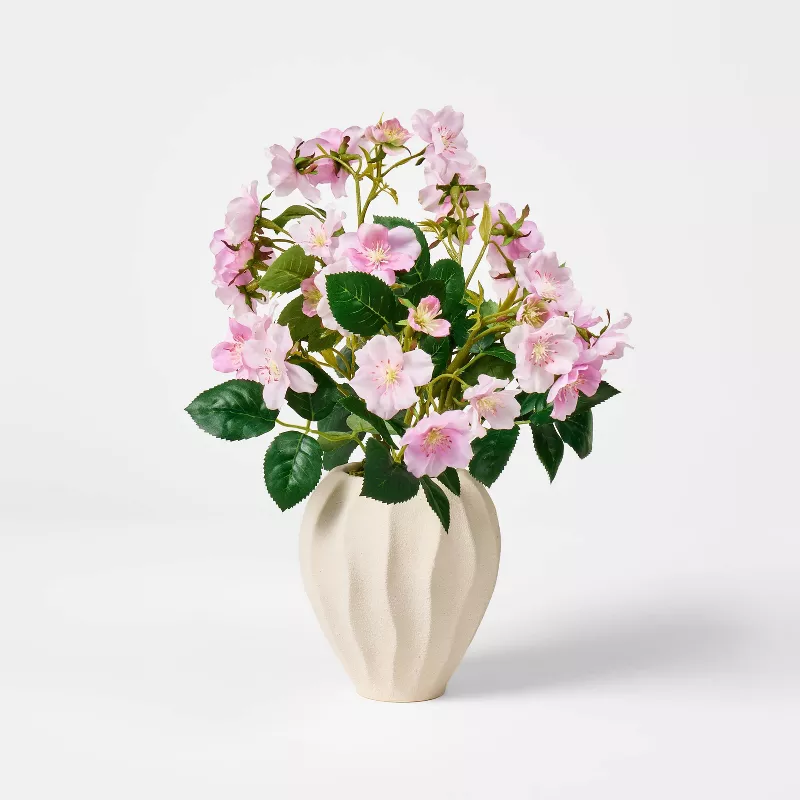
If your space runs toward warm, soft, or feminine tones, this pink blossom arrangement is the standout piece in the collection. Delicate faux blossoms in pale pink sit atop slender branches in a neutral ceramic pot, the kind of arrangement that looks expensive in a guest bedroom, a reading nook, or on a bathroom vanity.
What distinguishes this from the typical “pink flower pot” is the restraint of the design. The branches have a natural, slightly asymmetrical quality, and the blossoms are clustered loosely rather than stuffed in. It photographs beautifully, which has made it popular on home decor accounts. It is the kind of piece you buy because you keep seeing it everywhere and finally give in.
Layer it with the cream hydrangea arrangement or the small olive leaf arrangement for a curated shelf display that mixes bloom types and tones.
5. Hydrangea Arrangement Cream — Threshold x Studio McGee
Hydrangea Arrangement Cream
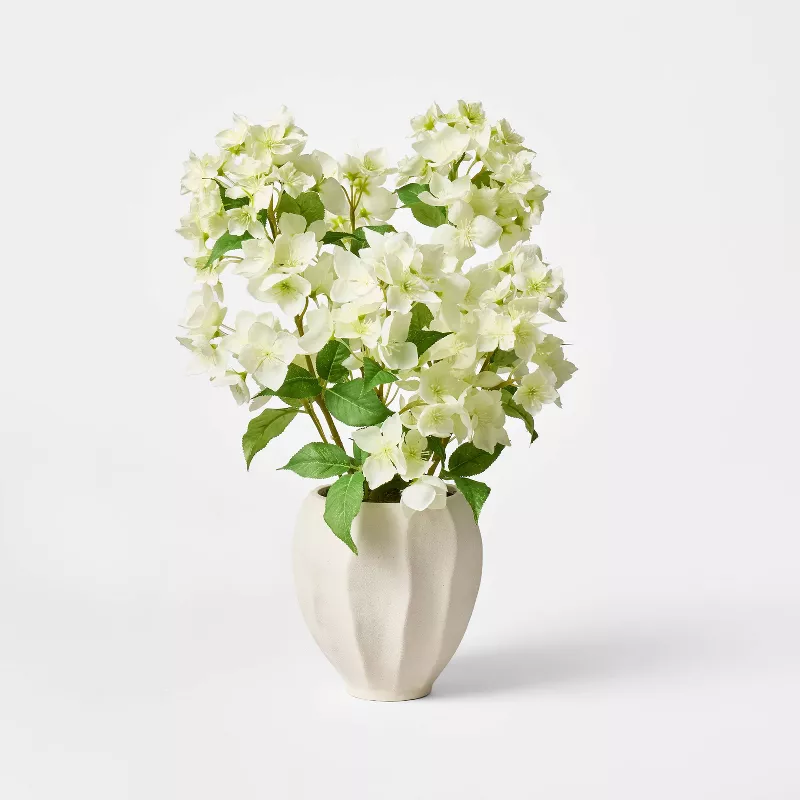
Hydrangeas are one of the hardest flowers to fake convincingly because of the complexity of each bloom. A real hydrangea head is made up of dozens of small individual florets, and cheap versions reduce this to a uniform puff of fabric. The Studio McGee version does not cut that corner. The cream colored blooms have depth and variation, and they sit in a textured ceramic container that has a slightly rough, hand thrown quality.
This arrangement works in spaces that call for a classic, timeless look rather than a contemporary one. A dining table centerpiece, a bedroom dresser, an entryway console: anywhere you might have used fresh cut hydrangeas in a vase. The cream color is versatile enough to pair with almost any wall color or upholstery.
If you are choosing one centerpiece level piece for a living room or dining table, this is the one to buy. It sits a step above the smaller tabletop arrangements in terms of the visual impression it makes.
6. Asymmetrical Olive Tree — Threshold x Studio McGee
Asymmetrical Olive Tree
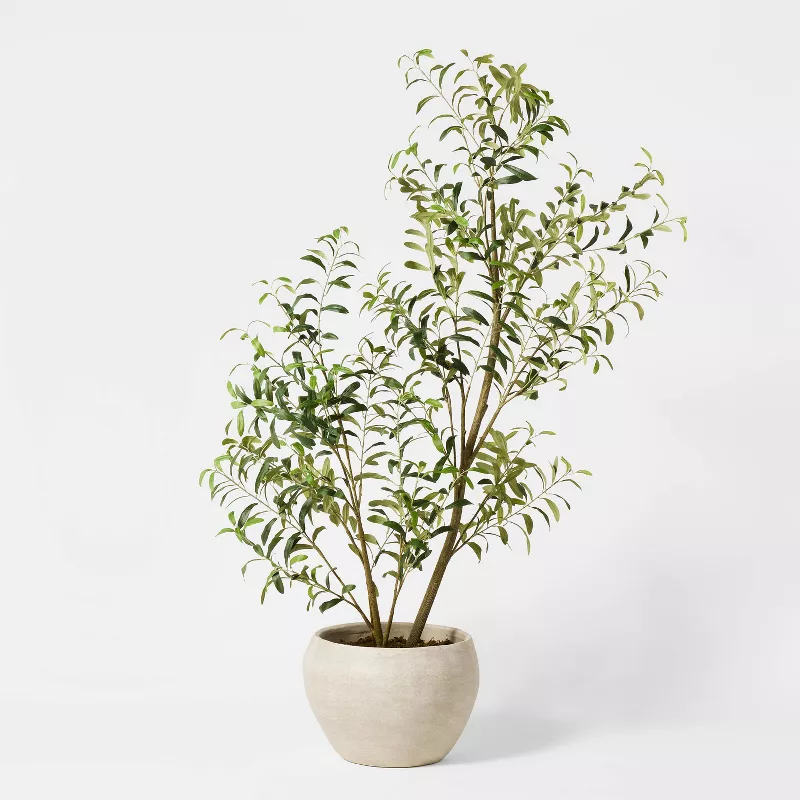
This is one of the highest rated floor trees in the entire faux plant category, and it earns that reputation. The leaning, slightly irregular silhouette of the branches is what makes this look like a real tree rather than a symmetrical showroom prop. Natural olive trees do not grow in perfect ovals. They reach toward light. They have a twist in the trunk. This faux version captures that quality in a way that more expensive artificial trees often fail to.
At 61 inches tall, this is a medium floor tree, substantial enough to fill a corner but not so large it crowds a smaller room. It arrives fully potted with no assembly required, which is a meaningful convenience. The pot is included and features a simple, clean design that pairs with both neutral and warmer palettes.
For anyone who has considered an olive tree but kept killing real ones, or lives somewhere the light does not support them, this is the definitive solution. Buyer reviews consistently confirm it delivers on its promise in real homes.
7. Artificial Pterocarpus Leaf Tree — Threshold x Studio McGee
Artificial Pterocarpus Leaf Tree
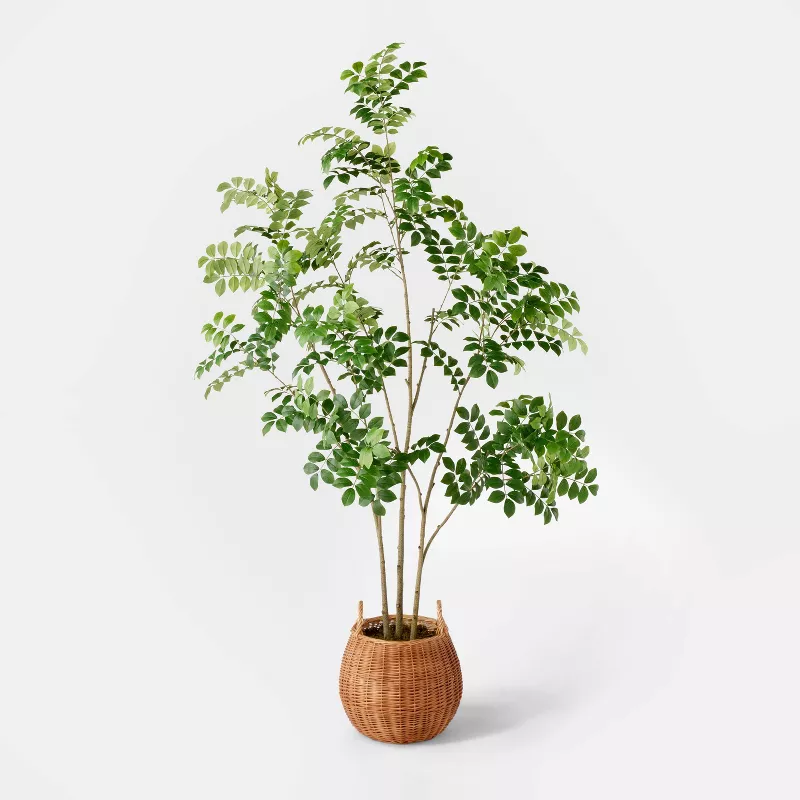
Pterocarpus, also known as Burmese rosewood or Padauk, has a distinctive leaf shape: elongated, slightly curved, with a warm green color that leans toward medium olive tones. This faux version captures that look in a 72 inch tall tree that comes in a woven basket container rather than a pot. The basket is the design decision that sets this apart from every other tree in the collection.
Woven baskets have a warmth that ceramic pots do not. They work in bohemian, coastal, rattan forward, and organic modern spaces. If your room has natural materials like rattan chairs, linen throws, jute rugs, and wood furniture, this tree slots in more naturally than a ceramic potted alternative. The basket also gives the tree a lighter visual weight than a solid pot, making it feel less dominant in smaller rooms.
At 72 inches, this is a proven, well loved piece. It requires no assembly and ships ready to place.
8. 72″ Artificial Ficus Tree — Threshold x Studio McGee
72″ Artificial Ficus Tree
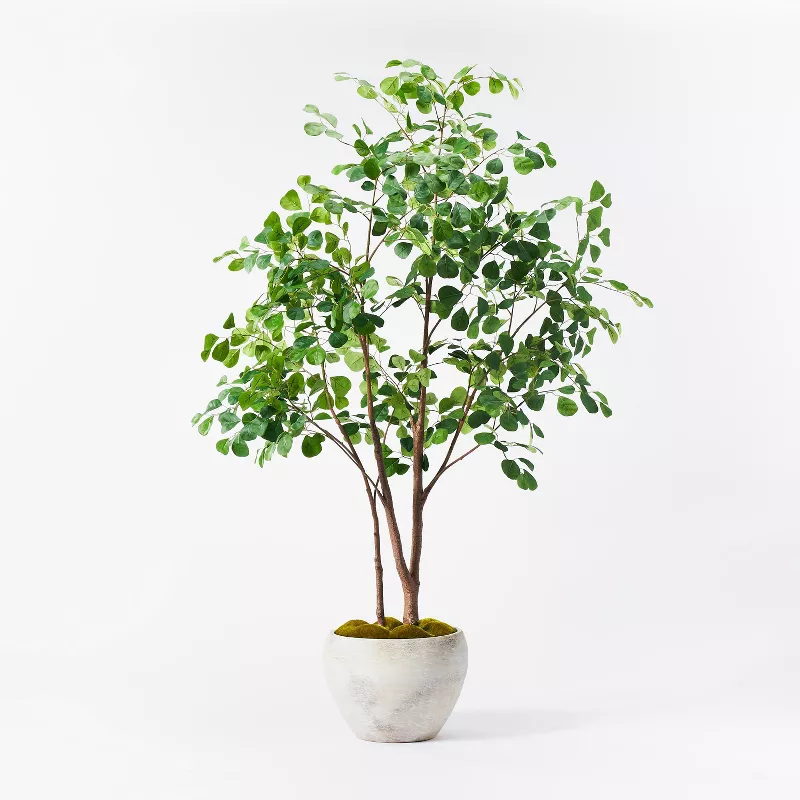
The ficus has been a staple of interior design for decades because its leaf shape is dense, rounded, and inherently lush without being loud. This version delivers on that classic look at 72 inches tall, housed in a clean white ceramic pot that pairs with virtually any decor palette. It is one of the most popular artificial trees in this category, and for good reason.
What buyers consistently report is that this tree looks convincingly real at normal living distance, that the branches have enough variation to avoid looking factory set, and that the white pot complements both neutral and warm toned rooms without competing. The overall effect is polished without trying too hard.
At 72 inches, this is an ideal mid size choice for living rooms, entryways, bedrooms, and home offices. No assembly required. It arrives ready to place. For rooms that need greenery but cannot accommodate a taller canopy tree, the ficus at this height is the cleaner fit.
9. 76.5″ Artificial Olive Tree in Ceramic Pot — Threshold x Studio McGee
76.5″x 30″ Artificial Olive Tree in Ceramic Pot
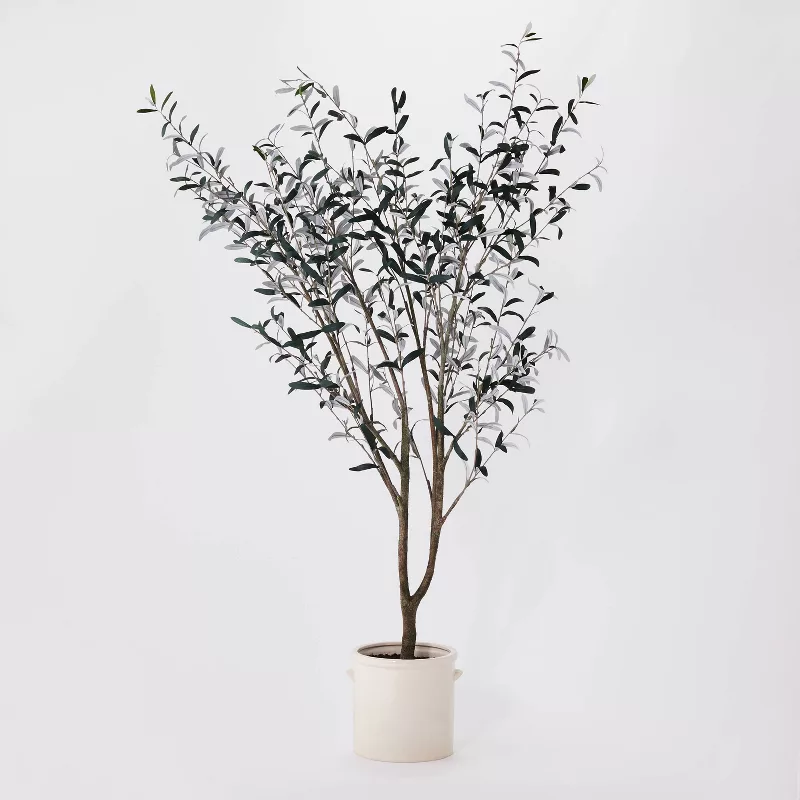
This is the most reviewed artificial tree in this lineup, and buyers consistently agree on the same things: it looks extremely realistic, fills the corner it was bought for, and holds its appearance over time without drooping or fading. That kind of consensus across hundreds of reviews is meaningful.
At 76.5 inches tall and 30 inches wide, this sits between the 61 inch asymmetrical olive and the larger floor trees in terms of presence. It arrives in a white ceramic pot with faux soil filler, a clean, neutral base that disappears into the decor and lets the tree itself do the work. The olive branch silhouette, multi trunked, slightly gnarled, with silvery green leaves, is one of the most recognizable and beloved in contemporary interior design.
This is a worthwhile investment for anyone who wants a proven, widely loved piece that anchors a room for years to come.
10. Hydrangea Wreath Cream — Threshold x Studio McGee
Hydrangea Wreath Cream
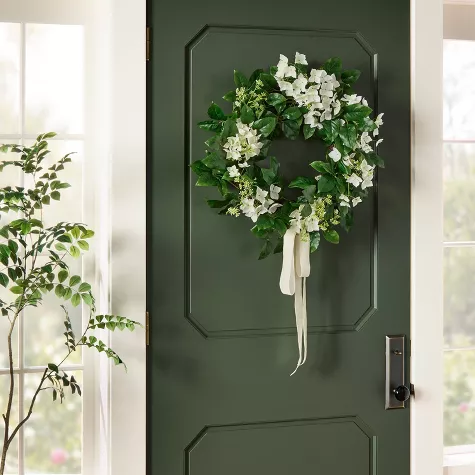
A wildcard pick. Not a potted plant, but an unexpected way to bring the botanical look to a wall, door, or mirror without shelf space. Faux wreaths have a reputation as seasonal only decor, but a cream hydrangea wreath in this style is genuinely year round. It works above a fireplace, on a front door, over a large mirror, or as a gallery wall anchor.
The cream hydrangea blooms are consistent with the quality in the arrangement version. There is depth and layering in the blooms, not just a flat ring of fabric. This is a relatively low risk experiment if you have never tried a botanical wreath as interior decor. If it does not work in the first spot you try, move it. Unlike a potted plant, a wreath takes two seconds to relocate.
It has quickly become one of the stronger selling pieces in the Studio McGee faux plant collection, which suggests it is delivering on its promise in a wide variety of home styles.
Pros and Cons by Plant Type
Tabletop Arrangements (Olive leaf, Hydrangea, Herb sets, etc.)
- Pro: Affordable entry point that is easy to try without commitment
- Pro: No assembly, no watering, no sunlight requirement
- Pro: Portable and can move from room to room seasonally or when styling changes
- Con: Smaller visual impact than floor trees and may disappear in large, open rooms
- Con: Dust accumulates on intricate leaf surfaces more than on solid objects
- Con: Cannot create the “statement corner” effect that a tall floor tree can
Medium and Large Floor Trees (61″ to 84″)
- Pro: Maximum visual impact that transforms a room corner completely
- Pro: Looks like the real thing at conversational distance (the 6 foot test)
- Pro: A one time investment that lasts for years with minimal maintenance
- Con: Higher price point requires more consideration
- Con: Shipping restrictions may apply depending on your location
- Con: Cannot be moved as easily once staged in a corner, so plan placement ahead
Faux Floral Wreaths
- Pro: Adds a botanical element to vertical space without using floor or shelf area
- Pro: Genuinely versatile for doors, walls, above mirrors, and fireplace mantels
- Pro: Year round use when choosing neutral toned designs like cream hydrangea
- Con: Less common as interior decor, which requires confidence in the styling decision
- Con: Can look dated if the wreath style leans too seasonal
- Con: More difficult to style in contemporary or minimal interiors
Frequently Asked Questions
Do faux plants from this collection actually look realistic?
The Studio McGee collection is consistently more realistic than budget faux plants from mass market sources. The key differences are leaf texture (polyester with surface detail vs. painted plastic), pot quality (ceramic or cement vs. plastic nursery pots), and branching structure (varied and slightly irregular vs. perfectly symmetrical). At normal conversational distance, about 3 to 6 feet, most of these plants pass the “is that real?” test. Up close, a trained eye will spot it, but that is true of most faux plants at any price point.
How do you clean artificial plants without damaging them?
For tabletop arrangements, a soft microfiber cloth or feather duster works well for weekly maintenance. For more thorough cleaning, a can of compressed air (used for electronics) clears dust from intricate leaf clusters without bending or breaking delicate branches. For floor trees, a damp cloth on a lint free microfiber works for the leaves, and a slightly damp towel on the pot removes any accumulated residue. Avoid harsh cleaners or direct water spray on the potting soil filler, as polyurethane foam filler can swell or discolor with moisture.
Can Studio McGee faux plants be used outdoors?
Most pieces in the Studio McGee collection are designated for indoor use only. Notable exceptions include the 14″ Privet Artificial Plant, which carries an indoor/outdoor rating. For covered porches, sunrooms, or sheltered outdoor spaces, pieces rated indoor/outdoor will perform significantly better over time. UV exposure, rain, and temperature swings degrade standard indoor rated faux plants faster than expected, so do not place them in direct outdoor conditions even temporarily.
Are these faux plants worth the price compared to real plants?
That depends on your circumstances. If you live in a low light apartment, travel frequently, or have genuinely not been successful keeping indoor plants alive, the math changes significantly. A quality faux floor tree never needs water, never drops leaves on your floors, survives a two week vacation without a sitter, and looks the same in the tenth year as it did in the first. A comparable real indoor tree costs more upfront and requires consistent care, the right light conditions, and occasional repotting. For many households, the faux option is the more practical and ultimately more affordable choice over a multi year horizon.
What is the Studio McGee brand, and why are their faux plants different?
Studio McGee is the design firm of Shea McGee, a Utah based interior designer and the creator of the Netflix series “Dream Home Makeover.” Her aesthetic centers on warm, layered, natural materials like linen, rattan, wood, and stone, and her Threshold collaboration brings that sensibility to accessible price points. The faux plant collection reflects her eye for what botanical decor looks like in a real, lived in home rather than a photo set: imperfect branching, neutral toned containers, plants that have character rather than just presence.
How do you style a faux floor tree so it looks intentional rather than staged?
The most common mistake is placing a floor tree in complete isolation. In real life, trees are surrounded by other plants, objects, and layered surfaces. To make a faux floor tree look intentional: place a smaller tabletop arrangement within 2 to 3 feet of it, add a natural fiber basket or another textural element near the base, and avoid centering it perfectly in a corner. A slight diagonal angle in the placement, and a “leaning” arrangement rather than a symmetrically upright one, reads as more natural. The Studio McGee asymmetrical olive tree does this work for you by design.
Final Thoughts
Faux plants get a bad reputation because most of them deserve it. The flat leaves, the plastic pots, the obvious symmetry. These are the tells that made “fake plant” a punchline. The Studio McGee collection has changed that standard in a meaningful way. These pieces are designed by someone who cares what they look like in a real home, and it shows.
Start with one of the smaller tabletop arrangements if you are unsure. The Small Olive Leaf Arrangement is the lowest risk entry point on this list. If you are ready to make a real design statement, the Asymmetrical Olive Tree or the 76.5″ Olive Tree in Ceramic Pot are the proven choices for a room anchor that holds up over years, not just seasons.