The Complete Guide to Outdoor & Patio Design (2026)

By Tereza Hower | Published March 23, 2026 | Updated March 27, 2026
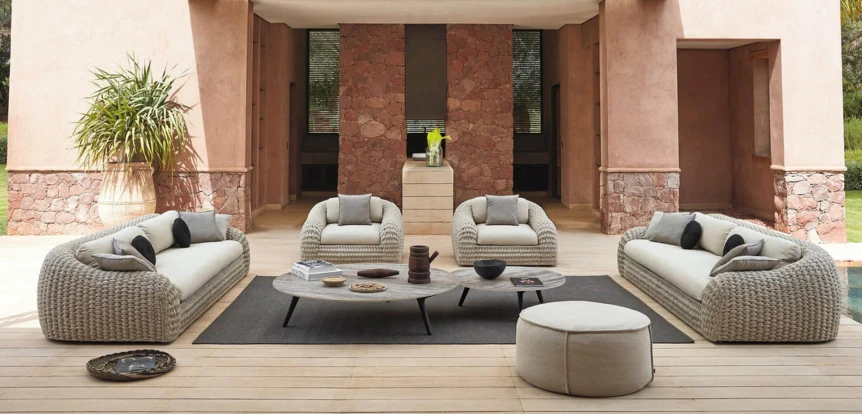
There is a particular kind of satisfaction that comes from a well-designed outdoor space. It is the feeling of sitting outside in the evening with a drink in hand, looking at a space that feels genuinely put together, and realising that what used to be a neglected slab of concrete or an overgrown patch of lawn has become a room you actually want to spend time in.
Outdoor design has matured enormously over the last decade. The idea of the patio as a functional extension of the home, with considered furniture, proper lighting, plants that do real design work, and materials chosen for how they age as much as how they look, is now well within reach for most households. You do not need a large garden or a significant budget to create an outdoor space that genuinely improves your daily life. You need a clear approach and the right sequence of decisions.
This guide covers everything involved in designing a patio or outdoor space that works year-round, feels personal, and holds up to the realities of outdoor life.
What’s Covered in This Guide
- Thinking About Outdoor Design
- The Key Principles of Good Outdoor Design
- Planning Your Outdoor Space
- Surfaces and Materials
- Choosing the Right Outdoor Furniture
- Outdoor Lighting
- Plants and Landscaping
- Outdoor Kitchen and Dining
- Designing a Small Patio
- Textiles, Rugs, and Accessories
- Designing for Year-Round Use
- Recommended Resources and Related Guides
Thinking About Outdoor Design
The most common mistake in outdoor design is treating the space as an afterthought. Interior rooms get careful consideration: measured floor plans, material samples, lighting schemes, and furniture chosen for how it works together. Outdoor spaces often get a trip to a garden centre and whatever is on sale at the end of summer.
The result is outdoor spaces that feel improvised rather than designed, and that fail to deliver on their potential as genuine extensions of the home. A patio or garden that has been thought through with the same care as an interior room is a completely different proposition. It has a clear identity, it functions well for the activities it is meant to support, and it makes the whole home feel larger and more complete.
Outdoor design also requires thinking about a set of considerations that interior design does not: weather, seasonal change, maintenance, and the way the space looks and feels at different times of year. These are not obstacles but design parameters, and working with them rather than against them leads to spaces that are more interesting and more satisfying than those that try to replicate indoor conditions outside.
The Key Principles of Good Outdoor Design
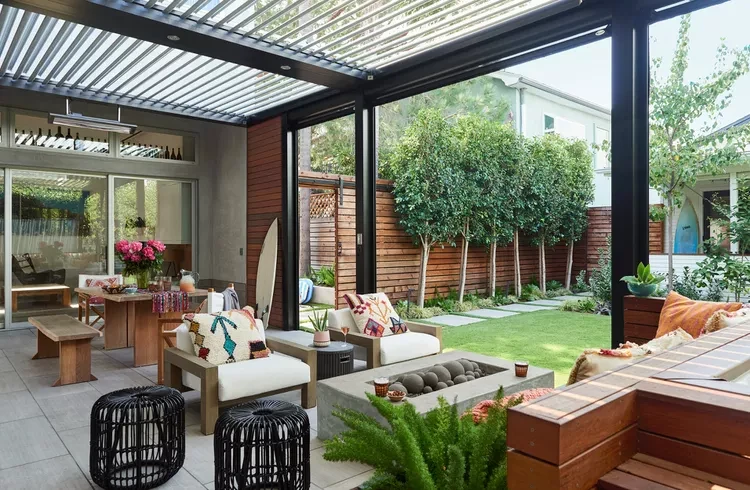
Treat it as a room. The most useful mental shift in outdoor design is to think of the patio or garden as a room without a roof rather than a yard with some furniture in it. Rooms have zones, circulation paths, a focal point, a considered material palette, and a defined purpose. Applying these ideas to an outdoor space changes how you plan it and dramatically improves the outcome.
Design for how you actually use it. An outdoor space designed around an idealized version of how you might use it, elaborate outdoor kitchen that never gets used, a dining table for twelve when you mostly eat outside alone or with one other person, will always disappoint. Design around the reality of your life: how many people gather there regularly, what activities you actually do, and what would make the space genuinely more enjoyable to use every day.
Choose materials that age well. Outdoor materials are subjected to sun, rain, frost, and wind in ways that interior materials never are. Choosing materials on aesthetics alone, without considering how they age and how much maintenance they require, leads to spaces that look beautiful when new and disappointing within a few years. The best outdoor materials look better with age: natural timber, stone, weathered steel, and terracotta all develop a patina that adds character rather than suggesting neglect.
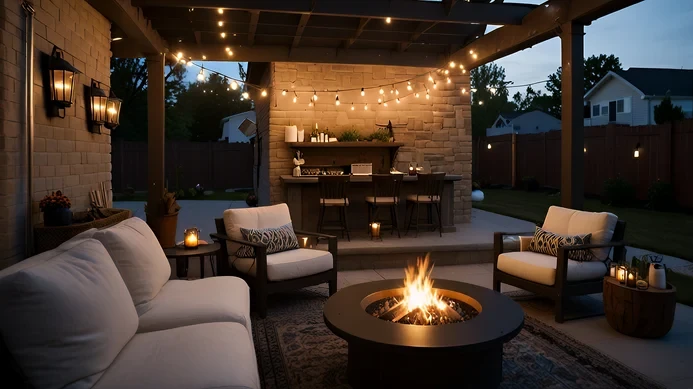
Layer the lighting. Outdoor lighting is one of the most transformative and most neglected elements of garden and patio design. A space that looks flat and uninviting after dark with a single wall light becomes warm and atmospheric with layered lighting. String lights, path lights, uplights, and candles all contribute to a nighttime environment that extends the usable hours of the space considerably.
Use plants as design elements, not decoration. Plants do structural work in outdoor spaces. They provide enclosure and privacy, they soften hard surfaces, they define zones, and they change the quality of light filtering through a space. Treating them as something added at the end rather than designed from the beginning leads to outdoor spaces that feel planted rather than designed.
Build in weather resilience from the start. Shade, shelter from wind, and protection from rain all affect how often and how comfortably an outdoor space can be used. These elements are often most effectively incorporated at the design stage rather than added later, and investing in them pays off in significantly more hours of outdoor enjoyment throughout the year.
Planning Your Outdoor Space
Good outdoor design starts with honest observation. Before making any decisions about furniture or plants, spend time in the space at different times of day and in different weather conditions. Where does the sun fall in the morning and afternoon? Where is the wind most problematic? Which areas feel naturally sheltered? Where is the view from the house most direct, and where is the most appealing view from the garden? These observations should directly inform your layout decisions.
Think about zones. Even a modest outdoor space benefits from being organized into areas with distinct purposes: a seating area for relaxing, a dining area for eating, perhaps a cooking zone or a play area. Clear zones make a space easier to use and give it a sense of structure that an undifferentiated area lacks. In small spaces, zones can be suggested by furniture arrangement, a rug, or planting rather than by hard physical boundaries.
Consider the relationship between indoors and outdoors. The most successful outdoor spaces feel connected to the interior rooms they adjoin. A consistent material language between the interior floor and the outdoor paving, a visual alignment between the main seating area and the living room window, or simply a clear and comfortable path between the two, all strengthen this connection and make both spaces feel larger and more cohesive.
Access and circulation deserve attention at the planning stage. How do you move between the house and the main outdoor areas? Is the path wide enough to carry food and drinks comfortably? Are there unnecessary obstacles between the kitchen and the dining area? Getting circulation right is as important outdoors as it is inside, and it is much easier to address during planning than once everything is in place.
Surfaces and Materials
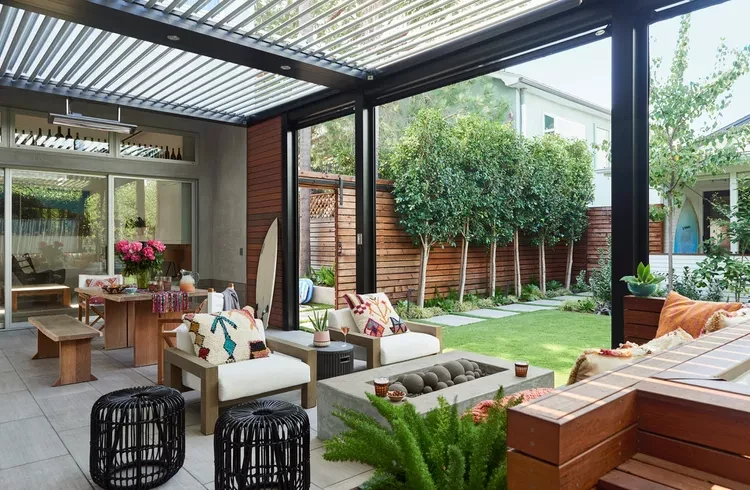
The surface material of a patio is the most permanent decision in outdoor design and the one with the most significant effect on how the space feels underfoot and how it relates to the surrounding environment. It is worth taking time with this choice.
Natural stone, including limestone, sandstone, slate, and granite, remains the most enduring and characterful paving material available. Stone develops a beautiful patina over time, each piece has its own natural variation, and it suits a wide range of garden styles from formal to naturalistic. The trade-offs are cost and the variability of the surface: some stones are more slippery when wet and require sealing to prevent staining, particularly lighter-colored options.
Porcelain paving has become a dominant force in contemporary garden design and for good reason. High-quality porcelain pavers in large formats are extremely durable, frost-resistant, non-porous, and easy to clean. The best versions convincingly replicate natural stone or concrete and are difficult to distinguish from the real thing in a finished setting. They lack the depth and natural variation of real stone but offer significant practical advantages, particularly in climates with hard frosts where certain natural stones can be prone to damage.
Timber decking brings warmth and a natural quality to outdoor spaces that stone and porcelain cannot match. Hardwood decking in species like ipe, cumaru, or teak is extremely durable and ages beautifully to a silver-gray if left untreated. Composite decking, made from a blend of timber fiber and recycled plastic, has improved dramatically in quality and appearance and offers the look of timber with significantly less maintenance.
Gravel and loose aggregate surfaces are underused in domestic gardens but offer real design advantages. They are free-draining, relatively inexpensive, can be laid around irregular shapes and existing plants, and have a relaxed, naturalistic quality that suits certain garden styles very well. The practical considerations are that they require edging to stay in place, can be uncomfortable underfoot for bare feet, and need occasional topping up.
Choosing the Right Outdoor Furniture
Outdoor furniture has to work harder than indoor furniture in almost every respect. It needs to withstand UV exposure, rain, frost, and temperature extremes while still looking good and being comfortable to sit on. The category has improved enormously in quality and design, and investing in well-made outdoor furniture is one of the most impactful things you can do for a patio or garden.
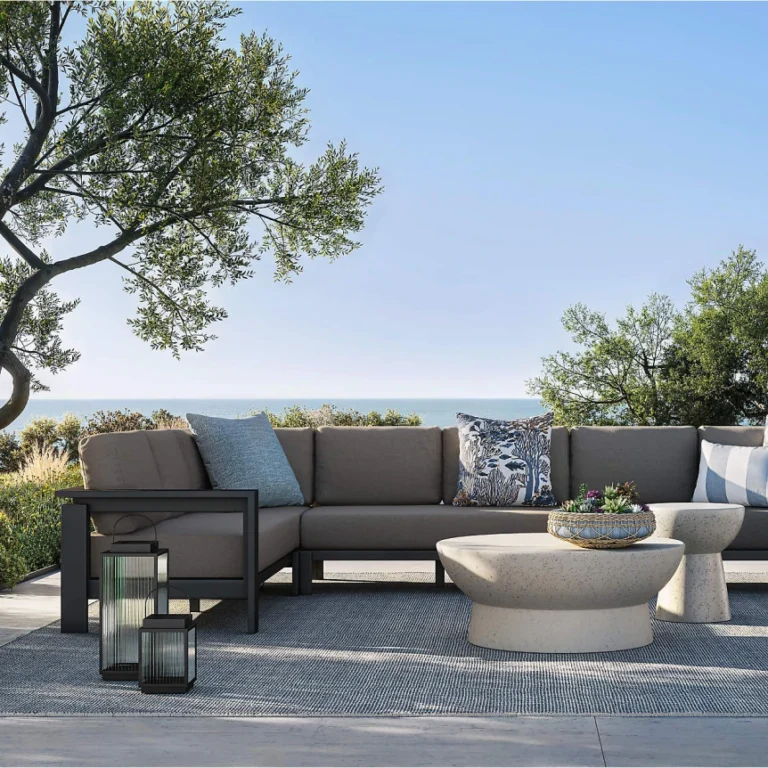
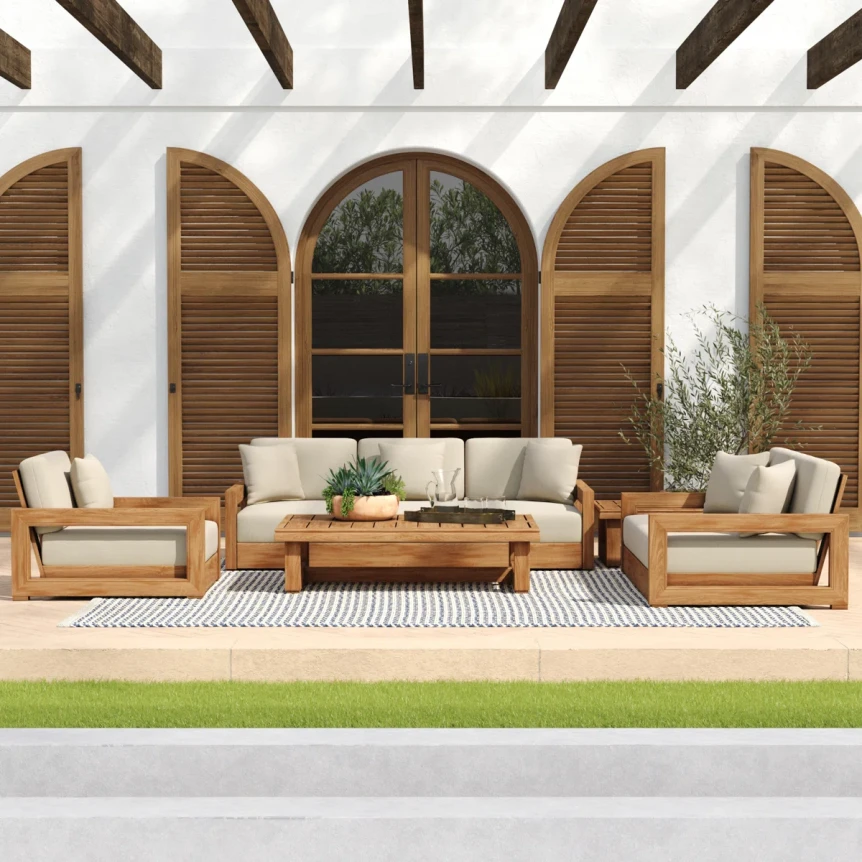
The starting point is material. The main outdoor furniture materials each have different characteristics in terms of durability, maintenance, weight, and aesthetic. Powder-coated aluminium is lightweight, rust-free, and extremely durable, making it one of the most practical choices for outdoor furniture frames. Teak is the gold standard in outdoor timber furniture: naturally oily, incredibly hard-wearing, and beautiful both when new and as it weathers to silver-gray. Rattan and woven synthetic wicker have a relaxed, organic quality that suits many garden styles, with synthetic versions being fully weather-resistant in a way that natural rattan is not.
Scale and proportion matter outdoors as much as inside, and the scale requirements are often larger than people anticipate. A dining table that seats four and looks generous in a kitchen can look slightly lost in a wide-open patio space. A sofa that fills a living room may need a partner or a coffee table of significant scale to hold its own outdoors. Measuring carefully and considering the proportions of the pieces relative to the space, including the sky above it, is essential.
Comfort is non-negotiable for a space that is meant to encourage relaxation. Deep seating with generous cushions in a high-quality outdoor fabric, a dining table at the right height with chairs that are comfortable for a long meal, a sun lounger that actually supports the body well: the comfort of outdoor furniture is directly related to how much time you actually spend using it.
Read our full guide: Best Outdoor Patio Furniture for 2026
Outdoor Lighting
Outdoor lighting is the element that most transforms a patio or garden after dark, and the element most commonly reduced to a single wall light beside the back door. A well-lit outdoor space extends the usable hours of the garden considerably and creates an atmosphere in the evenings that the best daytime design cannot replicate.
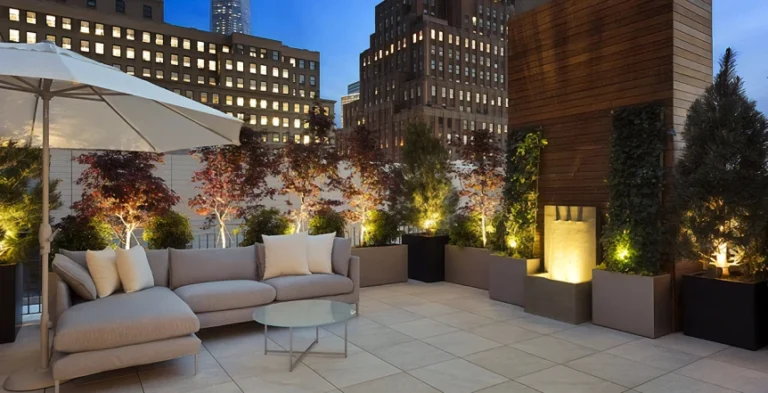
The approach is the same as interior lighting: layers. Ambient light provides overall illumination for safety and navigation. Task lighting serves specific areas like the dining table or the barbecue. Accent lighting creates atmosphere, highlighting plants, features, and the texture of materials.
String lights are the most versatile and universally effective outdoor lighting tool. Strung above a seating or dining area, they create an immediate sense of warmth and enclosure that changes the character of the space completely. They are also relatively inexpensive, easy to install, and straightforward to reconfigure if the layout of the space changes.
Ground level and path lighting adds a layer of safety and visual depth that overhead lighting alone cannot provide. Low-level bollard lights, recessed ground lights, and solar-powered path lights all contribute to the nighttime character of the garden while making it easier and safer to navigate.
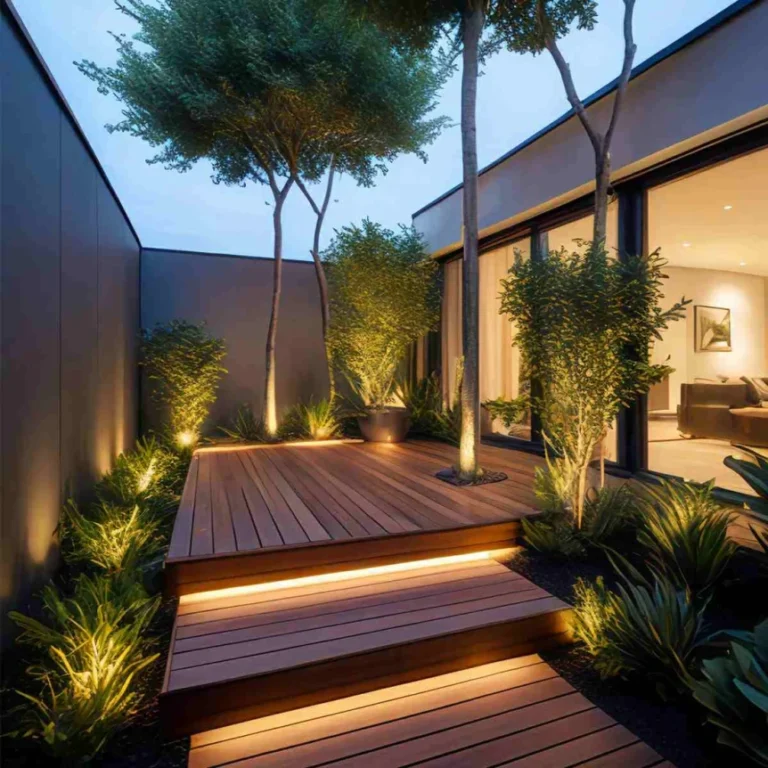
Uplighting trees and architectural planting creates dramatic effects that make a garden feel genuinely designed rather than simply lit. A single well-placed uplight beneath a mature tree transforms its presence in the garden after dark. The shadows cast through the canopy add a depth and movement that no amount of overhead lighting achieves.
Read our full guide: Outdoor Lighting Ideas for Patios and Gardens
Plants and Landscaping
Plants are the most dynamic element of any outdoor space and the one that changes most significantly over time. A garden planted well takes a few years to reach its potential, but when it does, no amount of furniture or paving can match the contribution that mature, well-chosen planting makes to the character of a space.
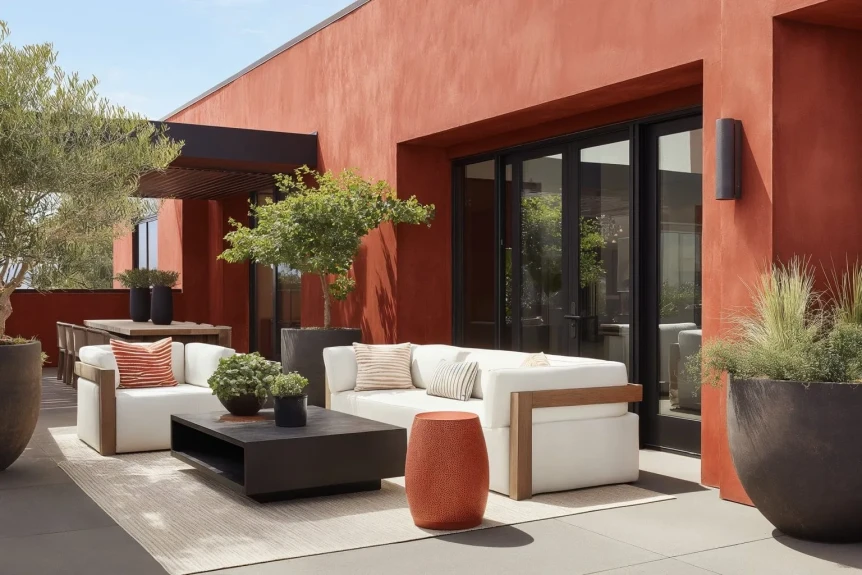
In a patio context, plants do several important things. Large specimens in generous pots provide vertical interest and a sense of scale. Perimeter planting creates privacy and enclosure without the need for high walls or fences. Fragrant plants near seating areas add a sensory dimension that makes the space memorable. Edible plants, herbs, salad leaves, and fruit, bring both practicality and a sense of life and productivity to the space.
Choosing plants for a patio requires thinking about conditions: sun exposure, wind, drainage, and climate. Plants that are well suited to their conditions establish quickly, require less intervention, and look better over time than those grown in conditions that do not suit them. Understanding the specific microclimate of your outdoor space, which areas are sheltered, which are exposed, where the frost pockets are, significantly improves the success rate of any planting scheme.
Read our full guide: Outdoor Plants and Landscaping Ideas for Patios
Outdoor Kitchen and Dining
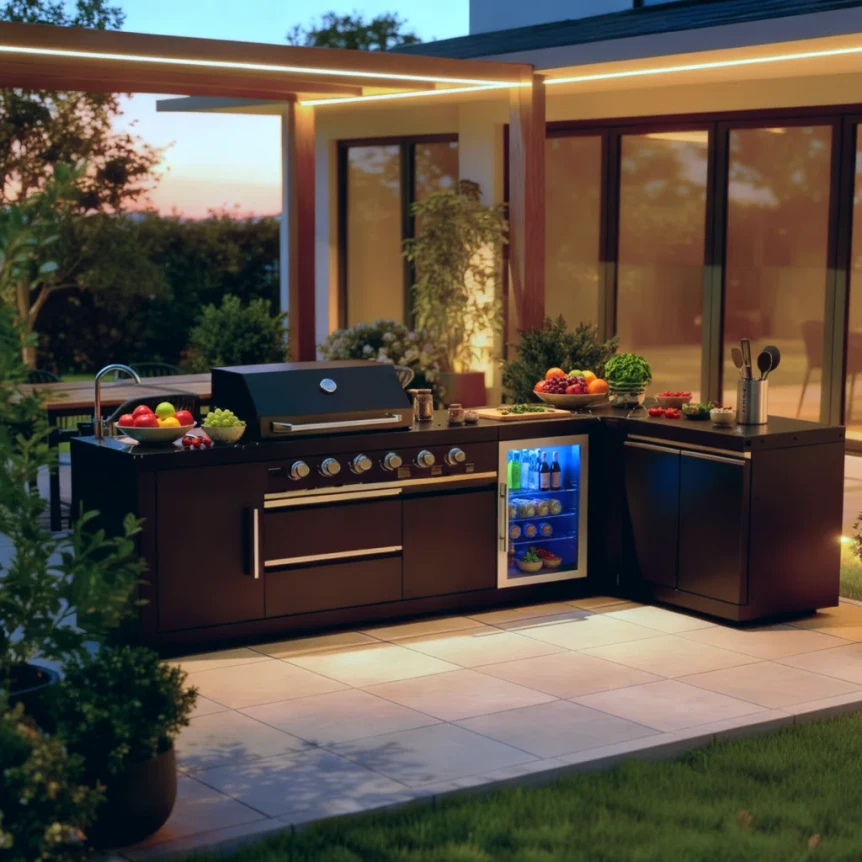
Eating outside is one of the great pleasures of warm weather, and designing the outdoor space to support it properly transforms the experience. A well-positioned dining area with the right table, adequate seating, good lighting, and proximity to the kitchen or cooking area makes outdoor dining feel effortless rather than logistically challenging.
The outdoor kitchen category has grown significantly, ranging from a simple built-in barbecue with a counter beside it to fully specified cooking stations with professional grade grills, refrigeration, sinks, and storage. The right level of investment depends entirely on how much and how seriously you cook outdoors. A high-quality freestanding grill used seasonally may be all that is needed. For those who genuinely love outdoor cooking, a built-in outdoor kitchen is one of the most used and most appreciated garden investments available.
The dining table is the centrepiece of any outdoor eating area. Choosing one that is genuinely large enough for how you use it, with enough chairs for regular gatherings plus room for the occasional larger group, and positioned to take advantage of the best views and the best afternoon light, makes every meal outside feel like an occasion.
Read our full guide: Outdoor Kitchen and Dining Area Ideas
Designing a Small Patio
A small outdoor space is not a compromise. It is a design brief with specific constraints that, when worked with rather than against, often produces some of the most intimate and beautiful outdoor spaces imaginable. Some of the most admired patio designs in the world are tiny urban courtyards and balconies that have been designed with precision and care.
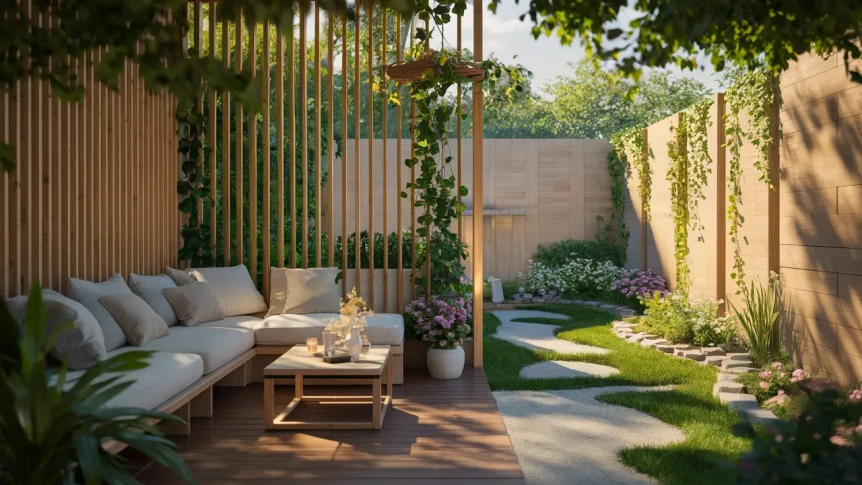
The most important principle in small outdoor spaces is to resist the temptation to fill them. A small patio with one well-chosen seating arrangement, a generous pot or two with beautiful plants, and good lighting will feel far more inviting than the same space packed with furniture, small pots, and decorative accessories. Restraint is a design strategy, not a defeat.
Vertical space becomes particularly important when floor area is limited. Climbing plants on walls and fences, wall-mounted planters, vertical lighting, and trained fruit trees all use the height of the space in ways that add richness and character without reducing the usable floor area.
Read our full guide: Small Patio Ideas That Make the Most of Your Space
Textiles, Rugs, and Accessories
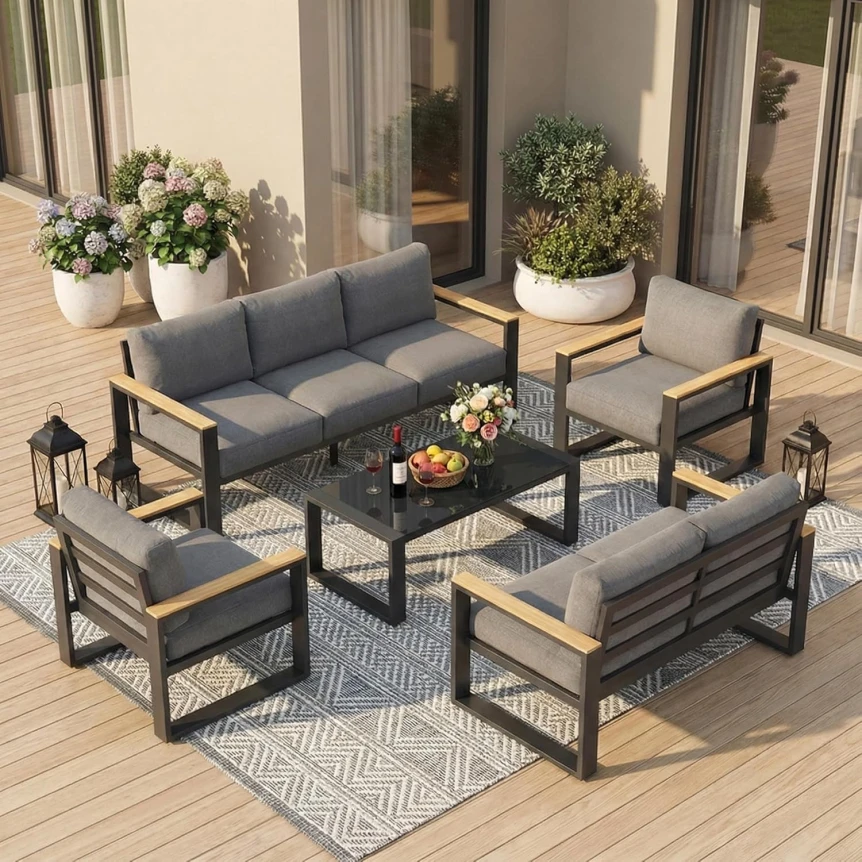
Outdoor textiles have improved dramatically in quality and design and are one of the most effective ways to make a patio feel like a properly designed room rather than a functional outdoor space. Cushions in high-performance outdoor fabrics, outdoor rugs in woven synthetic materials, and weather-resistant throws all add comfort and personality while being robust enough to live outside.
An outdoor rug is one of the single most transformative accessories in a patio or garden. It defines the seating zone, adds color and pattern, softens the surface underfoot, and visually ties the furniture arrangement together in a way that is immediately felt even if not consciously noted. Choose a rug large enough to sit under the front legs of all the furniture in the seating area, as an undersized rug will make the arrangement feel disconnected.
Accessories outdoors should be kept selective. A few quality pieces, a good lantern or two, some carefully chosen plant pots in a consistent material and finish, and well-styled outdoor cushions are enough. More than that and the space starts to feel cluttered in a way that is particularly jarring in an outdoor setting where simplicity and connection to nature are the whole point.
Read our full guide: How to Choose Outdoor Rugs and Textiles
Designing for Year-Round Use
One of the most common limitations of outdoor spaces is that they are pleasant in good weather and abandoned in bad. Designing for year-round use requires thinking about shade in summer, shelter from wind and rain in autumn and spring, and warmth on cool evenings throughout the year.
Shade structures, including pergolas, sails, awnings, and large umbrellas, make a south or west-facing patio usable in the height of summer when direct sun would otherwise make it uncomfortable. A well-designed pergola can also become the structural backbone of the outdoor space, defining the main seating area and providing a frame for lighting, climbing plants, and other additions.
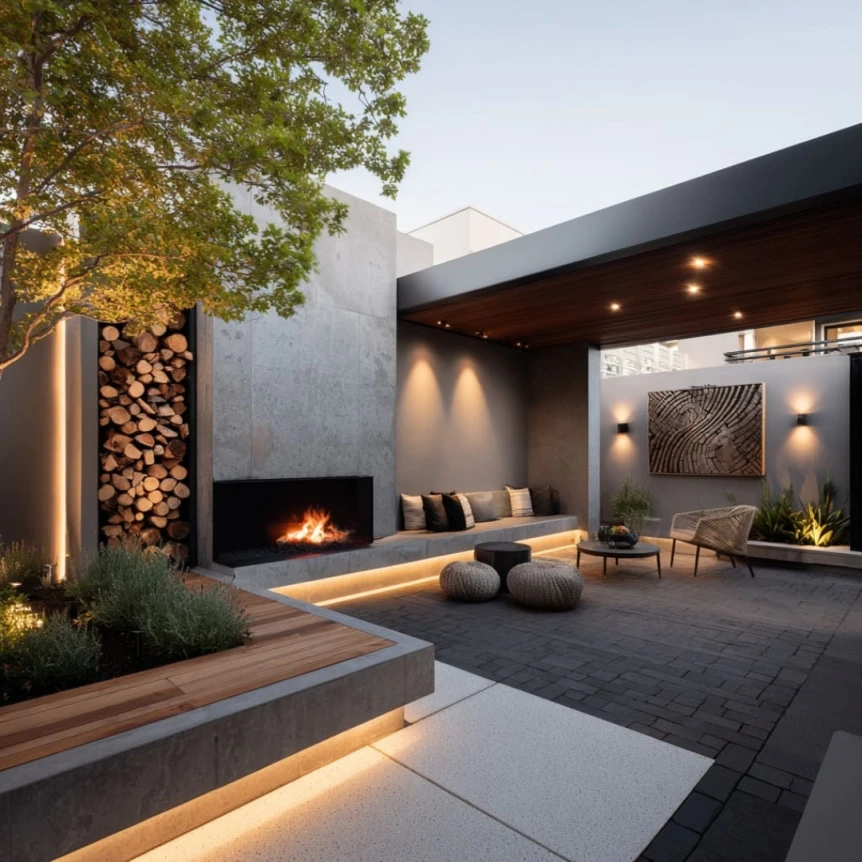
Outdoor heating extends the usable season of a patio significantly. Infrared heaters, which heat people and surfaces directly rather than warming the air, are the most efficient option and work well even in a breeze. A fire pit or chimenea adds warmth and atmosphere simultaneously and is often the most appealing option for regular evening use.
Wind protection, through planting, trellis screens, or low walls, makes a significant difference to outdoor comfort and is worth considering at the design stage for any space that is regularly affected by wind. Even a modest reduction in wind speed makes sitting outside substantially more enjoyable.
Recommended Resources and Related Guides
Best Outdoor Patio Furniture for 2026
A detailed guide to choosing outdoor furniture that looks great and lasts, covering materials, scale, comfort, and how to build a cohesive outdoor furniture scheme at different price points.
Outdoor Lighting Ideas for Patios and Gardens
How to layer outdoor lighting effectively, from string lights and path lighting to uplights and statement fixtures, with practical advice on installation and making the most of the space after dark.
Patio Design Ideas for Every Outdoor Space
Inspiration and practical guidance for patio design across a range of styles, sizes, and settings, with advice on surface materials, layout, and how to create a space with a clear identity.
How to Choose Outdoor Rugs and Textiles
Everything you need to know about outdoor rugs, cushions, and textiles: the materials that stand up to outdoor conditions, how to choose the right size, and how to use them to make a patio feel like a proper room.
Small Patio Ideas That Make the Most of Your Space
Design strategies for small patios, balconies, and compact outdoor spaces, covering layout, furniture selection, vertical planting, and the principles that make tight spaces feel generous and well considered.
Outdoor Plants and Landscaping Ideas for Patios
How to use plants and landscaping to structure, soften, and bring life to an outdoor space, with guidance on choosing the right plants for your conditions and using them as genuine design elements.
Outdoor Kitchen and Dining Area Ideas
How to design an outdoor eating and cooking area that makes the most of warm weather, from dining table placement and lighting to barbecue setups and fully specified outdoor kitchens.
Conclusion
A well-designed outdoor space is one of the most rewarding home improvement projects available, not least because the improvement to daily life is immediate and tangible. On the first warm evening when you sit outside in a space that feels genuinely designed and genuinely yours, the investment of time and thought pays itself back completely.
The sequence matters. Start with the layout and the surface material, since these are the most permanent decisions and the ones everything else builds on. Then the structural elements: furniture, shade, and planting. Then the layered additions: lighting, textiles, accessories, and the seasonal details that keep the space evolving and interesting throughout the year.
Each of the guides linked throughout this page goes deeper on its specific topic. Whether you are choosing between paving materials, working out how to make a small balcony feel like a proper outdoor room, or planning an outdoor kitchen, you will find specific and practical guidance in each one. Take your time, design with intention, and build a space you will genuinely love spending time in.