Buyer's Guides

By Tereza Hower | Published March 25, 2026 | Updated March 31, 2026
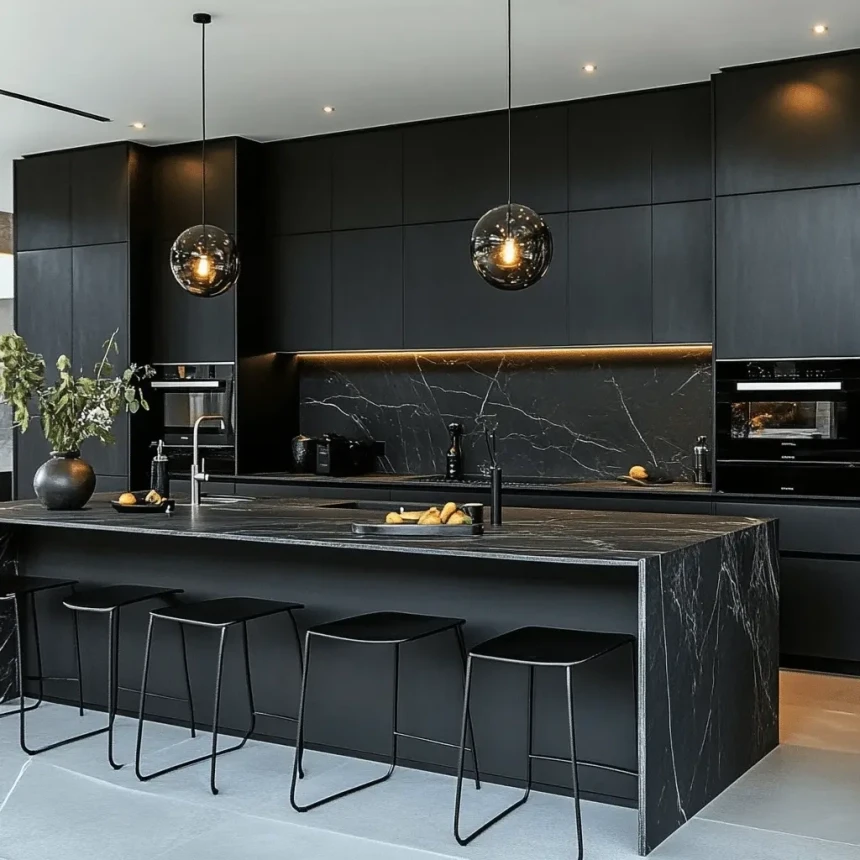
The kitchen is the most used room in the house. It’s where coffee happens before anyone is ready to talk, where dinner becomes a group project, and where the aesthetic of your home either comes together or quietly falls apart. That’s a lot of pressure for one room.
Modern kitchen design offers a clear answer to that pressure: thoughtful layouts, durable materials, smart storage, and a visual calm that makes the space feel good to be in every single day. It’s less about following trends and more about making decisions that age well.
This guide covers everything you need to know to design a modern kitchen from the ground up, whether you’re planning a full renovation or working with what you’ve got. The principles here apply at every budget level.
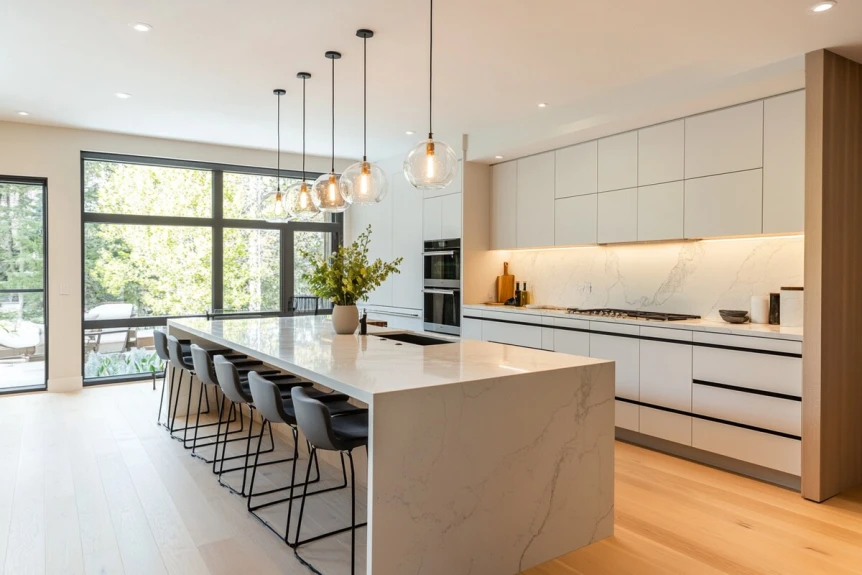
Modern kitchen design is a style rooted in function, clean lines, and a restrained use of materials. It favors flat-front cabinetry, minimal ornament, and surfaces that are easy to maintain. The goal is a kitchen that looks intentional and uncluttered, not sterile.
Contemporary kitchens often pull from this foundation but allow for more warmth through natural wood tones, textured stone, or mixed metal finishes. The two terms are frequently used interchangeably, and in practice, most well-designed kitchens today sit somewhere between the two.
What distinguishes modern kitchen design from other styles:
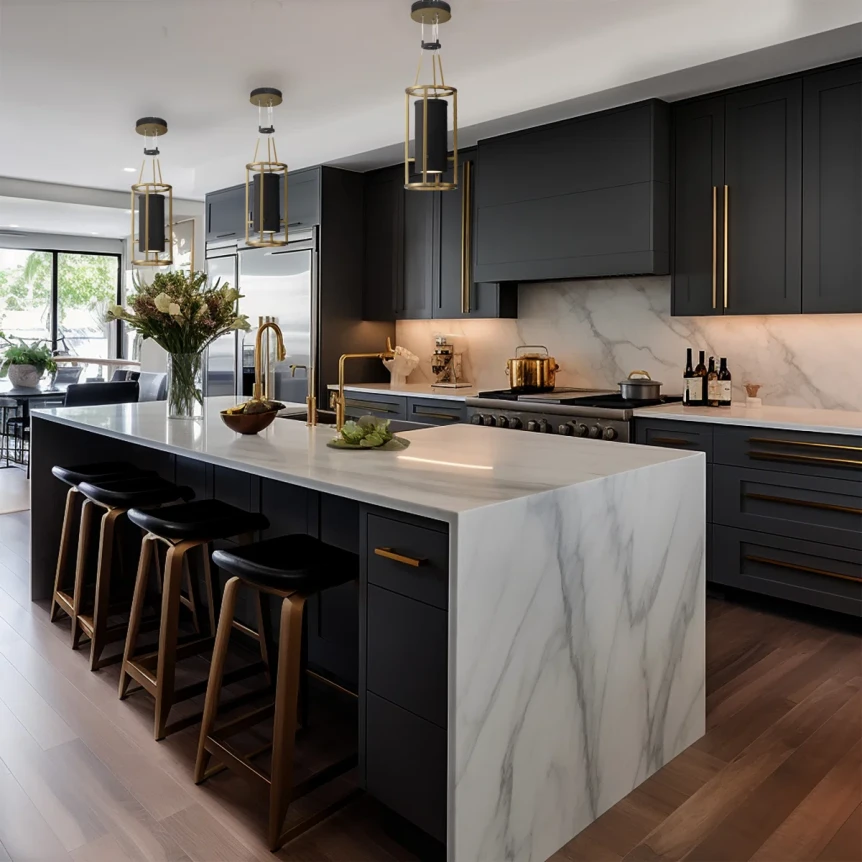
Before anything else, before you choose a cabinet color or countertop material, the layout needs to work. A beautiful kitchen that doesn’t function well will frustrate you every day. A functional one with simple finishes will feel far better than you’d expect.
The work triangle connects the refrigerator, sink, and stove. When these three points are within a reasonable distance of each other (generally 4 to 9 feet per leg), the kitchen becomes efficient to move around in. Most modern layouts are built around this concept, even when they don’t reference it by name.
If you’re working with a contractor or kitchen designer, they’ll handle the technical measurements. If you’re planning independently, sketch the room to scale and map out where appliances, plumbing, and electrical outlets currently sit. Moving plumbing is expensive, so try to work with existing positions where possible.
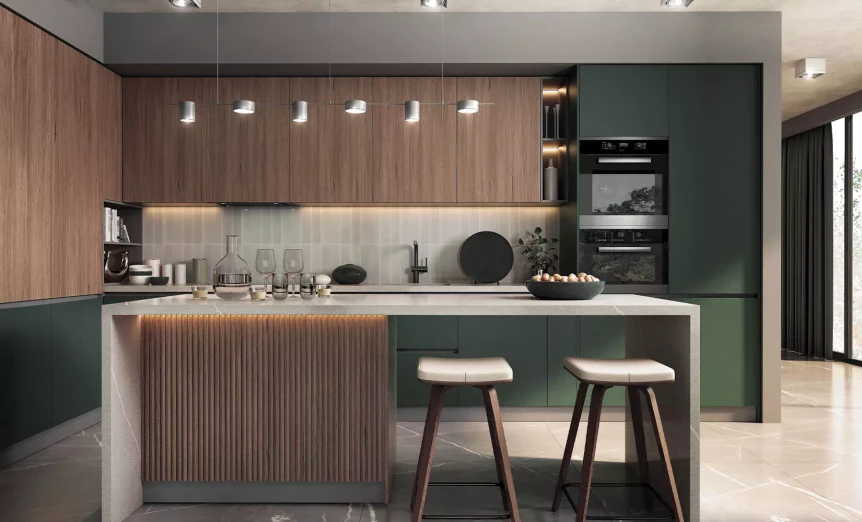
Cabinets cover more visual surface area than anything else in the kitchen. They set the tone before a single accessory is placed. Getting them right matters more than most people realize when they start a kitchen project.
For a modern kitchen, the two most common choices are:
White and off-white remain the most popular cabinet colors because they reflect light and make a kitchen feel open. Two-tone kitchens with lighter uppers and darker lowers have become a strong contemporary choice that adds depth without visual heaviness.
Other finishes worth considering:
Handles and pulls are one of the easiest ways to update a kitchen without a full renovation. Brushed brass, matte black, and satin nickel all work well in modern kitchens. For a truly minimal look, integrated finger-pull edges eliminate hardware entirely.
For a deeper look at cabinet options and how they affect the overall design, read our guide to Kitchen Cabinet Styles and Colors.
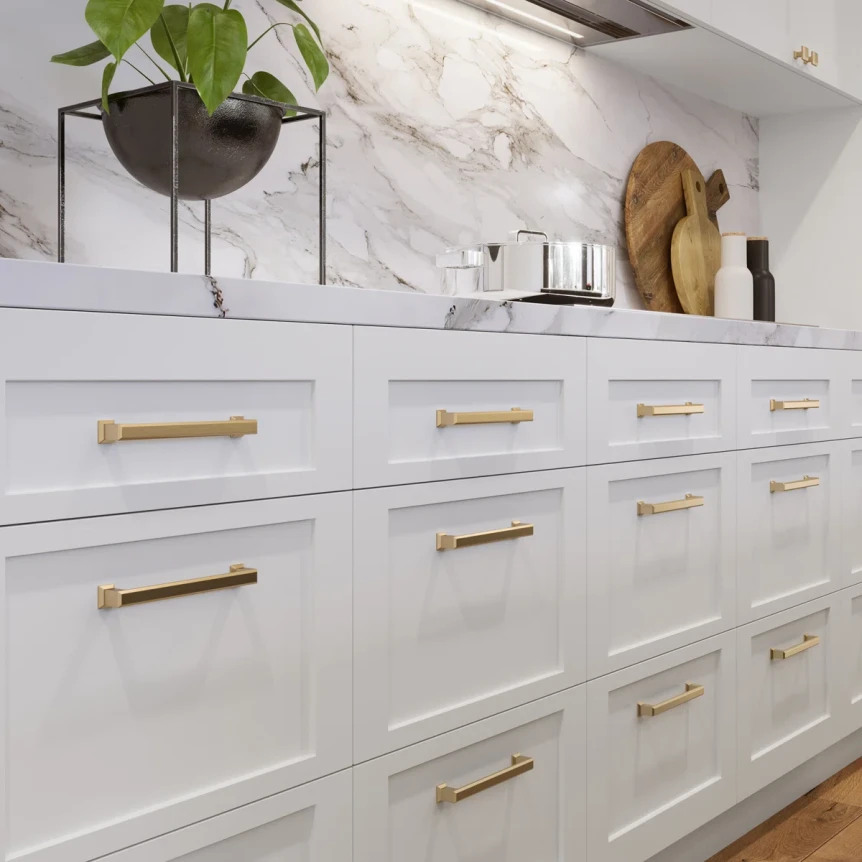
Countertops take daily abuse: cutting, heat, water, and everything else that comes with cooking. The right material needs to look good and hold up to real use. There’s no single best option; the right choice depends on how you cook, your maintenance tolerance, and your budget.
Quartz: Engineered stone that combines natural quartz with resin. Non-porous, low maintenance, and available in a wide range of colors and patterns including marble-look options. A top choice for busy kitchens.
Marble: Beautiful and timeless, but porous and prone to etching from acids like lemon juice or vinegar. Best suited to kitchens where aesthetics take priority and the owner is willing to seal and care for it properly.
Granite: Durable natural stone with unique patterning. More maintenance than quartz but more authentic than engineered alternatives. Holds up well to heat.
Butcher block: Warm, organic, and genuinely useful for prep work. Requires regular oiling and is susceptible to water damage near the sink if not sealed properly. Often used as an accent countertop alongside stone.
Concrete: Highly customizable in color and form. Requires sealing and can crack over time. A good fit for industrial or raw modern aesthetics.
Porcelain slab: A newer option gaining popularity. Durable, heat-resistant, and available in large-format slabs with minimal seams. Often used to mimic marble or stone at a lower cost.
Choosing the right surface involves trade-offs between beauty, durability, and upkeep. Our full breakdown in Kitchen Countertop Materials Guide walks through each option in detail.
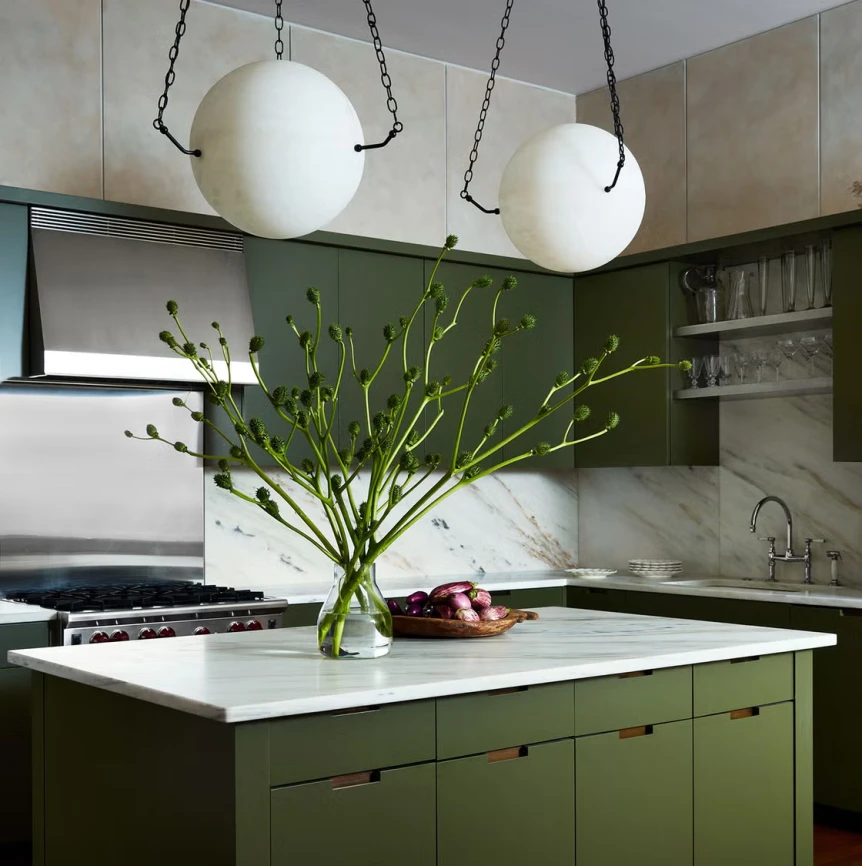
Color does more in a kitchen than set a mood. It affects how large the space feels, how easy it is to keep clean, and how well the room ages. Modern kitchens tend to favor restrained palettes where one or two colors do the heavy lifting.
White, cream, and greige kitchens remain the most searched and most installed for good reason. They’re forgiving, photograph well, and tend to appeal to a wider range of buyers if you’re thinking about resale. The key to making a neutral kitchen feel interesting is layering textures: matte cabinets against a glossy tile backsplash, for example, or a smooth countertop against a rough stone floor.
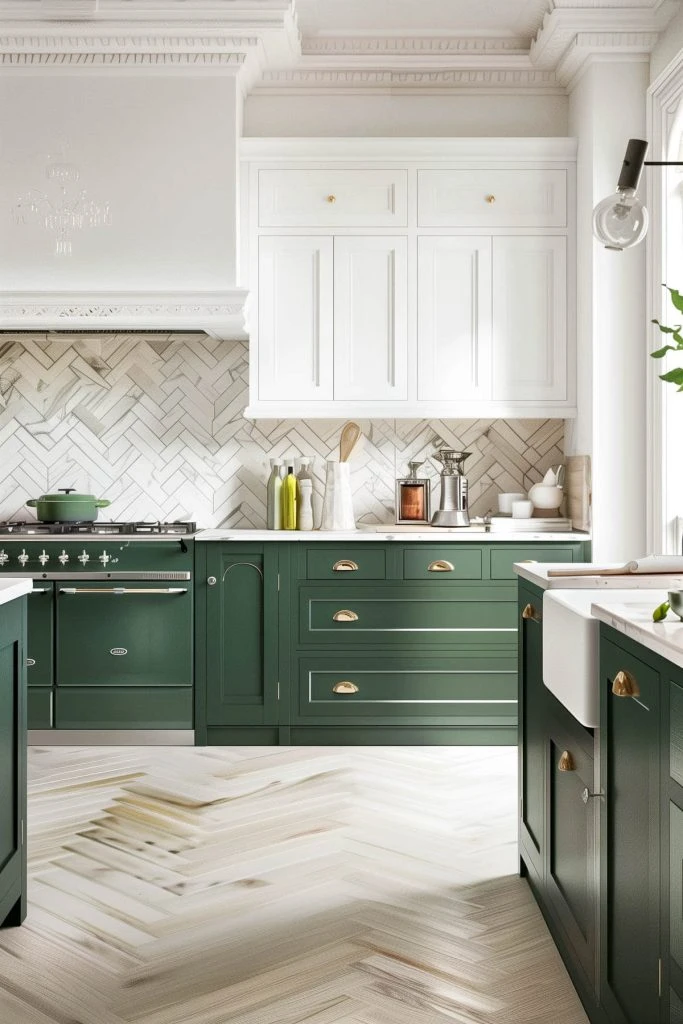
A two-tone approach uses one color for upper cabinets and a different (usually darker) color for the lower ones. This is one of the most effective ways to add visual interest to a kitchen without committing to a bold single color throughout. Navy lowers with white uppers, or black lowers with natural wood uppers, are both strong contemporary combinations.
Deep greens, charcoals, and warm blacks have moved from niche to mainstream in modern kitchen design. These work best in well-lit kitchens where the darkness reads as intentional and sophisticated rather than heavy. Pair with lighter countertops and good task lighting to balance the palette.
For a full walkthrough of what works room by room, see our guide to Kitchen Color Schemes That Work.
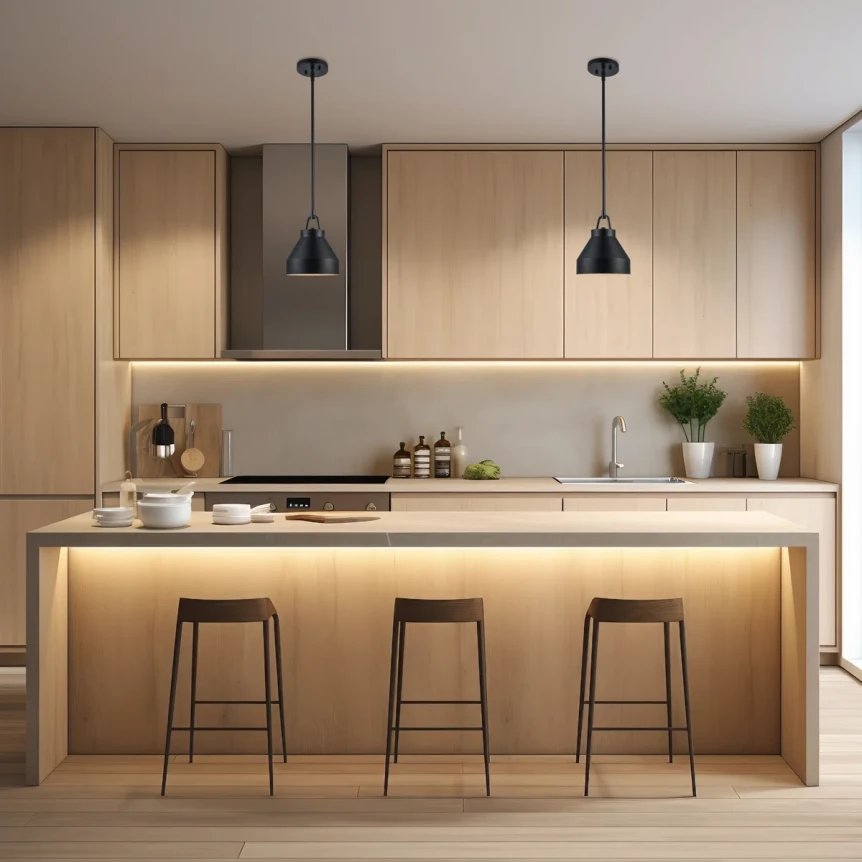
Lighting is often the last thing people budget for in a kitchen renovation and the first thing they regret skimping on. A well-lit kitchen uses at least three layers: ambient, task, and accent.
This is the general, room-wide light source. Recessed downlights are the most common choice in modern kitchens because they’re unobtrusive and distribute light evenly. In open-plan spaces, a statement pendant or flush-mount fixture can serve as both ambient light and visual anchor.
Task lighting goes where work happens: under cabinets, above the island, and over the sink. Under-cabinet LEDs are one of the highest-value additions to a kitchen. They’re inexpensive, easy to install, and immediately useful for prep work. Pendants over an island or peninsula serve both task and decorative purposes.
Interior cabinet lighting, toe-kick LEDs, and shelf lighting all fall into this category. They’re not essential, but they add depth and warmth, and are particularly useful in kitchens that lean toward moody or dramatic color schemes.
Finish consistency matters. Mixing too many metal finishes in a kitchen reads as unplanned rather than eclectic. Pick one dominant metal (brass, black, or nickel) and let it appear in your fixtures, hardware, and faucet. A secondary accent finish is fine, but keep it minor.
See our complete Kitchen Lighting Ideas guide for fixture recommendations and layout advice by kitchen type.
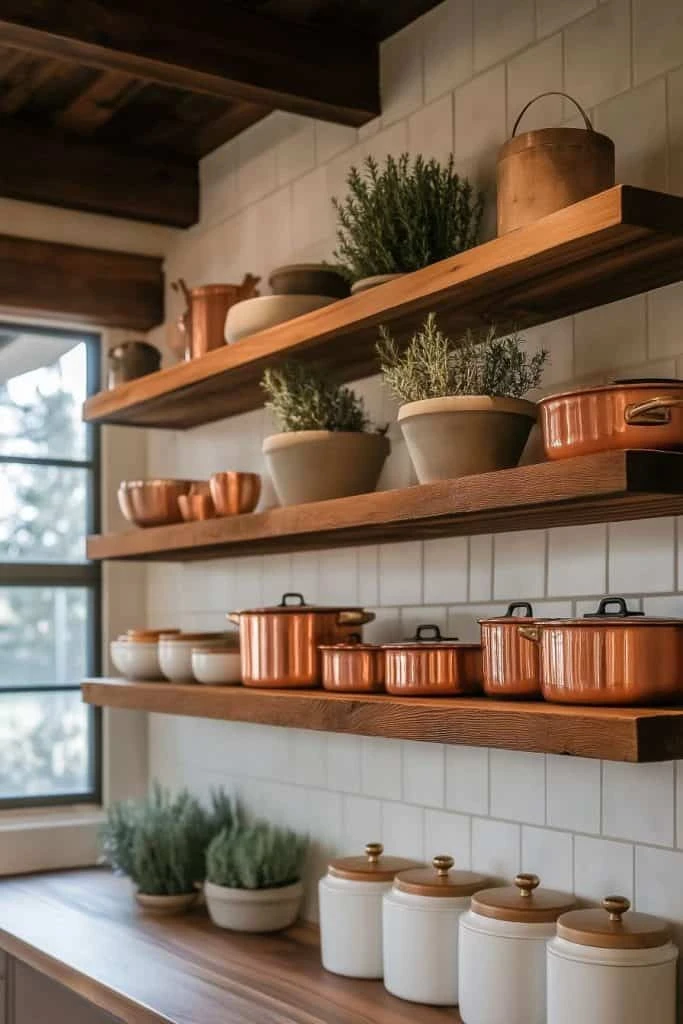
Open shelving is one of the most debated choices in kitchen design. Proponents love the airy, accessible feel it creates. Critics point out that it requires near-constant tidying and accumulates grease and dust faster than closed cabinetry.
The honest answer is that it works well in specific situations and less well in others.
The most common mistake with open shelving is overloading it. A shelf that holds too many items loses the visual calm that makes it appealing. Stick to items you use regularly, edit ruthlessly, and leave deliberate negative space.
Materials matter too. Solid wood shelves with visible grain add warmth, while painted MDF or metal brackets suit more industrial or minimal kitchens. Our guide to Open Shelving in the Kitchen covers installation, styling, and how to decide what actually belongs on display.
Good storage is what separates a kitchen that looks beautiful in photos from one that works beautifully in daily life. Counter clutter is one of the biggest barriers to a kitchen feeling calm and functional, and most of it is a storage problem, not a tidiness problem.
If you’re planning a kitchen renovation, this is the moment to get storage right. Think about how you actually cook: where do you prep? What appliances do you use daily versus occasionally? What ends up on the counter because it has nowhere else to go?
Some high-impact storage decisions to make early:
If you’re not renovating, there’s still a lot you can do. Cabinet organizers, drawer dividers, tiered shelf inserts, and over-door hooks can dramatically improve an existing kitchen without touching a single cabinet. The key is to assess what you have before buying solutions, since most kitchens are under-organized, not under-stored.
For a room-by-room breakdown, read our guide to Kitchen Organization and Storage.
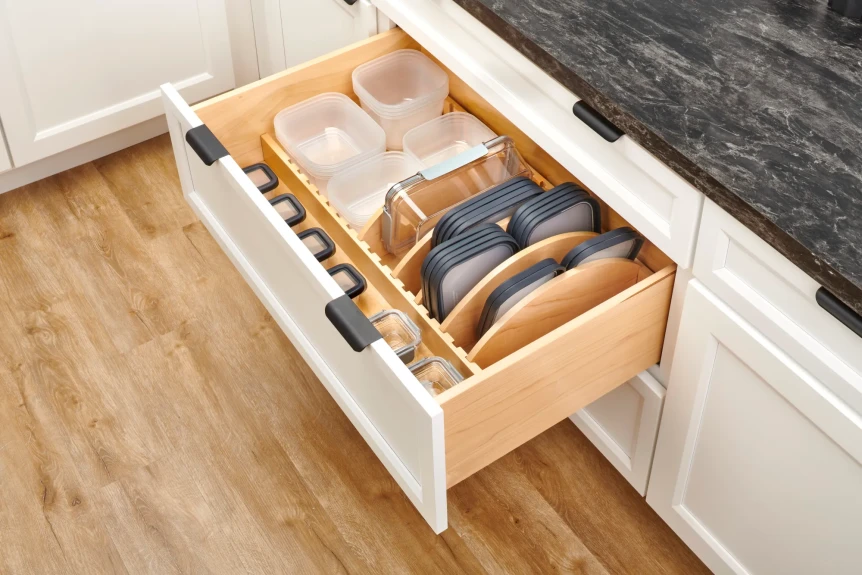
A small kitchen doesn’t have to feel like a compromise. Some of the most functional kitchens are compact. The galley kitchens of city apartments and narrow townhouses are proof that constraint leads to efficiency.
Cabinets that extend to the ceiling eliminate the awkward gap at the top and add significant storage. They also draw the eye upward, which makes low-ceilinged rooms feel taller. If full-height cabinets aren’t possible, use the top shelf for items you use infrequently and add a simple step stool to the kitchen toolkit.
Pale cabinets, glossy tile backsplashes, and light countertops all help a small kitchen feel more spacious by reflecting light around the room. Mirrors and glass cabinet fronts can help too, though they require more upkeep.
Compact and counter-depth appliances are purpose-built for smaller kitchens. A counter-depth refrigerator sits flush with the cabinetry and reclaims several inches of floor space. Integrated appliances, where the fridge and dishwasher are hidden behind cabinet panels, create a seamless look that makes a small kitchen feel more considered.
In a small kitchen, every square inch of counter space is valuable. Store appliances you don’t use daily, and be honest about what deserves prime real estate. A clear counter visually doubles the size of a small kitchen.
See our full guide for ideas and layouts: Small Kitchen Design Ideas That Make the Most of Your Space.
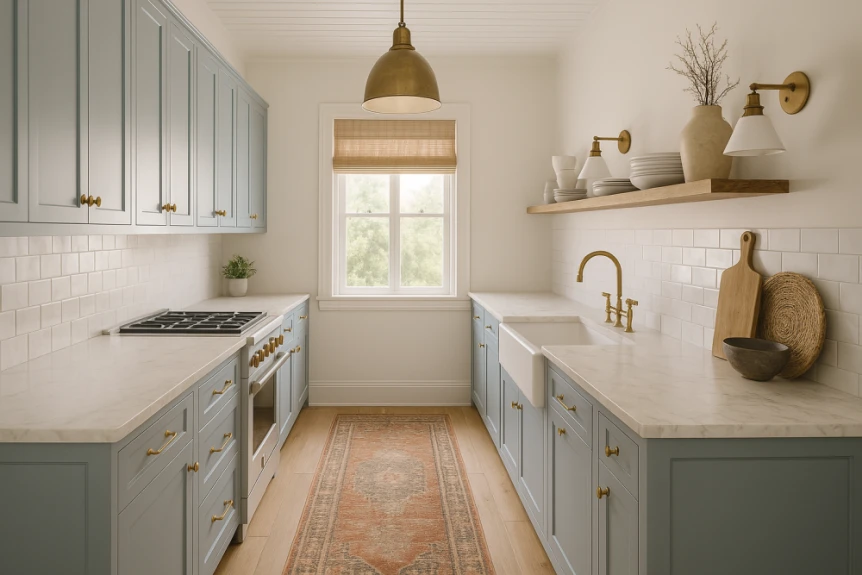
Once the major decisions are made, the finishing details are where a kitchen gets its personality. These elements are smaller in scale but significant in impact, and many of them can be updated without a full renovation.
The backsplash sits between the counter and upper cabinets, which makes it one of the most visible surfaces in the kitchen. It also has a practical job: protecting the wall from splashes and heat. For modern kitchens, the most popular choices include:
The kitchen faucet is used dozens of times a day, so it’s worth investing in one that works well and looks good doing it. Pull-down sprayer faucets are the most practical for busy kitchens. Matte black and brushed gold have both become popular finish alternatives to standard chrome.
Outlet covers, cabinet hinges, and switch plates are easy to overlook, but mismatched finishes or cheap hardware reads immediately in a finished kitchen. Spend a few extra dollars getting these details in line with your overall finish palette.
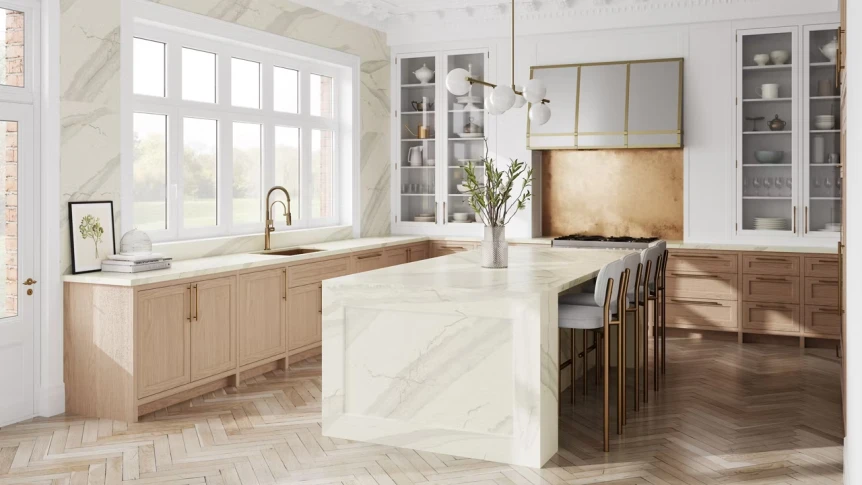
A complete breakdown of cabinet door styles, finishes, and color combinations for modern kitchens, including how to approach a two-tone scheme.
A side-by-side comparison of quartz, marble, granite, butcher block, and more, with honest notes on maintenance, cost, and durability.
How to choose a color palette for your kitchen, from safe neutrals to bold two-tone combinations, with guidance on what reads well in different light conditions.
A guide to layering ambient, task, and accent lighting in a kitchen, including pendant selection, under-cabinet LEDs, and how to avoid the most common lighting mistakes.
When open shelving works, when it doesn’t, how to install it, and how to style it so it stays looking good long after the renovation dust settles.
Storage solutions for both new kitchens and existing ones, from deep drawer systems to pantry pull-outs and the best ways to organize what you already have.
Layouts, finishes, and appliance choices for compact kitchens, with specific attention to making a small kitchen feel functional and considered rather than cramped.
Quartz is widely considered the most practical choice for busy kitchens. It’s non-porous, resistant to staining, and requires very little maintenance compared to natural stone. For those who prefer a natural material, granite is a close second. It’s durable, heat-resistant, and each slab is unique.
White and off-white cabinets consistently perform best for resale because they appeal to the widest range of buyers. If you want a bolder color, using it only on the island or lower cabinets while keeping upper cabinets neutral is a good compromise between personal expression and broad appeal.
The standard recommendation is at least 42 inches of clearance on all working sides of an island, and 48 inches if two people regularly cook at the same time. Less than 36 inches tends to feel tight and can create a safety issue near a hot stove.
It depends on how you cook and how much you’re willing to maintain the shelves. Open shelving looks great when edited and styled consistently, but it collects grease and dust faster than closed cabinets. It works best when used selectively, perhaps replacing just one or two sections of upper cabinets rather than eliminating closed storage entirely.
Modern kitchen design refers to a specific aesthetic rooted in the modernist design movement: clean lines, minimal ornament, and functional form. Contemporary design is more fluid and describes what’s current right now, which often includes warmer materials, mixed textures, and a broader color range. In practice, most well-designed kitchens today blend both approaches.
A well-designed kitchen doesn’t require an unlimited budget or a complete gut renovation. It requires good decisions made in the right order: layout first, then cabinetry, then surfaces, then lighting, then details. Each choice informs the next, and when they’re made thoughtfully, the result is a kitchen that looks considered and works hard every day.
The guides linked throughout this page go deeper on each topic. Whether you’re starting from scratch or refining what you have, use them as a reference rather than a checklist. Good design is about making choices that fit your space, your habits, and the way you actually live.
Start with the area that matters most to you, and work outward from there.