Small Kitchen Design Ideas That Make the Most of Your Space

By Tereza Hower | Published March 28, 2026 | Updated March 30, 2026
Small kitchens get a bad reputation they don’t entirely deserve. The best ones, the galley kitchens of city apartments and the compact fitted kitchens of older homes, are often more functional than their larger counterparts because every element has been chosen with purpose. Constraint removes the option to be inefficient.
The challenge is that a small kitchen designed poorly amplifies every problem: awkward traffic flow, insufficient counter space, limited storage, and a feeling of being enclosed. Designing one well means making deliberate choices at every level, layout, cabinetry, color, lighting, appliances, and storage, rather than just applying the same principles used in a larger room and hoping they scale down.
This guide covers the specific decisions that make a real difference in a compact kitchen.
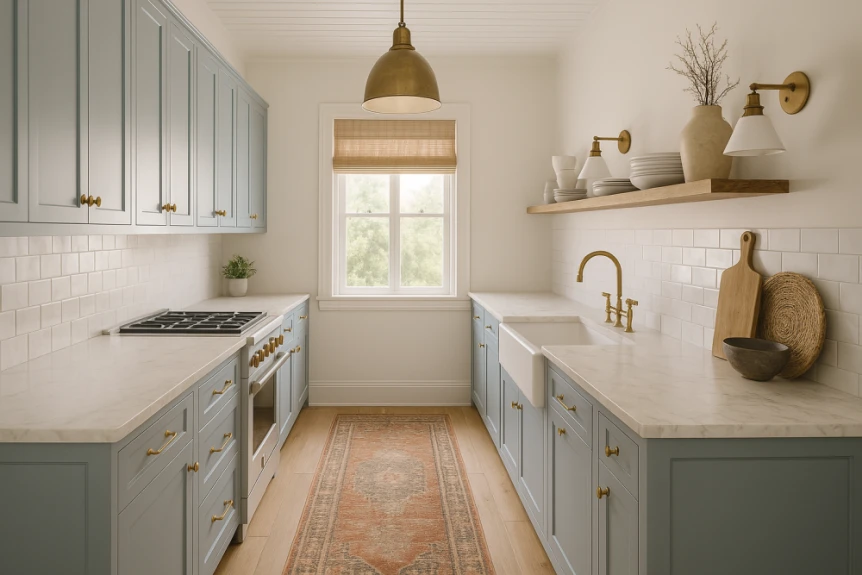
Layout First: Getting the Foundation Right
In a small kitchen, the layout has a more pronounced effect on daily function than in any other room size. A poor layout in a large kitchen is a minor inefficiency; in a small one, it makes the space genuinely unpleasant to work in.
The Galley Layout: The Most Efficient Use of a Narrow Space
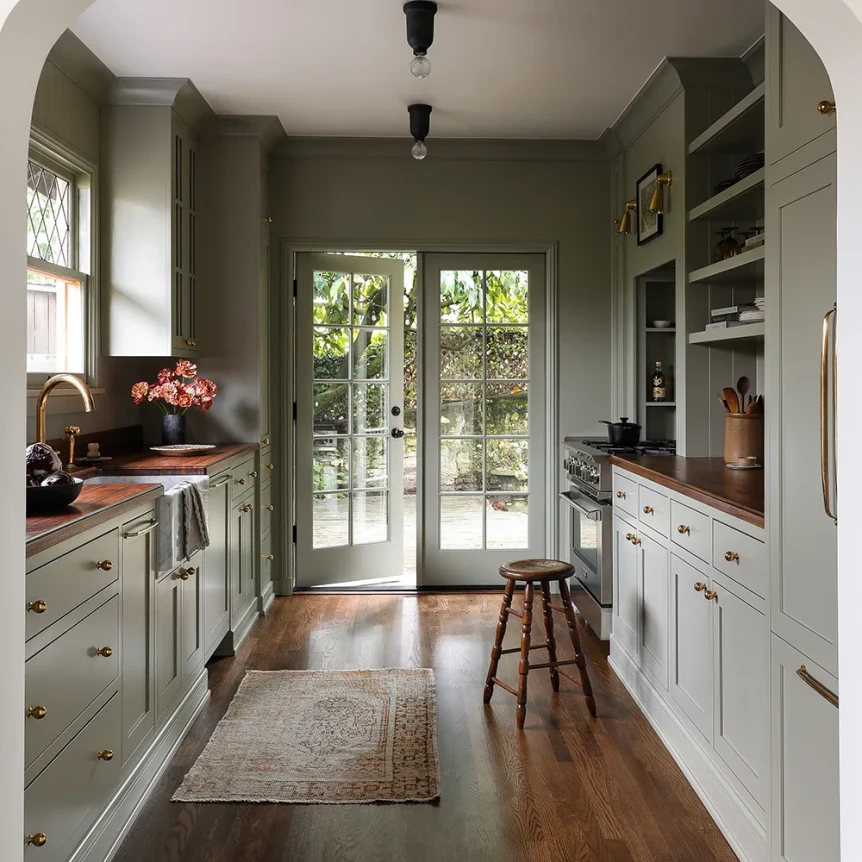
Two parallel runs of cabinetry and counter facing each other, the galley layout, is the most efficient kitchen configuration for a narrow space. It creates a tight work triangle, keeps the cook’s movements minimal, and maximizes the counter and storage on both walls. The main consideration is traffic flow: in a household with multiple people, a galley with less than 48 inches of clearance between the two runs can feel congested during meal preparation.
The Single-Wall Layout
For very small spaces, studio apartments, basement kitchens, or ancillary kitchen areas, a single-wall layout places all the cabinetry and appliances along one wall. It’s the most space-efficient option and leaves the maximum amount of floor space open. It works best when supplemented with an island or a table that provides additional counter and prep space.
The L-Shape in a Small Kitchen
An L-shaped layout in a small kitchen works well when the room is roughly square rather than narrow. It provides a natural work triangle and can often accommodate a small dining area or bar seating at the end of one run, which makes the overall space more versatile without requiring a separate dining room.
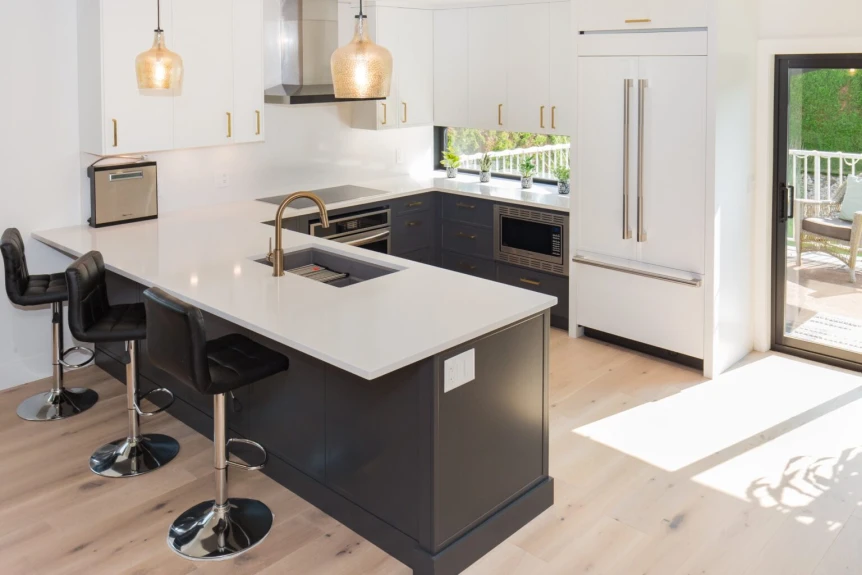
Cabinetry: Making Every Inch Count
Extend Cabinets to the Ceiling
One of the most effective things you can do in a small kitchen is eliminate the gap between the top of the upper cabinets and the ceiling. Full-height cabinets add meaningful storage, remove the awkward soffit space that collects dust, and draw the eye upward, which makes low-ceilinged rooms feel taller. Use the topmost shelf for items accessed infrequently, and add a simple step stool to the kitchen so they’re still reachable.
Choose Flat-Front or Minimal Shaker Doors
In a small kitchen, busy cabinet detailing adds visual complexity to a space that’s already compact. Flat-front doors or simple shaker profiles keep the cabinet faces calm and let the eye move around the room without interruption. Avoid ornate moldings, raised panels, or decorative hardware that fragments the visual field.
Deep Drawers Over Lower Cabinet Doors
In any kitchen, deep drawers are more accessible than lower cabinet doors. In a small kitchen where space to crouch and reach into a cabinet is limited, this matters even more. Drawers come out to you; cabinets require you to get in. Wherever the layout allows, choose deep drawers for lower storage.
Integrated Appliances
Integrated or panel-front appliances, where the refrigerator and dishwasher are concealed behind cabinet panels that match the rest of the kitchen, create a seamless visual that makes a small kitchen feel more considered and less cluttered. This is a premium option, but even semi-integrated appliances with panel fronts but visible handles and trims make a meaningful visual difference in a compact space.
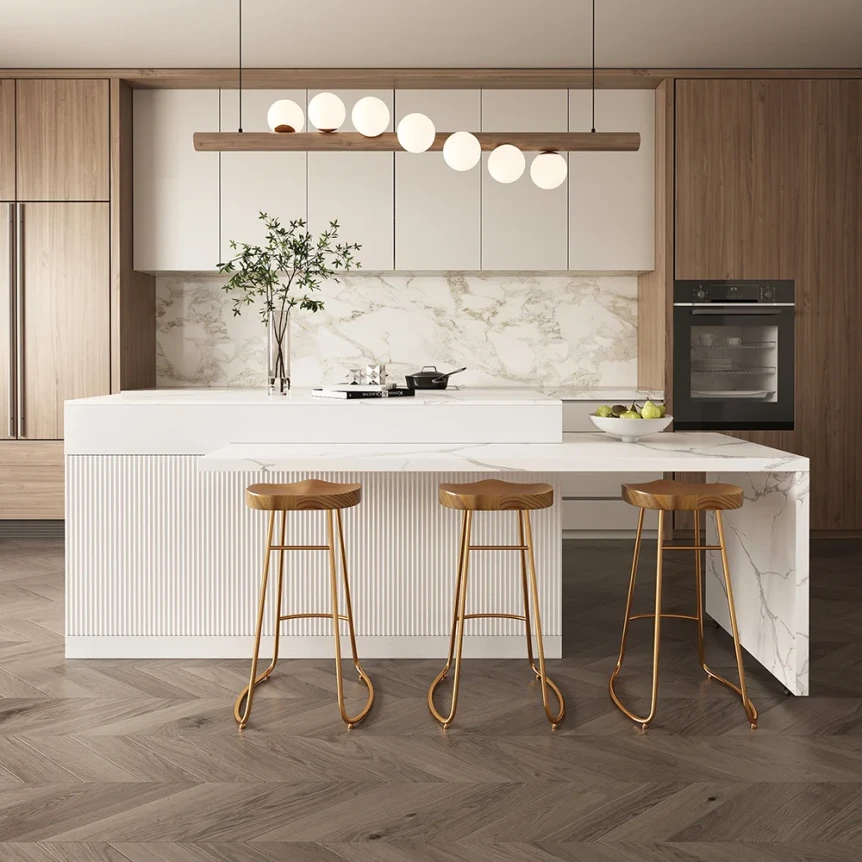
Color and Finish: Creating a Sense of Space
Keep the Palette Cohesive
In a small kitchen, color contrast works differently than in a large one. Bold contrast between cabinet color, wall color, and countertop in a compact space can make the room feel fragmented and smaller. A cohesive palette where the cabinets, walls, and countertop relate closely in tone reduces visual complexity and makes the room read as a unified whole rather than a collection of competing surfaces.
This doesn’t mean the kitchen needs to be all one color. It means the tones should be close relatives. A warm white cabinet with a warm cream wall and a slightly warm gray countertop, for example, rather than stark white cabinets against a cool gray wall with a beige countertop.
Light Colors Expand, Dark Colors Contract (With Exceptions)
The general principle is well-known: light colors make spaces feel larger, dark colors make them feel smaller. In a small kitchen, pale cabinets, light countertops, and white or off-white walls will almost always make the room feel more open than a darker scheme.
The exception is when a dark scheme is applied consistently and deliberately. A small kitchen with matte black cabinets, a dark stone countertop, and dark walls, lit well, can feel intimate and sophisticated rather than small. It’s a commitment and works best when the kitchen has good natural light or excellent artificial lighting. Half-measures in a dark direction look unintentional; full commitment can look exceptional.
Glossy Finishes Reflect Light
High-gloss cabinet doors, glossy tile backsplashes, and polished countertop surfaces all reflect light around the room, which helps a small kitchen feel brighter and more spacious. Matte finishes absorb light rather than reflect it. In a small kitchen with limited natural light, a mix of matte and gloss, matte cabinets with a glossy backsplash for example, uses this principle selectively without committing to the high-maintenance reality of an all-gloss kitchen.
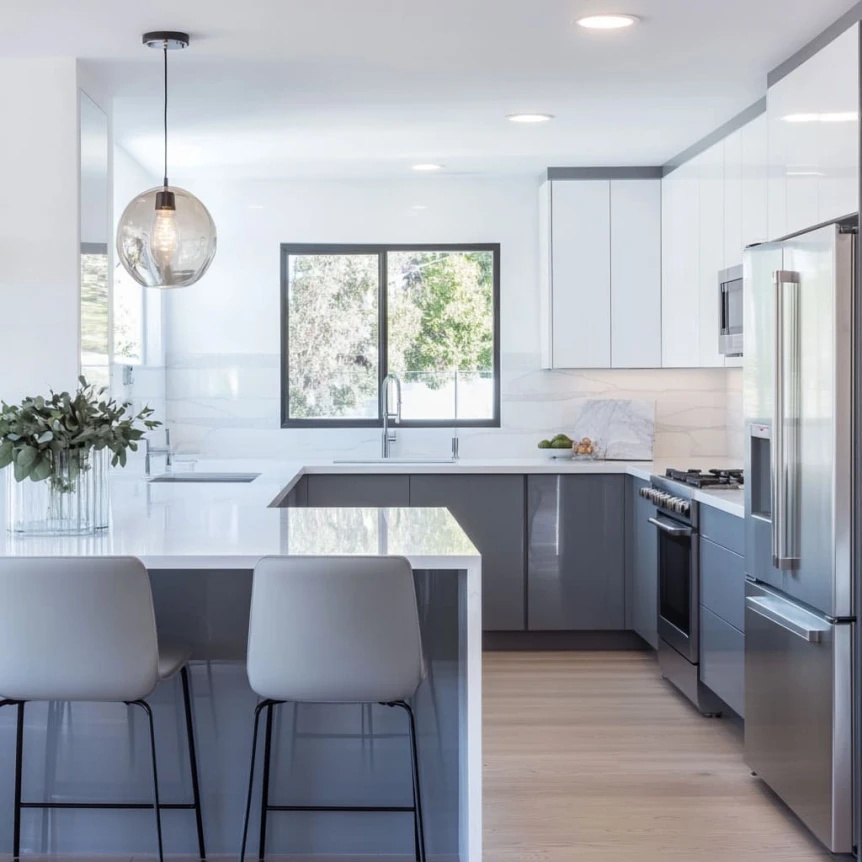
Lighting in a Small Kitchen
Good lighting in a small kitchen does more than allow you to see. It makes the space feel larger, more open, and more pleasant to spend time in. Conversely, a poorly lit small kitchen feels oppressively compact regardless of how well it’s designed otherwise.
Maximize Natural Light
If the kitchen has a window, keep it unobstructed. Avoid heavy curtains or blinds that block light. A simple roller blind in a neutral tone provides privacy when needed without sacrificing daylight when not. If the window looks onto a close or wall, a mirror or reflective tile backsplash positioned opposite can bounce additional light into the room.
Recessed Lighting Over the Counter
In a small kitchen, recessed lights positioned at the front edge of the upper cabinets illuminate the counter directly below, which is where the work happens. Lights positioned further into the room light the floor rather than the counter. In a compact galley, this positioning matters more than in a larger kitchen because there are fewer opportunities to add supplementary lighting elsewhere.
Under-Cabinet LEDs
Under-cabinet lighting is particularly valuable in a small kitchen because it illuminates the counter without taking up any surface space and contributes to a layered lighting effect that makes the room feel larger. See our Kitchen Lighting Ideas guide for a full breakdown of options and installation advice.
Appliances for Small Kitchens
Counter-Depth Refrigerator
A standard-depth refrigerator protrudes several inches beyond the cabinet face, which in a small kitchen can mean a meaningful loss of floor space and traffic clearance. Counter-depth refrigerators sit flush with the cabinetry, which creates a neater silhouette and reclaims those inches. They typically offer slightly less storage volume, but for most households the trade-off is worth it in a compact space.
Compact and Combination Appliances
A combination microwave-convection oven, a slimline dishwasher, or a two-burner induction cooktop can all reduce the footprint of individual appliances without eliminating functionality. In a very small kitchen, choosing two-burner cooking rather than four is a significant counter and cabinet space saving, particularly if the household is small and four burners are rarely used simultaneously.
Built-In vs. Freestanding
Built-in appliances integrate into the cabinetry and create a flush, seamless appearance. Freestanding ones create visible gaps at the sides that can read as unfinished. In a small kitchen where every detail is visible, built-in appliances produce a significantly cleaner result, though they cost more and limit flexibility if you move.
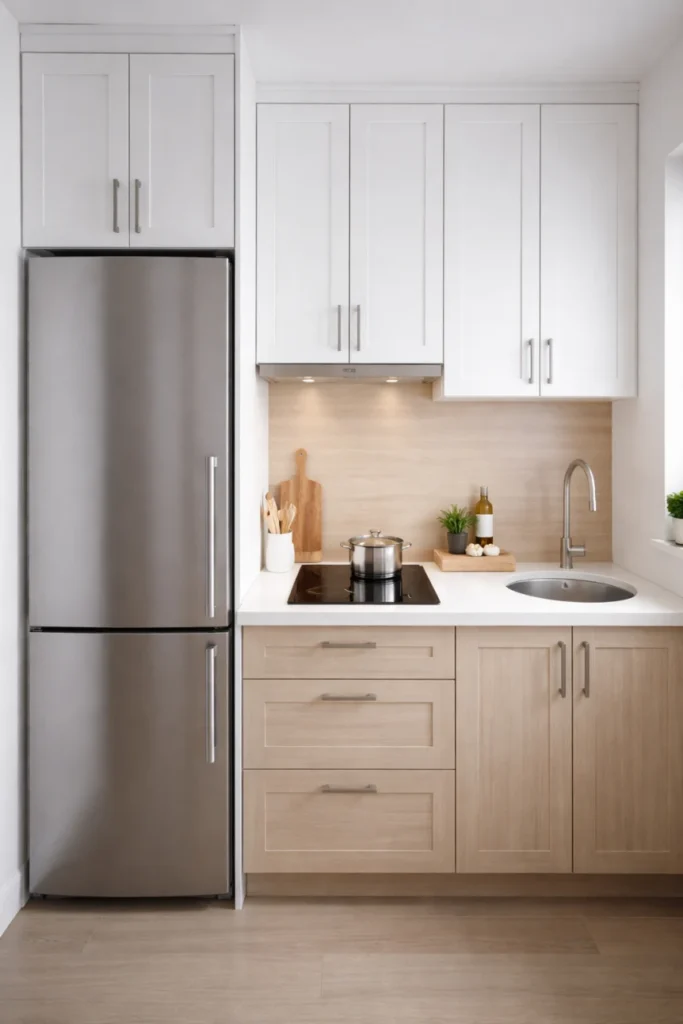
Small Kitchen Storage Solutions
Storage in a small kitchen requires more creative thinking than in a larger one. Every decision matters.
- Use the wall: A magnetic knife strip, a pegboard section, or a few hooks mounted on the wall can hold utensils, tools, and small pans without using any cabinet or counter space.
- Over-door storage: The inside of cabinet doors can hold cleaning supplies, cutting boards, or a small spice rack, space that’s otherwise completely unused.
- Vertical dividers: Sheet pans, cutting boards, and trays stored vertically in a dedicated section of a lower cabinet take up a fraction of the space they require when stacked flat.
- A rolling cart: A small rolling kitchen cart provides additional counter space and storage that can be moved aside when not needed. In an open-plan kitchen, it can double as a serving station.
For a deeper look at storage systems, read our full guide to Kitchen Organization and Storage.
For the full picture on designing your kitchen, see The Complete Guide to Modern Kitchen Design (2026). Color choices are especially consequential in small kitchens, so our Kitchen Color Schemes guide covers which palettes work best in compact spaces. Cabinet selection in a small kitchen requires particular care, so see Kitchen Cabinet Styles and Colors for specific guidance. Open shelving can help a small kitchen feel more open, so read Open Shelving in the Kitchen for when it’s the right call. And your countertop choice affects both the visual size of the space and its practical function, so see Kitchen Countertop Materials Guide for what to consider in a compact layout.
Frequently Asked Questions
What is the best layout for a small kitchen?
A galley layout is generally the most efficient for a narrow small kitchen. Two parallel runs of cabinetry and counter create a highly functional work triangle in minimal square footage. For a more square small kitchen, an L-shaped layout can work well and often allows for bar seating at the end of one run, which adds utility without requiring a separate dining area.
How do I make a small kitchen look bigger?
Keep the color palette cohesive and light. Wall, cabinet, and countertop tones that are related rather than strongly contrasting reduce visual fragmentation and make the space feel more open. Extend cabinets to the ceiling to remove the visual break at the top of the cabinet line. Use reflective finishes like glossy tile or polished stone to bounce light around the room. And keep the counter as clear as possible since clutter visually shrinks a small kitchen more than almost anything else.
What color cabinets work best in a small kitchen?
Light colors, particularly whites, off-whites, pale gray, and light greige, are the most reliable choices for small kitchens because they reflect light and don’t add visual weight to a compact space. If you want something more distinctive, a single bold color used consistently throughout, cabinets, walls, and countertop in a similar family of tones, can work well in a small kitchen. The key is consistency, not contrast.
Is an island practical in a small kitchen?
A fixed island requires at least 42 inches of clearance on all working sides, which rules it out for many small kitchens. However, a narrow rolling cart or a compact peninsula can provide many of the same benefits, additional counter space, extra storage, and a place for bar seating, in a much smaller footprint. If the floor space exists, a fixed island that doubles as a dining area is one of the most efficient uses of a small kitchen floor plan.
What appliances should I prioritize in a small kitchen?
Prioritize the appliances you use daily and be honest about which ones rarely come out of the cabinet. A counter-depth refrigerator is almost always worth considering in a small kitchen since the space reclaimed at the front is meaningful. For cooking appliances, match the cooktop size to how you actually cook. If you rarely use more than two burners simultaneously, a two or three-burner induction cooktop frees up meaningful counter and cabinet space without limiting your daily cooking.
Small Kitchens Reward Intention
Every square foot in a small kitchen is doing a job. When the layout is efficient, the storage is well-planned, the palette is cohesive, and the lighting is layered, a compact kitchen can feel like a genuinely pleasant place to work rather than a compromise you’ve learned to live with.
The goal isn’t to make a small kitchen feel like a large one. It’s to make it feel considered, functional, and suited to how you actually cook. Those are achievable in any size space.
For the complete kitchen design roadmap, head back to The Complete Guide to Modern Kitchen Design (2026).