Small Dining Room Ideas That Make the Most of Every Square Foot

By Tereza Hower | Published April 1, 2026
A small dining room is not a problem to solve. It’s a constraint that, when respected, leads to a space that feels intentional and intimate rather than oversized and generic. Some of the best dining experiences happen at small tables in small rooms, precisely because the scale brings people closer together.
The challenge is practical, not aesthetic. A small dining room needs furniture that fits, a layout that allows movement, and design choices that don’t visually shrink the space further. Get those right and the room will feel considered, not cramped.
Choosing the Right Table for a Small Dining Room
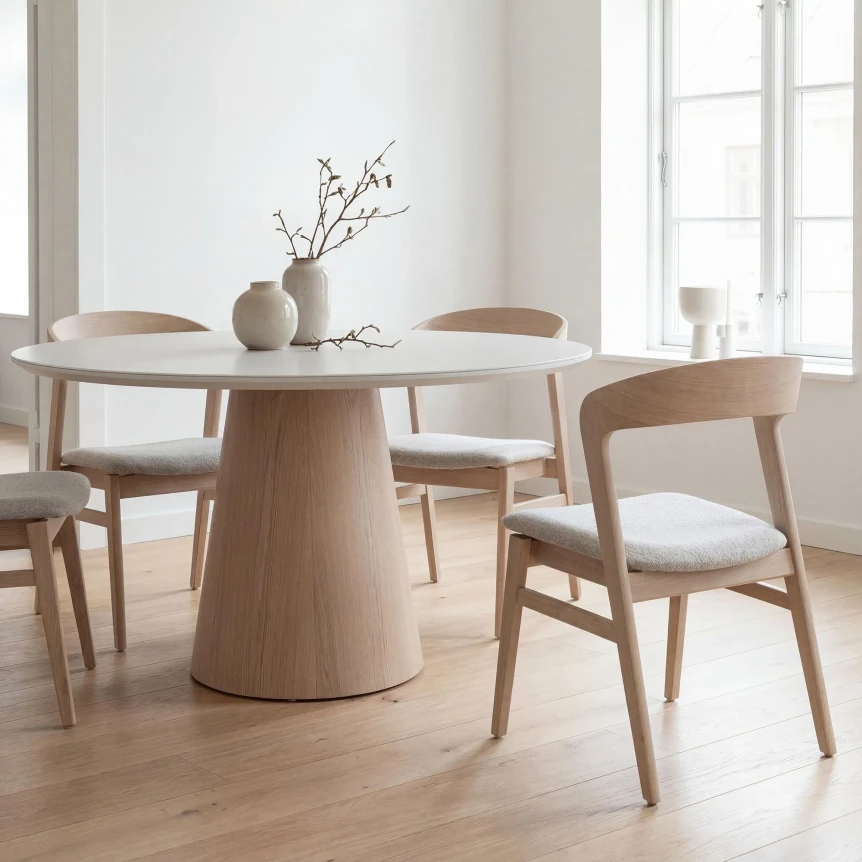
The table is where most small dining room mistakes happen. People buy the table they wish they had room for rather than the one that actually fits. In a compact room, the table size determines everything: traffic flow, chair clearance, and whether the room feels comfortable or congested.
Round Tables
Round tables are almost always the best choice for small dining rooms. A 42 to 48 inch round table comfortably seats four while taking up significantly less floor space than a rectangular table with equivalent seating. Round tables also improve traffic flow because there are no corners to navigate around, and they fit more naturally in square or irregular room shapes.
Small Rectangular Tables
If a rectangular table works better for your room’s proportions (especially in narrow rooms), keep it to 60 inches or less for four seats. Look for designs with slim profiles, tapered legs, or a pedestal base that reduces the visual mass. Avoid tables with bulky aprons or thick corner legs that eat into the already limited space around the perimeter.
Extendable Options
An extendable table that seats four daily and expands to six for guests is one of the smartest investments for a small dining room. Modern extension mechanisms have become quite refined, with leaves that store inside the table frame so there’s no separate piece to manage.
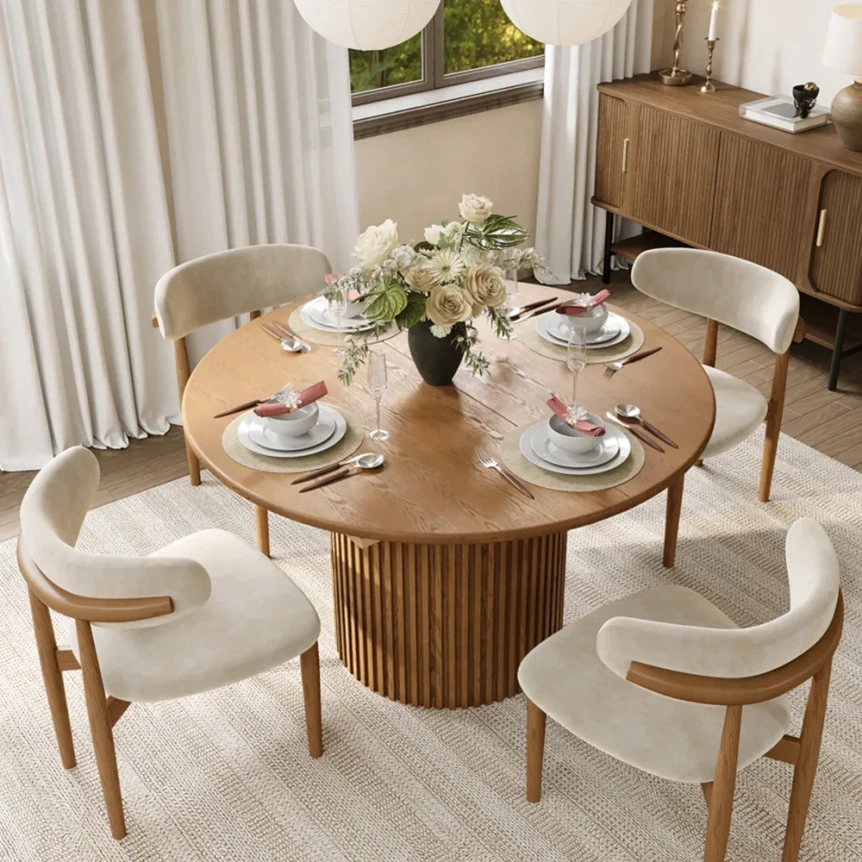
For a complete breakdown of table shapes, materials, and sizing for any room, see our Dining Table Buying Guide.
Layout Strategies for Tight Spaces
Push the Table Against a Wall
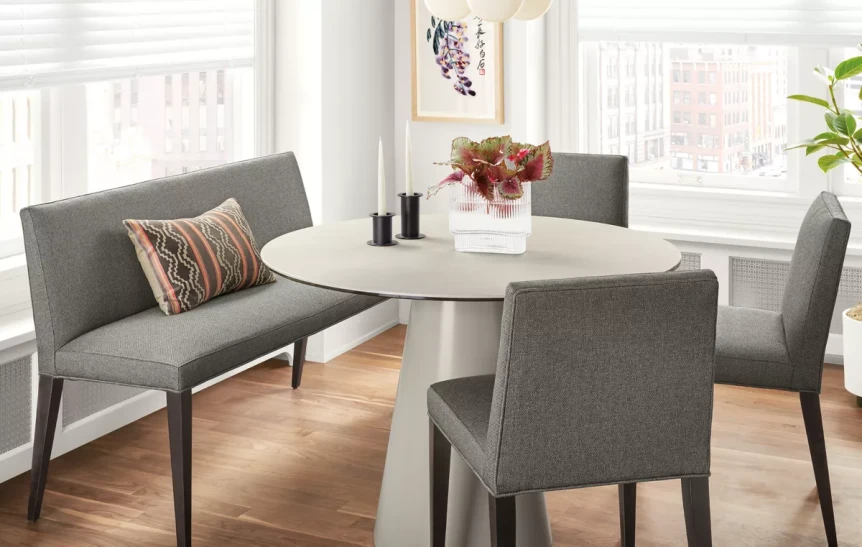
If floor space is genuinely tight, placing one long side of a rectangular table against a wall (with bench seating on that side and individual chairs on the other) frees up significant floor space. You lose one side of seating, but you gain clearance and movement room. This layout also works well when the dining area shares an open plan space with a kitchen or living room.
Use a Corner
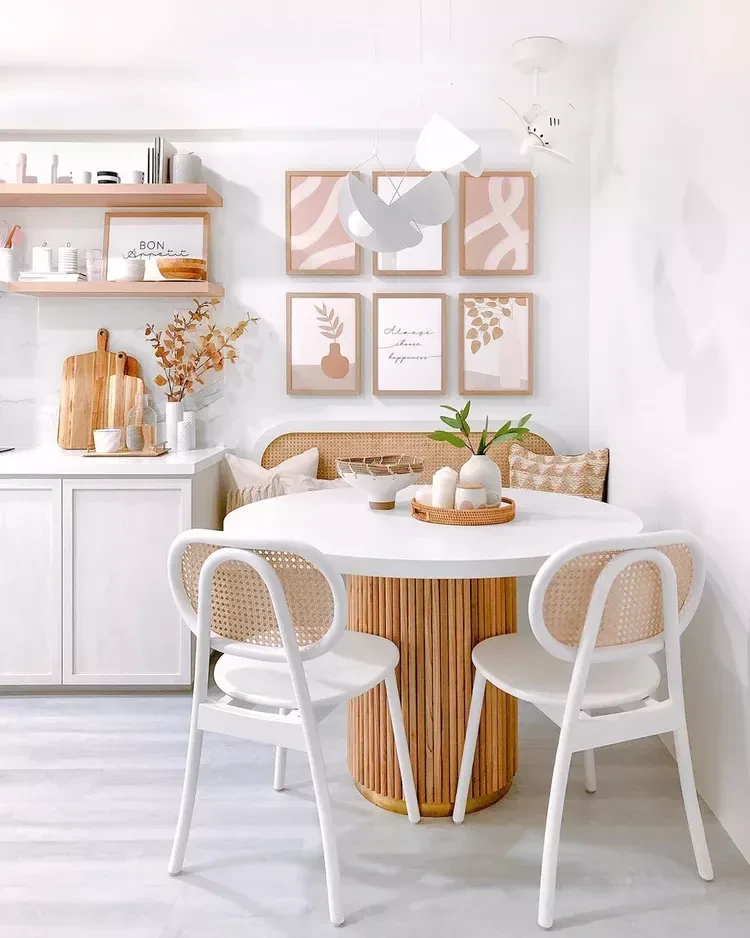
A corner banquette or built-in bench with a table pushed into the corner is one of the most space efficient dining configurations possible. The seating wraps into the corner, the table sits tight, and the only floor space needed is for chairs on the open sides. This approach works particularly well in kitchen eat-in areas and small apartments.
Clearance Minimums
In an ideal dining room, you’d have 36 inches between the table edge and the nearest wall. In a small room, you may need to compromise to 30 inches on one or two sides, which still allows chairs to be pulled out. Just make sure the primary entry path into the room maintains at least 36 inches so people can move through comfortably.
Furniture That Works in Small Spaces
Lightweight Chairs
Heavy, fully upholstered dining chairs add visual bulk that makes a small room feel even smaller. Instead, look for chairs with open backs, slim frames, or molded shell seats. Chairs that are partially see-through (wire frame chairs, for example) allow the eye to pass through them, which keeps the room feeling open.
Bench Seating
A bench on one side of the table is more space efficient than individual chairs because it can be pushed fully under the table when not in use. Benches also eliminate the visual clutter of multiple chair backs on one side, which simplifies the room’s appearance.
Skip the Sideboard (or Go Small)
A full size sideboard may not fit in a small dining room. Consider a wall mounted shelf or a slim console table instead. These provide a surface for candles, a serving dish, or a small collection of objects without consuming floor space. If you do want a sideboard, look for narrow designs (12 to 14 inches deep) that project minimally from the wall.
Mixing your chair styles can also help a small room feel more curated. Our guide on How to Mix and Match Dining Chairs covers how to combine styles without creating visual chaos.
Visual Tricks That Make Small Rooms Feel Larger
Light Walls with Warm Undertones
Light colors reflect more light and make walls feel like they’re receding. Warm whites, soft creams, and light taupes are the most effective choices. Avoid stark, cool whites, which can feel institutional in a small room. The warmth is what makes the space feel inviting rather than just pale.
That said, dark colors can also work in small dining rooms. A deep wall color creates intimacy and, under warm pendant light, can make a small room feel like a deliberate cocoon rather than a tight box. For a full breakdown, see our guide to Dining Room Color Schemes.
Mirrors
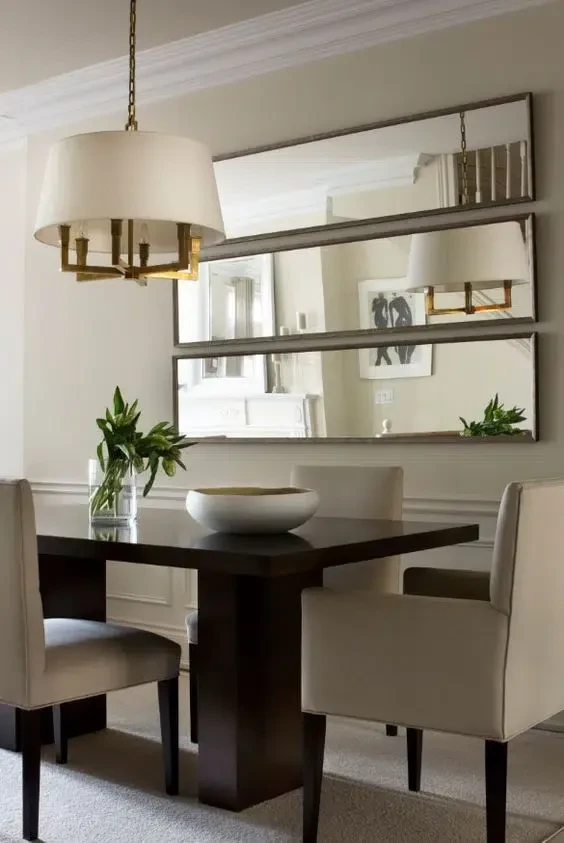
A large mirror on one wall doubles the visual depth of the room and reflects both natural and artificial light. Lean a floor mirror against the wall behind a sideboard, or hang a generously sized mirror on the wall most visible from the table. This is one of the oldest and most effective tricks for expanding a small space, and it works especially well in dining rooms where the reflected candlelight and warmth create a layered atmosphere.
Transparent and Reflective Materials
Glass, lucite, and polished metal allow light to pass through or bounce off surfaces. A glass pendant, acrylic chairs, or a table with a glass top all reduce the visual density of the room. Use these sparingly to avoid the room feeling cold, but a single transparent element in a small space can make a noticeable difference.
Vertical Emphasis
Draw the eye upward to counteract the room’s limited floor area. Tall, narrow art, curtains hung at ceiling height (even if the windows are lower), and pendant lights that hang at the correct height all contribute to vertical emphasis. Avoid low, horizontal furniture arrangements that keep the visual weight close to the floor.
Lighting in Small Dining Rooms
In a small dining room, the pendant light does most of the work. Choose a fixture that’s proportional to the table (not the room), and hang it at the standard 30 to 36 inches above the table surface. A pendant with an open or translucent shade lets light spread throughout the room rather than concentrating it in a narrow cone.
Supplementary lighting matters even more in small rooms because dark corners are more noticeable. A single wall sconce, a small lamp on a shelf, or a candle grouping on a side surface adds warmth and depth. For detailed guidance on layering light in any dining room, see our Dining Room Lighting Guide.
Small Dining Areas in Open Plan Spaces
If your dining area is part of a larger open plan room, you don’t have walls to define it. Instead, use these elements to create a visual zone:
- A rug under the table that’s large enough for chairs to stay on when pulled out
- A pendant light centered over the table that anchors the space from above
- A consistent material or color palette that distinguishes the dining area from the adjacent kitchen or living space
The pendant light is the most important of these. It acts as a visual ceiling for the dining area, defining the space even without walls.
What to Avoid in a Small Dining Room
- Oversized tables that leave less than 30 inches of clearance on any side
- Heavy, fully upholstered chairs that add visual bulk
- Large, elaborate centerpieces that consume usable table surface
- Multiple rugs or busy patterns that fragment the floor visually
- Full size sideboards or china cabinets that project too far into the room
- Pendant lights with opaque, dark shades that trap light above and leave the table in shadow
Frequently Asked Questions
What is the best table shape for a small dining room?
Round tables are typically the best choice. A 42 to 48 inch round table seats four comfortably while taking up less space than a rectangular table. Round tables also improve traffic flow because there are no corners to navigate around.
Can I use a dark wall color in a small dining room?
Yes. A deep wall color can make a small dining room feel intimate and deliberate rather than cramped, especially under warm pendant lighting in the evening. The key is pairing dark walls with adequate layered lighting so corners don’t disappear.
How do I fit a dining table in a small apartment?
Consider a round table for four, a wall-mounted drop leaf table, or a bench and table arrangement pushed against one wall. An extendable table that seats four daily and expands for guests is also a practical solution. Use a pendant light to define the dining zone in an open plan layout.
Small Rooms, Big Potential
A small dining room only feels like a limitation when you fight the space instead of designing for it. Choose a table that leaves room to breathe, keep the furniture visually light, and use light and mirrors to expand the sense of space. The result is a room that feels cozy and intentional, which is exactly what a dining room should be.
For a full guide to every aspect of dining room design, read The Complete Guide to Modern Dining Room Design.
Related guides to explore:
- Dining Table Buying Guide
- Dining Room Lighting Guide
- How to Mix and Match Dining Chairs
- Dining Room Wall Decor Ideas