How to Choose Outdoor Rugs and Textiles for Your Patio

By Tereza Hower | Published March 23, 2026 | Updated March 27, 2026
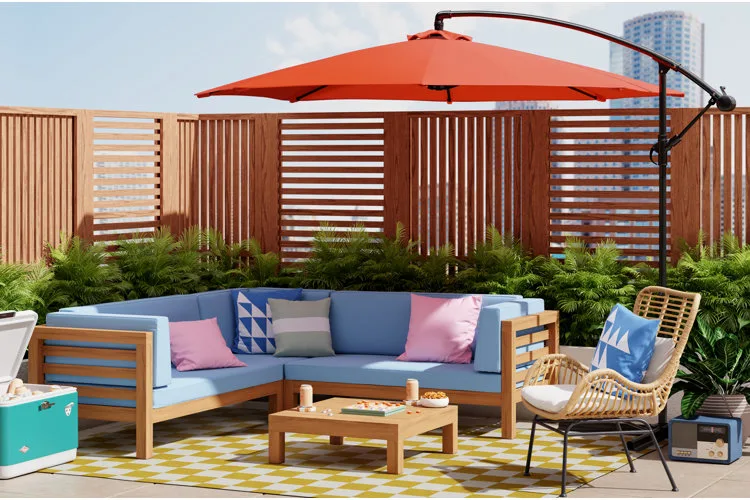
Outdoor rugs and textiles are the single most effective way to make a patio feel like a properly designed room rather than a paved area with furniture on it. A generous rug under the seating area, well-chosen cushions on the chairs and sofa, and a throw draped over the arm of a lounger on a cooler evening: these elements bring the warmth and layering of an interior room to the outdoor space and change how comfortable and inviting it feels.
The challenge is choosing materials that can genuinely live outside without fading, moulding, or falling apart within a season. This guide covers what to look for in outdoor textiles, how to size and position an outdoor rug, and how to use cushions and throws to complete the look.
Outdoor Rug Materials: What Actually Holds Up
Not all rugs marketed as outdoor rugs are equally weather-resistant. Understanding what the material is and how it performs in outdoor conditions saves money and disappointment.
Polypropylene is the most widely used outdoor rug material and the most reliably weather-resistant. It is UV-stabilized, water-resistant, mould-resistant, and available in an enormous range of weave styles and colors. The best polypropylene outdoor rugs closely resemble natural fiber rugs in texture and appearance, and the material is easy to clean: most can simply be hosed down. It is also one of the most affordable options in the outdoor rug category.
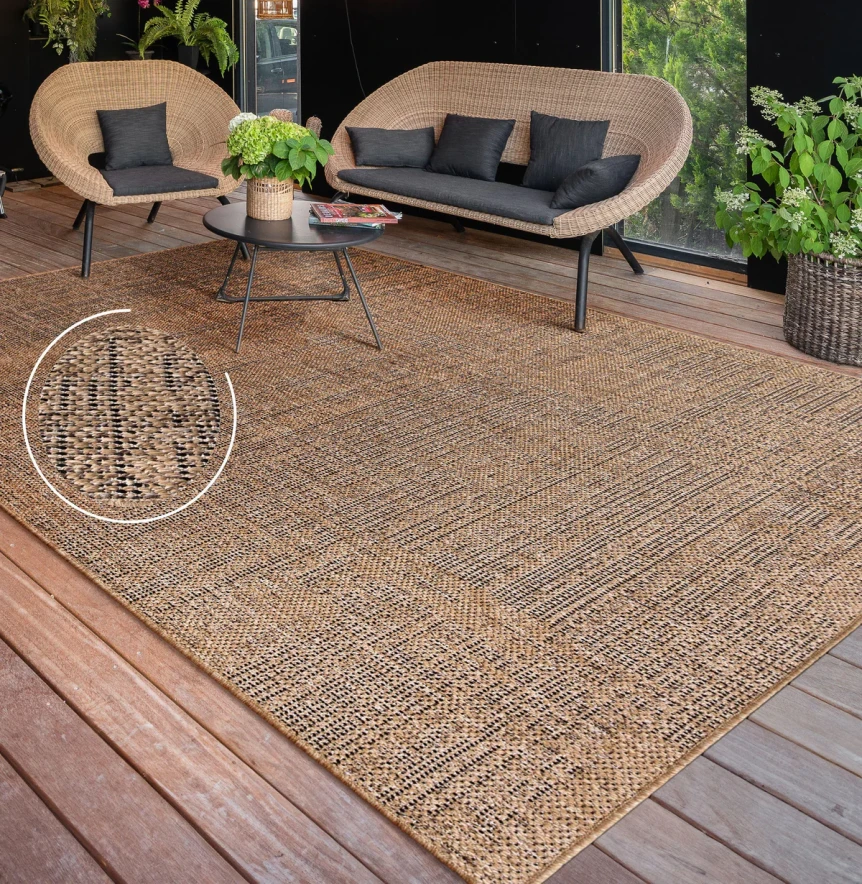
Recycled PET rugs, made from recycled plastic bottles, are a sustainable alternative with similar performance characteristics to polypropylene. They have become significantly more refined in design and texture in recent years and are worth considering for those who want both performance and environmental credentials.
Natural fiber options including sisal, jute, and seagrass are sometimes used in covered outdoor spaces such as porches, verandas, and very sheltered patios. They have a warmth and organic texture that synthetic alternatives cannot fully replicate, but they are not fully weather-resistant and will deteriorate if regularly wet. Reserve natural fiber rugs for fully covered outdoor spaces where they will not be exposed to rain.
Flatweave outdoor rugs in synthetic materials are the most practical choice for most patio applications. They dry quickly after rain, do not trap debris in a deep pile, and lie flat without curling at the edges. They are also easier to clean thoroughly than pile rugs since dirt does not embed in the weave in the same way.
Sizing Your Outdoor Rug
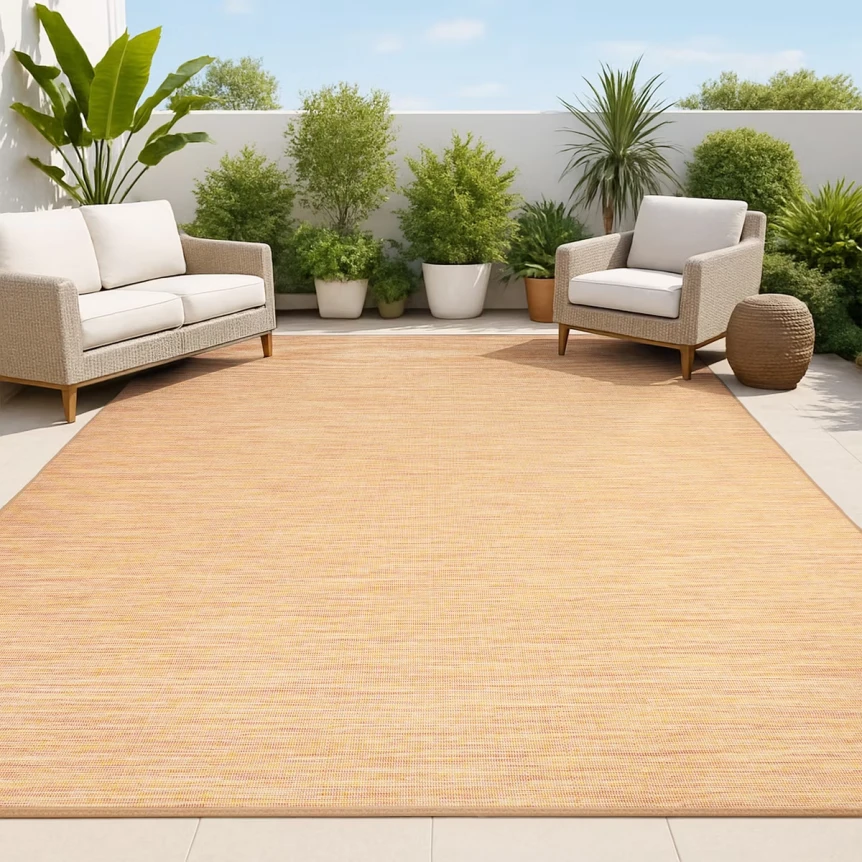
The most common outdoor rug mistake is the same as the most common indoor rug mistake: buying too small. An undersized rug that sits only under the coffee table, with the chairs and sofa around it sitting entirely on bare paving, does very little for the space. A rug large enough to anchor the whole seating arrangement, with at least the front legs of all the furniture sitting on it, defines the zone clearly and makes the furniture arrangement feel cohesive.
For a lounge area with a sofa and two chairs around a coffee table, aim for a rug of at least 240 by 300 centimeters. For a dining area, the rug should extend at least 60 centimeters beyond the table on all sides so that chairs remain on the rug when pulled out for seating. Measuring the furniture arrangement and adding the clearance before choosing a rug size prevents the undersizing that makes outdoor rugs look like an afterthought.
In a small patio where a full-sized rug under the whole seating area is not practical, a rug that fits under just the coffee table and defines the central zone of the seating arrangement is still more effective than no rug at all. The visual anchoring it provides, even at a modest size, makes a noticeable difference to how composed the arrangement looks.
Outdoor Cushions: Fabric, Fill, and Fit
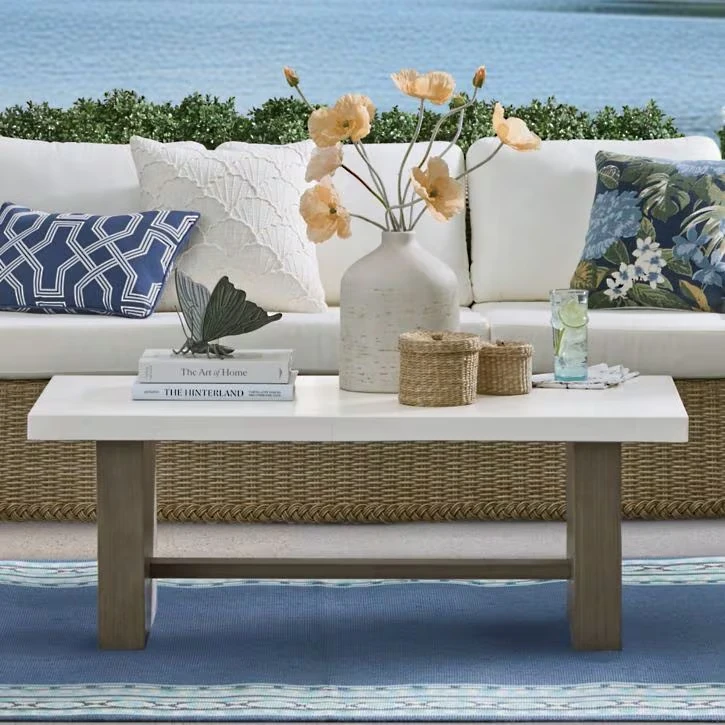
Outdoor cushions are the element that most directly affects how comfortable outdoor furniture actually is to sit on. Thin, poorly made cushions that compress within a season, retain moisture after rain, or develop mildew in damp conditions reduce the enjoyment of the outdoor space and need replacing frequently. Good outdoor cushions are a worthwhile investment.
Solution-dyed acrylic fabric is the best choice for outdoor cushions. The pigment runs through the fiber rather than sitting on the surface, which means the color is significantly more resistant to UV fading than printed or yarn-dyed alternatives. Solution-dyed acrylic is also water-repellent, easy to clean, and resistant to mildew. The feel of the fabric has improved considerably and the best versions are genuinely pleasant to sit on.
Cushion fill determines both comfort and weather performance. Quick-dry foam and hollow-fiber fills that allow water to drain and air to circulate are far more practical than standard interior foam, which retains moisture and becomes a breeding ground for mildew. Look for cushion specifications that specifically mention quick-dry or outdoor-rated fill if weather performance matters to you.
Removable, washable covers make practical outdoor cushions significantly easier to maintain. Being able to unzip and wash the covers when they accumulate sunscreen, food spills, or general outdoor grime extends the life of the cushion and keeps the patio looking fresh throughout the season.
Outdoor Throws and Blankets
An outdoor throw serves two purposes: it adds warmth on cool evenings and it completes the dressed, layered look of the outdoor seating arrangement. A quality throw draped over the arm of a sofa or a chair is both useful and beautiful, and it signals that the outdoor space has been considered with the same care as an interior room.
Outdoor throws need to be made from materials that dry quickly and resist mildew. Acrylic fleece, quick-dry cotton blends, and recycled polyester all perform well in outdoor conditions and are available in a wide range of colors and textures. Avoid wool throws outdoors unless they are stored inside when not in use, as wool retains moisture and takes a long time to dry.
Color and texture choice for throws and cushions is where the personality of the outdoor space really comes through. A neutral furniture base in warm gray or natural timber with cushions and a throw in terracotta, olive, and cream creates a warm, earthy palette that suits a naturalistic garden style. The same furniture with cushions in deep navy and white has a sharper, more graphic quality. The outdoor textile choices connect the furniture to the planting and the overall color direction of the space in the same way indoor textiles connect furniture to paint color and curtains.
Storage and Care: Making Textiles Last
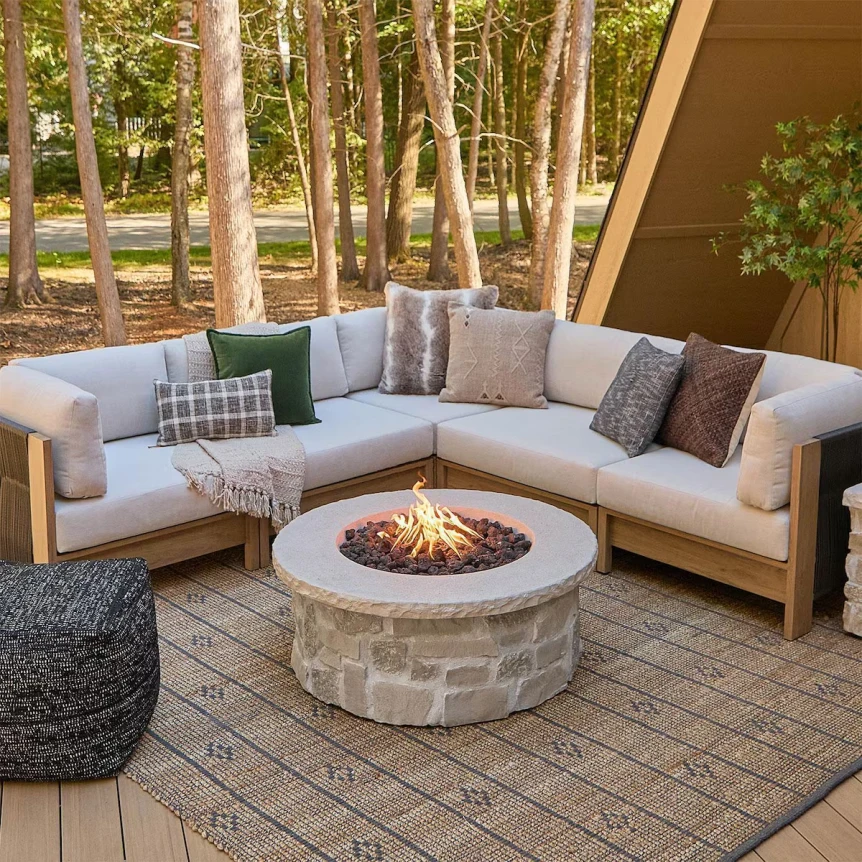
The lifespan of outdoor textiles is directly related to how they are stored when not in use. Even the most weather-resistant outdoor cushion will last longer and look better if stored when the furniture is not being used for extended periods, or during winter months in colder climates.
An outdoor storage box, positioned conveniently near the main seating area, makes putting cushions away easy enough to become a habit rather than a chore. The box can double as additional seating or a side table when closed, which means it earns its place in the space both practically and aesthetically. Choose a box large enough to hold all the cushions from the seating area at once: a box that requires multiple trips or careful stacking quickly becomes the reason cushions are left outside instead.
Outdoor rugs can generally be left in place through mild weather but benefit from being rolled up and stored during extended wet periods or winter months. Before storing, brush off any debris, hose down if necessary, and allow to dry completely before rolling to prevent mildew developing in storage.
With textiles sorted, these guides will help complete your outdoor space:
- Best Outdoor Patio Furniture for 2026
- Patio Design Ideas for Every Outdoor Space
- Outdoor Lighting Ideas for Patios and Gardens
- Small Patio Ideas That Make the Most of Your Space
- Outdoor Plants and Landscaping Ideas for Patios
For the complete outdoor design guide, visit The Complete Guide to Outdoor and Patio Design.