Outdoor Plants and Landscaping Ideas for Patios

By Tereza Hower | Published March 24, 2026 | Updated March 27, 2026
Plants are the most dynamic element of any outdoor space and the one that changes most significantly over time. A patio that was designed last year looks different today as plants establish, fill out, and begin to do the structural and atmospheric work they were chosen for. Getting the planting right, both in terms of which plants and where they go, is what separates an outdoor space that feels truly alive from one that feels assembled.
This guide covers how to think about planting as a design tool, which plants work best in patio contexts, and how to create a scheme that looks good throughout the year rather than only in peak summer.
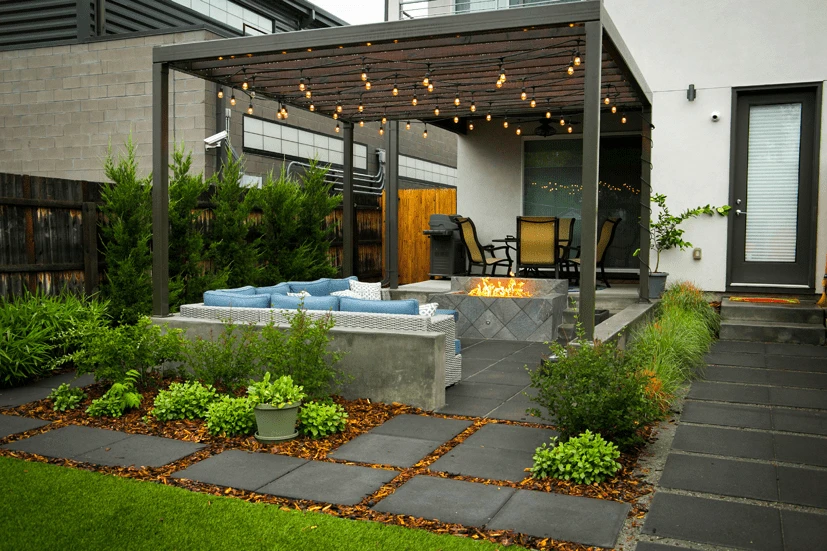
Planting as Structure, Not Just Decoration
The most common approach to patio planting is to treat it as decoration: a few pots arranged around the furniture, some bedding plants in season, perhaps a hanging basket or two. This approach produces a patio that feels planted rather than designed, where the plants are clearly an addition to the space rather than an integral part of it.
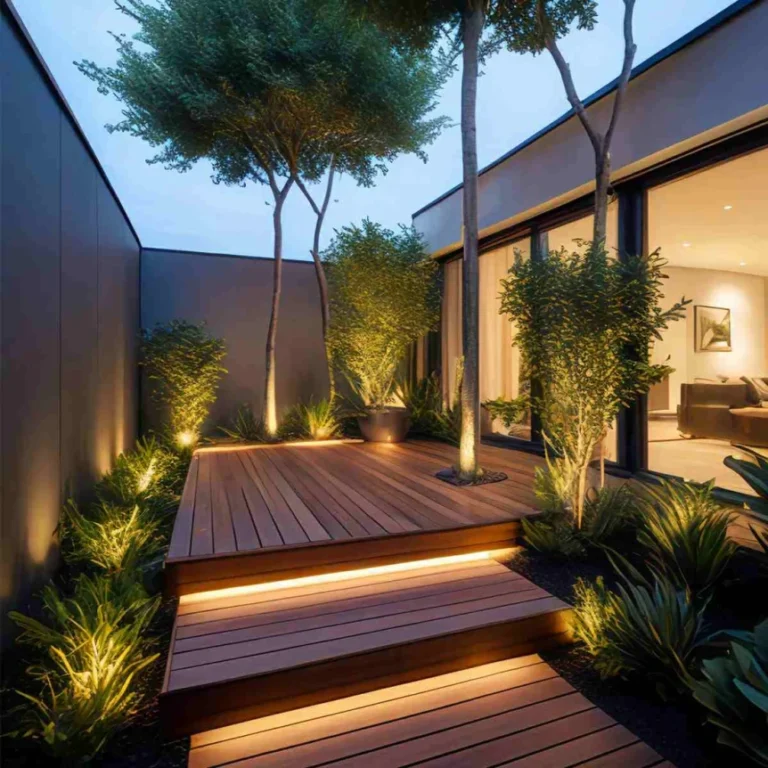
Planting becomes genuinely powerful in outdoor spaces when it is treated as a structural element from the beginning of the design process. It can define zones and boundaries, create privacy and enclosure, soften hard surfaces and angular architecture, provide shade and wind protection, frame views, and give the space a sense of depth and layering that hard landscaping alone cannot achieve.
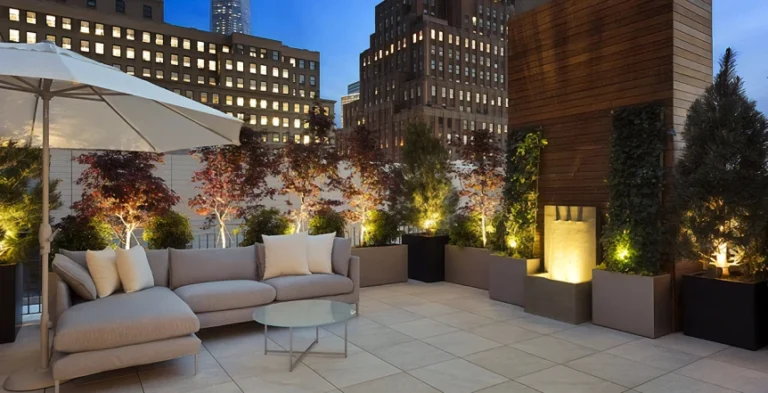
Thinking about what each plant is doing in the design, rather than just what it looks like, produces much better results. A large evergreen specimen in a pot at the corner of a seating area is not just decorative: it creates enclosure, provides a visual anchor, and gives the arrangement a sense of permanence. A climber on the boundary fence is not just a plant: it is a living wall that creates privacy, filters noise, and transforms the boundary from a barrier into a backdrop.
Evergreen Structure: The Backbone of Year-Round Interest
The plants that do the most consistent work in a patio scheme are the evergreens: those that retain their foliage through winter and provide structure and presence when everything else has died back. Without evergreen structure, a patio can look bare and uninviting for months of the year.
Clipped evergreens, including box, yew, bay, and pittosporum trained into balls, cones, or cubes, bring a formal, architectural quality that suits contemporary and traditional patios alike. A pair of clipped balls flanking a path or doorway creates an instant sense of arrival and formality. A single large clipped specimen in a generous pot anchors a seating area and provides a focal point that works in every season.
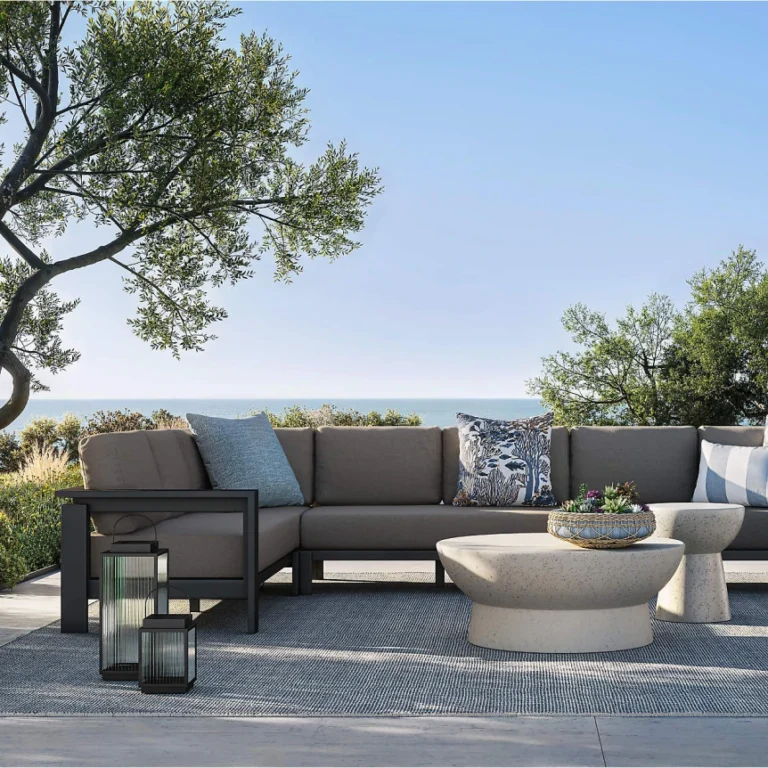
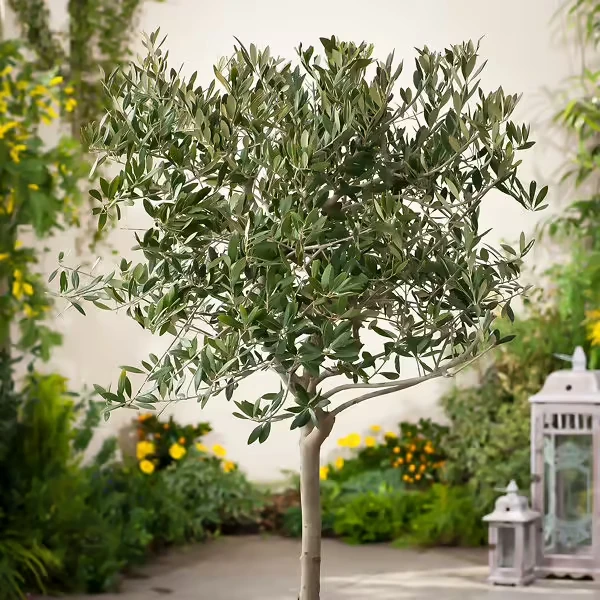
Larger evergreen shrubs and small trees, including olive trees, photinia, and viburnum tinus, bring height and volume to a patio scheme and create the sense of enclosure that makes outdoor spaces feel genuinely room-like. An olive tree in a large terracotta pot has a Mediterranean quality that is instantly evocative and suits a wide range of patio styles.
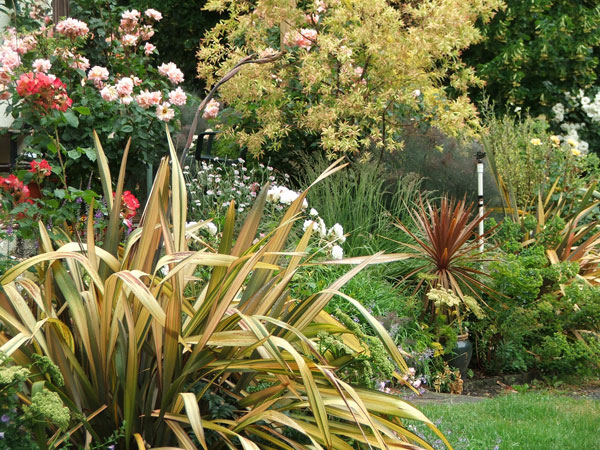
Grasses and grass-like plants, including phormium, carex, and miscanthus, provide a different kind of evergreen structure: looser, more naturalistic, and more dynamic in a breeze. They suit contemporary and naturalistic garden styles particularly well and provide movement and sound in the space that rigid evergreens cannot.
Seasonal Interest: Planning for the Whole Year
A well-planned patio planting scheme has something of interest in every season, not just in summer when everything is at its peak. Planning for seasonal succession requires thinking about which plants provide interest at which times of year and making sure the scheme has representatives at each stage.
Spring bulbs, including tulips, alliums, and narcissus, provide early season color before most other planting has got going. Planted in pots in autumn, they emerge in spring with a welcome burst of color after the bare winter months. They can be stored or replaced after flowering and need not take up prime position during the rest of the year.
Summer is the season when patio planting is most abundant and most obvious. This is when annuals and tender perennials earn their place: pelargoniums, petunias, verbena, and helichrysum all provide long-season color and suit container growing well. For a more naturalistic approach, perennials including echinacea, salvia, and agapanthus provide summer color with more structure and less maintenance than annuals.
Autumn and winter are the seasons most often neglected in patio planting. Ornamental grasses with their late-season seed heads, the berries and structural forms of deciduous shrubs after leaf fall, and winter-flowering plants including hellebores, cyclamen, and winter-flowering heathers all extend the visual interest of the patio well beyond the summer season.
Fragrance: The Underrated Layer
A fragrant plant near the seating area adds a sensory richness to an outdoor space that purely visual planting cannot provide. In a patio context where you are sitting close to the plants for extended periods, fragrance has a disproportionate impact on the experience of being outside.
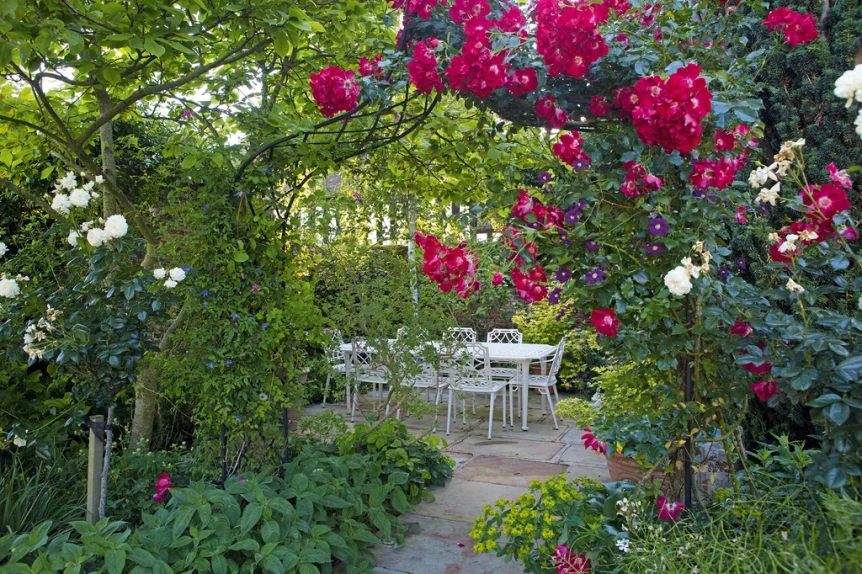
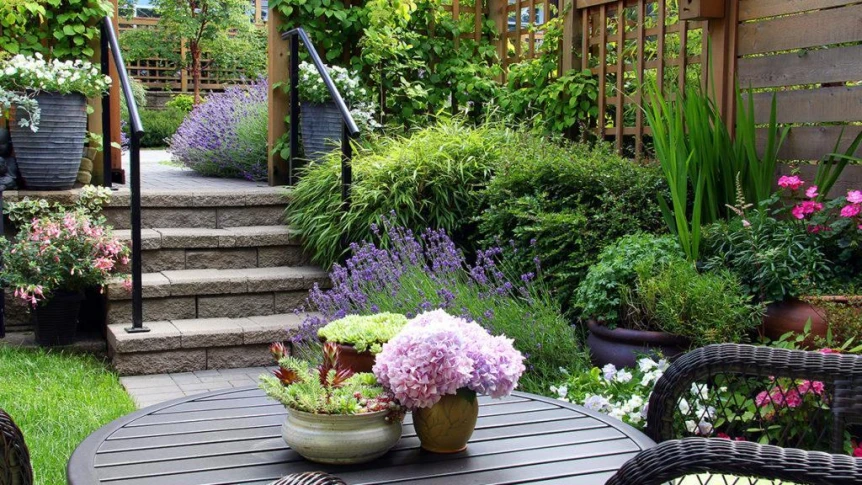
Some of the most effective fragrant patio plants include jasmine, which fills warm evenings with a sweetness that is hard to match; lavender, drought-tolerant, bee-friendly, and beautifully aromatic when brushed; rosemary and thyme, useful as herbs and fragrant when their foliage is touched; and sweet-smelling roses trained on a wall or fence, which bring a classic scent that is genuinely hard to improve upon.
Positioning fragrant plants where people brush past them, alongside a narrow path, near the entrance to the seating area, or beside a regularly used gate, means their fragrance is released regularly rather than only when you lean in to smell them deliberately.
Container Planting: Making Pots Work Harder
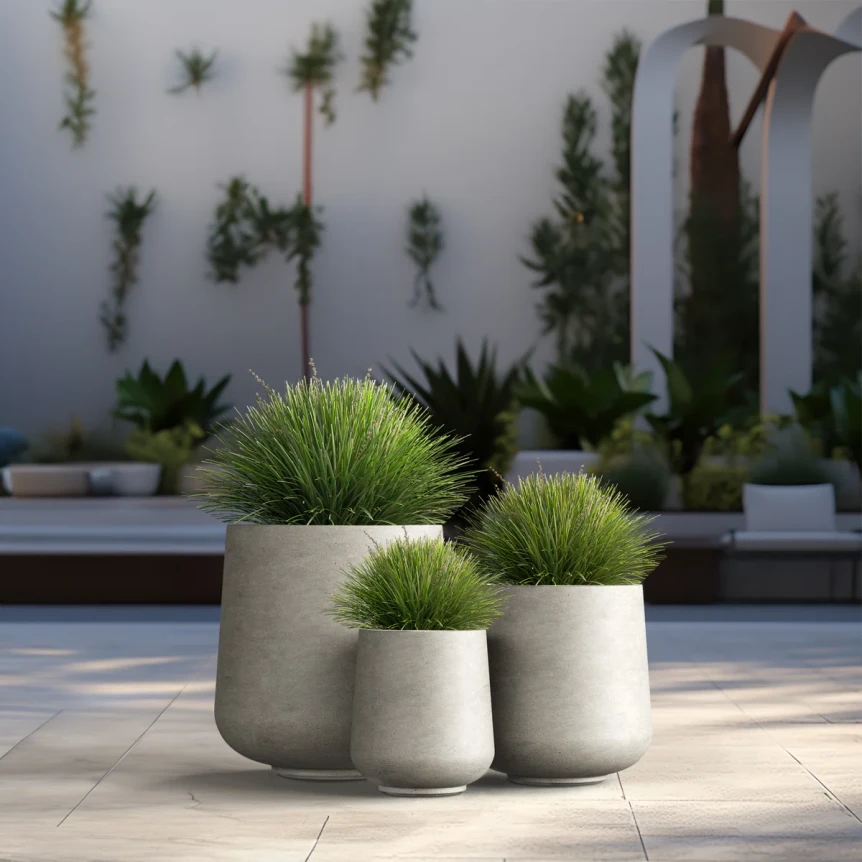
Container planting is the primary mode of patio gardening for most people, and it has more design potential than is often realized. The quality of the pot matters as much as the plant in it: a beautiful plant in an undersized, cheap plastic pot looks worse than a simpler plant in a generous, well-chosen container. Investing in a few large, good-quality pots in a consistent material produces a much more considered result than a collection of pots in varying materials, sizes, and styles.
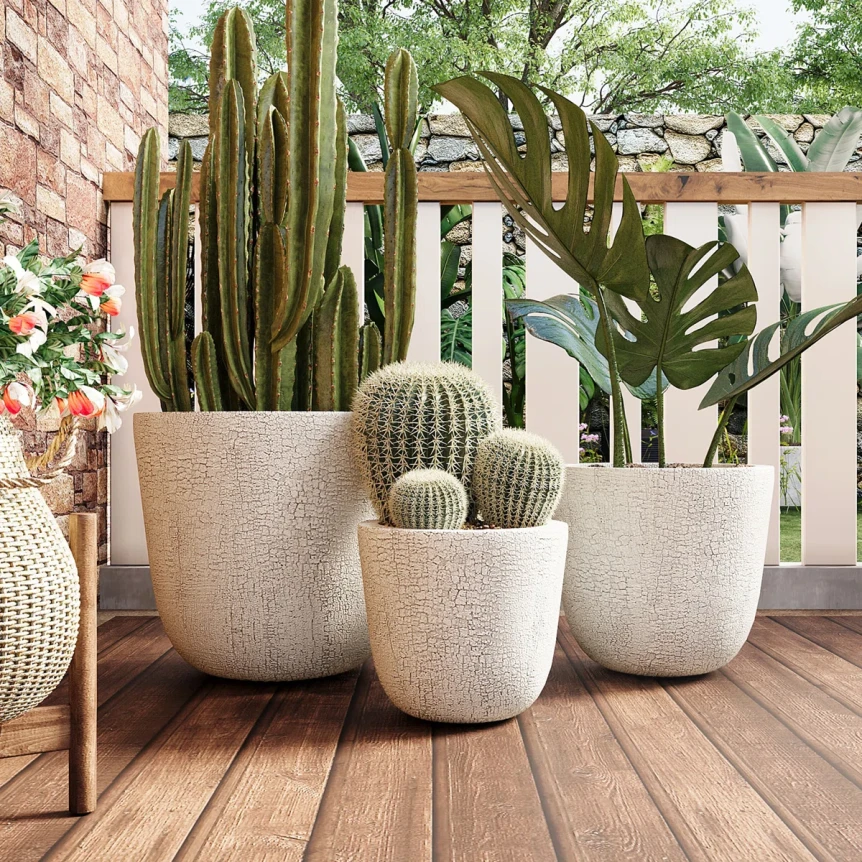
Large pots make a stronger visual impact than small ones, support plants better through dry periods due to greater soil volume, and need watering less frequently. Where a scheme might currently use eight small pots, replacing them with three large ones typically produces a more confident and more manageable result.
Pot material choice affects both the look and the performance of container planting. Terracotta is beautiful and breathable but can crack in hard frosts if left outside when wet: it suits covered or sheltered situations best, or varieties specifically labeled as frost-resistant. Glazed ceramic pots are more frost-resistant, available in a wide range of colors, and look beautiful but are heavy and less breathable than terracotta. Lightweight fiber-cement and resin pots convincingly replicate the look of stone, concrete, and terracotta at a fraction of the weight, which is particularly useful for roof terraces and balconies where load bearing is a concern.
Privacy Planting: The Living Screen
Privacy is one of the most frequently cited requirements for outdoor spaces, and planting is often the most attractive and least imposing way to achieve it. A hedge, a row of tall grasses, or a climber-covered trellis creates privacy while adding to the character and beauty of the garden in a way that a solid fence panel cannot.
For fast-growing privacy screens, bamboo in non-spreading clumping varieties, tall ornamental grasses, and evergreen climbers on trellis all establish quickly and create a living boundary with movement and texture. For more formal hedging, hornbeam and yew are among the most effective choices for a neat, clipped screen that provides excellent privacy once established.
These related guides cover the other elements of your outdoor design:
- Patio Design Ideas for Every Outdoor Space
- Small Patio Ideas That Make the Most of Your Space
- How to Choose Outdoor Rugs and Textiles
- Outdoor Lighting Ideas for Patios and Gardens
- Best Outdoor Patio Furniture for 2026
For the full outdoor and patio design guide, read The Complete Guide to Outdoor and Patio Design.