Outdoor Lighting Ideas for Patios and Gardens

By Tereza Hower | Published March 24, 2026 | Updated March 27, 2026
Outdoor lighting is the element that separates a patio used only in daylight from one that becomes a genuinely enjoyable space after dark. The difference between a single wall light beside the back door and a properly layered lighting scheme is dramatic, and the investment required to achieve it is more modest than most people expect.
This guide covers the types of outdoor lighting that work best, how to layer them for both atmosphere and practicality, and the practical considerations that make outdoor lighting last and perform well.
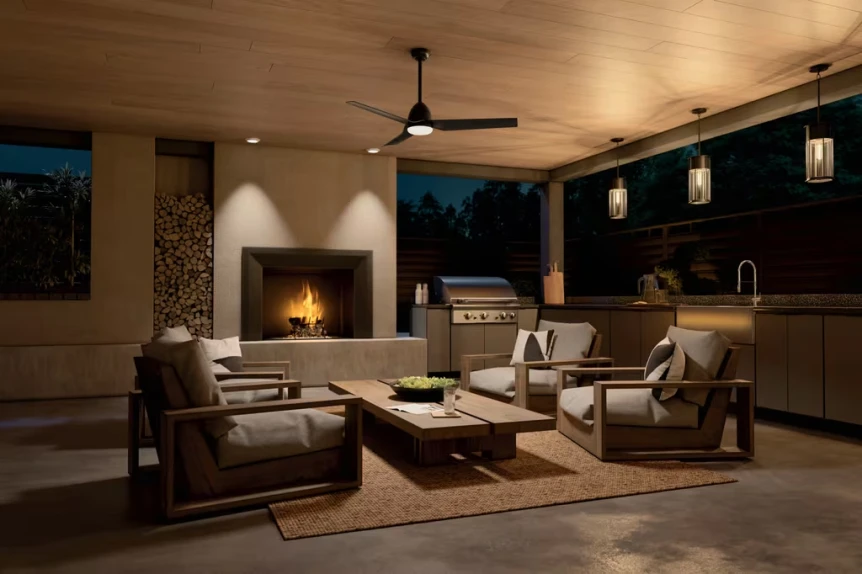
Why Outdoor Lighting Deserves Proper Planning
Most outdoor spaces are lit as an afterthought: a security light here, a solar stake there, a string of lights strung hastily for a summer party and left in place indefinitely. The result is lighting that functions at a basic level but does nothing to enhance the character or atmosphere of the space.
Planned outdoor lighting, approached with the same layering principles used for interior rooms, creates an entirely different experience. It makes the space feel like a destination after dark rather than an approximation of one. It extends the usable hours of the garden across more months of the year. And it creates an atmosphere in the evenings that the best daytime garden design cannot replicate.
The planning conversation for outdoor lighting ideally happens at the same time as the patio design, since some of the most effective lighting solutions, in-ground uplights, recessed step lights, and wiring for wall-mounted fittings, are most easily and inexpensively installed during the construction phase. Retro-fitting these afterward is possible but significantly more disruptive and expensive.
String Lights: The Most Versatile Tool in Outdoor Lighting
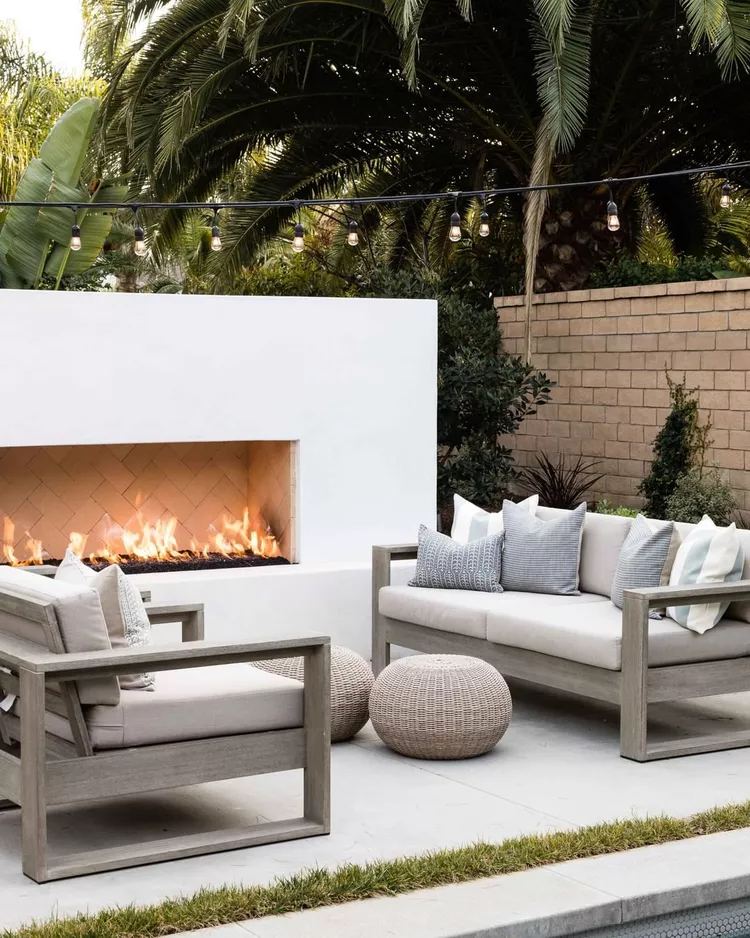
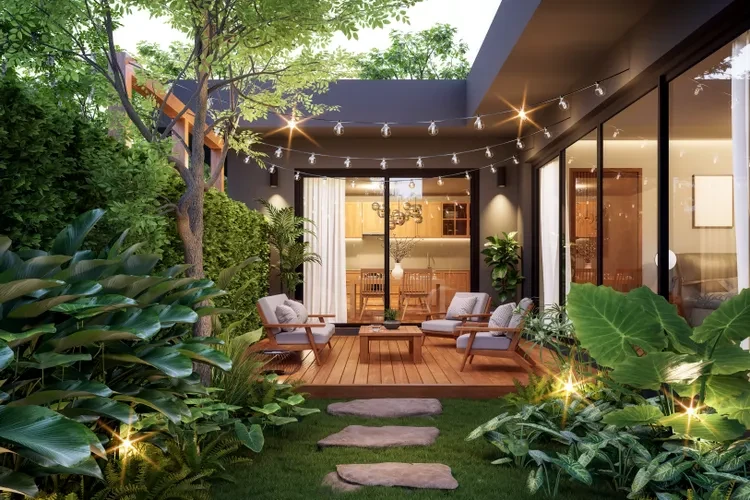
String lights are the outdoor lighting equivalent of the dimmer switch: a relatively inexpensive, easy-to-install change that transforms the character of the space more than almost anything else. Strung above a seating or dining area, they create an immediate sense of warmth, enclosure, and occasion that changes the entire feel of the outdoor space.
The key to string lights looking designed rather than improvised is the quality of the bulb and the way they are hung. Warm Edison-style bulbs in a consistent size, hung at a consistent height, and strung in a deliberate pattern rather than looped randomly, look intentional and beautiful. Most effective configurations involve stringing the lights between fixed attachment points, whether the house wall, fence posts, pergola beams, or purpose-made poles, at a height that creates a defined overhead plane above the seating area.
Commercial-grade string lights with individually replaceable bulbs are worth the additional cost over cheaper alternatives. They last significantly longer, the bulbs can be replaced individually when they fail rather than the whole string being discarded, and they look more refined and deliberate in the finished space.
Path and Ground Level Lighting
Lighting at ground level adds a layer of depth and safety that overhead lighting alone cannot provide. Path lights, step lights, and in-ground uplights all contribute to the nighttime character of a garden while making it safer and more comfortable to navigate after dark.
Path lighting, low-level bollard lights or recessed ground-level fittings set alongside a path or the edge of a patio, defines routes through the space and creates a visual rhythm that is appealing both practically and aesthetically. Solar-powered path lights have improved considerably in quality and reliability and are a good option where running mains cable is impractical. Mains-powered versions are more reliable in terms of output and consistency, particularly in locations with limited sun exposure.
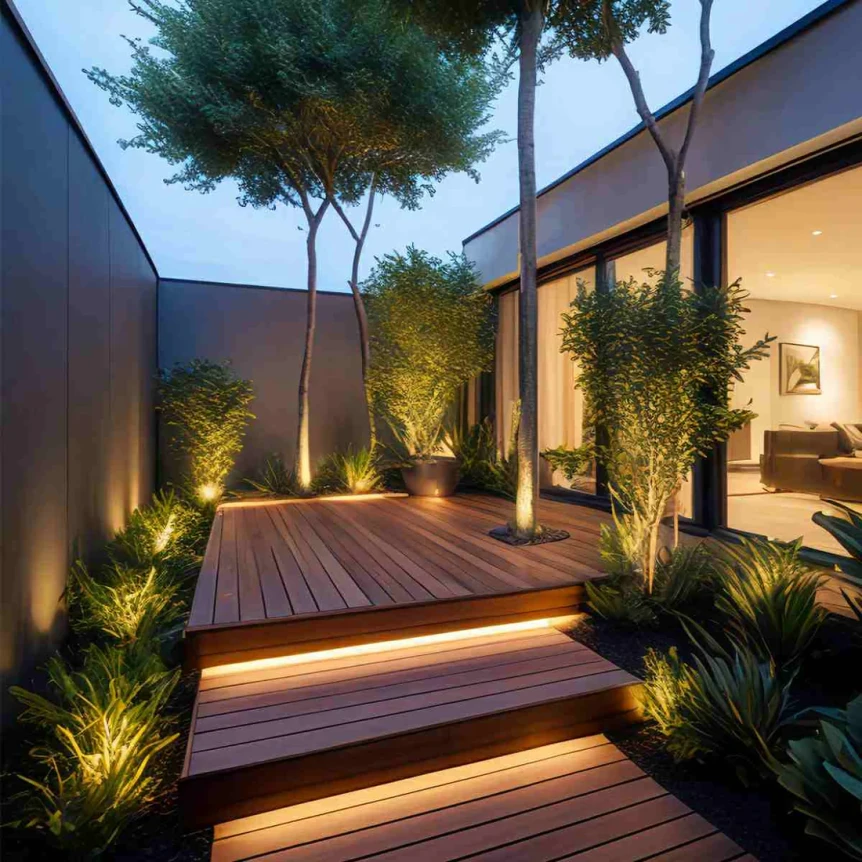
Recessed step lights, set into the riser of garden steps or the edge of a raised platform, are one of the most elegant outdoor lighting solutions available. They illuminate steps sufficiently for safe use without any visible fixture interrupting the surface, and they create a beautiful effect after dark that photographs particularly well. These need to be specified at the construction stage for the best results.
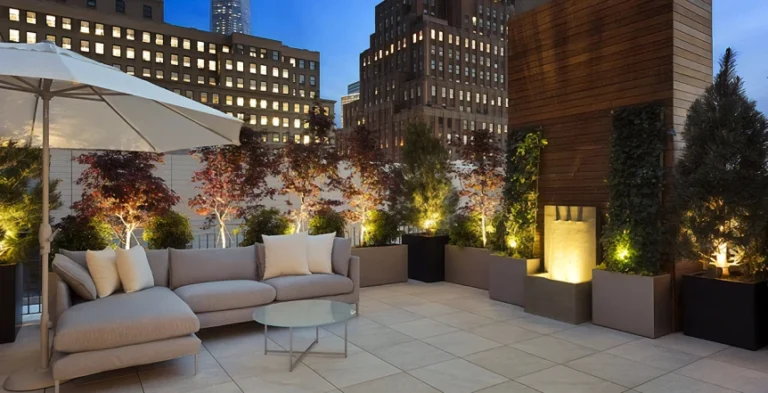
In-ground uplights set flush with the patio surface and aimed upward at a wall, fence, or planting create a dramatic effect that completely changes the nighttime character of those features. Used at the base of a planted wall, they turn climbing plants and textured masonry into sculptural focal points. Used alongside a boundary wall or fence, they add depth and dimension that the flat surface lacks in daytime.
Uplighting Trees and Planting
Uplighting significant trees and architectural planting is one of the highest-impact outdoor lighting techniques and one of the most underused in domestic gardens. A single well-placed uplight at the base of a mature tree transforms its presence in the garden after dark: the canopy glows, the shadows of the branches move in the breeze, and the whole garden gains a quality of depth and drama that no other technique provides.
Spike-mounted uplights are the easiest to install and reposition, which is useful when plants are still establishing and the best lighting position may change as they grow. Flush-mounted in-ground uplights have a cleaner appearance since there is no visible fixture above the surface, but they require more careful placement since repositioning them is disruptive.
The color temperature of uplights matters. Warm white bulbs in the 2700K to 3000K range bring out the greens and browns of foliage and bark beautifully. Cooler temperatures can make plants look slightly unnatural and tend to be less flattering for most garden contexts.
Wall-Mounted Fixtures and Lanterns
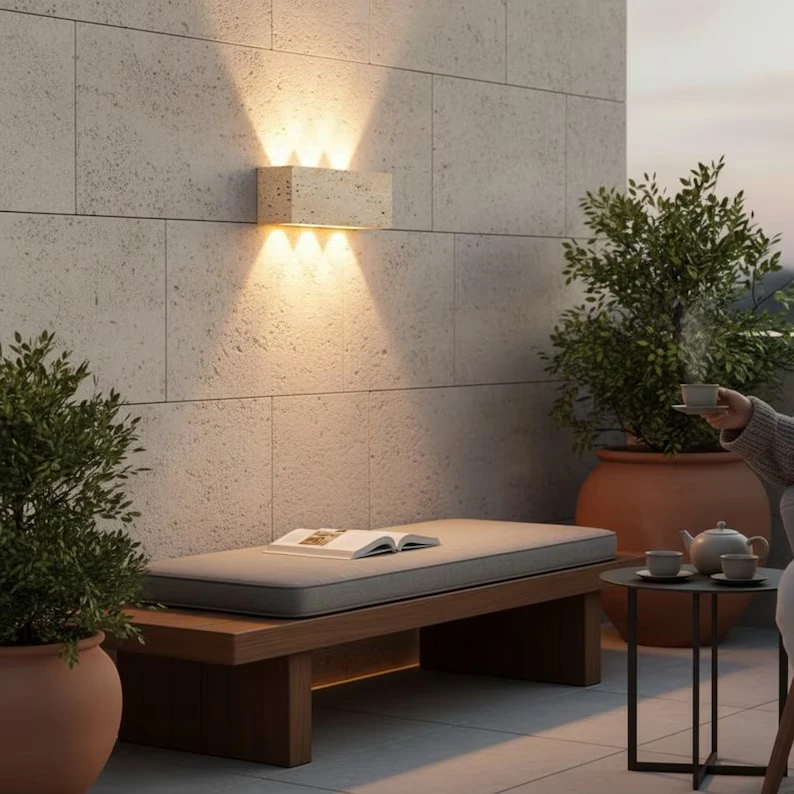
Wall-mounted outdoor lights on the house exterior and on boundary walls contribute to both ambient illumination and the architectural quality of the space. Well-chosen wall lanterns are themselves decorative objects that add character in daylight as well as at night.
Modern outdoor wall lights range from minimal architectural fixtures to more traditional lantern styles, and the right choice depends entirely on the character of the building and garden. For a contemporary outdoor space, a simple matte black or brushed steel wall bracket with a geometric shade integrates cleanly. For a more traditional setting, a quality cast aluminium or brass lantern adds warmth and period character.
The position of wall-mounted lights matters as much as the fitting itself. Lights placed too high provide poor ground-level illumination and create glare when viewed from a seated position. At roughly head height or slightly above, they illuminate the space well while remaining comfortable to look toward.
Candles and Fire
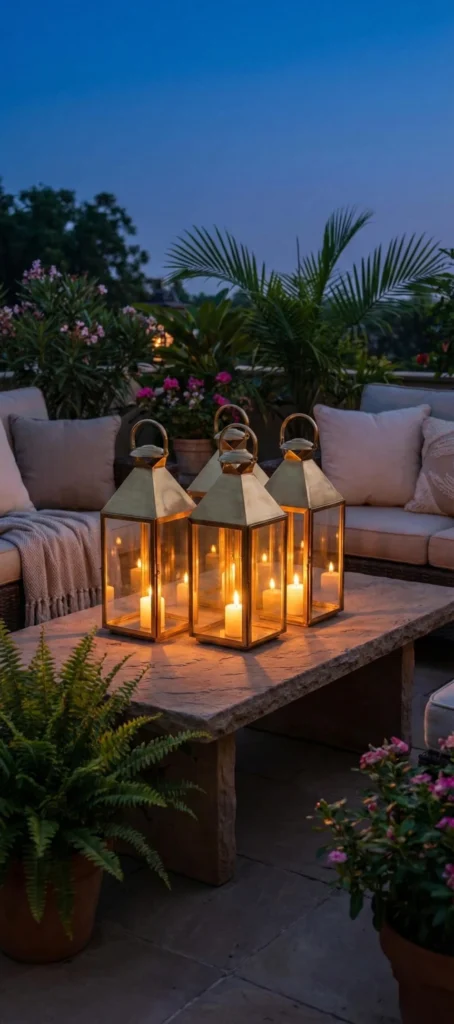
No electric light source fully replicates the quality and atmosphere of candlelight and firelight outdoors. Candles in good outdoor lanterns or hurricane glasses, a fire pit, or a chimenea add a warmth and movement to the outdoor space after dark that is genuinely different from any artificial alternative.
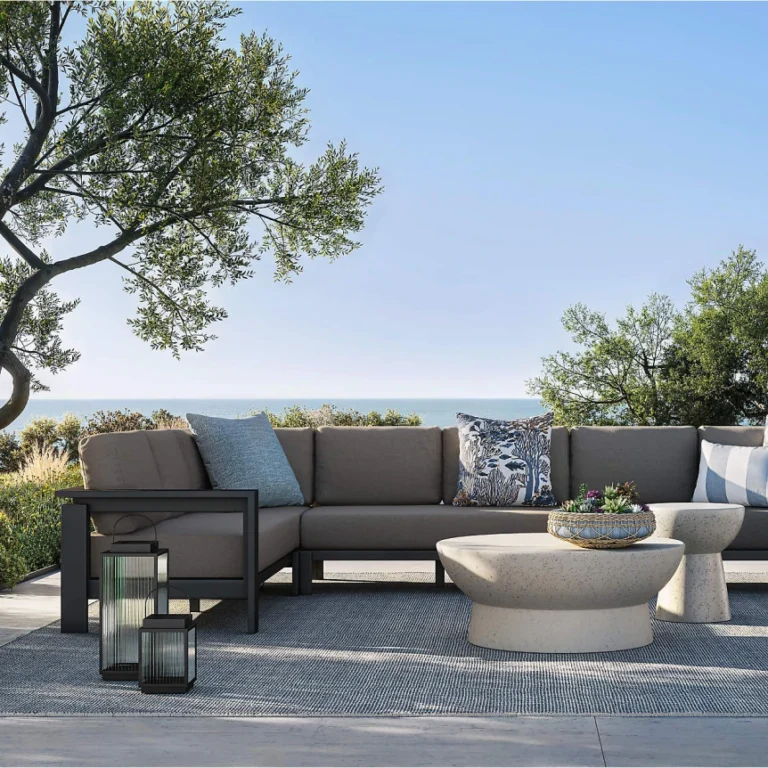
Outdoor lanterns in generous sizes, grouped on a table or set at different heights on a surface, create an intimate atmosphere that suits evening gatherings perfectly. Quality lanterns in materials that weather well, including powder-coated steel, zinc, and teak, look beautiful as they age and can stay outside year-round in most climates.
A fire pit is one of the most sociable outdoor additions available. People gather around fire naturally, conversations last longer, and evenings outside extend well past the point they would without one. Position a fire pit with enough clear space around it for comfortable seating and with wind direction in mind, since smoke following a guest for an entire evening is the one reliable way to shorten a gathering.
With your lighting scheme in place, these related guides cover the rest of the outdoor space:
- Best Outdoor Patio Furniture for 2026
- Patio Design Ideas for Every Outdoor Space
- Outdoor Plants and Landscaping Ideas for Patios
- Small Patio Ideas That Make the Most of Your Space
- Outdoor Kitchen and Dining Area Ideas
For the complete outdoor design guide, read The Complete Guide to Outdoor and Patio Design.