Kitchen Organization and Storage: Practical Solutions That Actually Work

By Tereza Hower | Published March 26, 2026 | Updated April 3, 2026
Most kitchen storage problems aren’t actually storage problems. They’re organization problems. The average kitchen has enough cubic footage to hold everything it needs to. It’s just not arranged in a way that makes things accessible, visible, or easy to put away. The result is a cluttered counter, a drawer that won’t close, and the nagging sense that the kitchen doesn’t quite work.
Solving this doesn’t always require a renovation. Many of the most effective kitchen storage improvements can be made in an existing kitchen with organizers, inserts, and a reassessment of what actually belongs where. For those planning a new kitchen or a remodel, building storage in thoughtfully from the start produces a dramatically better result than retrofitting solutions later.
This guide covers both approaches: building storage right in a new kitchen, and improving storage in an existing one.
The Real Cause of Kitchen Clutter
Counter clutter in a kitchen is almost always a sign of one of three things: not enough storage for the items that need a home, storage that’s too inconvenient to use consistently, or items that don’t need to be in the kitchen at all. Addressing counter clutter means identifying which category the problem falls into before reaching for a solution.
Not Enough Storage
This is rarer than it seems. Most kitchens have adequate total storage volume. The issue is usually that it’s not organized to hold what the household actually owns. Assess the cubic footage available before concluding you need more.
Storage That’s Hard to Use
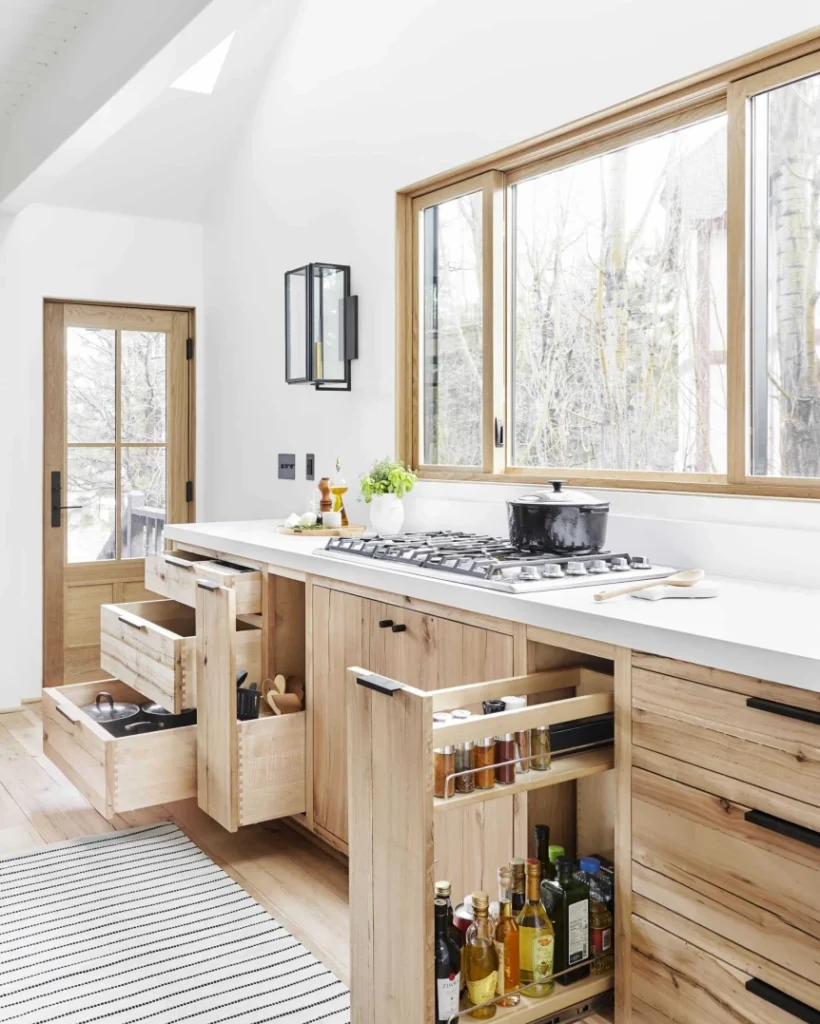
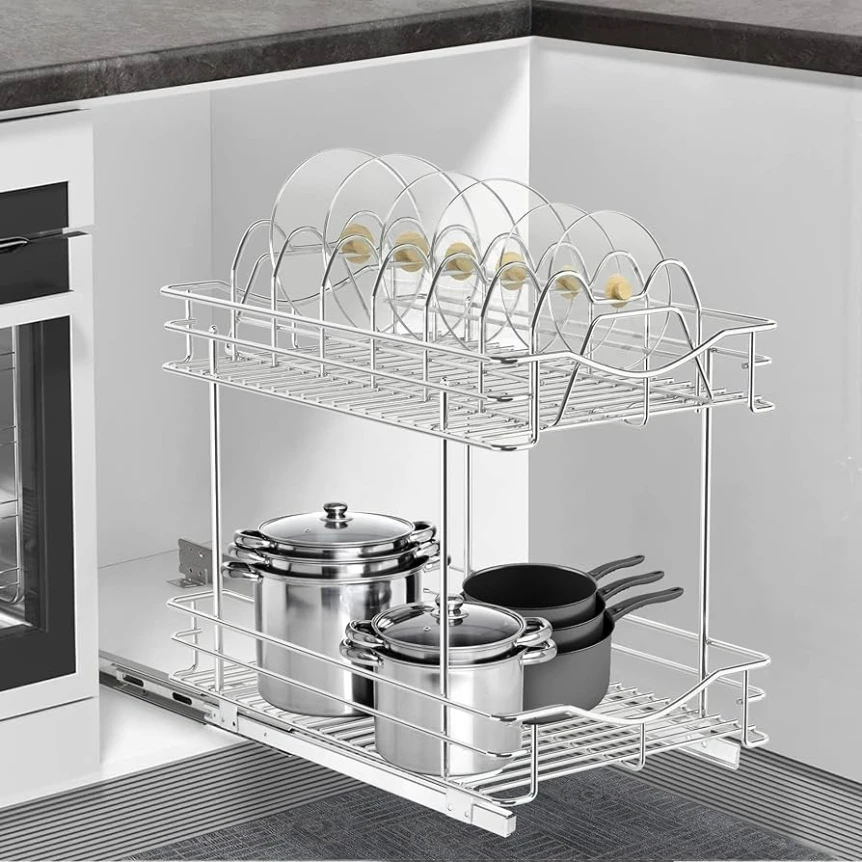
A lower cabinet with two fixed shelves and a door is technically storage, but accessing items at the back requires getting on the floor and reaching in. The result is that the front of the shelf gets used and the back fills with things that never get touched. Converting that cabinet to a drawer system or adding pull-out shelves immediately increases the usable storage it provides.
Items That Shouldn’t Be in the Kitchen
Kitchen drawers filled with batteries, takeout menus, rubber bands, and tools borrowed from another room are a maintenance problem, not a storage problem. A regular clear-out of items that belong elsewhere is a necessary part of keeping a kitchen organized.
High-Impact Storage Decisions for a New Kitchen
If you’re planning a kitchen renovation, these are the storage choices that have the most meaningful impact on daily use and the ones most worth investing in before the cabinets go in.
Deep Drawers Over Lower Cabinet Doors
This is one of the most significant storage upgrades available in a kitchen design. Deep drawers, typically 9 to 12 inches deep, are dramatically more accessible than lower cabinets with doors. Pots, pans, lids, mixing bowls, and pantry staples are all easier to see, reach, and put away in a deep drawer. Standard lower cabinets with doors require crouching and reaching; a drawer comes to you at standing height and shows you everything at once.
The only lower cabinet area where a door configuration makes more sense is under the sink, where plumbing constraints prevent a standard drawer installation.
Pull-Out Pantry Columns
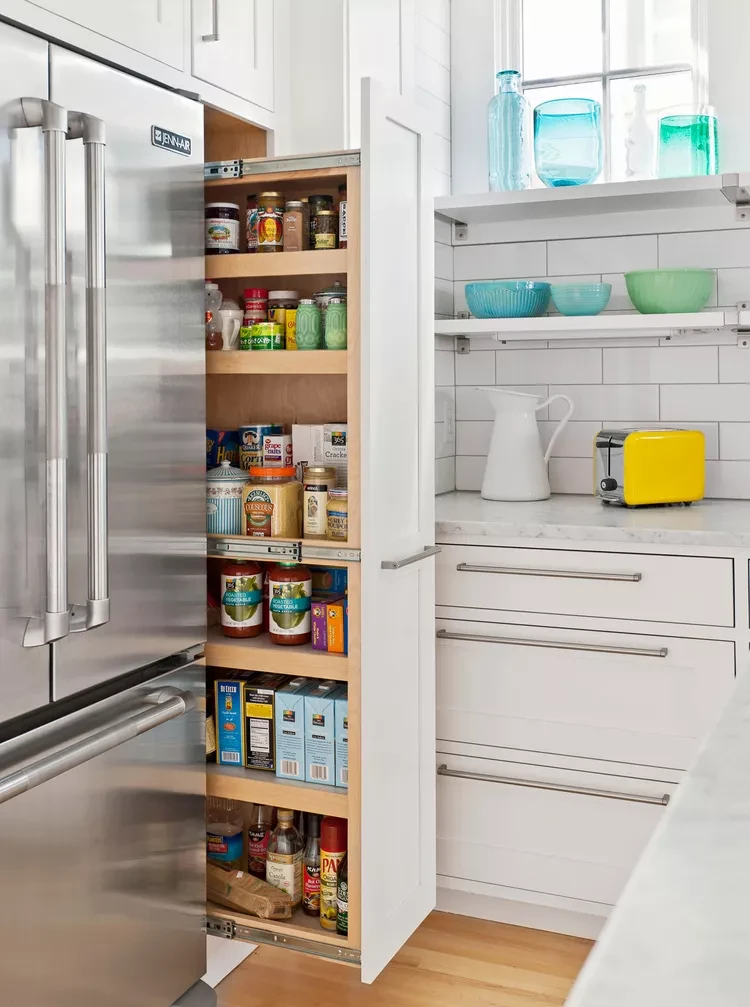
A tall, narrow pull-out pantry beside the refrigerator or at the end of a cabinet run makes use of otherwise wasted space and provides a highly visible, accessible home for pantry staples. When you pull the column out, everything on it is visible at once. No reaching to the back of a shelf or losing track of what you have.
Corner Solutions
Kitchen corners are among the most awkward and underused spaces in any layout. Standard corner cabinets with doors are difficult to access and tend to accumulate forgotten items. Effective corner solutions include:
- Lazy Susans: Rotating trays that bring items at the back of a corner cabinet into reach. The most common and affordable corner solution.
- Magic corner pull-outs: A two-tier system where pulling the front section out brings the back section forward on a linking mechanism. More expensive but significantly more effective than a standard lazy Susan.
- Diagonal corner drawers: Custom-built at 45 degrees to address the corner directly. A high-end option that produces the cleanest result but requires precise cabinetry work.
Appliance Garages
An appliance garage is a section of cabinetry with a lift-up, roll-up, or tambour door that can conceal a toaster, coffee maker, stand mixer, or other counter appliance when not in use. The counter remains clear and the appliance is immediately accessible without being stored in a lower cabinet. This is one of the most effective ways to keep a kitchen looking organized without inconveniencing regular use.
Integrated Waste and Recycling
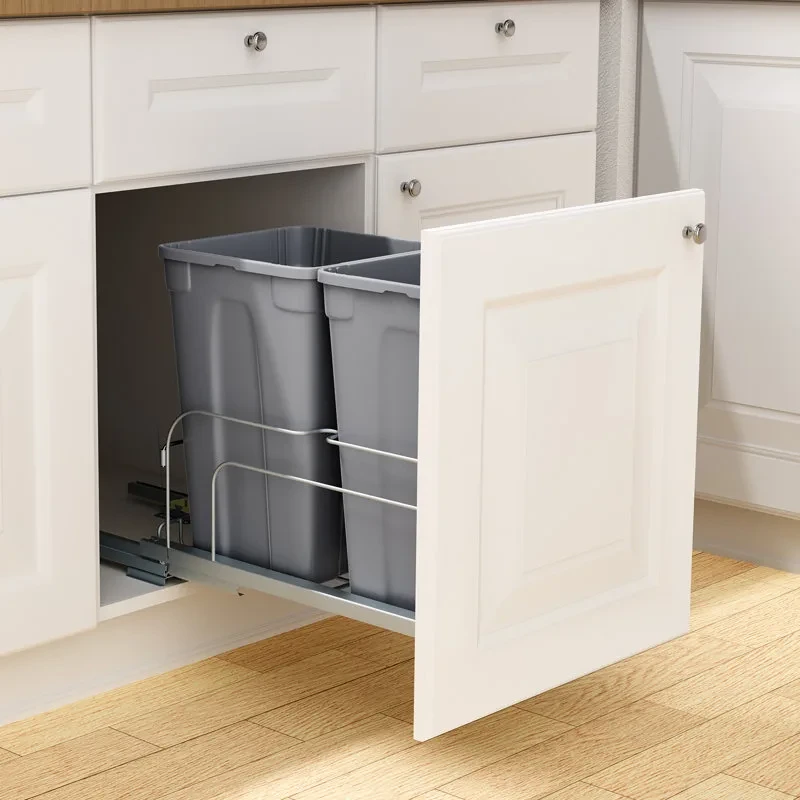
A built-in pull-out for waste and recycling, typically a two-bin system under the sink or near the food prep area, removes the bins from the floor and makes waste management a seamless part of the kitchen workflow rather than an afterthought. Planning for this from the start means it fits properly; retrofitting a pull-out into an existing cabinet often requires compromise.
Improving Storage in an Existing Kitchen
Not everyone has the opportunity to build storage in from scratch. For existing kitchens, there’s a significant range of improvements available without touching the cabinet structure.
Cabinet Organizers and Inserts
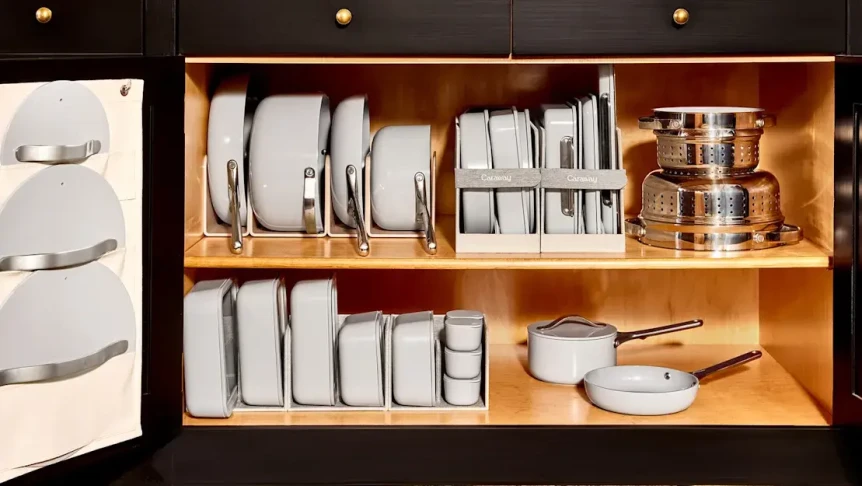
The inside of a standard lower cabinet can be substantially improved with pull-out shelf inserts, wire or solid shelves mounted on slides that bring the back of the cabinet to the front. This is one of the highest-value retrofits available in an existing kitchen. Cabinet door organizers can also use the inside of a door for additional small-item storage, useful for cutting boards, cleaning supplies, or pot lids.
Drawer Dividers
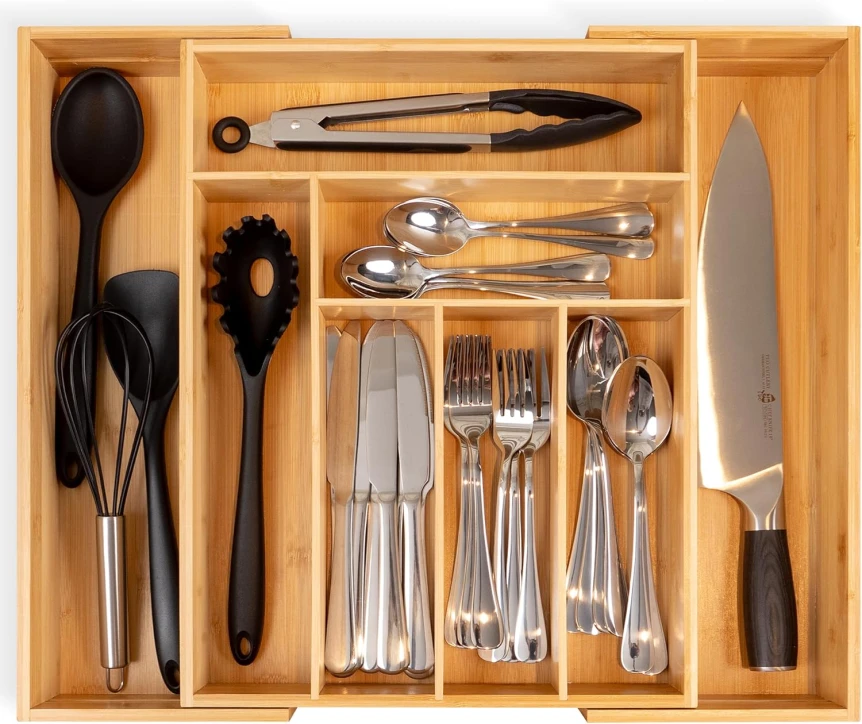
A kitchen drawer without dividers becomes a jumbled mix of utensils, tools, and miscellaneous items within days of being organized. Adjustable drawer dividers, available in wood, bamboo, and acrylic, allow the drawer to be customized for exactly what it holds and maintain that organization without constant maintenance.
Tiered Shelf Inserts
A tiered riser insert in a standard upper cabinet creates a second level of storage, making items at the back visible and accessible without moving everything in front of them. These are particularly useful in spice cabinets, pantry shelves, and anywhere small items tend to get lost behind larger ones.
Vertical Storage
Items like cutting boards, baking trays, and sheet pans are awkward to stack and difficult to access at the bottom of a pile. Vertical dividers, either built-in or added as insert organizers, store these items upright and make individual pieces easy to pull out without disturbing the rest.
The Back of Cabinet Doors
The inside of a lower cabinet door is almost always unused space. Door-mounted racks for cleaning supplies, foil and wrap storage, or pot lids can reclaim this space without any permanent modification.
Counter Storage: What Deserves to Live There
Once the cabinets are organized effectively, the counter becomes easier to manage because there’s a proper home for everything. But a decision still needs to be made about what lives on the counter permanently versus what gets put away after use.
The Counter Test
An item earns counter space if it meets two conditions: it’s used daily (or near-daily), and putting it away and getting it out is genuinely inconvenient. A coffee machine used every morning passes this test. A blender used twice a month doesn’t.
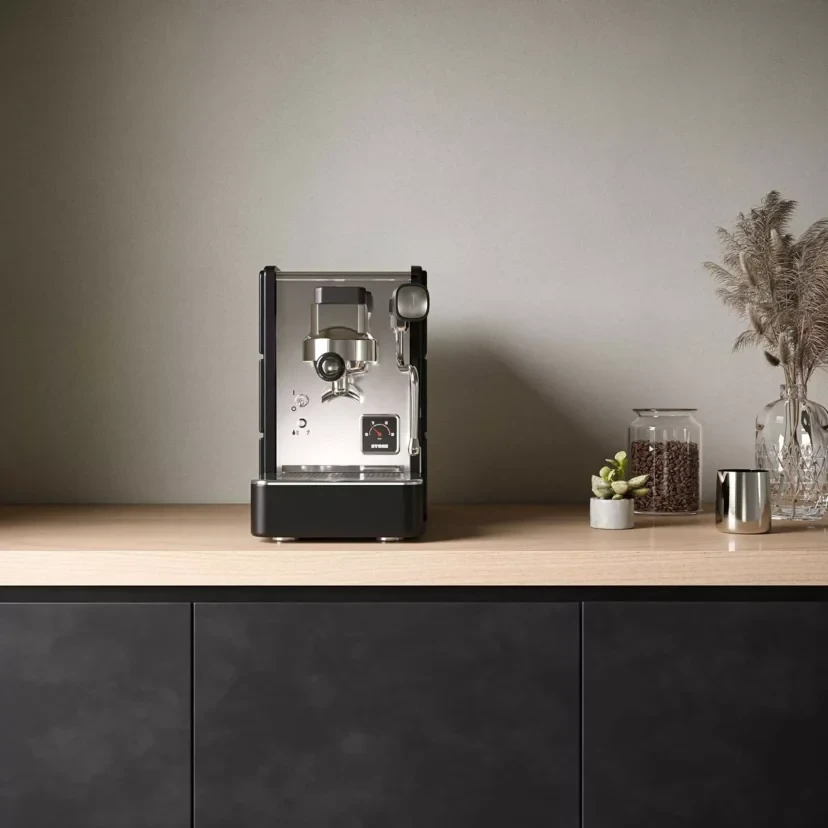
Apply this honestly and most kitchen counters can be significantly cleared. A small caddy or designated tray for counter appliances creates a visual boundary. Everything within the tray belongs; everything outside it gets put away.
Knife Storage
Knives stored in a drawer with other utensils are dangerous and dull quickly from contact with other metal. A magnetic wall strip or a knife block keeps them organized, accessible, and maintained. The wall strip has the additional advantage of saving counter or drawer space and displaying the knives as tools that are part of the kitchen aesthetic.
The Pantry: Zones and Visibility
Whether it’s a full walk-in pantry or a single dedicated cabinet, pantry organization follows one principle: visibility. If you can’t see it, you’ll forget you have it and buy it again, creating the duplication that fills most pantry shelves with multiples of the same thing.
Organize by zone: baking items together, canned goods together, snacks together, oils and condiments together. Within each zone, put frequently used items at eye level and less frequent ones above or below. Clear containers for decanted dry goods make contents immediately visible and make the pantry look significantly more organized at a glance.
For a full overview of how storage fits into your overall kitchen design, see The Complete Guide to Modern Kitchen Design (2026). Cabinet choices directly affect storage options — read our Kitchen Cabinet Styles and Colors guide for how door style and configuration affect what you can do with the interior. Open shelving is an alternative to closed cabinet storage for some items — our Open Shelving in the Kitchen guide covers when it works as a storage solution. For small kitchens where every inch matters, see Small Kitchen Design Ideas, which covers compact storage solutions specifically. And our Kitchen Color Schemes guide touches on how keeping counters clear contributes to the overall visual calm of the space.
Frequently Asked Questions
How do I maximize storage in a small kitchen?
In a small kitchen, the priority is using every available space efficiently rather than adding more furniture. Extend cabinets to the ceiling to use vertical space. Use deep drawers instead of lower cabinet doors wherever possible. Add pull-out shelf inserts to existing cabinets. Store items vertically since baking trays, cutting boards, and sheet pans take up far less space standing upright than stacked flat. And be honest about what the kitchen actually needs since most small kitchen storage problems are partly a clutter problem.
What is the most useful kitchen storage addition?
For most kitchens, converting lower cabinets to deep drawers or adding pull-out shelf inserts to existing lower cabinets produces the most immediate improvement in daily usability. The second most impactful addition is under-cabinet organizers or a pull-out pantry column if one can be accommodated in the layout.
How do I organize a kitchen with limited storage?
Start by removing everything from the kitchen that doesn’t belong there: tools, paperwork, chargers, and anything else that has crept in. Then take stock of what remains and assess whether each item is used regularly enough to deserve kitchen storage. For items that stay, use tiered shelf inserts, drawer dividers, and door-mounted organizers to maximize the storage you have. A regularly maintained kitchen with less in it will function better than an overfull one with additional organizers.
What should I store in kitchen drawers vs. cabinets?
Drawers are better for items you reach for frequently and need to see quickly: utensils, cutlery, small tools, spices, and pantry staples. Cabinets with doors are better suited to items stored in bulk, used infrequently, or too large for a drawer. As a general principle, if you’re opening a lower cabinet and reaching into the back regularly, it would work better as a drawer.
How do I deal with an awkward kitchen corner cabinet?
The most accessible solutions for corner cabinets are pull-out systems, either a standard lazy Susan for budget-conscious situations or a magic corner pull-out mechanism for a more effective result. If the cabinet is already in place and you can’t change the mechanism, use it for large, rarely used items like oversized stock pots, which are easy enough to retrieve even from an awkward corner.
Organization Is a Habit, Not a One-Time Project
The best-organized kitchen in the world will drift toward clutter if it isn’t maintained. The goal of good storage design is to make the right behavior easier than the wrong one. When storage is logical, accessible, and genuinely matched to what the kitchen holds, maintaining it becomes far less effortful.
Start with the areas that cause the most daily frustration and work outward. A kitchen that functions well in its highest-use zones feels organized even when the rest is still a work in progress.
For the full kitchen design guide, return to The Complete Guide to Modern Kitchen Design (2026).