Kitchen Lighting Ideas: How to Layer Light for a Kitchen That Actually Works

By Tereza Hower | Published March 27, 2026 | Updated March 30, 2026
Lighting is the element most often underbudgeted and most frequently regretted in kitchen design. People spend weeks choosing cabinet colors and countertop materials, then assign whatever’s left in the budget to lighting and wonder why the finished kitchen doesn’t feel as good as it looked in the plans.
Good kitchen lighting isn’t complicated. It follows a straightforward principle: layer multiple light sources so the room works well for different activities and different times of day. A single overhead fixture can’t do all of that. A thoughtfully planned lighting scheme can.
This guide covers the three layers of kitchen lighting, how to choose fixtures, common mistakes, and how to get the details right.
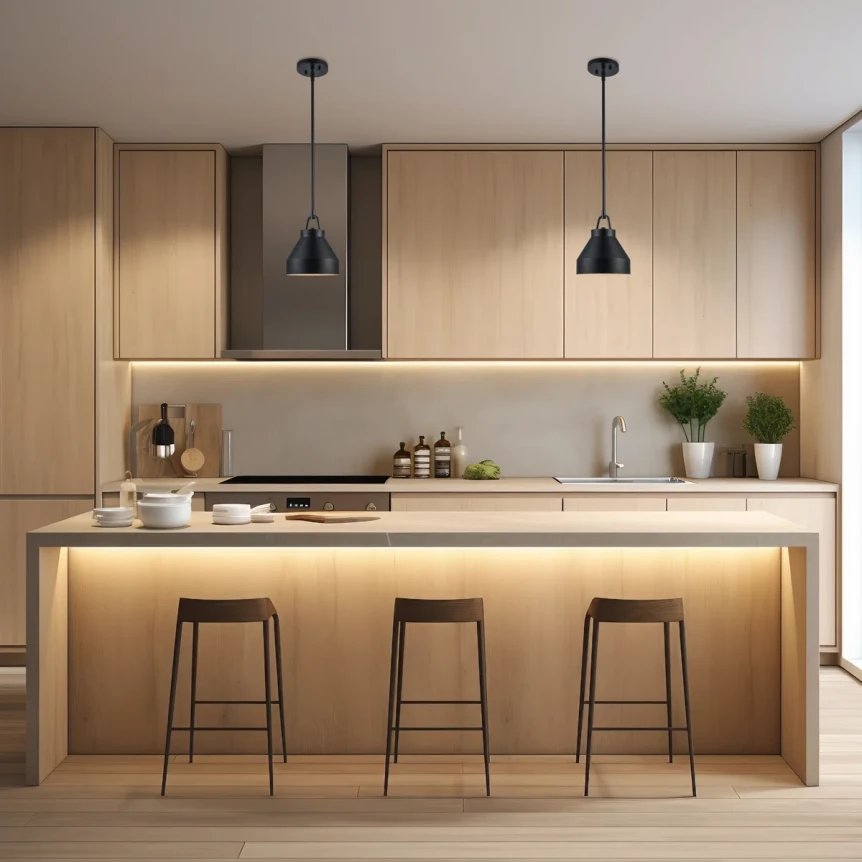
The Three Layers of Kitchen Lighting
A well-lit kitchen uses at least three types of light working together. Each layer serves a different purpose, and removing any one of them creates a noticeable gap in how the room functions.
Ambient Lighting
Ambient light is the general, room-wide source that makes the space navigable. In most modern kitchens, recessed downlights are the primary ambient source. They’re unobtrusive, distribute light evenly, and don’t compete visually with other design elements. In open-plan spaces, a statement pendant or semi-flush ceiling fixture can serve this role while also functioning as a design feature.
Ambient lighting should be on a dimmer wherever possible. Full brightness is useful for cooking and cleaning; a lower setting creates a much more livable atmosphere during meals or casual evening use.
Task Lighting
Task lighting goes where work happens. Its job is to illuminate specific surfaces: the countertop, the sink, the island, without creating shadows that make cooking or prep difficult.
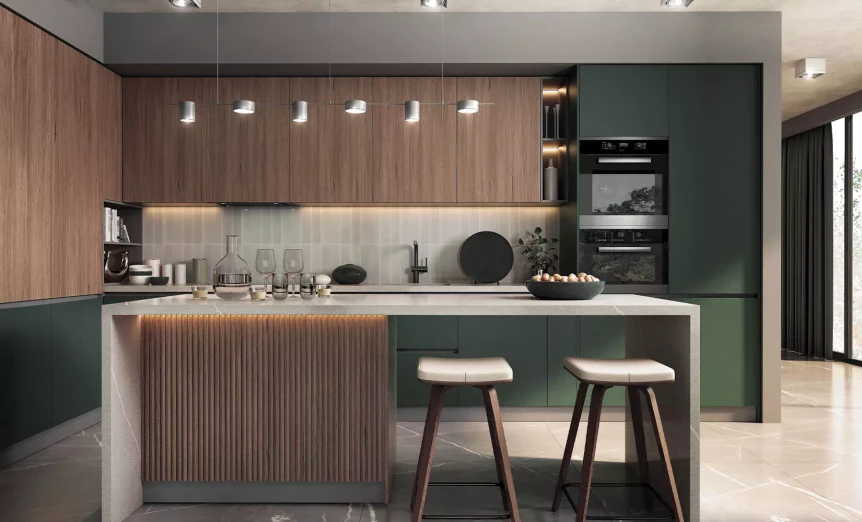
- Under-cabinet lighting: The most important task lighting addition in most kitchens. LED strip lights or puck lights mounted under upper cabinets illuminate the counter directly below, which is exactly where prep work happens. Without this, upper cabinet lighting casts a shadow right where you need to see.
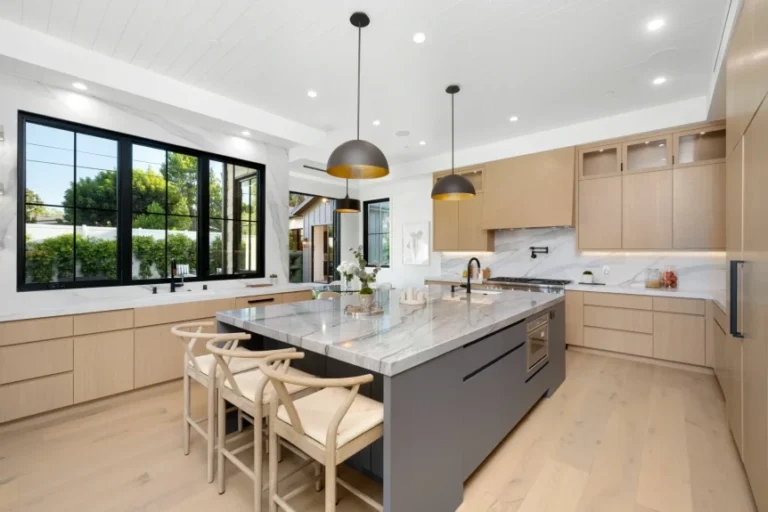
- Pendants over an island or peninsula: Combine task and decorative functions. They bring light closer to the surface and add visual weight to the island as a design element.
- A dedicated fixture over the sink: Often overlooked. A small pendant or a recessed light positioned directly over the sink makes washing up and food prep at the sink significantly easier.
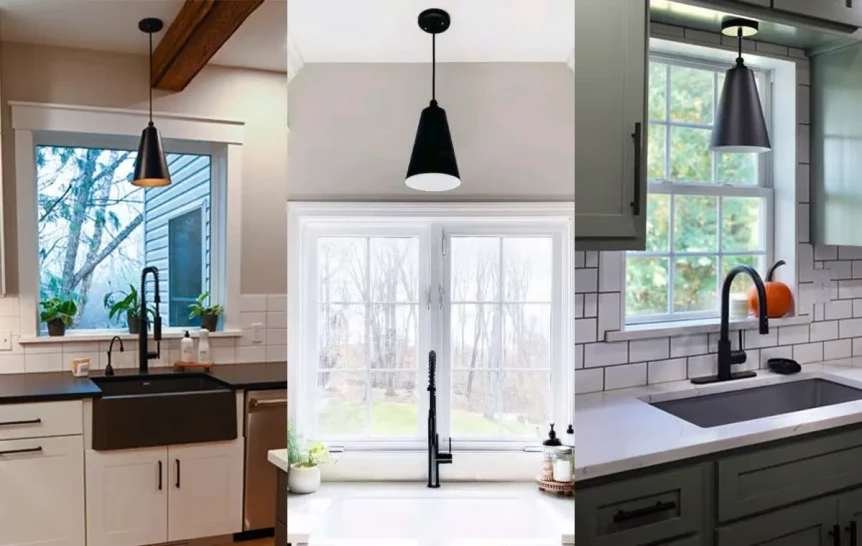
Accent Lighting
Accent lighting adds depth and atmosphere without serving a primary functional purpose. Interior cabinet lighting, toe-kick LEDs, and shelf lighting all fall here. They’re not essential, but they do add a layer of warmth, particularly in the evenings when overhead lights are dimmed and the kitchen is used more casually.
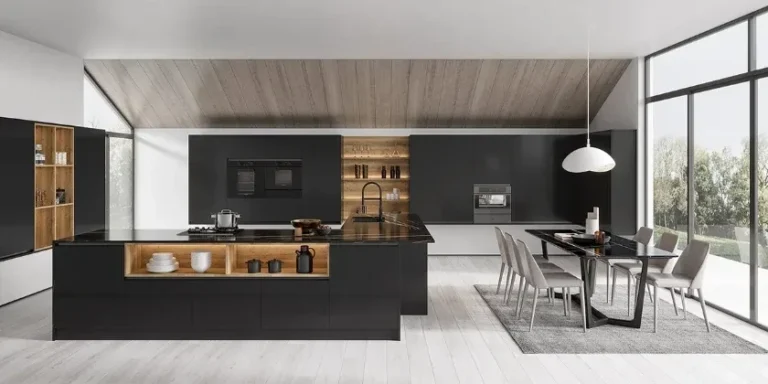
Interior cabinet lighting through glass-front doors is a particularly effective detail. It adds depth to the kitchen visually and makes the contents of those cabinets easy to find without opening every door.
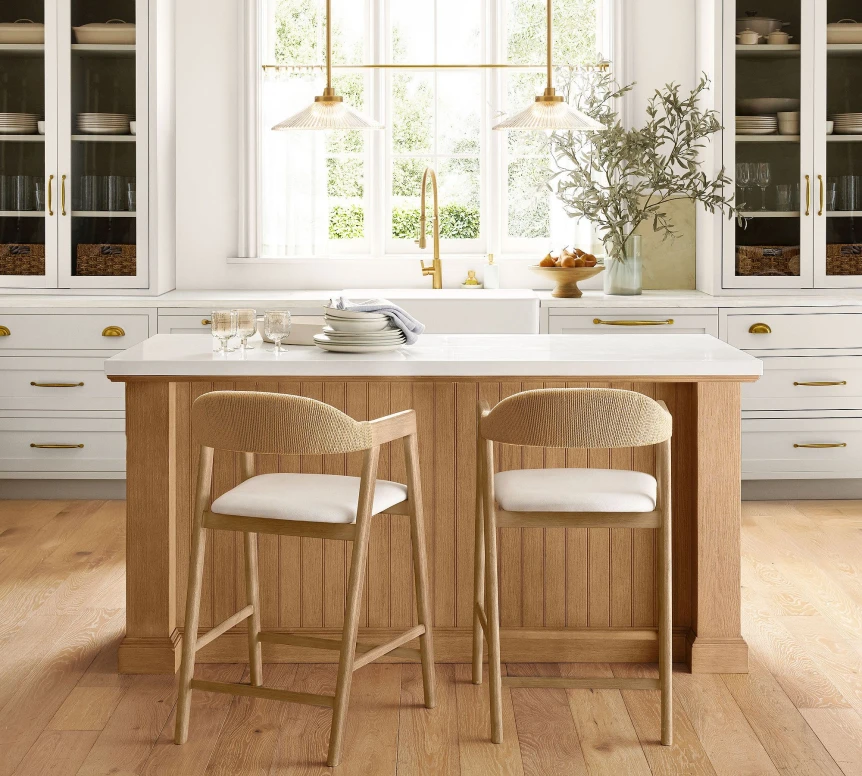
Recessed Lighting: Getting the Layout Right
Recessed downlights are the workhorses of kitchen ambient lighting. When planned well, they’re invisible and effective. When planned poorly, or added after the fact to an existing ceiling, they create uneven pools of light with bright and dark patches throughout the room.
Spacing
A common rule of thumb is to space recessed lights at roughly half the ceiling height apart. In a kitchen with 9-foot ceilings, lights spaced 4 to 4.5 feet apart will generally produce even coverage. Lights spaced too far apart create dark patches; lights placed too close together can produce a clinical, over-lit feel.
Positioning Relative to Cabinets
Recessed lights positioned directly above the front edge of upper cabinets will illuminate the countertop below. Lights positioned too far into the room will light the floor rather than the counter. This is one of the most common recessed lighting planning mistakes in kitchens.
Bulb Type
LED bulbs are the standard choice now for good reason: they’re energy-efficient, long-lasting, and available in a wide range of color temperatures. For kitchens, a color temperature between 2700K and 3000K produces a warm white light that’s bright enough for task use without the harshness of cooler daylight-spectrum bulbs. Save cooler temperatures (4000K and above) for utility spaces, not the main kitchen.
Pendant Lights: Choosing and Positioning Them Well
Pendants over a kitchen island or peninsula are often the most visible light fixture in the kitchen. They serve a task function, but they’re also a design statement, and getting the scale, height, and number right makes a meaningful difference.
Scale
A pendant that’s too small over a large island gets lost. One that’s too large dominates the room. As a general guide, the diameter of a pendant (or the combined width of a group of pendants) should be roughly two-thirds the width of the surface below. For a 6-foot island, two or three pendants totaling about 4 feet of combined diameter is a reasonable starting point.
Height
Pendants over an island are typically hung so the bottom of the fixture sits 30 to 36 inches above the countertop surface. Lower than 30 inches becomes an obstruction; higher than 36 inches loses the visual relationship between the pendant and the surface. In rooms with particularly high ceilings, the pendants may need to hang lower on their cords to maintain the right proportion.
Number
Two pendants over a standard island is the most common configuration. Three pendants suit a longer island. One large pendant can work if the fixture is substantial enough to anchor the space. Odd numbers often feel more balanced than two, though two is the more practical choice for most island lengths.
Style Considerations
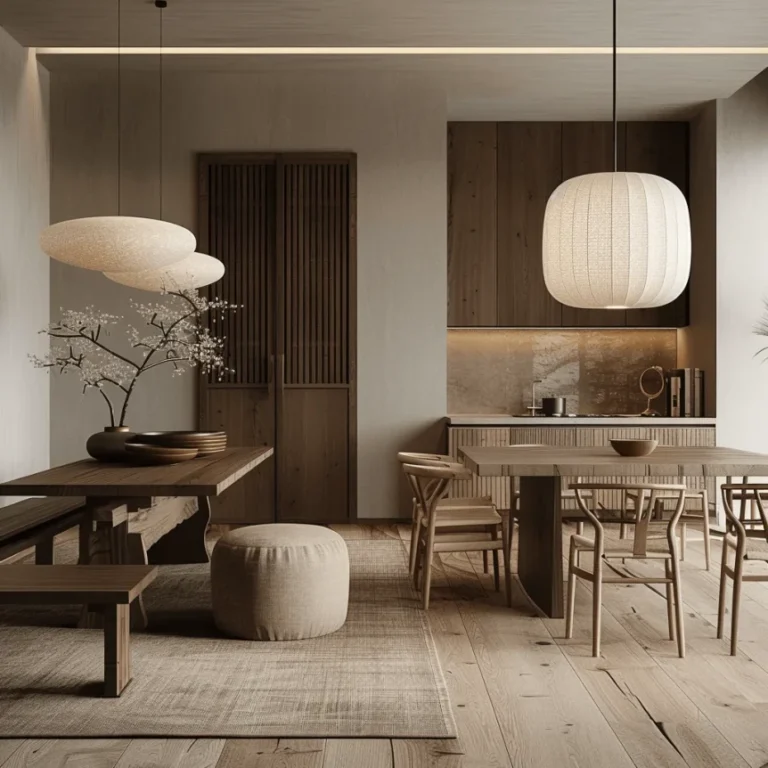
Pendant style should align with the overall kitchen aesthetic. Rattan or woven pendants suit warmer, more organic kitchens. Industrial cage or bare-bulb pendants suit raw or urban aesthetics. Minimal geometric forms in metal work well in strictly modern kitchens. Avoid over-decorative fixtures in simple kitchens since the pendant should complement the space, not compete with it.
Under-Cabinet Lighting: The Most Useful Upgrade
If there’s one lighting upgrade worth making in almost any kitchen, it’s under-cabinet lighting. It’s relatively inexpensive, straightforward to install (particularly with plug-in LED strips), and has an immediate, noticeable impact on how usable the kitchen feels.
LED Strip Lights vs. Puck Lights
LED strip lights run continuously along the underside of the cabinet and produce an even, uninterrupted wash of light across the countertop. They’re the more commonly used option for this reason. Puck lights are individual circular fixtures spaced at intervals. They’re easier to install but can create pools of light with darker areas between them if not positioned carefully.
Placement
Mount under-cabinet lights toward the front edge of the cabinet, not the back. Positioning them at the back will illuminate the backsplash more than the countertop and can create glare. Concealing the strip behind a small trim piece or lip gives a cleaner finished look, particularly in kitchens with open lower shelves where the fixture might be partially visible.
Color Temperature
Match the color temperature of under-cabinet lights to the rest of the kitchen lighting. Mismatched temperatures, warm ambient light paired with cool under-cabinet light, create an uncomfortable visual disconnect that’s difficult to ignore once noticed.
Finish Consistency: The Detail That Ties Everything Together
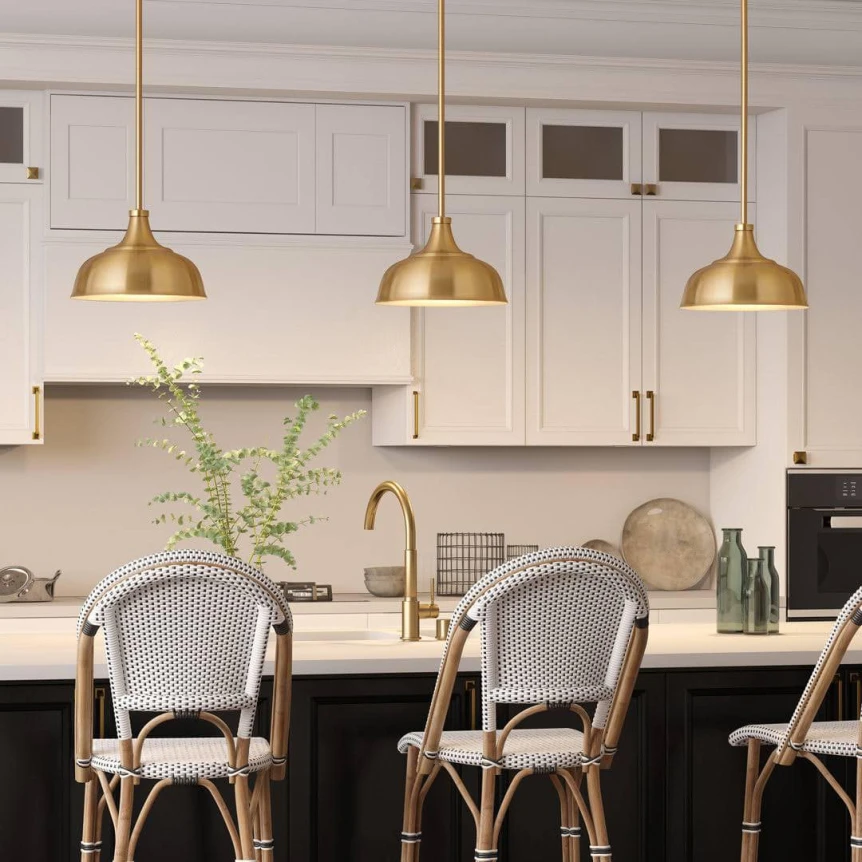
One of the most effective ways to make a kitchen’s lighting scheme feel cohesive is to keep fixture finishes consistent with the hardware and plumbing fixtures throughout the room. Mixing too many metals in a kitchen reads as unplanned rather than eclectic.
Choose one dominant finish, whether brushed brass, matte black, satin nickel, or another, and let it appear in the pendant fixtures, the faucet, and the cabinet hardware. A secondary accent finish can be introduced sparingly, but the primary finish should be consistent throughout.
In kitchens with stainless steel appliances, a brushed nickel or chrome fixture finish maintains a coherent look. In kitchens with integrated or panel-front appliances that hide the stainless, there’s more flexibility to introduce warmer metals like brass without the appliances pulling in a different direction.
Common Kitchen Lighting Mistakes
- No dimmer switches: A kitchen that can only operate at full brightness is limited. Dimmers on ambient lighting are inexpensive and make the room dramatically more livable.
- Relying on a single ceiling fixture: One central light source, however bright, creates shadows near the perimeter of the room and leaves counter surfaces underlit. Multiple sources are always better.
- Pendants hung too high: A pendant that floats too far above the island loses its visual connection to the surface. Aim for 30 to 36 inches above the countertop.
- Mismatched color temperatures: Warm and cool light sources in the same space create an incoherent feel. Choose a temperature and stick to it throughout.
- Ignoring the sink area: The sink is one of the most-used points in the kitchen. A dedicated light source here, even a single recessed light positioned directly overhead, makes a real difference.
For full context on planning your kitchen, read The Complete Guide to Modern Kitchen Design (2026). Pendant finish selection should align with your hardware choices, so see Kitchen Cabinet Styles and Colors for how to coordinate metals throughout. Lighting also affects how color reads in a room, so review our Kitchen Color Schemes guide alongside this one. For small kitchens where lighting choices have an even bigger impact on perceived space, see Small Kitchen Design Ideas. And if you’re planning open shelving, our Open Shelving in the Kitchen guide covers how interior shelf lighting can be incorporated.
Frequently Asked Questions
How many pendant lights do I need over a kitchen island?
Two pendants work well for a standard 4 to 6-foot island. Three pendants suit longer islands of 7 feet or more. One large pendant can work if the fixture is substantial enough to fill the visual space. As a rule, the combined width of your pendants should be roughly two-thirds the length of the island surface.
What color temperature is best for kitchen lighting?
A color temperature between 2700K and 3000K produces a warm white light that’s bright and functional without feeling harsh. This range is warm enough to feel comfortable for extended time in the kitchen while being cooler and brighter than typical living room or bedroom lighting. Avoid going above 4000K in the main kitchen as it produces a clinical, office-like quality that most people find uncomfortable in a home setting.
How high should pendant lights hang over a kitchen island?
The standard recommendation is 30 to 36 inches between the bottom of the pendant and the countertop surface. Lower than 30 inches becomes an obstruction for people standing at the island; higher than 36 inches starts to lose the visual connection between the fixture and the surface it’s meant to illuminate.
Is under-cabinet lighting worth it?
Yes, it’s one of the most cost-effective lighting upgrades available in a kitchen. The counter directly below upper cabinets is where most prep work happens, and it’s exactly where a ceiling light source creates shadows. Under-cabinet LEDs eliminate that problem and add a layer of warmth to the overall kitchen atmosphere. Plug-in strip light options make it easy to add without rewiring.
Do I need a licensed electrician to install kitchen lighting?
For recessed lighting, new circuits, or any work that requires running cables through the ceiling or walls, yes, a licensed electrician is the appropriate choice for safety and code compliance. For plug-in under-cabinet lights or replacing an existing fixture on an existing circuit, many homeowners handle the installation themselves. When in doubt, consult a licensed professional.
Lighting Is Worth the Investment
Good kitchen lighting is one of those elements that’s invisible when it’s done well and obvious when it’s not. A kitchen with thoughtful layered lighting, ambient overhead, task at the counter, and accent in the details, feels better to be in at every hour of the day without anyone being able to articulate exactly why.
Plan the lighting early, budget for dimmers, and resist the temptation to cut costs on fixtures you’ll look at and interact with every day. It’s a decision that pays back in daily quality of use for as long as you live in the space.
For the full kitchen planning guide, return to The Complete Guide to Modern Kitchen Design (2026).