Kitchen Countertop Materials Guide: How to Choose the Right Surface

By Tereza Hower | Published March 30, 2026
Countertops are where the kitchen gets used. They absorb spills, handle hot pans, bear the weight of stand mixers, and get wiped down multiple times a day. The right material needs to hold up to all of that while still looking good, ideally for years, not just months.
Choosing a countertop involves trade-offs. The most beautiful natural stones require the most maintenance. The most durable engineered surfaces can lack the organic character of natural materials. Budget-friendly options have improved significantly but still come with limitations. There’s no universally correct answer, only the right answer for how you cook, what you value, and what you’re willing to maintain.
This guide covers the most common countertop materials used in modern kitchens, with honest notes on what each one is actually like to live with.
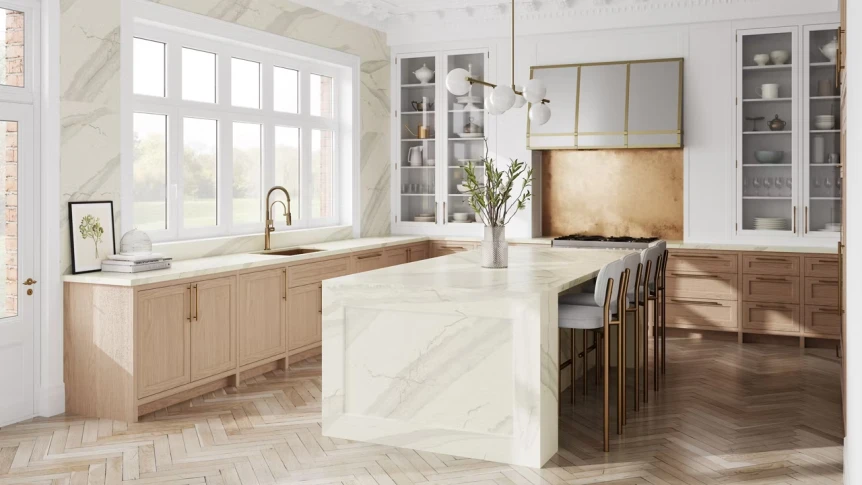
Quartz: The Practical Standard
Quartz countertops are engineered from crushed natural quartz bound with resin and pigments. The result is a non-porous, highly consistent surface that resists staining, scratching, and bacteria without sealing. It’s the most popular countertop material in modern kitchens, and the reasons are straightforward.
What Makes Quartz a Strong Choice
- Non-porous, no sealing required
- Highly stain-resistant, including to red wine, coffee, and oil
- Available in a wide range of colors, including convincing marble-look patterns
- Consistent appearance throughout with no variation between slabs
- Low maintenance: clean with mild soap and water
Limitations to Know
Quartz is not heat-resistant in the way natural stone is. Placing a very hot pan directly on the surface can cause discoloration or damage to the resin, so always use trivets. It’s also UV-sensitive, and prolonged direct sunlight can cause fading or yellowing over time, which makes it a less ideal choice for outdoor kitchen applications.
Cost and Style Range
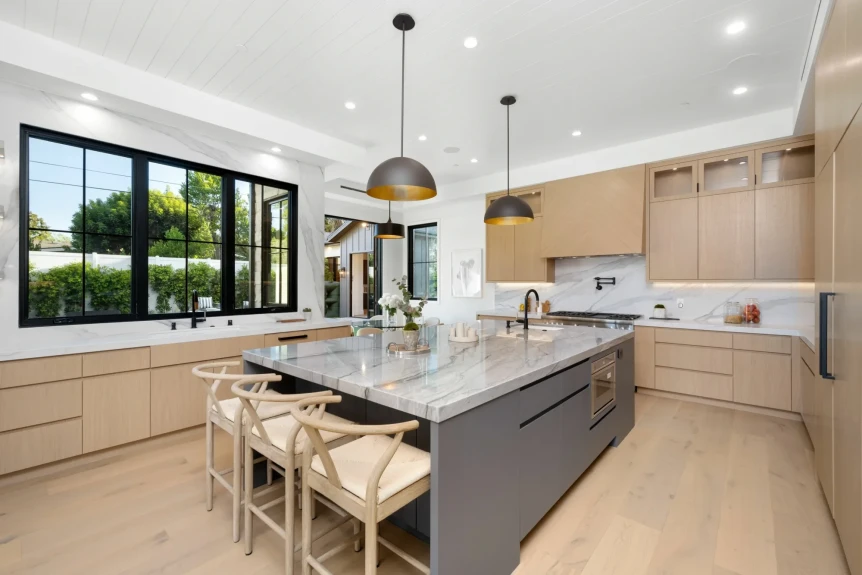
Quartz ranges from mid-range to premium depending on the brand and finish. Marble-look quartz, particularly those with soft veining in white and gray, has become one of the most searched countertop styles and is available at a range of price points.
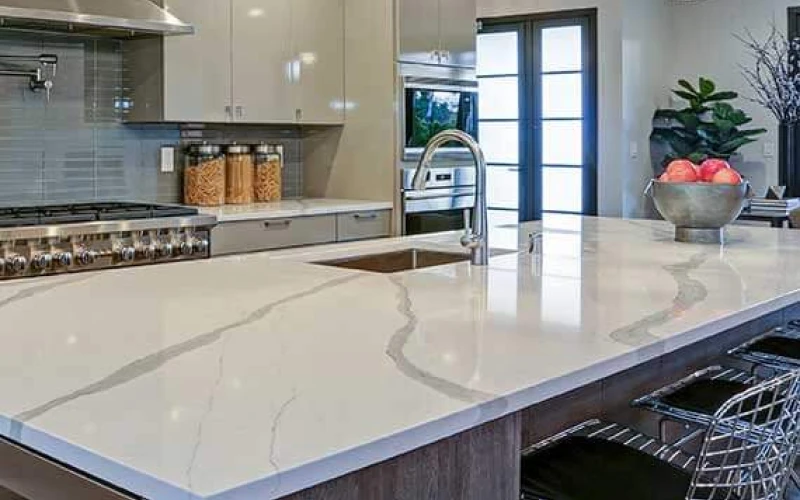
Marble: Beautiful and Demanding
Marble is the countertop that people fall in love with in showrooms and sometimes struggle with at home. It’s genuinely beautiful. The veining is organic and unrepeatable, the surface has a cool, smooth quality that no engineered material fully replicates. But it requires care that not every kitchen and not every household can realistically provide.
The Honest Case for Marble
Marble is porous and relatively soft as natural stones go. It will etch, meaning acids like lemon juice, vinegar, and wine will leave dull marks on the surface even if wiped up quickly. It will also scratch and stain if not sealed regularly. Over time, marble develops a patina that some homeowners find beautiful and others find frustrating.
If you cook heavily, have young children, or simply don’t want to think about what lands on your counter, marble is a difficult choice to recommend. If you cook occasionally, appreciate natural materials, and are willing to maintain and reseal the surface regularly, it can be a genuinely rewarding one.
Where Marble Works Best
Marble is particularly popular for kitchen islands used more for serving and prep than heavy cooking, for baking stations where the cool surface is genuinely useful for pastry work, and for smaller accent counters where the aesthetic impact is high and the daily use is lower.
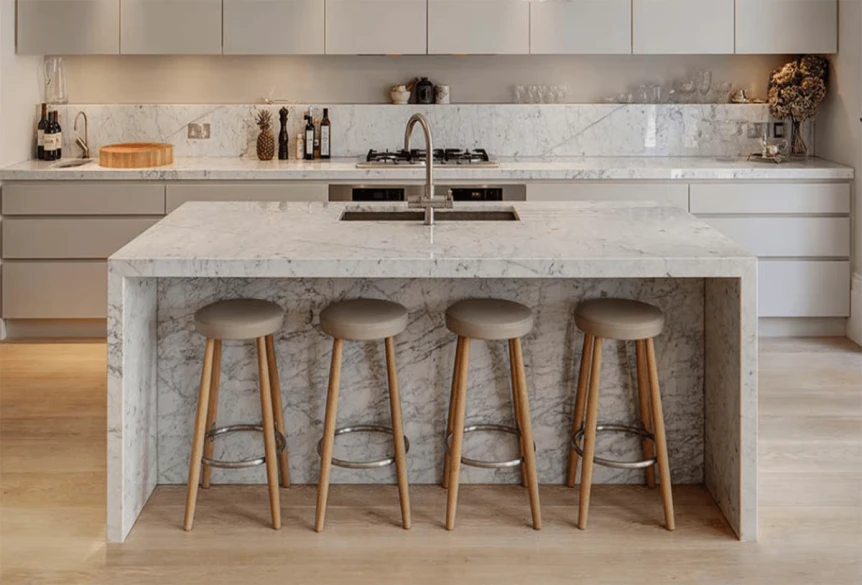
Granite: Durable Natural Stone
Granite is one of the hardest natural stones available and has been a kitchen countertop staple for decades. It’s heat-resistant, scratch-resistant, and when sealed, reasonably stain-resistant. Unlike marble, it holds up well to the demands of an active kitchen.
What Sets Granite Apart
Every granite slab is unique. The natural variation in color and pattern means your countertop will look different from anyone else’s, which appeals to homeowners who want a surface with genuine character. It comes in a wide range of colors, from soft creams and grays to dramatic blacks and deep blues, and the speckled, granular patterning of most granite suits both traditional and contemporary kitchens.
Maintenance Requirements
Granite is porous and needs to be sealed on installation and resealed periodically, typically once a year, though this varies by the density of the specific stone. An unsealed or poorly sealed granite surface can absorb stains, particularly from oil. The sealing process itself is straightforward, but it’s a maintenance step that shouldn’t be skipped.
Granite vs. Quartz
The practical case for quartz over granite comes down to maintenance: quartz requires no sealing and is more consistent in its resistance to staining. The case for granite over quartz is authenticity. The variation and depth of natural stone is something engineered surfaces approximate but don’t fully replicate.
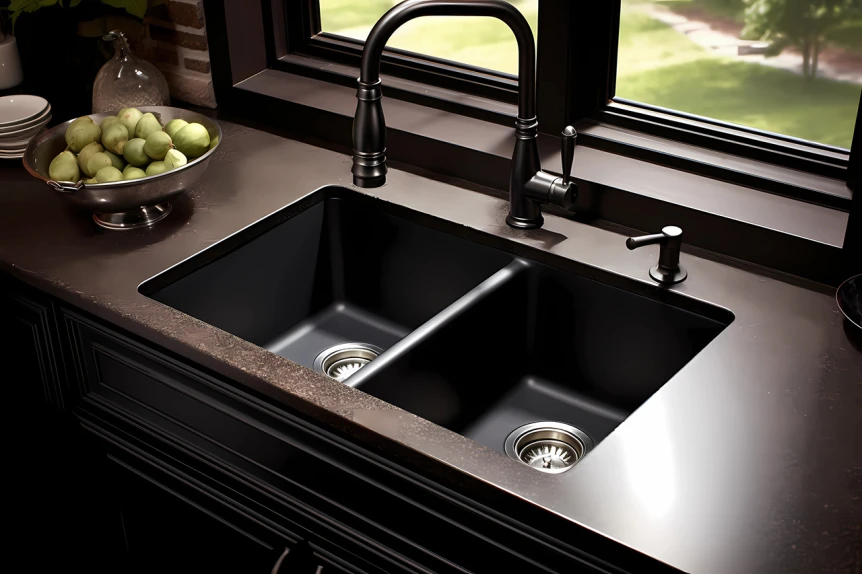
Butcher Block: Warmth and Practicality
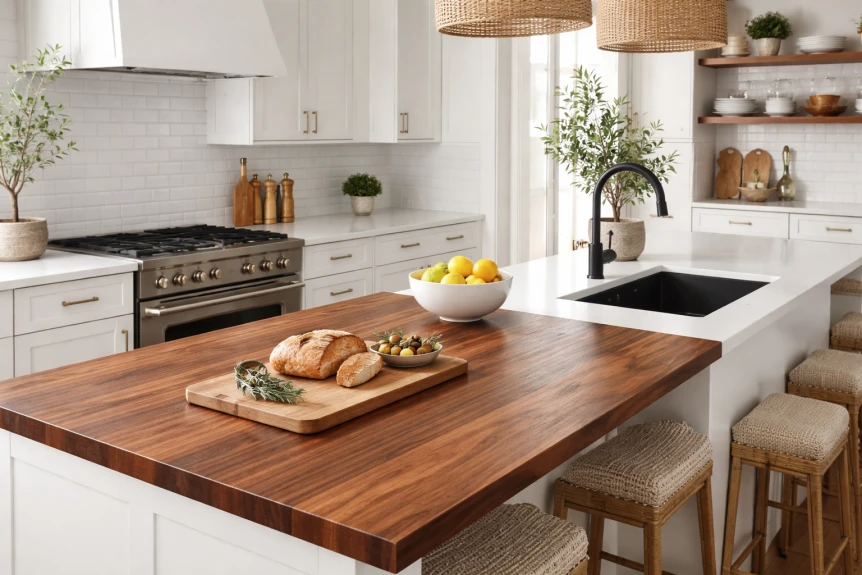
Butcher block countertops are made from strips of wood, typically maple, walnut, or oak, bonded together under pressure. They bring an organic warmth to the kitchen that stone surfaces can’t match and are genuinely useful as a prep surface. They’re also one of the more affordable countertop materials available.
Using Butcher Block Well
Butcher block works best when used selectively rather than throughout. A butcher block island or prep counter alongside stone or quartz perimeter counters is a particularly appealing combination. The contrast of materials adds visual interest while keeping the warmest, most maintenance-intensive surface away from the sink and stovetop where water and heat damage are most likely.
Maintenance Reality
Butcher block needs to be oiled regularly, typically with food-safe mineral oil, to prevent drying and cracking. It’s susceptible to water damage near sinks if not properly sealed and maintained. It will show knife marks over time, which some people view as character and others view as wear. It can be sanded and refinished, which is a genuine advantage over surfaces that can’t be restored.
Porcelain Slab: The Newer Option Worth Knowing
Large-format porcelain slabs have emerged as a serious alternative to natural stone in recent years. They’re produced in very large formats with minimal seams, are non-porous, heat-resistant, UV-stable, and available in designs that convincingly mimic marble, concrete, and other stone types at a lower cost.
Why Porcelain Is Gaining Ground
Porcelain combines many of the visual qualities people want from natural stone with the low-maintenance properties of quartz, and it’s UV-stable, which makes it one of the better options for outdoor kitchen use. The large slab format means fewer visible seams, which contributes to the clean, uninterrupted look that suits modern kitchen design well.
Considerations
Porcelain is very hard, which is an advantage for durability but means it can chip at edges and corners if impacted. Thin-format slabs in particular require careful handling during installation. It’s also worth noting that porcelain, unlike natural stone, cannot be repaired if chipped. The section needs to be replaced.
Concrete: Character for Specific Kitchens
Concrete countertops are poured and cast in place or fabricated off-site. They’re highly customizable in color, texture, and form, and suit industrial, raw, or highly individualized kitchen aesthetics. They’re also one of the more demanding options to live with.
Concrete is porous and must be sealed. It can crack over time as the material cures and the house settles. It stains if not carefully maintained, and it’s heavy, which can be a structural consideration. For the right kitchen and the right owner, the organic imperfection of concrete has a quality no other material produces. But it’s a niche choice that rewards research and realistic expectations.
Laminate: Better Than Its Reputation
Modern laminate has improved substantially from the versions that gave it a bad reputation. High-quality laminate now mimics stone and wood convincingly, is easy to clean, and is significantly more affordable than any natural or engineered stone. It’s a reasonable choice for rental renovations, budget kitchens, or secondary spaces like laundry rooms and utility areas.
Its limitations, susceptibility to heat damage, visible seams, and difficulty repairing chips, are real. But for the right context and the right budget, it’s worth considering rather than dismissing.
How to Choose: A Practical Framework
Rather than picking a material based purely on aesthetics, work through these questions first:
- How heavily do you cook? Heavy use favors quartz or granite over marble or butcher block.
- How much maintenance are you willing to do? Quartz and porcelain require the least. Marble and concrete require the most.
- What’s your budget? Laminate and butcher block are the most affordable. Marble and high-end quartz are at the premium end.
- What aesthetic are you after? Natural variation and organic character points toward stone and wood. A clean, consistent look points toward quartz or porcelain.
- Are there children in the household? Families with young children often find quartz the most forgiving choice.
For a full overview of planning your kitchen, see The Complete Guide to Modern Kitchen Design (2026). Your countertop choice will influence your color palette, so our Kitchen Color Schemes guide covers how to build a cohesive palette around your surface material. For cabinet pairings, Kitchen Cabinet Styles and Colors covers which combinations work best with different countertop materials. If you’re working in a smaller space, see Small Kitchen Design Ideas for countertop considerations specific to compact layouts. And if you’re considering an open-shelf design, our Open Shelving in the Kitchen guide discusses how the shelf material can complement your countertop choice.
Frequently Asked Questions
What is the most low-maintenance kitchen countertop material?
Quartz is the most low-maintenance option commonly used in kitchens. It’s non-porous, requires no sealing, and resists staining, scratching, and bacteria. Porcelain slab is a close second with similar properties and the added benefit of being UV-stable.
Is marble a practical choice for a family kitchen?
For most families with children or those who cook heavily, marble is a difficult choice to recommend. It etches easily from acidic foods and drinks, requires regular sealing, and shows wear more visibly than harder surfaces. If you love the look, consider a marble-effect quartz instead, or limit marble to a lower-traffic area like a butler’s pantry or baking station.
How much does a kitchen countertop cost?
Costs vary significantly by material and region. Laminate is typically the most affordable, followed by butcher block and tile. Granite and quartz fall in the mid-to-premium range. Marble, concrete, and high-end porcelain slabs tend to be at the premium end. Installation costs add to material costs in all cases, so it’s worth getting multiple quotes.
Can you put hot pans directly on quartz countertops?
No. Quartz contains resin, which can discolor or crack under extreme heat. Always use a trivet or hot pad between a hot pan and a quartz surface. Natural stones like granite are more heat-tolerant, though using trivets is still a good practice regardless of material.
What countertop material looks most like marble but requires less maintenance?
High-quality marble-look quartz is the most convincing alternative. Porcelain slab in a marble-look finish is also strong. It’s non-porous, UV-stable, and available in large formats with minimal seaming that helps replicate the look of a genuine slab. Both require far less maintenance than real marble.
Making the Decision
The best countertop is the one you’ll still be happy with in five years, not just the one that looked best in the showroom. Prioritize durability and maintenance fit first, then use the remaining options to find the material that suits your aesthetic.
If you’re genuinely torn between two materials, request samples and live with them in your kitchen for a few days. See how they look in your actual light, with your actual cabinets. The decision tends to become clearer when the material is in context rather than on a showroom floor.
For the full kitchen planning roadmap, return to The Complete Guide to Modern Kitchen Design (2026).