Kitchen Cabinet Styles and Colors: How to Choose the Right Look

By Tereza Hower | Published March 26, 2026 | Updated April 1, 2026
Cabinets cover more surface area than any other element in a kitchen. They set the tone before a countertop is chosen or a light fixture is hung. Getting them right, both the style and the color, is the single most impactful decision in a kitchen design.
The good news is that modern cabinet design has become more versatile, not less. There are strong options at every price point, and the range of colors and finishes has expanded well beyond the white-or-wood binary that dominated kitchens for decades.
This guide walks through the main cabinet door styles, how to approach color, and how to think about two-tone kitchens, one of the most effective contemporary approaches available.
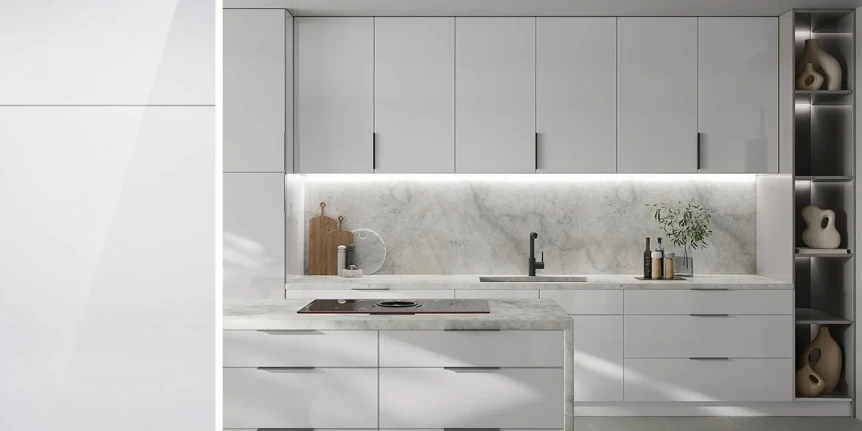
Cabinet Door Styles: The Main Options
The door style determines the overall visual character of the kitchen more than almost anything else. For modern and contemporary kitchens, the field narrows quickly to a handful of strong choices.
Flat-Front (Slab) Cabinets
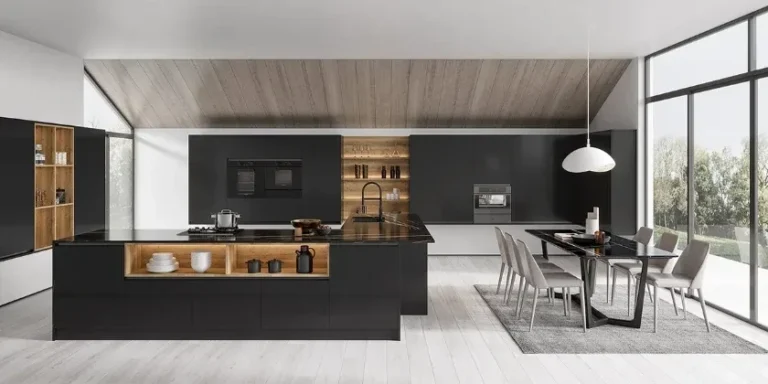
Flat-front doors have no frame and no detailing, just a single, uninterrupted panel. They’re the cleanest, most contemporary option available and work especially well in kitchens that lean minimal or architectural. Because there’s no ornamentation to distract the eye, material quality and installation precision matter more here than with any other style.
Flat-front cabinets pair naturally with integrated handles or push-to-open mechanisms, which push the minimal aesthetic further. If you want hardware, keep it simple: a thin bar pull or a recessed edge detail.
Shaker Cabinets
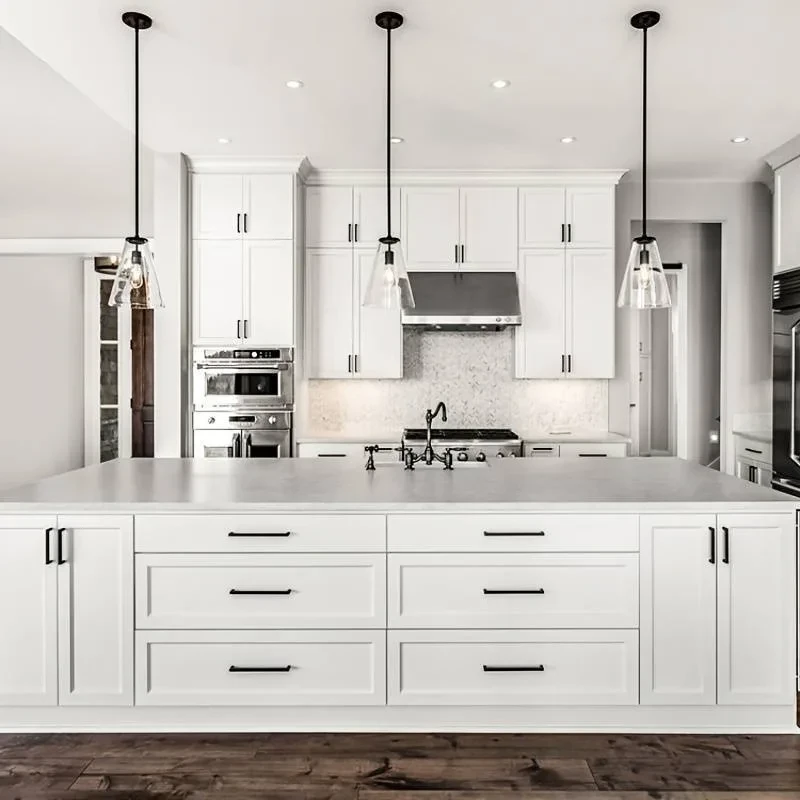
The shaker style features a recessed center panel with a flat frame around it. It originated in 19th-century American furniture design and has remained one of the most popular cabinet styles ever since, and for good reason. It’s versatile enough to work in both traditional and contemporary kitchens, depending on the finish and hardware chosen.
Painted shaker cabinets in a modern color with simple hardware read as clean and current. The same shaker door in a natural wood finish with bin pulls reads more farmhouse or transitional. The style itself is neutral; the finish and context do the stylistic work.
Beaded Inset Cabinets
A more traditional choice where the door sits inside the frame rather than over it. The result is a furniture-like quality with visible gaps around each door. This style suits more classic or transitional kitchens and is less common in strictly modern designs, but it can work in contemporary spaces that want a sense of craftsmanship and history.
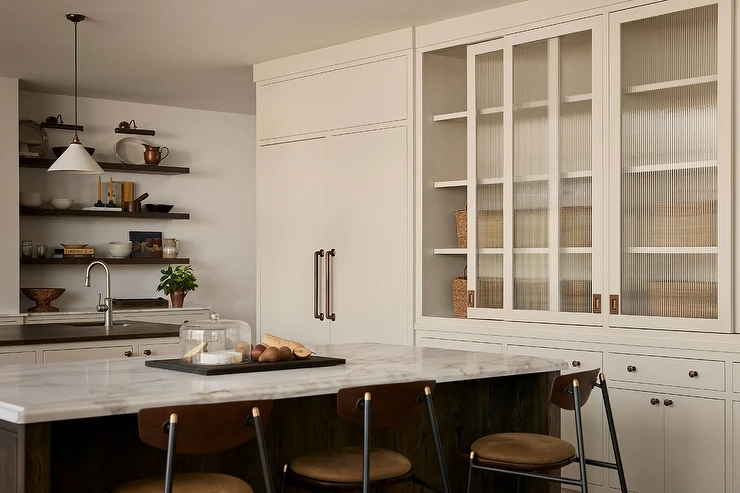
Glass-Front Cabinets
Glass inserts, whether clear, reeded, or frosted, are typically used for one or two upper cabinet sections rather than throughout. They add lightness and visual interest, break up a long run of solid cabinet fronts, and create a natural display opportunity for dishware or glassware. Reeded glass in particular has become a popular contemporary choice for the texture it adds without the full transparency of clear glass.
Cabinet Colors: How to Build a Palette
Color choice is where most people feel the most uncertainty. The range of available options is wider than ever, which makes the decision feel harder than it needs to be. A few principles help narrow it down.
White and Off-White
White cabinets remain the most widely installed color for a reason: they reflect light, make spaces feel larger, and work with almost any countertop or flooring combination. They’re also the safest choice for resale value. The key decision within white is the undertone. A cool, bright white reads differently from a warm cream or an off-white with a gray or yellow base. Test samples in your specific lighting before committing.
Greige and Warm Neutrals
Greige (a blend of gray and beige) has become one of the most popular cabinet colors in contemporary kitchens because it reads warmer than white or cool gray while remaining neutral enough to work with a wide range of countertop and flooring materials. Warm taupe and linen tones fall into the same family and are worth considering if you want a neutral kitchen that doesn’t feel stark.
Navy and Deep Blues
Deep navy has established itself as the most popular bold cabinet color, and it’s not hard to see why. It reads as sophisticated and grounded, photographs beautifully, and pairs well with brass or gold hardware. It works best on lower cabinets or islands where the darker tone feels anchoring rather than heavy.
Forest Green and Sage
Green cabinets have moved from trend to genuine design staple. Deep forest greens suit kitchens with good natural light and complement stone countertops and brass fixtures particularly well. Softer sage greens are more forgiving in lower-light spaces and pair well with natural wood elements.
Charcoal and Near-Black
Dark charcoal or near-black cabinets create a dramatic, high-contrast kitchen when paired with light countertops and walls. They require confident commitment since this isn’t a color that recedes, but in the right space they produce a result that feels considered and distinctive.
Natural Wood
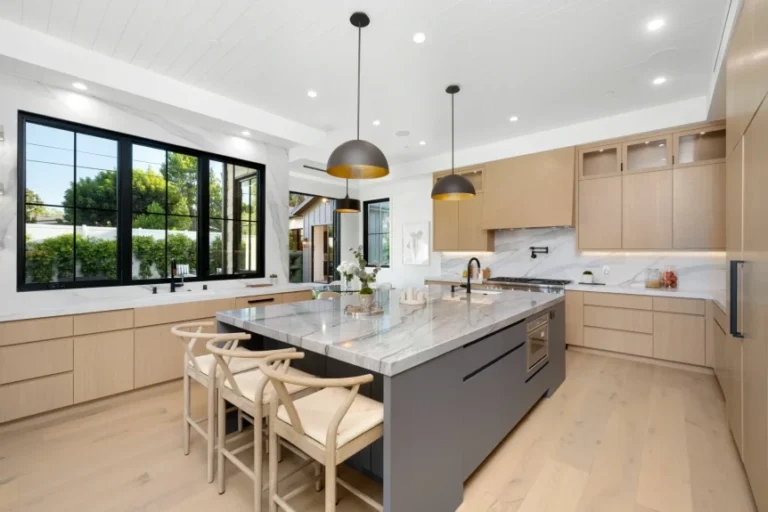
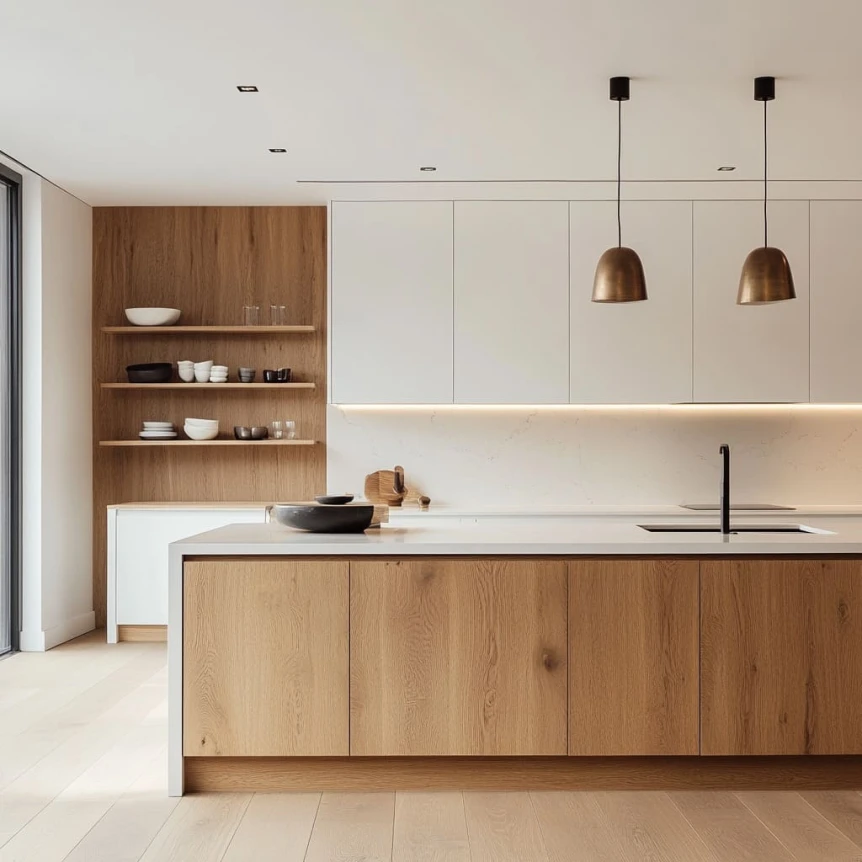
Warm wood tones, oak, walnut, and maple in particular, have seen a strong resurgence in contemporary kitchen design, often used alongside painted cabinets rather than throughout. A natural wood island base with white or greige perimeter cabinets is one of the most appealing combinations in modern kitchen design right now.
Two-Tone Kitchens: The Case for Mixing
A two-tone kitchen uses one color or finish for the upper cabinets and a different one for the lower cabinets. It’s one of the most effective ways to add visual depth without committing to a bold color throughout, and it tends to look more intentional than a single-color kitchen when done well.
How to Approach a Two-Tone Scheme
The most successful two-tone combinations follow a simple logic: lighter on top, darker on the bottom. This mirrors the way we naturally perceive weight and balance. Darker tones feel grounding when they’re lower, and the eye reads the combination as stable and deliberate.
Strong two-tone combinations for modern kitchens:
- White uppers with navy or forest green lowers
- Off-white uppers with warm oak or walnut lowers
- Light gray uppers with charcoal lowers
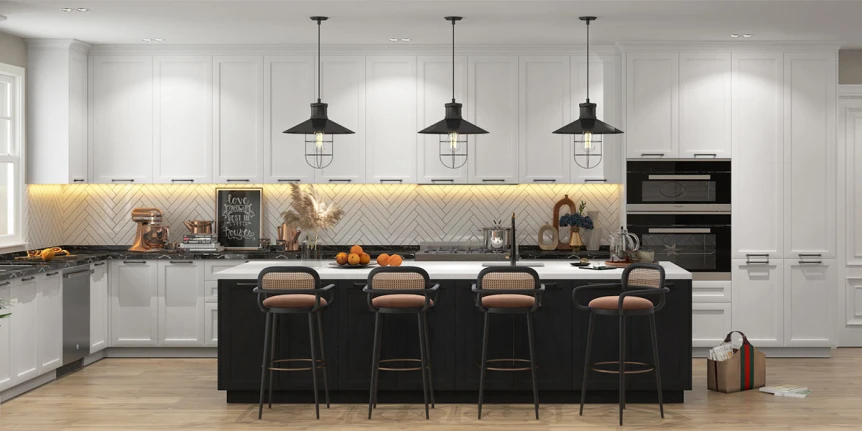
- White uppers with black island base
- Greige uppers with deep green or slate lowers
The Island as a Third Element
In kitchens with an island, the island base is often treated as a separate design element, a third color or finish that anchors the space. This is a natural opportunity to introduce a contrasting wood tone or a bolder color without affecting the main cabinet run.
Hardware: The Detail That Ties It Together
Cabinet hardware is the jewelry of the kitchen. It’s a small detail with an outsized visual impact, and it’s one of the most cost-effective ways to update an existing kitchen without replacing the cabinets themselves.
Finish Options
- Brushed brass or unlacquered brass: Warm, sophisticated, and currently one of the most popular choices in contemporary kitchens. Pairs well with warm neutrals, greens, and natural wood.
- Matte black: Strong and graphic. Works particularly well in contrast-led kitchens with white or light cabinets.
- Satin or brushed nickel: A safe, versatile choice that suits cool-toned kitchens and stainless appliances.
- Polished chrome: More traditional and reflective. Less common in modern kitchens but can work in high-gloss, minimal schemes.
Handle Styles
Bar pulls are the most commonly used handle in modern kitchens. They’re clean, functional, and available in every finish. Cup pulls suit more relaxed or transitional styles. For a truly minimal kitchen, integrated finger pulls or push-to-open mechanisms eliminate hardware entirely and keep the cabinet face uninterrupted.
Whichever style you choose, consistency matters. Pick one dominant finish and use it throughout: on cabinet hardware, the faucet, and light fixtures. A secondary accent finish is fine, but keep it minor.
A Few Practical Considerations
Material Quality
Cabinet boxes are typically made from plywood or particleboard. Plywood is significantly more durable. It holds screws better, resists moisture more effectively, and doesn’t sag over time under heavy loads. If budget allows, plywood construction is worth the premium, particularly for lower cabinets and any cabinets near the sink.
Soft-Close Hardware
Soft-close hinges and drawer slides are a small upgrade that makes a meaningful difference in daily use. Doors and drawers close quietly and without slamming. Most cabinet manufacturers include this as standard now, but it’s worth confirming before ordering.
Paint vs. Factory Finish
Factory-sprayed cabinet finishes are more durable than paint applied on-site. If you’re ordering new cabinets, a factory finish is the better choice. If you’re painting existing cabinets, use a high-quality cabinet-specific paint and apply it with a sprayer or a fine-finish roller for the smoothest result.
For more on planning your full kitchen design, read The Complete Guide to Modern Kitchen Design (2026).
Once you’ve settled on cabinets, the next major decision is your countertop surface. See our Kitchen Countertop Materials Guide for a full comparison of options. For color direction, our Kitchen Color Schemes guide covers how to build a palette around your cabinet choice. If you’re working with a compact space, Small Kitchen Design Ideas has specific advice on cabinet choices for tighter layouts. And for the full finishing picture, Kitchen Lighting Ideas covers how fixture finishes should align with your hardware choices.
Frequently Asked Questions
What is the most popular kitchen cabinet style right now?
Shaker cabinets remain the most widely used style overall due to their versatility. For strictly modern or contemporary kitchens, flat-front slab cabinets are the top choice. They offer the cleanest look and work well with both integrated hardware and simple bar pulls.
What kitchen cabinet color has the best resale value?
White and off-white cabinets consistently perform best for resale because they appeal to the widest range of buyers. If you want a bolder color, using it only on the island or lower cabinets while keeping upper cabinets neutral is a good compromise between personal expression and broad appeal.
How do I choose between flat-front and shaker cabinets?
If your kitchen leans strictly modern or minimal, flat-front cabinets are the cleaner choice. If you want something more versatile that works across a range of styles, or if you’re concerned about the precision required for flat-front installation to look its best, shaker is the safer option without being a compromise.
Can I paint my existing kitchen cabinets instead of replacing them?
Yes, and it can be a very effective update if done properly. The key is thorough preparation: clean, sand, and prime the surfaces before painting, and use a cabinet-specific paint for durability. A sprayer or fine-finish roller will give a much smoother result than a standard brush. The finish won’t be quite as hard-wearing as a factory finish, but it can last many years with reasonable care.
What hardware finish works best with white cabinets?
Brushed brass, matte black, and satin nickel all work well with white cabinets. Matte black creates the most graphic, high-contrast look. Brushed brass adds warmth. Satin nickel is the most neutral and pairs well with stainless appliances. The best choice depends on the overall tone of the kitchen: warmer rooms suit brass, cooler rooms suit nickel or black.
The Bottom Line
Cabinet style and color are decisions you’ll live with for a long time, so it’s worth thinking them through carefully. Start with the door style since it sets the visual tone for everything else. Then choose your color based on the light in your kitchen, the countertop and flooring you’re working with, and how bold you’re willing to go.
When in doubt, a shaker door in a warm neutral with simple hardware is a combination that almost never fails. From there, every other element in the kitchen has a solid foundation to build on.
For the full picture on planning your kitchen, head back to The Complete Guide to Modern Kitchen Design (2026).