Japandi Furniture Guide: Clean Lines and Natural Materials

By Tereza Hower | Published April 4, 2026 | Updated April 6, 2026
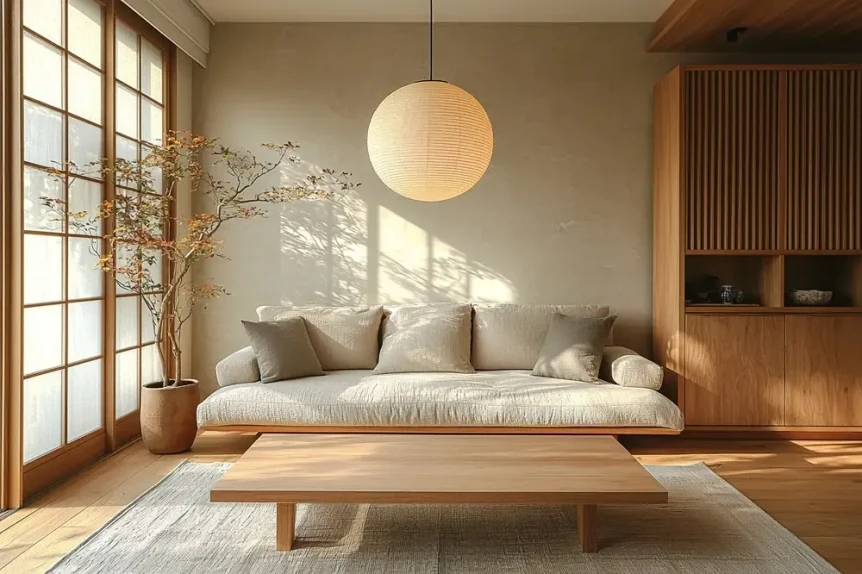
Japandi furniture is where the two halves of this hybrid style become most visible. The Japanese influence shows up in low profiles, clean geometry, and a respect for natural wood. The Scandinavian influence appears in ergonomic comfort, functional design, and a warmth that prevents the clean lines from feeling severe.
This guide covers the essential furniture pieces for a Japandi home, the materials and forms that define the style, and practical advice on sourcing pieces that balance quality with budget.
What Makes Furniture Japandi
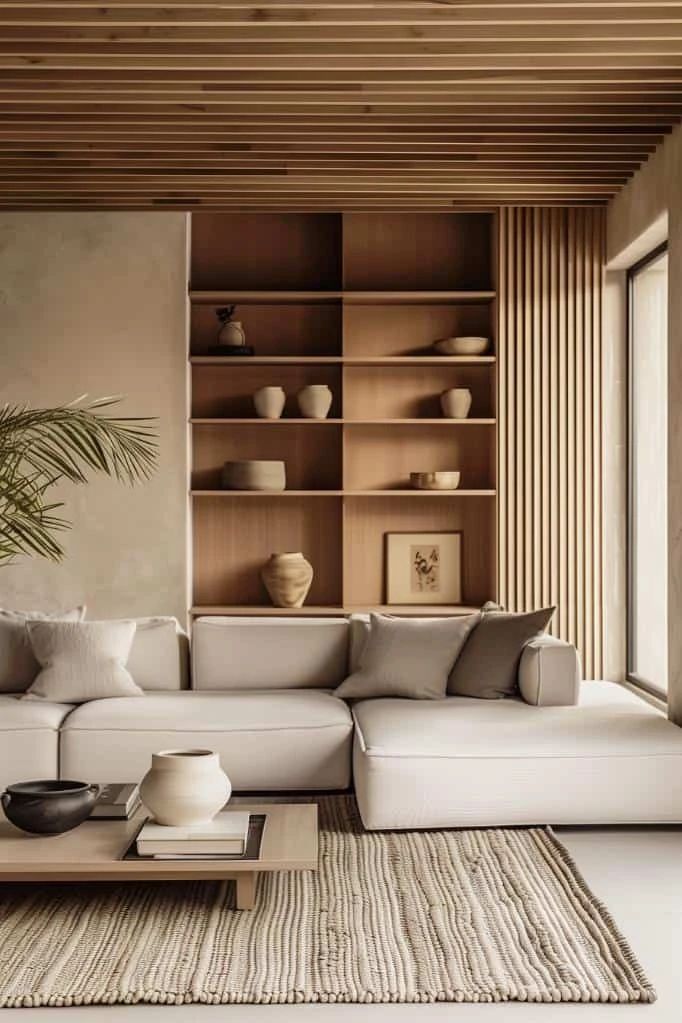
Japandi furniture shares several consistent characteristics across all room types. Lines are clean and geometric but softened by natural materials and organic touches. Profiles tend to be low, reflecting the Japanese tradition of living closer to the ground. Construction emphasizes craftsmanship, with visible joinery, solid wood frames, and honest finishes that let the material speak for itself.
The Scandinavian contribution ensures that comfort isn’t sacrificed for aesthetics. Seats are properly cushioned. Tables are at usable heights. Storage is functional and accessible. The result is furniture that looks serene and actually works for everyday life.
For the broader design philosophy that guides these choices, see our complete guide to Japandi interior design.
Essential Pieces for the Living Room
The Sofa
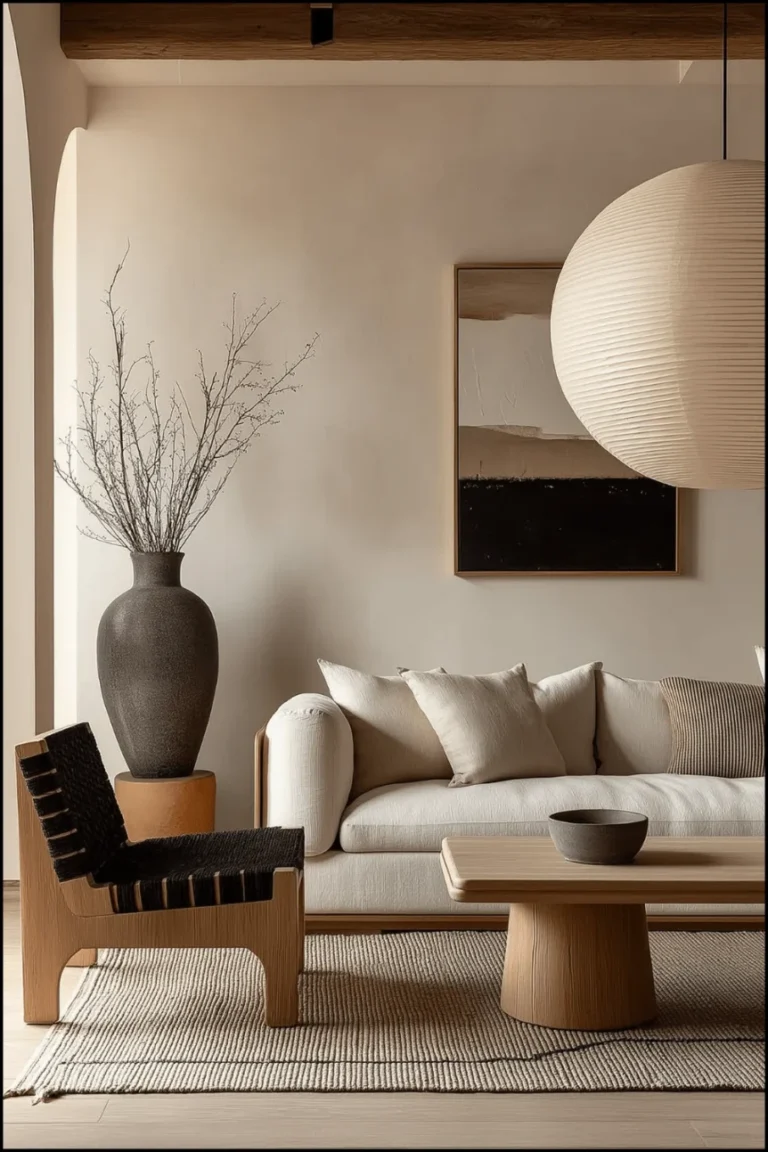
Look for a sofa with a low, clean profile and slim legs in natural wood. Upholstery should be in a natural fabric like linen or cotton, in warm neutrals such as soft gray, warm beige, or charcoal. Avoid tufting, rolled arms, and decorative details. The beauty of a Japandi sofa comes from its proportions and the quality of its materials.
The Coffee Table
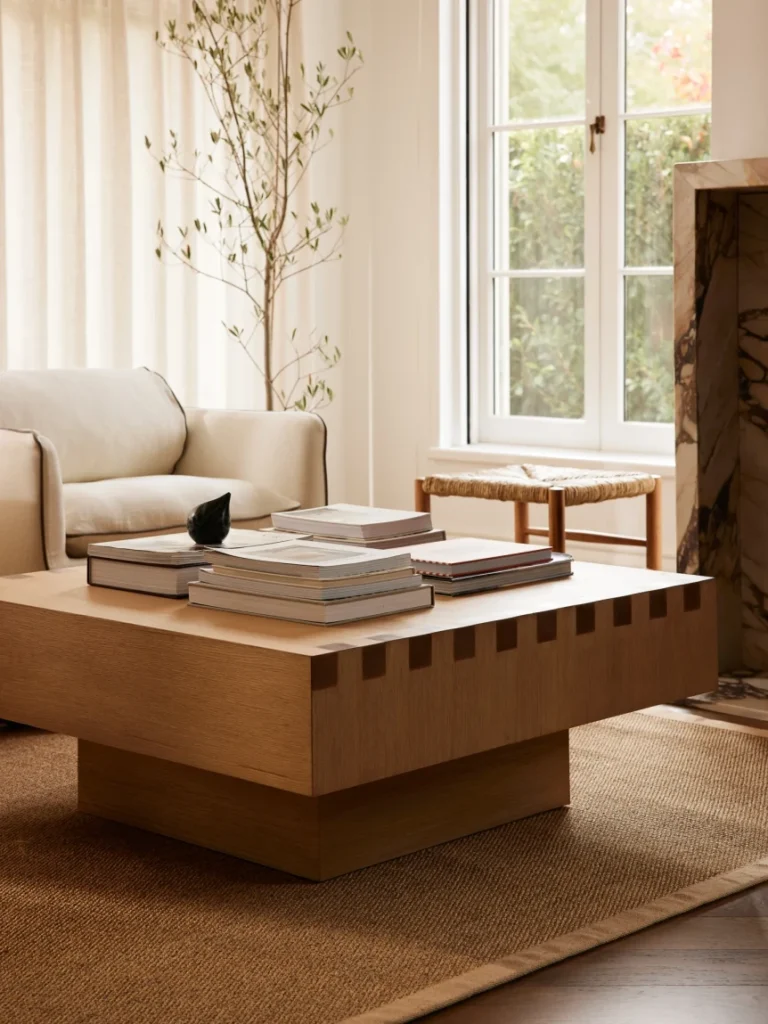
A natural wood coffee table is the centerpiece of a Japandi living room. Round or oval shapes soften the room and add organic flow. Rectangular tables with rounded edges work equally well. The finish should be matte or natural, allowing the wood grain to show through. Popular wood choices include oak, walnut, ash, and teak.
Accent Chairs
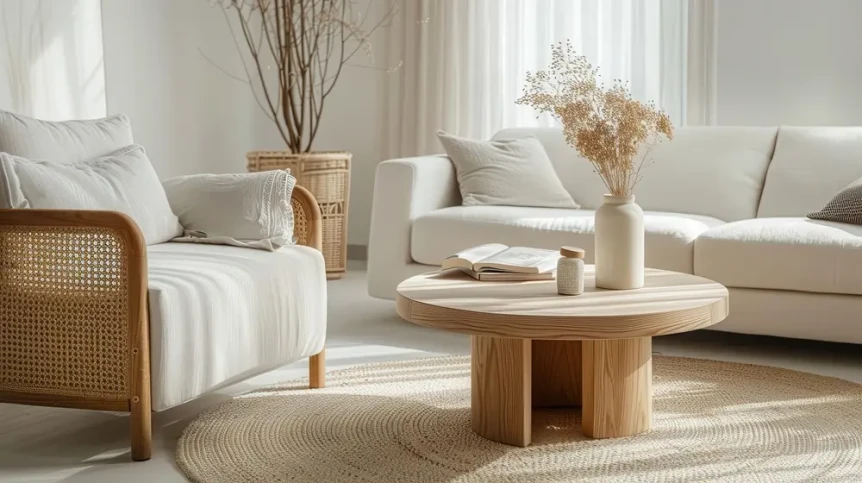
A simple wooden armchair with a linen cushion is the most classic Japandi accent chair. Rattan chairs bring a lighter, more organic quality. Whatever you choose, the chair should feel like it belongs in the room without demanding attention. Clean lines and natural materials are the common thread.
Media Storage
A low wooden credenza or media console with clean lines and minimal hardware keeps electronics and media organized without visual clutter. Look for pieces with closed storage to hide cables and devices, plus a flat top surface for one or two styled objects.

Essential Pieces for the Bedroom
The Bed Frame
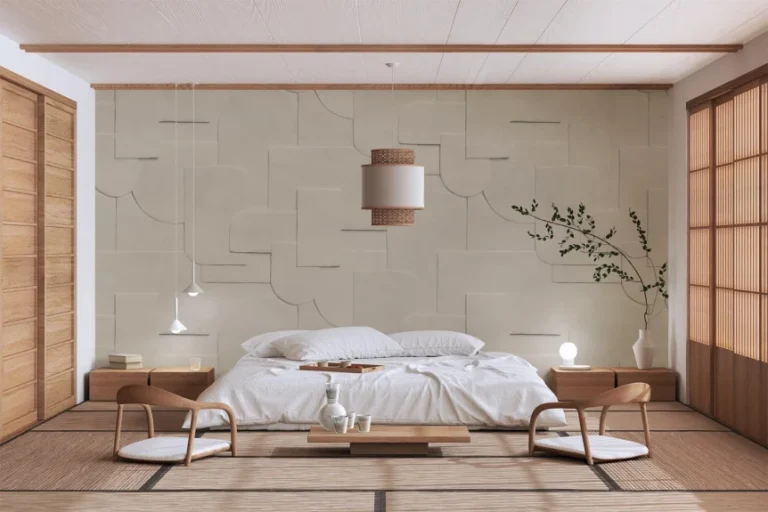
A low platform bed in natural wood is the defining piece of a Japandi bedroom. The frame should have clean lines and a visible wood grain. Headboards are either simple flat panels, slim upholstered pads in linen, or absent entirely. Walnut and oak are the most popular choices for their warm, rich tones. For a more detailed look at bedroom design, see our Japandi bedroom ideas guide.
Nightstands
Small, simple, and functional. A wooden nightstand with one drawer, a wall mounted shelf, or a slim wooden stool all serve the purpose without taking up excess visual or physical space.
Dressers and Wardrobes
Storage furniture in the bedroom should be clean fronted with minimal hardware. Wooden dressers with push to open drawers or simple wooden pulls maintain the uncluttered aesthetic. For wardrobes, solid doors in a finish that matches the bed frame create a cohesive look.

Essential Pieces for Dining
The Dining Table
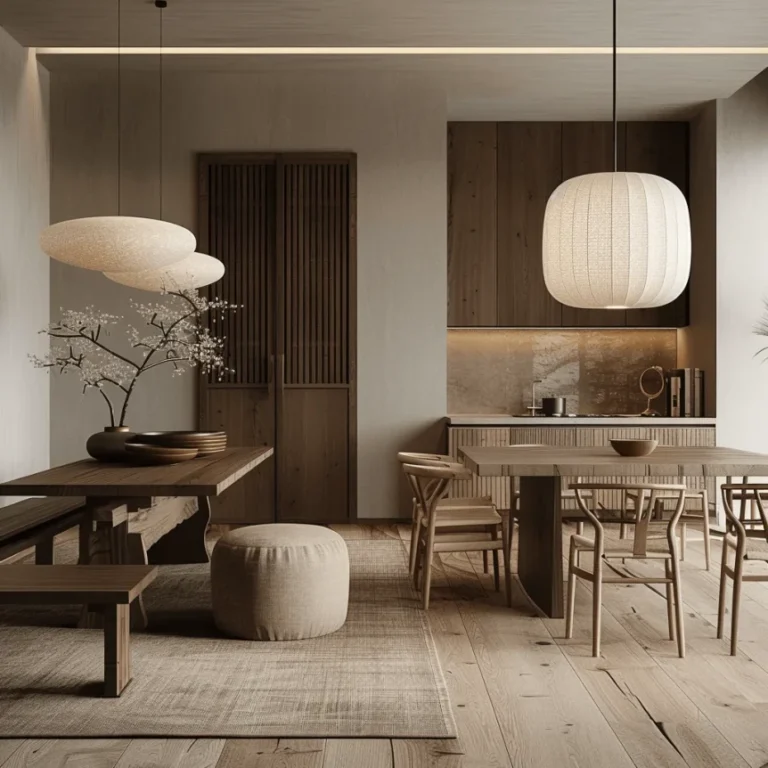
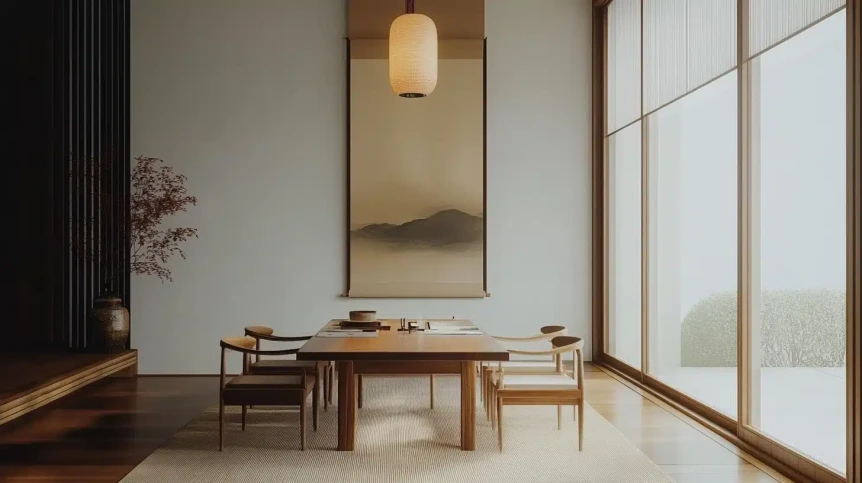
A solid wood dining table is often the single most important furniture purchase in a Japandi home. Look for quality construction and a natural finish that will age well. Rectangular tables with gently rounded corners are the most common Japandi shape, but round tables work beautifully in smaller spaces. For dining specific ideas, check out our guide to Japandi kitchen and dining room ideas.
Dining Chairs
Wooden dining chairs with simple, modern lines are the standard Japandi choice. Danish style chairs with curved backs and woven seats are a natural fit, bridging the Scandinavian and Japanese influences. Upholstered seats in neutral linen or leather add comfort for longer meals. Consistency matters here: matching or closely related chairs around the table reinforce the sense of order.
Materials and Construction
Solid Wood
Solid wood is the primary material in Japandi furniture. Oak, walnut, ash, teak, and maple are the most common choices. Each offers a different tone and grain pattern. Light woods like ash and maple lean Scandinavian. Darker woods like walnut and teak lean Japanese. Many Japandi rooms combine both, using light wood for larger pieces and dark wood for accents, or the reverse.
Natural Finishes
Matte, oil, or wax finishes that protect the wood while preserving its natural appearance are preferred over glossy lacquers or heavy stains. The point is to see and feel the wood itself, not a layer of chemical finish on top of it.
Joinery and Craftsmanship
Visible joinery, where you can see how the wood pieces connect, is a feature in Japandi furniture rather than something to hide. Dovetail joints, mortise and tenon construction, and hand finished edges signal quality and connect to the Japanese tradition of masterful woodworking.
Rattan, Cane, and Bamboo
These materials appear in accent chairs, headboards, light fixtures, and storage pieces. They add lightness and texture that complement heavier wood furniture. A rattan accent chair paired with a solid walnut coffee table is a classic Japandi combination.
Where to Source Japandi Furniture
Mid Range Retailers
Several mainstream furniture brands now offer Japandi inspired collections with clean lines and natural wood at accessible prices. These pieces may not have the handcrafted quality of higher end options, but they provide a solid foundation that can be complemented with more unique accent pieces.
Independent Makers and Artisans
Independent furniture makers, particularly those specializing in solid wood construction and Japanese joinery techniques, offer the highest quality Japandi furniture. These pieces are investments, but they’re built to last decades and carry the handmade authenticity that the style values.
Vintage and Secondhand
Mid century Scandinavian furniture and vintage Japanese pieces are natural fits for Japandi interiors. Danish chairs, teak sideboards, and simple wooden benches from the mid 20th century align perfectly with Japandi aesthetics. Secondhand shopping also supports the sustainability values that both design traditions share.
What to Prioritize
If your budget is limited, invest in the pieces you use most and see most. The sofa, the dining table, and the bed frame are worth spending more on. Nightstands, shelving, and accent pieces can come from more affordable sources without compromising the overall look. For color coordination across your furniture choices, see our Japandi color palettes guide.
Arrangement and Space
Japandi furniture arrangement respects the principle of ma, or meaningful negative space. Don’t push all furniture against the walls. Leave generous clearance between pieces. Allow the floor to remain visible. The space around the furniture is an active part of the design, not wasted area waiting to be filled.
Symmetry and balance are valued more in Japandi than in eclectic styles. Matching nightstands, evenly spaced dining chairs, and centered focal pieces contribute to the orderly calm that the style creates.
Conclusion
Japandi furniture is about choosing well rather than choosing much. Each piece should earn its place through honest materials, thoughtful construction, and genuine usefulness. The fewer pieces you own, the more each one matters, and the more your room feels like a deliberate, considered space rather than a collection of random purchases.
Take your time sourcing pieces. Mix vintage with new. Prioritize natural materials and visible craftsmanship. And remember that the empty space between your furniture is just as important as the furniture itself.
For the full scope of Japandi design, from color and decor to room by room strategies, visit our complete guide to Japandi interior design.
Frequently Asked Questions
What type of wood is best for Japandi furniture?
Oak, walnut, ash, teak, and maple are all excellent choices. Light woods like ash and maple bring Scandinavian warmth, while darker woods like walnut and teak add Japanese depth. Many Japandi rooms combine both for contrast and balance. Natural, matte finishes that show the grain are preferred over heavy stains or glossy lacquers.
Does Japandi furniture have to be expensive?
Not necessarily. While Japandi values quality craftsmanship, you can build a Japandi room at various price points. Invest more in high use pieces like the sofa, bed frame, and dining table. Source accent furniture, nightstands, and shelving from more affordable retailers or secondhand. Vintage mid century pieces are often perfect for Japandi and can be found at reasonable prices.
Can mid century modern furniture work in a Japandi room?
Yes. Mid century Scandinavian furniture in particular fits Japandi interiors beautifully. Danish chairs, teak sideboards, and wooden tables from this era share the same values of clean lines, natural materials, and functional design. Look for pieces with warm wood tones and minimal ornamentation.
How many pieces of furniture should a Japandi room have?
There’s no fixed number, but the guiding principle is fewer, better pieces. Each item should serve a clear function and have enough space around it to breathe. A Japandi living room might have just a sofa, coffee table, one accent chair, and a storage piece. The negative space between furniture is an intentional part of the design.