How to Style a Living Room on a Budget: Our Favorite Target Finds for Every Aesthetic

By Tereza Hower | Published February 24, 2026 | Updated March 24, 2026
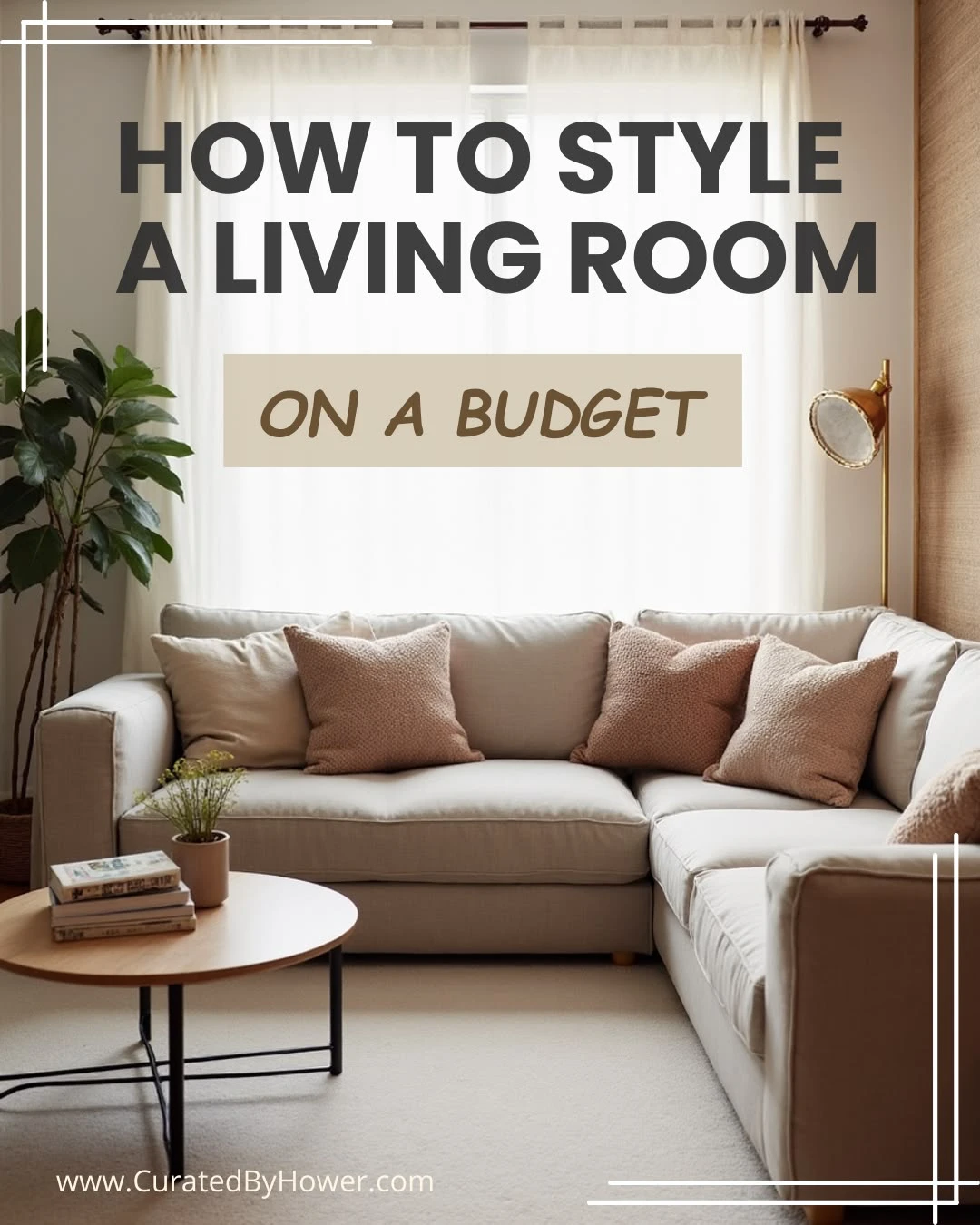
Styling a living room that looks genuinely put-together does not require a designer budget or a furniture delivery that takes three months to arrive. What it requires is intention — knowing which pieces to prioritize, how to layer them, and where to shop smartly. Target has become one of the most underrated destinations for exactly this, with in-house brands like Threshold designed with Studio McGee and Opalhouse designed with Jungalow consistently delivering designer-quality aesthetics at prices that actually make sense.
This guide breaks down how to style your living room from the ground up for four of the most popular aesthetics right now — Organic Modern, Bohemian, Minimalist, and Cozy/Maximalist — with specific Target product picks for each. Whether you are starting fresh or just looking to refresh a room that never quite came together, this is your roadmap.
Start Here: The Layering Formula That Works for Every Aesthetic
Before we get into the aesthetic-specific picks, there is a framework that professional interior designers use across every style — and once you understand it, you can apply it no matter what your taste is.
Every well-styled living room has these six layers working together: a rug (the foundation), seating (the anchor), lighting (the atmosphere), window treatments (the frame), textiles (the texture), and one or two statement accents (the personality). Miss any of these and the room feels incomplete, no matter how nice the individual pieces are. The goal of this guide is to show you exactly which Target pieces fill each layer for each aesthetic, so you can shop with intention rather than guessing.
The Organic Modern Living Room
Organic modern is the aesthetic that has dominated interior design for the past several years — and it shows no signs of slowing down. Think warm neutrals, natural materials like jute, wood, and linen, sculptural shapes, and a deliberate absence of clutter. It is sophisticated without being cold, and relaxed without feeling unfinished.
The Foundation: Rug
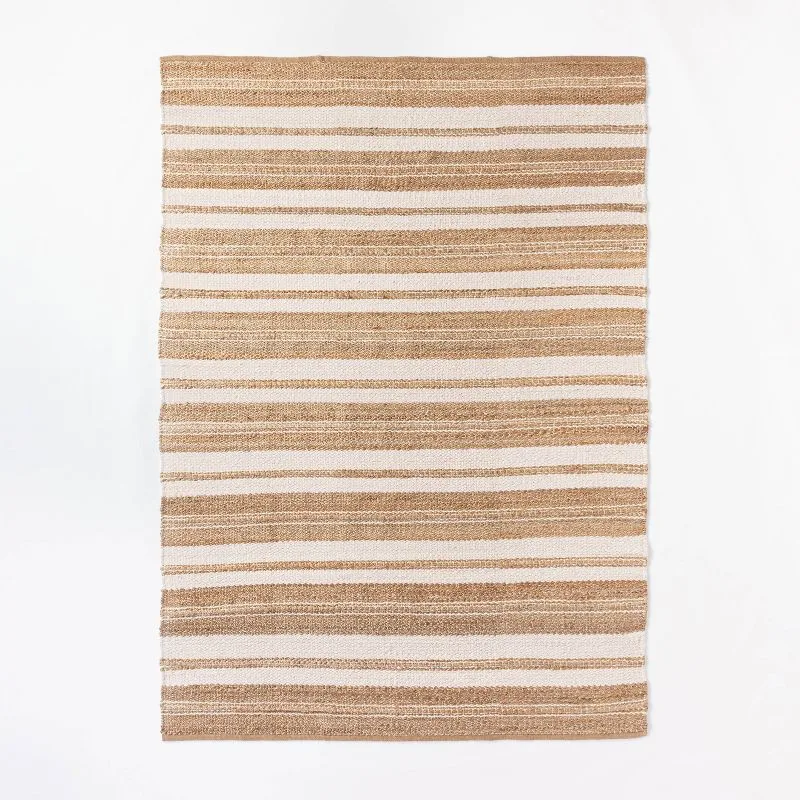
The rug sets the entire tone for an organic modern room. You want natural fibers or something that mimics them — jute, wool blends, or low-pile textures in warm neutral tones.
The Riverton Striped Jute/Wool Area Rug from Threshold designed with Studio McGee is the ideal anchor for this look. The jute and wool blend in a warm tan stripe adds natural texture without any visual noise. It looks like something you would find in a boutique hotel lobby, but it costs a fraction of the price. Go with at least a 7’x10′ to properly anchor your seating arrangement.
Riverton Striped Jute/Wool Area Rug Tan – Threshold™ designed with Studio McGee
The Anchor: Seating Accent
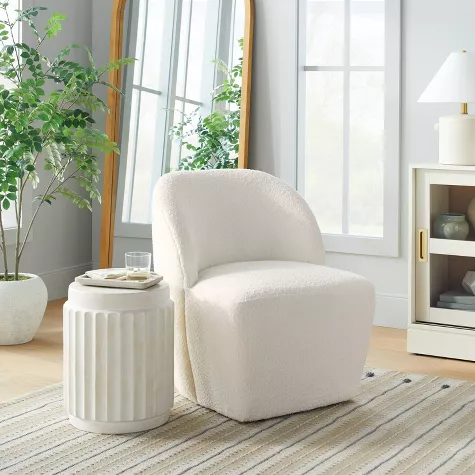
The Pasadena Swivel Accent Chair in Cream Boucle from Threshold designed with Studio McGee was practically designed for this aesthetic. The rounded, armless silhouette in nubby cream boucle is exactly the kind of sculptural, tactile piece that makes an organic modern room feel considered rather than assembled.
Pasadena Swivel Accent Chair Cream Boucle – Threshold™ designed with Studio McGee
The Frame: Window Treatments
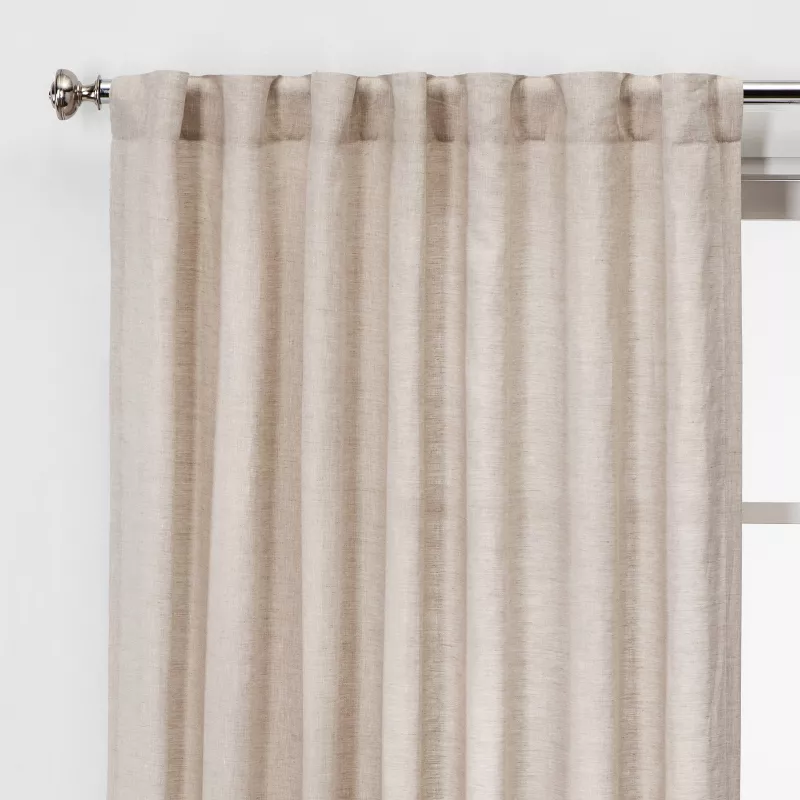
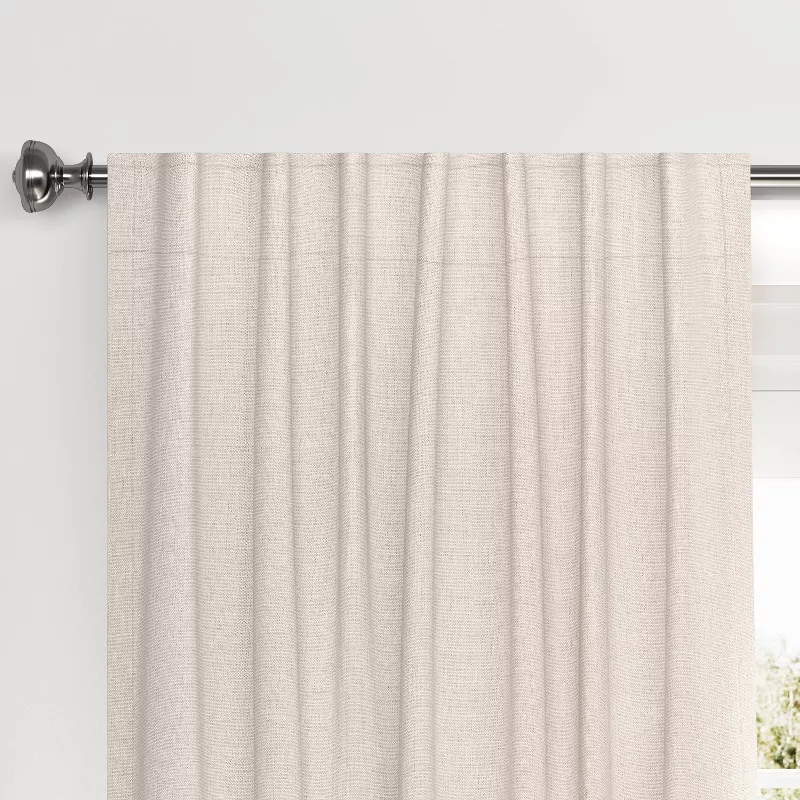
Linen curtains are non-negotiable for this look. The Light Filtering Linen Window Curtain Panel from Threshold lets warm natural light diffuse gently through the room while adding softness and height to your walls. Hang them close to the ceiling and let them pool slightly on the floor — this instantly makes ceilings look taller and the room feel more expensive.
54″x84″ Light Filtering Linen Window Curtain Panel Cream
The Atmosphere: Lighting
A warm-toned floor lamp with a fabric or rattan shade anchors the seating area and creates that layered, ambient lighting that makes a room feel lived-in rather than staged. The Arc Floor Lamp with Rattan and Fabric Shades in Gold hits every note — the arc shape is modern, the rattan detailing is organic, and the gold finish adds warmth without veering into maximalist territory.
The Statement: Mirror
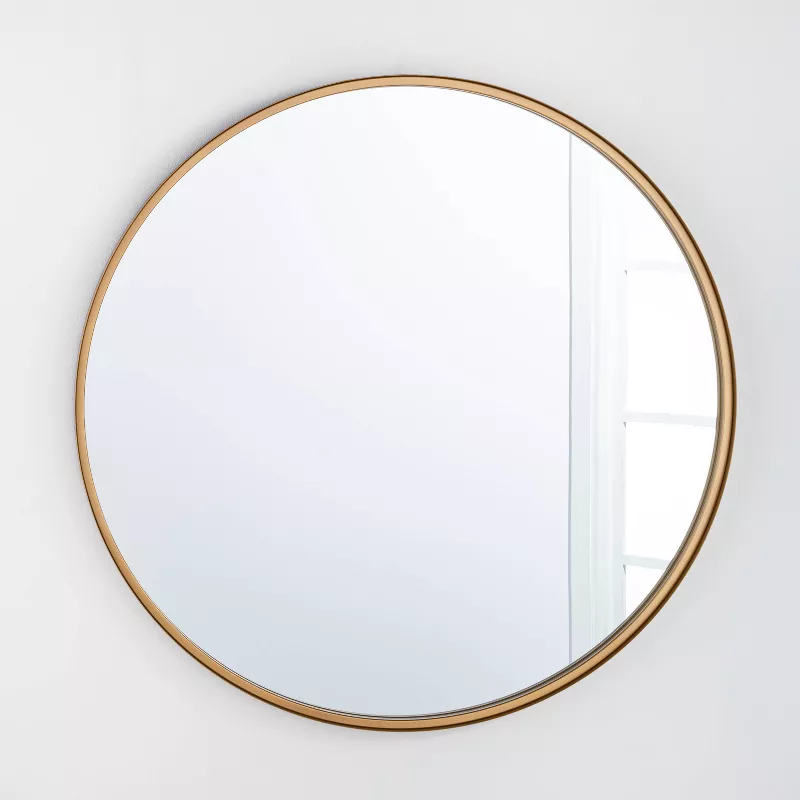
A large round mirror on the wall above a console or sofa reflects light, adds visual depth, and serves as a piece of wall art in its own right. The 34″ Round Decorative Wall Mirror in Brass from Threshold designed with Studio McGee is one of the most-recommended pieces on this site for a reason. The warm brass finish and clean circular frame hit the exact organic modern sweet spot.
34″ Round Decorative Wall Mirror Brass
The Texture: Textiles
Layer a warm throw blanket over the arm of your sofa and tuck in a few textured pillows. For organic modern, stay in the warm neutral family — cream, oatmeal, tan, warm white. The Ruched Faux Rabbit Fur Throw Blanket in Cream from Threshold adds the kind of plush, tactile softness that makes a room feel genuinely welcoming.
The Bohemian Living Room
Boho done well is layered, colorful, and full of personality — but it never looks chaotic. The secret is that every element still follows an underlying logic of color, texture, and scale. The Opalhouse designed with Jungalow collection at Target was essentially built for this aesthetic, and it delivers consistently.
The Foundation: Rug
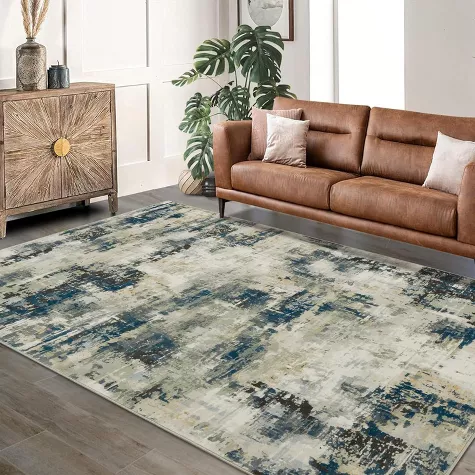
Boho living rooms are one of the few spaces where a bold, patterned rug is not just acceptable — it is essential. The 8×10 Washable Abstract Area Rug in Blue Multi brings color, movement, and pattern all at once — and the machine-washable feature means it can take the daily reality of a lived-in boho home. The blue multi colorway works beautifully as the palette anchor that the rest of your decor can pull from.
Washable Area Rug Modern Abstract Carpet Large Non-Slip Rug
The Anchor: Seating Accent
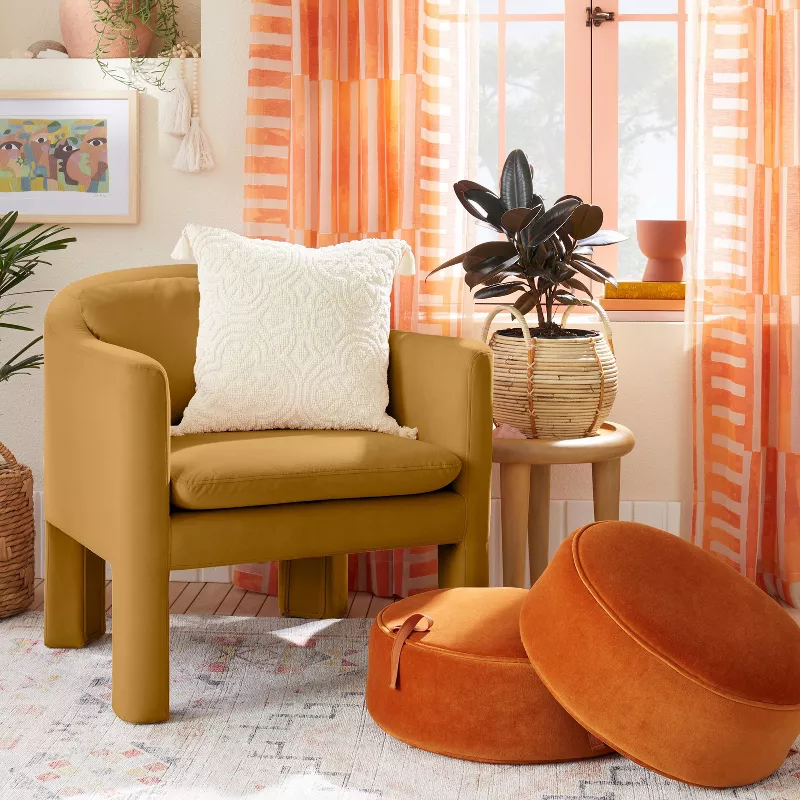
The Linaria Velvet Accent Chair in Mustard from Opalhouse designed with Jungalow is the kind of piece that makes a room. Rich mustard velvet, a curved back, and a fully upholstered seamless design make this the statement chair that boho rooms are built around. Surround it with plants and layered pillows and it becomes the visual center of the entire space.
Linaria Fully Upholstered Velvet Accent Chair Mustard
The Frame: Window Treatments
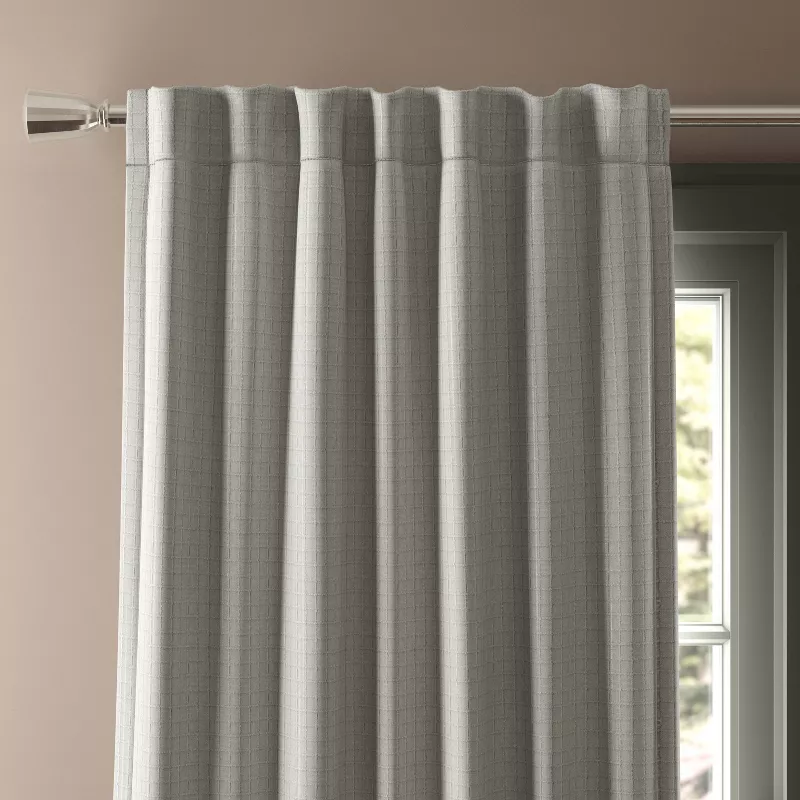
Boho rooms respond well to curtains that add texture rather than structure. The Blackout Textured Plaid Curtain Panels from Threshold bring visual interest through texture and pattern without overwhelming a room already full of personality. For a lighter boho look, the linen panels above work here too — just style the rest of the room with more color and pattern to compensate.
50″x108″ Blackout Textured Plaid Curtain Panel Gray
The Atmosphere: Lighting
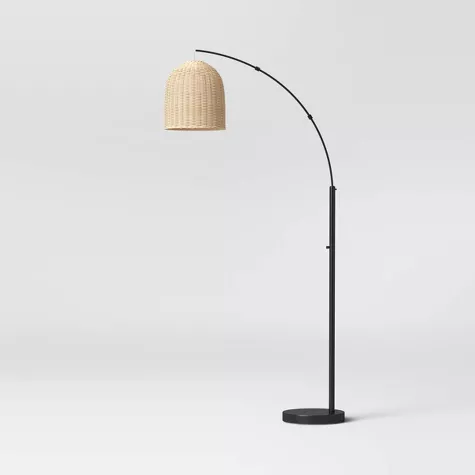
Boho lighting should feel warm and layered. Avoid anything too sleek or industrial. The Arc Floor Lamp with Rattan Shades works beautifully here as well — the rattan detailing is distinctly boho, and the warm-toned light setting creates that golden, intimate atmosphere that defines the aesthetic.
82″x13″ Addison Arc Floor Lamp with Natural Rattan Shade
The Statement: Mirror
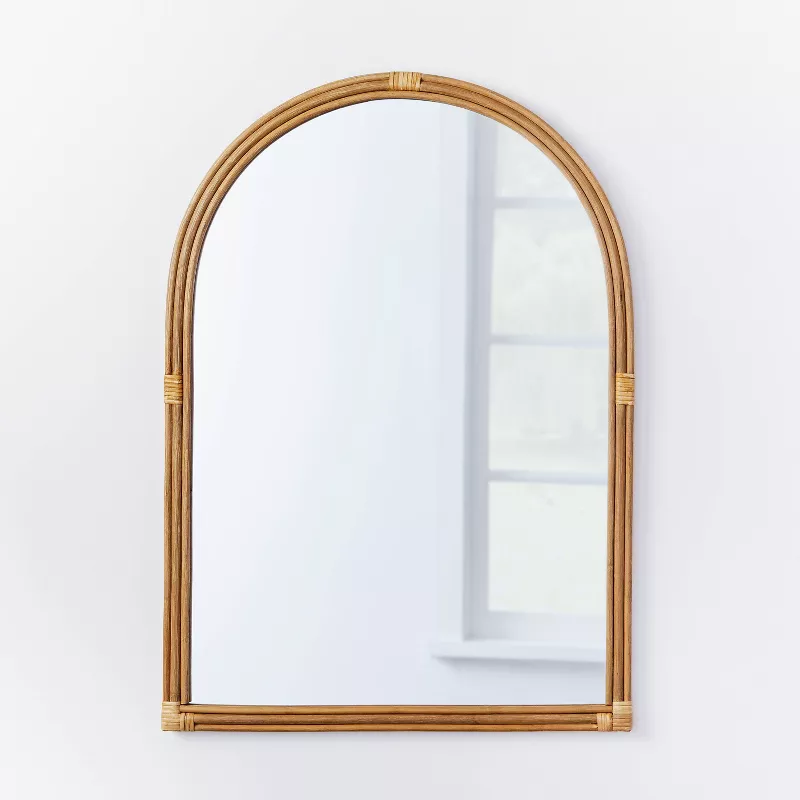
For a boho room, the arched rattan mirror is the obvious choice. The 24″ x 34″ Rattan Arched Wall Mirror from Threshold designed with Studio McGee brings natural material, artisanal texture, and a gorgeous arch shape that pairs perfectly with boho decor.
24″ x 34″ Rattan Arched Wall Mirror
The Texture: Textiles
This is where boho really comes to life. Layer multiple throw pillows in a mix of patterns — paisleys, global prints, and solid velvets all work together when they share a color family. Add a woven or tasseled throw blanket draped loosely over the sofa for that effortlessly layered look.
The Minimalist Living Room
Minimalist does not mean sparse or cold — it means deliberate. Every piece earns its place. The color palette is tight, the forms are clean, and the quality of individual pieces matters more than quantity. The goal is a room that feels open, calm, and considered.
The Foundation: Rug
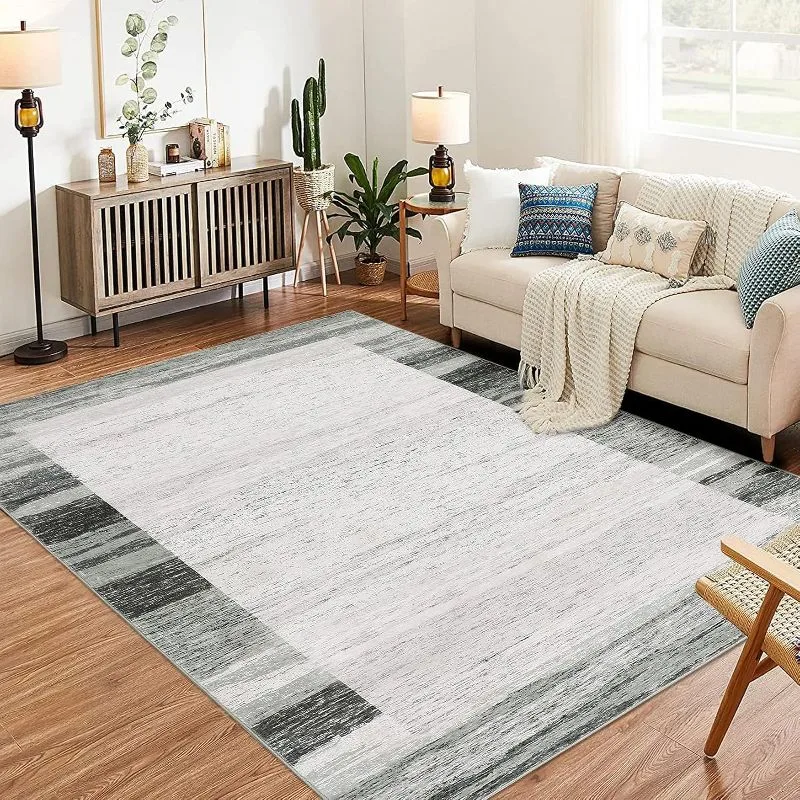
In a minimalist room, the rug should quietly anchor the space without demanding attention. The 8×10 Modern Bordered Washable Area Rug in Gray is exactly right — the subtle border gives it structure, the gray is the ideal minimalist neutral, and the low pile keeps it grounded and easy to maintain.
Modern Bordered Washable Area Rug – Non-Slip Low Pile Indoor Carpet
The Anchor: Seating Accent
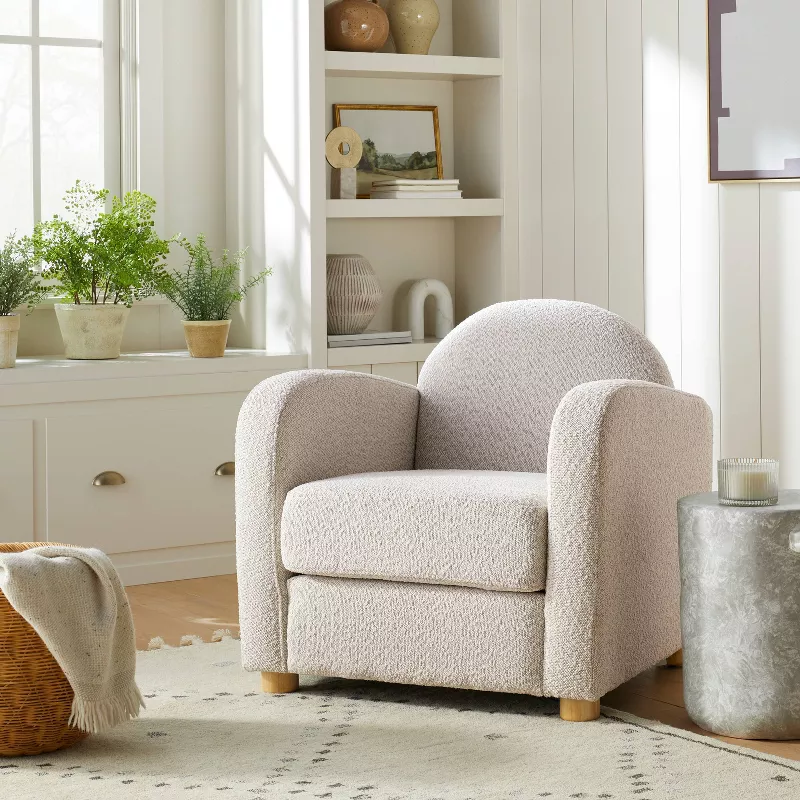
The Pacific Palisades Accent Chair in Boucle from Threshold designed with Studio McGee is a perfect minimalist accent piece — clean proportions, no ornate detailing, quality texture. It adds warmth without visual noise, which is the exact balance minimalist rooms need.
Pacific Palisades Accent Chair
The Frame: Window Treatments
For minimalism, you want curtains that frame the window cleanly and add height without drawing attention to themselves. The Light Filtering Linen Curtain Panels from Threshold are the answer again — their natural drape and neutral color disappear into the room in the best way possible, letting the architecture and intentional furniture do the talking.
54″x84″ Light Filtering Linen Window Curtain Panel Cream
The Atmosphere: Lighting
Minimalist lighting should be architectural — a single, well-chosen floor lamp that reads as a design object rather than just a functional item. Look for clean lines, a matte or brushed finish, and a simple shade in a neutral tone.
The Statement: Mirror
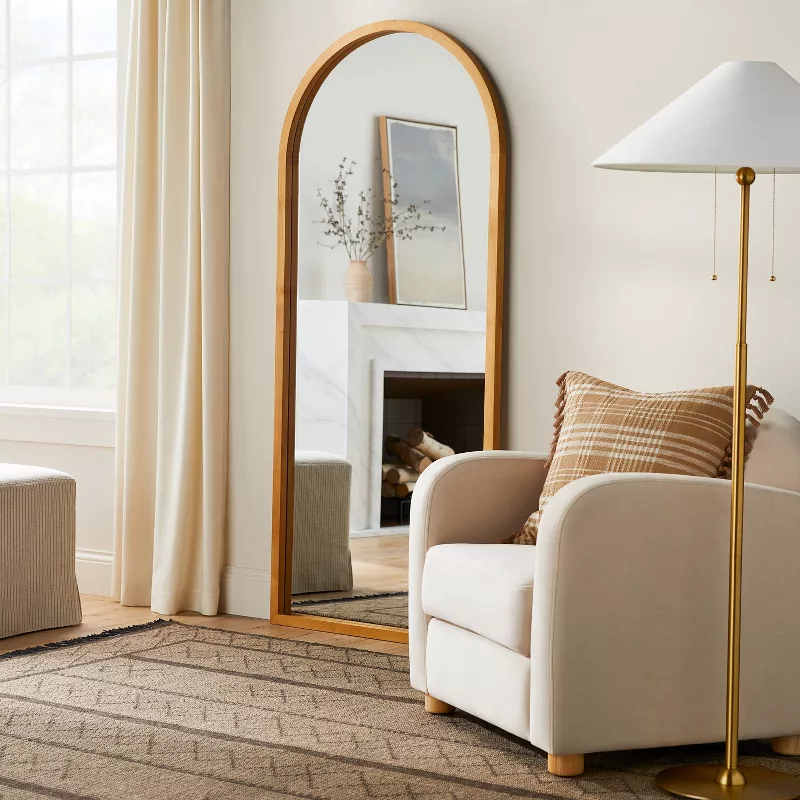
The 32″ x 72″ Wooden Arch Mirror in Brown from Threshold designed with Studio McGee is a leaner-style arch mirror with a stained wood frame that serves as a quiet statement — it adds height, warmth, and a beautiful organic shape without cluttering the room. Leaned against a wall rather than hung, it also signals the kind of casual confidence that defines modern minimalism.
32″ x 72″ Wooden Arch Mirror Brown
The Texture: Textiles
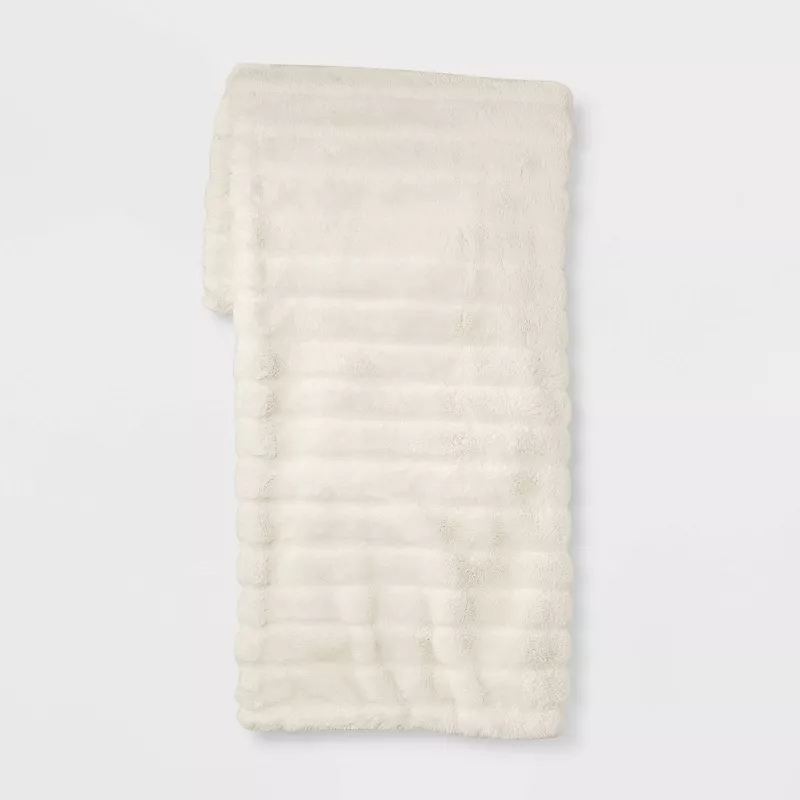
Minimalist rooms need texture to avoid feeling clinical. A single, well-chosen throw blanket and one or two simple pillows are all you need. The Textured Faux Fur Reversible Throw Blanket from Threshold in a neutral tone adds that necessary softness without introducing visual clutter. Less is genuinely more here.
Textured Faux Fur Reversible Throw Blanket Cream
The Cozy Maximalist Living Room
Maximalist rooms are the opposite of restrained — they are layered, rich, and unapologetically full. The key to maximalism that works is that it still follows rules: everything in the room should relate to a shared color palette or design era, and nothing should feel randomly placed. It is abundance with intention.
The Foundation: Rug
Go big and go bold. The 8×10 Washable Abstract Area Rug in Blue Multi brings the pattern-forward energy that maximalist rooms thrive on. Alternatively, layer two rugs — a large neutral base with a smaller patterned rug on top — for an extra-curated look that interior designers use constantly.
Washable Area Rug Modern Abstract Carpet Large Non-Slip Rug
The Anchor: Seating Accent
The Alberhill Velvet Accent Chair with Fringe in Pink from Opalhouse designed with Jungalow was made for this aesthetic. The fringe detailing, curved arms, and rich velvet upholstery have a lush, opulent quality that anchors a maximalist room and gives it that boutique-hotel-meets-collected-traveler energy.
The Frame: Window Treatments
Maximalist rooms can handle drama at the window. The Blackout Velvet Window Curtain Panel from Threshold brings deep color and rich texture that maximalist spaces reward. Choose a jewel tone — navy, forest green, plum — that coordinates with your chair and rug palette.
50″x84″ Blackout Velvet Window Curtain Panel Cream
The Atmosphere: Lighting
Layer your light sources. A floor lamp plus table lamps plus a few candles or decorative lanterns create the warm, enveloping atmosphere that maximalist rooms are known for. Avoid overhead lighting as your primary source — nothing kills a cozy maximalist vibe faster than a single bright ceiling light.
The Statement: Mirror
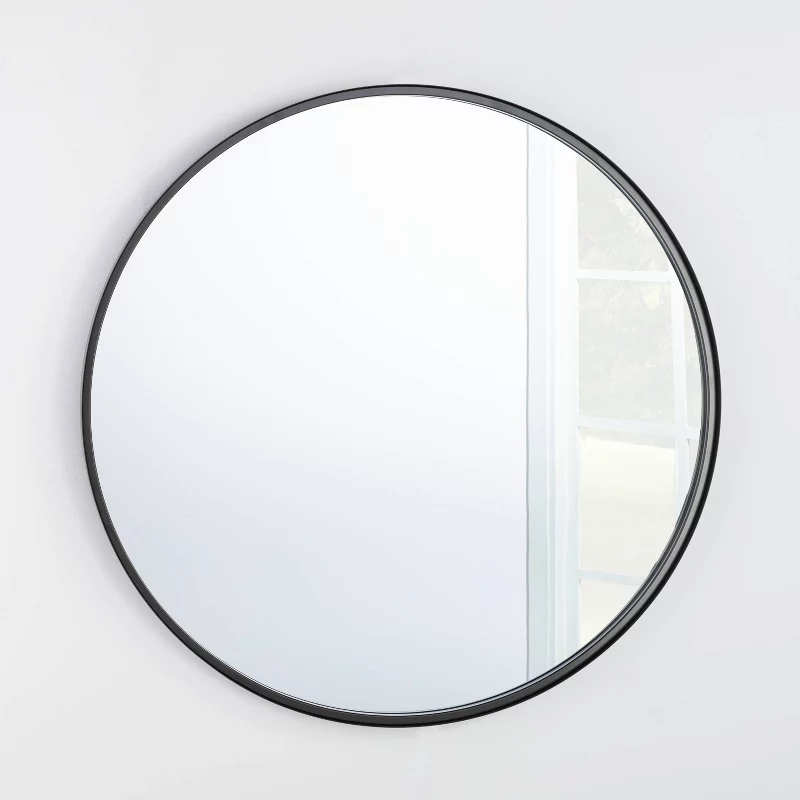
The 34″ Round Decorative Wall Mirror in Black from Threshold designed with Studio McGee provides a strong, defined frame that holds its own in a visually busy room. The black metal finish is bold and grounding — exactly what a maximalist room needs to keep all its layers feeling intentional rather than chaotic.
34″ Round Decorative Wall Mirror Black
The Texture: Textiles
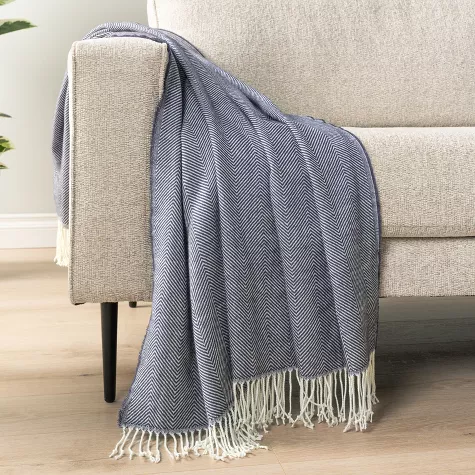
This is where you lean fully in. Multiple throw pillows, a chunky throw blanket, a woven pouf on the floor, a basket in the corner — layer every textile you can. The PAVILIA Knit Textured Soft Throw Blanket adds handcrafted texture in a warm colorway that pairs well with velvet and jewel tones. Drape it, fold it loosely, or toss it — in a maximalist room, nothing needs to be perfectly placed.
PAVILIA Knit Textured Soft Throw Blanket
The 6 Rules Every Styled Living Room Follows
Regardless of your aesthetic, these six principles separate rooms that feel designed from rooms that feel assembled:
Rule 1: Hang your curtains high. Mount your curtain rod as close to the ceiling as possible and let the panels extend to the floor. This makes ceilings appear taller and windows appear larger — two of the most impactful visual tricks in interior design.
Rule 2: Size up your rug. The most common living room mistake is choosing a rug that is too small. In most rooms, all major furniture legs should sit on the rug, or at minimum the front legs. When in doubt, go one size larger than you think you need.
Rule 3: Layer your lighting. A room lit by a single overhead fixture will always feel flat. Aim for at least three light sources at varying heights — a floor lamp, table lamps, and something low like candles or a decorative lantern.
Rule 4: Vary your textures. A room where everything is the same material — all smooth, all matte, all shiny — will always feel incomplete. Mix smooth with rough, hard with soft, natural with manufactured. This is what creates the sense of depth and richness that makes a room feel curated.
Rule 5: Introduce one statement piece. Every well-designed living room has one piece that anchors the room’s personality — a bold chair, an oversized mirror, an unexpected lamp. Without it, a room can look nice but not memorable. With it, the entire space has a point of view.
Rule 6: Add something living. A plant, a vase of stems, or even a bowl of seasonal fruit introduces an organic quality that no manufactured product can replicate. It signals that someone actually lives in the space, which is the ultimate goal.
Frequently Asked Questions
What is the best way to style a living room on a budget?
Start with the rug — it is the single piece that most dramatically transforms a room and creates the foundation everything else builds on. From there, add one statement piece (a bold accent chair or large mirror), layer in textiles (throw pillows and a blanket), and finish with lighting. You do not need to do everything at once; adding intentional pieces over time often produces more interesting rooms than buying everything in a single shopping session.
How do I figure out my living room aesthetic?
The easiest starting point is to collect 10 to 15 images of living rooms you genuinely love — from Pinterest, Instagram, or design sites. Look for patterns: are they all neutral or colorful? Are they minimalist or layered? Do they feature natural materials or polished ones? The commonalities across your saved images will tell you more about your actual aesthetic preferences than any quiz will.
How do I make a small living room look bigger?
Several Target-accessible strategies help here. Hang curtains close to the ceiling to draw the eye upward. Choose a rug that is larger than you think you need — counterintuitively, a bigger rug in a small room makes it feel larger, not smaller. Add a large mirror to reflect light and add depth. Keep the color palette relatively tight and lean toward lighter tones on walls and large furniture. Avoid blocking natural light sources.
What colors work best for a living room?
There are no universally wrong colors, but some palettes are consistently easier to work with. Warm neutrals — cream, warm white, tan, warm gray, terracotta — provide the most versatile base because they work with almost every accent color and material. If you want color, introduce it through accent pieces (pillows, a chair, curtains) rather than large furniture, which gives you flexibility to refresh the room seasonally without a major investment.
Should the accent chair match the sofa?
It should coordinate, not match. A chair in an identical fabric and color to your sofa reads as a suite of furniture rather than a designed room. Choose a chair that shares either a color, a material family, or a design era with your sofa while still offering visual contrast. The tension between coordination and contrast is what makes a room feel curated.
How many throw pillows should a sofa have?
For a standard three-seat sofa, three to five pillows is the typical range — two larger pillows on each side and one lumbar pillow in the center is a classic, balanced arrangement. For a two-seat sofa or loveseat, two to three pillows is usually sufficient. The goal is enough to feel layered and comfortable, but not so many that sitting becomes an event.